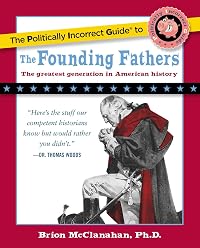
The Politically Incorrect Guide to the Founding Fathers
by Brion McClanahan
The Politically Incorrect Guides
On This Page
Description
A Southern historian challenges traditional interpretations of the Founding Fathers. "You think you know about the Founding Fathers, but did you know : The Founders were right-wingers by today's standards --- for gun rights, limited government, and religion in public life ; The Founders waged a War of Independence, not a revolution ; Is America a democracy? The Founders regarded the very idea of democratic government with scorn ; 'A nation of immigrants'? Most of the Founders were third- or show more fourth- generation Americans, not recent arrivals ; The Founders believed in States' rights, including the right to secede from the Union" --Cover, p1. show lessTags
Recommendations


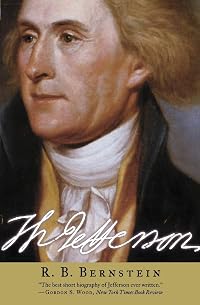
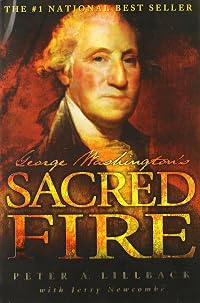
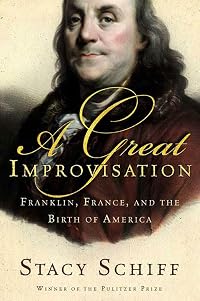
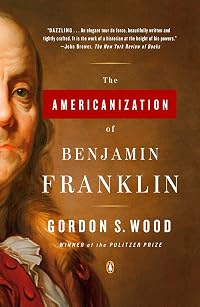


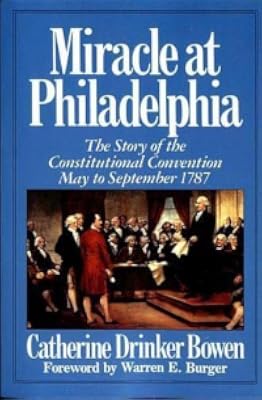
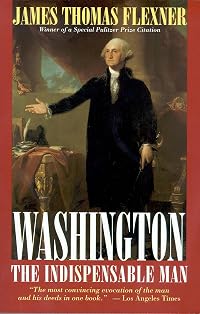
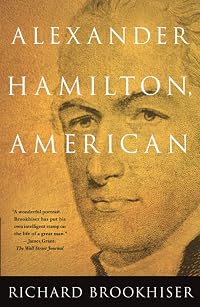
Member Reviews
When I saw “Politically Incorrect” I guess I was thinking along the lines of, ironically, the type of writing about our predecessors that Mcclanahan promptly denounces. The introduction begins by setting this up as a similar response to useless history textbooks and the resultant murky knowledge amongst our fellow citizens as covered by, say, James Loewen. Then the author immediately criticizes Loewen and others as examples of the leftist, revisionist scholarship that his book is conceived of as an antidote to. That is, in addition to some decent writing about the various founders, there’s quite the conservative agenda here.
Much of the content is well written and I feel of interest to anyone desiring a primer about the guys show more behind all those important documents and Mcclanahan’s interpretation of their intentions is likely spot on. Where this deteriorates, however, is with his constant pontifications about how everything that defines the US government these days – mammoth centralized government, welfare state-esque policies, gun control, and other pre-packaged conservative gripes – would prove anathema to our predecessors’ intent if they were exhumed tomorrow. Perhaps he’s correct (he includes any number of well-positioned quotes that came from somewhere though it’s often difficult to determine from what context) but it comes off like so many flippant, incongruous insertions.
Personally I’m not going defend our massive, often dysfunctional federal government and the resultant off-putting tax burdens supplementing behemoth corporations and hardly anyone else. Certainly if a coach-and-four pulls up to 2009 and drops off Jefferson in his best wig, the ex-Pres would be quite bewildered and perturbed with all this dysfunction as well. Obviously President Three would also express little more than complete befuddlement in the face of the innumerable transformations that have taken place since the Industrial Revolution. He would no doubt raise an eyebrow when the President 43 (and 44) ships thousands of troops off to the Middle East, but then he’d see some national embarrassment like Dancing With the Stars and wonder why we’re not exiling all those people to Afghanistan! Perhaps gun control would strike him as unconstitutional, but an hour with You Tube might convince him that some people just shouldn’t pack heat. As intelligent and well read (in Greek Classics, Ye Olde English Law, and the like) as these gentlemen were – and certainly one could argue for a few timeless principals in political theory – the discussions and debates they had back in the day seem a bit quaint don’t they? At the very least, Jefferson’s isolationist, agrarian-gentlemen-farmer-sporting-a-love/hate-relationship-with-slavery ideal for each US citizen would have to be pretty damn elastic in regards to the 294 trillion transformations that have impacted our country since 1826.
In contrast, I recently read the aforementioned Loewen’s Lies My Teacher Told Me and didn’t necessarily think his writing was from some resentful, leftist, anti-patriotic standpoint. It was merely an attempt to position these founders as real people that made occasional mistakes so A) every single real human that reads only the canned textbook crap doesn’t feel eternally inferior to the flawless, epic heroes presented by some of these “histories” and/or B) current students know these founders even existed as many post-sixties texts purge out an Alexander Hamilton completely to make room for three pages on Helen Keller (while then further purging all controversial aspects of her political activism) and/or C) the current student might find some of these histories interesting instead of simply rote, test-prep trash revolving around the memorization of key dates and titles (such as his example of college freshman understanding Keller as an inspirational hero without knowing a damn thing about anything she did post-Radcliffe).
This is Loewen’s agenda and I think it’s much more significant and palatable than the simplistic partisan politics that taint Mcclanahan’s effort. This is unfortunate. Much of this is well written and accessibly organized. If our politically incorrect author had ditched the incessant political preaching he would have a nice, concise contribution to Founding Father history for those of us who didn’t major in US History. Really, I kinda want to bestow three stars on the book, but the obvious predetermined intent of this and, I presume, the rest of the series is simply annoying. show less
Much of the content is well written and I feel of interest to anyone desiring a primer about the guys show more behind all those important documents and Mcclanahan’s interpretation of their intentions is likely spot on. Where this deteriorates, however, is with his constant pontifications about how everything that defines the US government these days – mammoth centralized government, welfare state-esque policies, gun control, and other pre-packaged conservative gripes – would prove anathema to our predecessors’ intent if they were exhumed tomorrow. Perhaps he’s correct (he includes any number of well-positioned quotes that came from somewhere though it’s often difficult to determine from what context) but it comes off like so many flippant, incongruous insertions.
Personally I’m not going defend our massive, often dysfunctional federal government and the resultant off-putting tax burdens supplementing behemoth corporations and hardly anyone else. Certainly if a coach-and-four pulls up to 2009 and drops off Jefferson in his best wig, the ex-Pres would be quite bewildered and perturbed with all this dysfunction as well. Obviously President Three would also express little more than complete befuddlement in the face of the innumerable transformations that have taken place since the Industrial Revolution. He would no doubt raise an eyebrow when the President 43 (and 44) ships thousands of troops off to the Middle East, but then he’d see some national embarrassment like Dancing With the Stars and wonder why we’re not exiling all those people to Afghanistan! Perhaps gun control would strike him as unconstitutional, but an hour with You Tube might convince him that some people just shouldn’t pack heat. As intelligent and well read (in Greek Classics, Ye Olde English Law, and the like) as these gentlemen were – and certainly one could argue for a few timeless principals in political theory – the discussions and debates they had back in the day seem a bit quaint don’t they? At the very least, Jefferson’s isolationist, agrarian-gentlemen-farmer-sporting-a-love/hate-relationship-with-slavery ideal for each US citizen would have to be pretty damn elastic in regards to the 294 trillion transformations that have impacted our country since 1826.
In contrast, I recently read the aforementioned Loewen’s Lies My Teacher Told Me and didn’t necessarily think his writing was from some resentful, leftist, anti-patriotic standpoint. It was merely an attempt to position these founders as real people that made occasional mistakes so A) every single real human that reads only the canned textbook crap doesn’t feel eternally inferior to the flawless, epic heroes presented by some of these “histories” and/or B) current students know these founders even existed as many post-sixties texts purge out an Alexander Hamilton completely to make room for three pages on Helen Keller (while then further purging all controversial aspects of her political activism) and/or C) the current student might find some of these histories interesting instead of simply rote, test-prep trash revolving around the memorization of key dates and titles (such as his example of college freshman understanding Keller as an inspirational hero without knowing a damn thing about anything she did post-Radcliffe).
This is Loewen’s agenda and I think it’s much more significant and palatable than the simplistic partisan politics that taint Mcclanahan’s effort. This is unfortunate. Much of this is well written and accessibly organized. If our politically incorrect author had ditched the incessant political preaching he would have a nice, concise contribution to Founding Father history for those of us who didn’t major in US History. Really, I kinda want to bestow three stars on the book, but the obvious predetermined intent of this and, I presume, the rest of the series is simply annoying. show less
3.5 stars. A good addition for a well rounded study of the founding fathers. While I may have issues with some of the authors "interpretations" I do feel that it succeeded in its purpose of getting me to read more about the "other" important founders.
This is a book that deals with the founding of America, and with about 20 of the founding fathers. It is does not go into great detail on anything, but it does provide a good, albeit brief, overview of many of the founding fathers. This book is easy to read, and is informative. I would highly reccomend this book to anyone interested in the founding generation.
This biography is about the life of our first President, George Washington. Many people have heard the famous tale about his chopping down the cherry tree. This is indeed true. When George Washington was six, he got a hatchet for his birthday and the rest is history! George had one sister, Betty, and three brothers, Samual, John, Charles. Instead of going to school, George studied at home. His life was normal with everyday struggles and many celebrated achievements. He became a symbol of strength and honor. He is remembered with much repsect,
I enjoyed this biography of George Washington. I especially like the fact that he overcame his struggles and became a symbol of strength and honor.
For an extension we would study his life and mostly show more his presidency. I would have the children to research information about his life on the internet or by going to the library and
checking a book out. We would also write a paper. show less
I enjoyed this biography of George Washington. I especially like the fact that he overcame his struggles and became a symbol of strength and honor.
For an extension we would study his life and mostly show more his presidency. I would have the children to research information about his life on the internet or by going to the library and
checking a book out. We would also write a paper. show less
Ratings
Members
- Recently Added By
Author Information

9 Works 489 Members
Brion McClanahan is the author of The Politically Incorrect Guide® to the Founding Father, The Founding Fathers Guide to the constitution, The Politically Incorrect Guide® to Real American Heroes, and How Alexander Hamilton Screwed Up America. He holds an MA and PhD in American history from the University of South Carolina. Born in Virginia, show more McClanahan received a BA in history from Salisbury University in Maryland. He lives with his wife and three daughters near Phenix City, Alabama. show less
Series

Common Knowledge
- Canonical title
- The Politically Incorrect Guide to the Founding Fathers
- Original title
- The Politically Incorrect Guide to the Founding Fathers
- Original publication date
- 2009
- Dedication
- To Samantha
- First words
- On a cold, damp, blustery, gray day in March 1775, prominent Virginians gathered at Saint John's Church in Richmond to consider action against the British Crown and Parliament.
Classifications
- Genres
- Nonfiction, History, General Nonfiction
- DDC/MDS
- 973.3092 — History & geography History of North America United States Revolutionary War (1775-89) Personal narratives--American Revolution
- LCC
- E302.1 .M417 — History of the United States United States Revolution to the Civil War, 1775/1783-1861 Political history
- BISAC
Statistics
- Members
- 157
- Popularity
- 208,468
- Reviews
- 4
- Rating
- (3.90)
- Languages
- English
- Media
- Paper, Audiobook, Ebook
- ISBNs
- 9
- ASINs
- 5