
Clint Johnson
Author of The Politically Incorrect Guide to the South (and Why It Will Rise Again)
About the Author
Clint Johnson has written nine books on the war, as well as hundreds of newspaper and magazine articles. His hobbies include reenacting with the 26th Regiment of North Carolina Troops (which serves as the 24th Michigan when portraying Federals). He lives in Ashe County, North Carolina.
Works by Clint Johnson
Pursuit: The Chase, Capture, Persecution, and Surprising Release of Confederate President Jefferson Davis (2008) 88 copies
Bull's-Eyes and Misfires: 50 Obscure People Whose Efforts Shaped the American Civil War (2002) 60 copies, 1 review
Touring Virginia's and West Virginia's Civil War Sites (Touring the Backroads) (1999) 42 copies, 2 reviews
The 25 Best Civil War Sites: The Ultimate Traveler's Guide to Battlefields, Monument & Museums (Greenline Historic Trave (2005) 9 copies
From rails to roads: The history of Perley A. Thomas Car Works and Thomas Built Buses (A Lifescapes corporate biography) (1996) 5 copies
Say and Sing 1 copy
Associated Works
True Heroes: A Treasury of Modern-day Fairy Tales Written by Best-selling Authors (2015) — Contributor — 35 copies, 1 review
Tagged
Common Knowledge
- Gender
- male
- Education
- University of Florida
- Nationality
- USA
- Places of residence
- North Carolina, USA
- Associated Place (for map)
- North Carolina, USA
Members
Reviews
Received via LibraryThing Early Reviewers
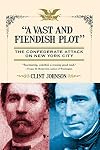
The struggles of Lee and Grant on the battlefields of the Civil War are familiar to many people, but author Clint Johnson brings to light a much less well-known aspect of the war between the states: the activities of the Confederate Secret Service, and especially its “vast and fiendish plot” to destroy the city of New York by burning it to the ground.
Don’t expect brilliant writing -- the poetry of David McCullough or the plumbing of show more psychological depths of Annette Gordon-Reed. This is meat and potatoes history, marshaling facts and dates in a straightforward narrative that recounts the who, what, when, where, and how (and to be fair, a good dose of the why) of past events.
Johnson sets the stage for the plot to burn New York with a meticulous, and sometimes surprising, examination of the relationship between the great commercial metropolis of the North and the cotton-producing South. That New York would be an ardent supporter of the South – and staunchly anti-Lincoln -- seems incongruous to a modern reader. But there were slaves in New York before Jamestown, and the Northern port grew very rich indeed off cotton: nearly 40 cents of every dollar made in the cotton trade went into the pockets of New Yorkers. Reading of New York’s complicity in slavery is unsettling and challenges any complacent belief that the North has always been a bastion of progressive thought.
Johnson uses a mass of detail (you don’t actually get to the plan to destroy New York until well into the book), to make the case for why Confederate agents would feel justified in trying to wipe New York off the map. While the destruction of civilian farms and towns so they can't supply the enemy doesn't surprise us today, the Confederates thought it dastardly and called for revenge.
When Johnson finally gets to the plot to burn New York, he makes clear just how inept the conspirators were. They used “Greek Fire,” a liquid that ignites when exposed to air, to set fires in hotel rooms across the city – but didn’t experiment with how to use the flammable liquid before hand. They ignored locations that would have burned readily and caused mass destruction – a gas factory, warehouses packed with combustibles, a turpentine distillery -- in favor of hotels filled with people who could detect a fire before it raged out of control. They set their fires in the early evening when the whole city was awake, rather than the wee hours of the morning when response would have been much more slow. As a result, most of the fires petered out on their own or were quenched before they did much damage. But if the agents had been more strategic, New York might have suffered tremendous damage.
Throughout the book Johnson stops just short of being an apologist for the South, but he makes clear how true the old adage is: history is written by the winners. You’re likely to think a bit differently about the North, and the South, after reading A Vast and Fiendish Plot. And changing our sense of the world is just what good history should do. show less
The struggles of Lee and Grant on the battlefields of the Civil War are familiar to many people, but author Clint Johnson brings to light a much less well-known aspect of the war between the states: the activities of the Confederate Secret Service, and especially its “vast and fiendish plot” to destroy the city of New York by burning it to the ground.
Don’t expect brilliant writing -- the poetry of David McCullough or the plumbing of show more psychological depths of Annette Gordon-Reed. This is meat and potatoes history, marshaling facts and dates in a straightforward narrative that recounts the who, what, when, where, and how (and to be fair, a good dose of the why) of past events.
Johnson sets the stage for the plot to burn New York with a meticulous, and sometimes surprising, examination of the relationship between the great commercial metropolis of the North and the cotton-producing South. That New York would be an ardent supporter of the South – and staunchly anti-Lincoln -- seems incongruous to a modern reader. But there were slaves in New York before Jamestown, and the Northern port grew very rich indeed off cotton: nearly 40 cents of every dollar made in the cotton trade went into the pockets of New Yorkers. Reading of New York’s complicity in slavery is unsettling and challenges any complacent belief that the North has always been a bastion of progressive thought.
Johnson uses a mass of detail (you don’t actually get to the plan to destroy New York until well into the book), to make the case for why Confederate agents would feel justified in trying to wipe New York off the map. While the destruction of civilian farms and towns so they can't supply the enemy doesn't surprise us today, the Confederates thought it dastardly and called for revenge.
When Johnson finally gets to the plot to burn New York, he makes clear just how inept the conspirators were. They used “Greek Fire,” a liquid that ignites when exposed to air, to set fires in hotel rooms across the city – but didn’t experiment with how to use the flammable liquid before hand. They ignored locations that would have burned readily and caused mass destruction – a gas factory, warehouses packed with combustibles, a turpentine distillery -- in favor of hotels filled with people who could detect a fire before it raged out of control. They set their fires in the early evening when the whole city was awake, rather than the wee hours of the morning when response would have been much more slow. As a result, most of the fires petered out on their own or were quenched before they did much damage. But if the agents had been more strategic, New York might have suffered tremendous damage.
Throughout the book Johnson stops just short of being an apologist for the South, but he makes clear how true the old adage is: history is written by the winners. You’re likely to think a bit differently about the North, and the South, after reading A Vast and Fiendish Plot. And changing our sense of the world is just what good history should do. show less
 This review was written for LibraryThing Early Reviewers.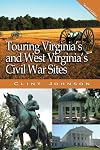
Unabashed Confederate hagiography. I wouldn’t mind so much if the book included more about military affairs and battles, but there aren’t any detailed battle site tours; instead it’s grave sites of Confederate generals, houses where famous Confederates lived, and museums of Confederate memorabilia. I suppose there are people, not necessarily Lost Cause zealots, who might want to see where Stonewall Jackson’s arm is buried or the house of J.E.B. Stuart’s widow. But author Clint show more Johnson makes it pretty clear where his sympathies lie; we learn, for example, that the Confederate army included blacks – as servants and musicians – and thus was more “integrated” than the Union army.
The book departs from the Civil War theme to provide a tour of the Nat Turner rebellion area; Johnson claims that the fear of slave rebellions was one of the motivators of the Confederacy.
One surprising thing I did learn is John Singleton Mosby – the famous/infamous “Gray Ghost” partisan (see Gray Ghosts and Rebel Raiders) became “reconstructed”, becoming a personal friend of U.S. Grant and a Republican. Johnson describes this as a “mistake” and notes “an angry Virginian” shot at Mosby as a result.
As mentioned, not much in the way of battle descriptions. If you’re interested in automobile tours of Civil War country I’d recommend the Civil War Explorer series by Jim Miles (mostly out of print, alas). Miles is also a Southerner but his books are more balanced and less Confederate apologetics than this one.
No foot or endnotes. Lots of black and white pictures of houses, statues and gravestones. A bibliography; a good index. show less
The book departs from the Civil War theme to provide a tour of the Nat Turner rebellion area; Johnson claims that the fear of slave rebellions was one of the motivators of the Confederacy.
One surprising thing I did learn is John Singleton Mosby – the famous/infamous “Gray Ghost” partisan (see Gray Ghosts and Rebel Raiders) became “reconstructed”, becoming a personal friend of U.S. Grant and a Republican. Johnson describes this as a “mistake” and notes “an angry Virginian” shot at Mosby as a result.
As mentioned, not much in the way of battle descriptions. If you’re interested in automobile tours of Civil War country I’d recommend the Civil War Explorer series by Jim Miles (mostly out of print, alas). Miles is also a Southerner but his books are more balanced and less Confederate apologetics than this one.
No foot or endnotes. Lots of black and white pictures of houses, statues and gravestones. A bibliography; a good index. show less
I’m always glad to discover something new. In this case, I discovered I actually could be bored by a book on the Civil War. This book by a Civil War aficionado ultimately concerns the actions of the Confederate Secret Service and the attempt by some of its agents to bring down the Union by burning New York. But it takes a meandering and dilatory path to get to that point.
Johnson begins by cataloging all the ways in which antebellum New York City was actually the South’s best friend; show more certainly, as Johnson avers, “the city had grown wealthy trading Southern cotton and financing Southern slave purchases.” Additionally, Northern textile mills made use of more than 80 percent of the cotton shipped to New York; New York benefited as the intermediary for all these transactions. Thus, many in New York City was opposed to abolition, insofar as it was so interdependent on the South and the slave system for its wealth.
But in spite of New York’s support prior to the outbreak of the Civil War, the Confederate agents mobilizing in Canada could think of no better target for their planned terrorist action. (Indeed, the appeal to terrorists trying to win glory by attacking New York hasn’t changed over the centuries.)
Thus, a plot was hatched to ignite fires in hotel rooms across the city. The plan fizzled out however without much damage because of the ineptitude of the saboteurs. Johnson does not go so far to claim to be disappointed, but the book has a bit of a “the romantic South” bias, and the author does end with a detailed discussion on what factors the Confederates should have taken into account in order for their mission to have succeeded. His last two chapters end in sort of breathless, excited italics: “Fire would have consumed New York City.” and “New York City would have burned down.”
My recommendation? Skip this one. show less
Johnson begins by cataloging all the ways in which antebellum New York City was actually the South’s best friend; show more certainly, as Johnson avers, “the city had grown wealthy trading Southern cotton and financing Southern slave purchases.” Additionally, Northern textile mills made use of more than 80 percent of the cotton shipped to New York; New York benefited as the intermediary for all these transactions. Thus, many in New York City was opposed to abolition, insofar as it was so interdependent on the South and the slave system for its wealth.
But in spite of New York’s support prior to the outbreak of the Civil War, the Confederate agents mobilizing in Canada could think of no better target for their planned terrorist action. (Indeed, the appeal to terrorists trying to win glory by attacking New York hasn’t changed over the centuries.)
Thus, a plot was hatched to ignite fires in hotel rooms across the city. The plan fizzled out however without much damage because of the ineptitude of the saboteurs. Johnson does not go so far to claim to be disappointed, but the book has a bit of a “the romantic South” bias, and the author does end with a detailed discussion on what factors the Confederates should have taken into account in order for their mission to have succeeded. His last two chapters end in sort of breathless, excited italics: “Fire would have consumed New York City.” and “New York City would have burned down.”
My recommendation? Skip this one. show less
This review was written for LibraryThing Early Reviewers.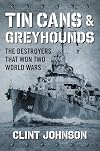
A quick but quite thorough review of destroyer operations in WW 1 & 2. They did not win these wars but their part should be noted. These essential but often overlooked ships of the USN are appropriately portrayed in most of their many guises as escorts, submarine hunters and rarely but often effective attack ships. Clint Johnson has skimmed the cream from the thousands of Destroyer Operations to create this lively and interesting narrative.
You May Also Like


Associated Authors
Statistics
- Works
- 15
- Also by
- 2
- Members
- 708
- Popularity
- #35,796
- Rating
- 3.6
- Reviews
- 12
- ISBNs
- 42
