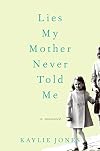
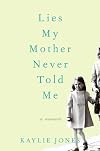
Lies My Mother Never Told Me
by Kaylie Jones
On This Page
Description
An acclaimed writer recalls her relationship with her alcoholic mother--particularly in the aftermath of the death of her father, novelist James Jones--in a memoir that explores the addictions of both mother and daughter.Tags
Recommendations









Member Reviews
Her father is James Jones, the National Book Award winner most famous for "From Here to Eternity," the first book of his World War II trilogy that also includes "The Thin Red Line" and "Whistle." Her mother is Gloria Jones, an outrageously full of life woman so beautiful that she was once a Marilyn Monroe stand-in. Like her father, Kaylie Jones is a talented writer and she has spent a lifetime immersed in the literary world. Unfortunately, Jones also shares the alcoholism suffered by both her parents, a problem she addresses frankly in Lies My Mother Never Told Me: A Memoir.
Jones begins her story in 1958 when, some seven years after the publication of "From Here to Eternity," her father decides he wants to live in Paris for a few years show more in the manner of some of his literary heroes. In 1960, after her mother has suffered several miscarriages, Kaylie Jones is born there into a fairy tale world marked by all-night parties attended by the famous writers, movie stars, directors, socialites and diplomats her father collects around him. Kaylie will spend her childhood among the likes of William Styron, Richard Wright, Carlos Fuentes, Sargent Shriver, Eunice Kennedy, Jean Seberg, Norman Mailer, Truman Capote, Kurt Vonnegut and Willie Morris. It is a world in which the excessive use of alcohol and drugs is seen as part of the creative process, a world in which real men can handle their liquor, and one in which alcoholism is seen as something shameful that happens only to the weaker among them.
Alcohol's destructive influence on the James Jones family is only part of the story. Kaylie, who lost her father when she was 16, promised him on his deathbed that she would make her mother stop drinking, a promise she would find it impossible to keep. The relationship between Kaylie Jones and her mother was so toxic that it would dominate both their lives for decades. According to Kaylie, "...from the moment I was capable of thought, I was certain that something was seriously wrong with me, because I annoyed and bored my mother to distraction, and elicited from her the most soul-shattering cruelty - the kind only a mother can inflict."
Kaylie, as an adult, finally would reconcile herself to the fact that her mother would never change her behavior or end her dependence on alcohol - and, most importantly, Kaylie would stop blaming herself for her mother's failures. As she describes in "Lies My Mother Never Told Me," Kaylie managed to get her own drinking under control but failed to remove her daughter from Gloria's influence before Gloria desperately tried to steal her daughter's love from her. Watching Gloria Jones slip into the helplessness of dementia made terribly worse by her heavy drinking makes for painful reading, but Jones' writing does not allow the reader to look away from what turns out to be the messy end of her mother's life.
Fans of American literature, as well as those who enjoy reading frank memoirs of all types, will cherish Lies "My Mother Never Told Me." The book is filled with stories about some of the literary greats of the mid-20th century, some flattering and some not so flattering, and Kaylie makes very clear her love and respect for the father she lost at such an early age. Even in death, James Jones set his daughter on a path she might never have found for herself. As she puts it, "It also occurred to me that if my father had lived, I would never have written. His death had broken me, and it was only through reading and writing that I had begun to heal myself." And now, Kaylie Jones has written a remarkable memoir.
Rated at: 5.0 show less
Jones begins her story in 1958 when, some seven years after the publication of "From Here to Eternity," her father decides he wants to live in Paris for a few years show more in the manner of some of his literary heroes. In 1960, after her mother has suffered several miscarriages, Kaylie Jones is born there into a fairy tale world marked by all-night parties attended by the famous writers, movie stars, directors, socialites and diplomats her father collects around him. Kaylie will spend her childhood among the likes of William Styron, Richard Wright, Carlos Fuentes, Sargent Shriver, Eunice Kennedy, Jean Seberg, Norman Mailer, Truman Capote, Kurt Vonnegut and Willie Morris. It is a world in which the excessive use of alcohol and drugs is seen as part of the creative process, a world in which real men can handle their liquor, and one in which alcoholism is seen as something shameful that happens only to the weaker among them.
Alcohol's destructive influence on the James Jones family is only part of the story. Kaylie, who lost her father when she was 16, promised him on his deathbed that she would make her mother stop drinking, a promise she would find it impossible to keep. The relationship between Kaylie Jones and her mother was so toxic that it would dominate both their lives for decades. According to Kaylie, "...from the moment I was capable of thought, I was certain that something was seriously wrong with me, because I annoyed and bored my mother to distraction, and elicited from her the most soul-shattering cruelty - the kind only a mother can inflict."
Kaylie, as an adult, finally would reconcile herself to the fact that her mother would never change her behavior or end her dependence on alcohol - and, most importantly, Kaylie would stop blaming herself for her mother's failures. As she describes in "Lies My Mother Never Told Me," Kaylie managed to get her own drinking under control but failed to remove her daughter from Gloria's influence before Gloria desperately tried to steal her daughter's love from her. Watching Gloria Jones slip into the helplessness of dementia made terribly worse by her heavy drinking makes for painful reading, but Jones' writing does not allow the reader to look away from what turns out to be the messy end of her mother's life.
Fans of American literature, as well as those who enjoy reading frank memoirs of all types, will cherish Lies "My Mother Never Told Me." The book is filled with stories about some of the literary greats of the mid-20th century, some flattering and some not so flattering, and Kaylie makes very clear her love and respect for the father she lost at such an early age. Even in death, James Jones set his daughter on a path she might never have found for herself. As she puts it, "It also occurred to me that if my father had lived, I would never have written. His death had broken me, and it was only through reading and writing that I had begun to heal myself." And now, Kaylie Jones has written a remarkable memoir.
Rated at: 5.0 show less
Book Overview
To say Kaylie Jones grew up in an interesting household is an understatement. Her father was James Jones—the acclaimed novelist renowned for his WWII books, including From Here To Eternity and The Thin Red Line (both made into movies). Her mother Gloria was a beauty (she was Marilyn Monroe's stand-in for a movie once) and a quick-witted storyteller who was both brainy and bawdy. (Some of her mother's best stories are interspersed throughout the book and make for some very interesting and fun reading.)
During Kaylie's childhood in Paris, she and her adopted brother Jamie live a lifestyle far from their parent's humble Midwestern roots—parties that last all night, guests who include a veritable "who's who" of the literary show more world (family friends included William Styron, Irwin Shaw and Willie Morris), a full-time nanny, private schools, exotic vacations. Yet Kaylie's childhood was not terribly happy. Her mother's mean streak and unreliability helped make Kaylie an uncertain and tentative child. Kaylie's father was the light of her life, but he was often "missing in action" due to his writing or being a part of the constant party that was at the center of her parents' lives. The end result was a lonely childhood filled with doubt, self-esteem issues and uncertainty. And no one in the family dared to say the forbidden word: alcoholic.
When the family moved back to the United States, they settled in a literary enclave in the Hamptons. Not too long after, James Jones's health began to deteriorate (in no small part to the heavy drinking that accompanied his lifestyle), and he died when Kaylie was 16. His passing ripped a hole into Kaylie's life that was never fully mended. Although she was now struggling with her own drinking problem (yet deep in denial), Kaylie promised her father on his deathbed that she would keep her mother from drinking so much.
This promise becomes an almost unbearable burden. To keep an alcoholic from drinking is an impossible task—especially when your own drinking problems are unrecognized. The toxic relationship between Gloria and Kaylie plays out over the years as they dance to the same tune over and over again ... until Kaylie acknowledges her own drinking problems and begins to realize the true depth of her mother's alcoholism and how their relationship is built on a script that casts Gloria as the all-powerful tyrant and Kaylie as the submissive, disobedient slave.
When Kaylie begins her own path to recovery, her mother does everything in her power to thwart her. Kaylie slowly begins to understand that she does not need to take responsibility for her mother's drinking and that she does not need to accept her mother's opinions about her love affairs, lifestyle or career. And when Kaylie becomes a mother, she struggles valiantly to rebuild a relationship with her mother and provide her daughter with a grandmother—a Herculean task that is littered with conflict, anger, betrayal and sadness.
In the end, the relationship between mother and daughter deteriorates to a point where it ceases to exist in any real form. When her mother finally dies, the only thing Kaylie feels is relief.
My Thoughts
Kaylie Jones has written a clear-eyed, unflinching memoir that is absolutely stunning. She has a very direct and spare writing style that suits the material well. She presents her story with a minimum of embellishment and little drama—yet you are drawn in by the strength of her writing and her story itself. Besides the obvious draw of having a famous novelist for a father and a childhood that includes frequent brushes with literary giants, Kaylie's story is most compelling for the life-long struggle she has with coming to terms with her mother's and her own alcoholism. So many memoirs feature flawed and alcoholic mothers, but I've never read one as direct and unswerving in its focus on the ugliness that drinking can bring as this one.
Yet don't think this book is all doom and gloom. Humor permeates the book (particularly in her mother's stories that are interspersed throughout), and Kaylie does find moments of grace and humor even in her darkest hours. In other words, you're not going to be depressed after reading the book. In fact, I suspect most readers will come away from this memoir feeling inspired and uplifted. If Kaylie can find a path to peace, so can we.
Another compelling aspect of Kaylie Jones's memoir is her struggle to find her voice as a writer while standing in her father's shadow. Throughout her career, Kaylie never feels she is good enough—that she is only granted scholarships, accepted into writing programs, and published because of who her father is. This inability to believe in herself and continual self-doubt make her easy to empathize with. I imagine that anyone who follows in the footsteps of a successful parent must almost always grapples with these types of doubts and fears.
As Kaylie begins to regain her life—both by admitting she has a drinking problem and by becoming a mother—I felt her strength and confidence grow slowly but surely. One of the keys to her salvation was pursuing a black belt in tae kwon do. I was particularly drawn to this aspect of the book because I'm currently taking my son to karate classes, and I've thought of trying it myself. Hearing about Kaylie's experiences as she progresses through the various belt levels was quite inspirational to me—and it made me realize how pursuing a goal like a black belt can be a literal life-saving quest.
My Final Recommendation
There are so many reasons to read this memoir.
First, anyone interested in American writers of the mid-20th century would be fascinated by this insider's glimpse into an exclusive literary world. This memoir features stories about Norman Mailer, Kurt Vonnegut, Truman Capote, William Styron and many more. Interspersed with the appearances by these literary giants are brushes with Hollywood luminaries such as Kris Kristofferson and Frank Sinatra. In addition, this book serves as a mini-biography of James Jones—exploring his childhood, marriage and literary legacy.
Second, I think this memoir should have a place on the bookshelf of any adult child of an alcoholic (ACOA). Kaylie's struggle with her mother's alcoholism is raw, unflinching and brutal. As Kaylie herself says, so many aspects of her relationship with her mother is textbook ACOA material. If drinking plays a role in your family life, I imagine that reading this memoir would be both painful but ultimately helpful and perhaps even healing.
Third, this memoir is well-written and weaves a compelling story. What more do you really need? show less
To say Kaylie Jones grew up in an interesting household is an understatement. Her father was James Jones—the acclaimed novelist renowned for his WWII books, including From Here To Eternity and The Thin Red Line (both made into movies). Her mother Gloria was a beauty (she was Marilyn Monroe's stand-in for a movie once) and a quick-witted storyteller who was both brainy and bawdy. (Some of her mother's best stories are interspersed throughout the book and make for some very interesting and fun reading.)
During Kaylie's childhood in Paris, she and her adopted brother Jamie live a lifestyle far from their parent's humble Midwestern roots—parties that last all night, guests who include a veritable "who's who" of the literary show more world (family friends included William Styron, Irwin Shaw and Willie Morris), a full-time nanny, private schools, exotic vacations. Yet Kaylie's childhood was not terribly happy. Her mother's mean streak and unreliability helped make Kaylie an uncertain and tentative child. Kaylie's father was the light of her life, but he was often "missing in action" due to his writing or being a part of the constant party that was at the center of her parents' lives. The end result was a lonely childhood filled with doubt, self-esteem issues and uncertainty. And no one in the family dared to say the forbidden word: alcoholic.
When the family moved back to the United States, they settled in a literary enclave in the Hamptons. Not too long after, James Jones's health began to deteriorate (in no small part to the heavy drinking that accompanied his lifestyle), and he died when Kaylie was 16. His passing ripped a hole into Kaylie's life that was never fully mended. Although she was now struggling with her own drinking problem (yet deep in denial), Kaylie promised her father on his deathbed that she would keep her mother from drinking so much.
This promise becomes an almost unbearable burden. To keep an alcoholic from drinking is an impossible task—especially when your own drinking problems are unrecognized. The toxic relationship between Gloria and Kaylie plays out over the years as they dance to the same tune over and over again ... until Kaylie acknowledges her own drinking problems and begins to realize the true depth of her mother's alcoholism and how their relationship is built on a script that casts Gloria as the all-powerful tyrant and Kaylie as the submissive, disobedient slave.
When Kaylie begins her own path to recovery, her mother does everything in her power to thwart her. Kaylie slowly begins to understand that she does not need to take responsibility for her mother's drinking and that she does not need to accept her mother's opinions about her love affairs, lifestyle or career. And when Kaylie becomes a mother, she struggles valiantly to rebuild a relationship with her mother and provide her daughter with a grandmother—a Herculean task that is littered with conflict, anger, betrayal and sadness.
In the end, the relationship between mother and daughter deteriorates to a point where it ceases to exist in any real form. When her mother finally dies, the only thing Kaylie feels is relief.
My Thoughts
Kaylie Jones has written a clear-eyed, unflinching memoir that is absolutely stunning. She has a very direct and spare writing style that suits the material well. She presents her story with a minimum of embellishment and little drama—yet you are drawn in by the strength of her writing and her story itself. Besides the obvious draw of having a famous novelist for a father and a childhood that includes frequent brushes with literary giants, Kaylie's story is most compelling for the life-long struggle she has with coming to terms with her mother's and her own alcoholism. So many memoirs feature flawed and alcoholic mothers, but I've never read one as direct and unswerving in its focus on the ugliness that drinking can bring as this one.
Yet don't think this book is all doom and gloom. Humor permeates the book (particularly in her mother's stories that are interspersed throughout), and Kaylie does find moments of grace and humor even in her darkest hours. In other words, you're not going to be depressed after reading the book. In fact, I suspect most readers will come away from this memoir feeling inspired and uplifted. If Kaylie can find a path to peace, so can we.
Another compelling aspect of Kaylie Jones's memoir is her struggle to find her voice as a writer while standing in her father's shadow. Throughout her career, Kaylie never feels she is good enough—that she is only granted scholarships, accepted into writing programs, and published because of who her father is. This inability to believe in herself and continual self-doubt make her easy to empathize with. I imagine that anyone who follows in the footsteps of a successful parent must almost always grapples with these types of doubts and fears.
As Kaylie begins to regain her life—both by admitting she has a drinking problem and by becoming a mother—I felt her strength and confidence grow slowly but surely. One of the keys to her salvation was pursuing a black belt in tae kwon do. I was particularly drawn to this aspect of the book because I'm currently taking my son to karate classes, and I've thought of trying it myself. Hearing about Kaylie's experiences as she progresses through the various belt levels was quite inspirational to me—and it made me realize how pursuing a goal like a black belt can be a literal life-saving quest.
My Final Recommendation
There are so many reasons to read this memoir.
First, anyone interested in American writers of the mid-20th century would be fascinated by this insider's glimpse into an exclusive literary world. This memoir features stories about Norman Mailer, Kurt Vonnegut, Truman Capote, William Styron and many more. Interspersed with the appearances by these literary giants are brushes with Hollywood luminaries such as Kris Kristofferson and Frank Sinatra. In addition, this book serves as a mini-biography of James Jones—exploring his childhood, marriage and literary legacy.
Second, I think this memoir should have a place on the bookshelf of any adult child of an alcoholic (ACOA). Kaylie's struggle with her mother's alcoholism is raw, unflinching and brutal. As Kaylie herself says, so many aspects of her relationship with her mother is textbook ACOA material. If drinking plays a role in your family life, I imagine that reading this memoir would be both painful but ultimately helpful and perhaps even healing.
Third, this memoir is well-written and weaves a compelling story. What more do you really need? show less
 This review was written for LibraryThing Early Reviewers.
My first exposure to Kaylie Jones came years ago with her very autobiographical novel, A SOLDIER'S DAUGHTER NEVER CRIES, which I liked very much. And which was made into quite a successful Hollywood film. As the daughter of writer James Jones (whose first novel, FROM HERE TO ETERNITY, firmly established him in the early 1950s as an important writer of his generation), Kaylie Jones enjoyed a rather privileged childhood in the rarefied international literary community of Paris in the 1960s. Her memoir, LIES MY MOTHER NEVER TOLD ME, finally reveals how seriously this childhood and youth were marred by parents who were alcoholics and somewhat negligent in their parental duties. Jones's mother Gloria was perhaps most guilty in that she show more seemed simply incapable of exressing her love for her daughter. The author recognizes, years later, that this failing in Gloria was probably the result of neglect and abuse at the hands of her own mother, who she said she "hated." The other tragedy of Kaylie's life was the death of her famous father when she was only sixteen.
The memoir is something of a tell-all, filled with names of the rich and famous from the celebrity world of the time. For example, she tells of her father's friend William Styron propositioning her, noting that "... if my father had known that Bill was going to proposition his nineteen-year-old, grief-stricken daughter, he would have beaten the living s**t out of him, sick or not." This anecdote seems to confirm the story that Anne Roiphe told of her own affair with the long-married and famously philandering Styron in her memoir, ART & MADNESS.
In yet another story, Kaylie tells of meeting her father's high school sweetheart, Annis Flemming, during a visit to Robinson, Illinois, who described the young James Jones as "a gentle, fragile boy ... He was a bit of a show-off, but that's not really who he was inside. He was hurting so bad when he came back after the war ... All the boys were like that when they came back." This assessment seems to parallel certain contradictory descriptions of a young Hemingway after the the Great War. Gertrude Stein often commented that Hemingway's macho displays of bravado were an act to mask his sensitive side. (Read Lyle Larsen's STEIN & HEMINGWAY.)
I had mixed feelings about this memoir. When she talks of her father and their special relationship, the book is at its best. In the second half (or more) of the book, when she begins to speak of her problems with her unloving - and unlovable -alcoholic mother, and then her own alcoholism and subsequent reform,the narrative sometimes slips into self-pity and becomes tediously repetitious. There is much of the proud mother in the author when she speaks of her daughter Eyrna, as well as pride of accomplishment in her struggles to earn her black belt. But the name-dropping later seems to become more obvious and unnecessary, slowing the pace of the book. For example, I wondered if it was really necessary, for example, in describing her father's friendship with Willie Morris, to mention that Donna Tartt and John Grisham had been students of Morris at Mississippi. And there are other similar name-dropping digressions scattered throughout the book - Winston Groom, Truman Capote, Norman Mailer, Vonnegut, Joseph Heller, Frank Sinatra, Lauren Bacall, etc. Being an avid reader and filmgoer, some I found interesting, but not all.
There were also, however, very poignant moments which made me nearly weep, such as her sadness at watching her mother's gradual deterioration which included memory loss. I remembered my own mother describing how her mother (my grandmother) always loved to talk of the past, until one day, in her early 90s, she began to forget. My mother is 95 now, and I see it happening to her.
But as a booklover and memoirist, the passage that struck home the hardest with me was a comment Jones made as she looked over the personal bookshelves of Willie Morris the day of his funeral -
"My eyes drifted over the contents of Willie's study - books I did not know and photos of strangers. Never mind, I thought, Willie wrote it all down in his memoirs, and ... the books will endure. And we will always have Bill Styron's books, and Truman Capote's, and Faulkner's, and Tolstoy's books, and my father's books, and those, no matter what else, will always be worth fighting for."
Books. They are indeed so important. I hope she is right. "The books will endure." show less
The memoir is something of a tell-all, filled with names of the rich and famous from the celebrity world of the time. For example, she tells of her father's friend William Styron propositioning her, noting that "... if my father had known that Bill was going to proposition his nineteen-year-old, grief-stricken daughter, he would have beaten the living s**t out of him, sick or not." This anecdote seems to confirm the story that Anne Roiphe told of her own affair with the long-married and famously philandering Styron in her memoir, ART & MADNESS.
In yet another story, Kaylie tells of meeting her father's high school sweetheart, Annis Flemming, during a visit to Robinson, Illinois, who described the young James Jones as "a gentle, fragile boy ... He was a bit of a show-off, but that's not really who he was inside. He was hurting so bad when he came back after the war ... All the boys were like that when they came back." This assessment seems to parallel certain contradictory descriptions of a young Hemingway after the the Great War. Gertrude Stein often commented that Hemingway's macho displays of bravado were an act to mask his sensitive side. (Read Lyle Larsen's STEIN & HEMINGWAY.)
I had mixed feelings about this memoir. When she talks of her father and their special relationship, the book is at its best. In the second half (or more) of the book, when she begins to speak of her problems with her unloving - and unlovable -alcoholic mother, and then her own alcoholism and subsequent reform,the narrative sometimes slips into self-pity and becomes tediously repetitious. There is much of the proud mother in the author when she speaks of her daughter Eyrna, as well as pride of accomplishment in her struggles to earn her black belt. But the name-dropping later seems to become more obvious and unnecessary, slowing the pace of the book. For example, I wondered if it was really necessary, for example, in describing her father's friendship with Willie Morris, to mention that Donna Tartt and John Grisham had been students of Morris at Mississippi. And there are other similar name-dropping digressions scattered throughout the book - Winston Groom, Truman Capote, Norman Mailer, Vonnegut, Joseph Heller, Frank Sinatra, Lauren Bacall, etc. Being an avid reader and filmgoer, some I found interesting, but not all.
There were also, however, very poignant moments which made me nearly weep, such as her sadness at watching her mother's gradual deterioration which included memory loss. I remembered my own mother describing how her mother (my grandmother) always loved to talk of the past, until one day, in her early 90s, she began to forget. My mother is 95 now, and I see it happening to her.
But as a booklover and memoirist, the passage that struck home the hardest with me was a comment Jones made as she looked over the personal bookshelves of Willie Morris the day of his funeral -
"My eyes drifted over the contents of Willie's study - books I did not know and photos of strangers. Never mind, I thought, Willie wrote it all down in his memoirs, and ... the books will endure. And we will always have Bill Styron's books, and Truman Capote's, and Faulkner's, and Tolstoy's books, and my father's books, and those, no matter what else, will always be worth fighting for."
Books. They are indeed so important. I hope she is right. "The books will endure." show less
It's very rare that a memoir can have the ability to change your life. "Lies My Mother Never Told Me" will make you laugh, cry, and leave you in awe. Kaylie Jones' is a true treasure! Her life of heartbreak, addiction, and ultimately of hope is as beautiful as any book I've read so far.
I was not familiar with James Jones's novels or Kaylie's, but after reading this memoir, I'd like to read more. Kaylie Jones looks at her life unflinchingly, but without the know-it-all tone some memoirs have. At the end, she is still questioning, but she has also learned a lot, and she's presented what she's learned in a such a way as to make a clear picture of a convoluted life.
I was quickly drawn into this autobiographical portrait of Kaylie Jones. At first I wasn't sure if I'd enjoy the autobiography of someone I'd never heard of, but Jones does a fantastic job of vividly illustrating her struggles growing up with a cold, aloof and sometimes abusive mother, and a famous literary father; and the transformations she must make in her life in order to survive and thrive as an adult.
I came to care about all the players in her story and was disappointed at the end that I wouldn't be able to keep up with any more of Kaylie's story. (I guess blogs have spoiled us with the never-ending daily details of those we follow there.)
I would recommend this book to anyone who enjoys getting inside the heads of others. Because show more there's a lot going on in Ms. Jones' head in this work. show less
I came to care about all the players in her story and was disappointed at the end that I wouldn't be able to keep up with any more of Kaylie's story. (I guess blogs have spoiled us with the never-ending daily details of those we follow there.)
I would recommend this book to anyone who enjoys getting inside the heads of others. Because show more there's a lot going on in Ms. Jones' head in this work. show less
This review was written for LibraryThing Early Reviewers.It's partly my own fault - I'm a bit overdosed on memoirs, especially alcoholic memoirs. Memoirs are like swimming a straight line; while novels, even if autobiographically based, can be like deep dives.
But this wasn't bad. It was honest, and searing in places, and sad. The constant name-dropping got to me (sometimes I felt like she just included an anecdote because it involved a famous person), and she might have explored her blindness to her mother's alcoholism at the end a bit more. Bottom line: she still feels victimized by her mother (with good reason), but a more powerful memoir, which needs years of perspective, would have left us with more than this.
But this wasn't bad. It was honest, and searing in places, and sad. The constant name-dropping got to me (sometimes I felt like she just included an anecdote because it involved a famous person), and she might have explored her blindness to her mother's alcoholism at the end a bit more. Bottom line: she still feels victimized by her mother (with good reason), but a more powerful memoir, which needs years of perspective, would have left us with more than this.
This review was written for LibraryThing Early Reviewers.Members
- Recently Added By
Published Reviews
ThingScore 75
At the end of the book, with a touching lack of self-consciousness, she envisions a paradise in which Stendhal, Tolstoy, James Jones and, yes, Kaylie Jones can sit together as peers.
“Lies My Mother Never Told Me” isn’t the book that will put her there. But it’s a bright, fast-paced memoir with an inviting spirit.
“Lies My Mother Never Told Me” isn’t the book that will put her there. But it’s a bright, fast-paced memoir with an inviting spirit.
added by Shortride
Author Information

10+ Works 415 Members
Kaylie Jones is the author of Celeste Ascending, As Soon as It Rains, and A Soldier's Daughter Never Cries, which was made into a film starring Kris Kristofferson and Barbara Hershey.
Common Knowledge
- Canonical title
- Lies My Mother Never Told Me
Classifications
Statistics
- Members
- 139
- Popularity
- 236,317
- Reviews
- 19
- Rating
- (3.63)
- Languages
- English
- Media
- Paper, Ebook
- ISBNs
- 5
- ASINs
- 3