
Rum Punch
by Elmore Leonard
On This Page
Description
Rum Punch is classic Elmore Leonard-the electrifying thriller that served as the basis for the acclaimed film Jackie Brown by director Quentin Tarantino, starring Pam Grier, Robert DeNiro, and Samuel L. Jackson. Leonard's story of a not-altogether-blameless flight attendant on the run from her vicious gun-running sometime employer who sees her as a troublesome loose end, Rum Punch is Leonard at his sharpest and most ingeniously entertaining. Enjoy this sensational noir winner from the show more creator of the character of U.S. Marshal Raylan Givens, lately of TV's hit series Justified, and see why the great Elmore Leonard stands tall in the company of America's most legendary crime fiction masters: John D. MacDonald, Dashiell Hammett, James M. Cain, et al. show lessTags
Recommendations
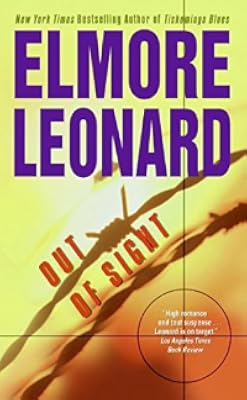
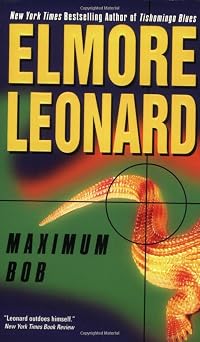
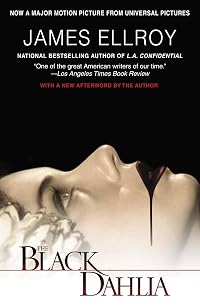





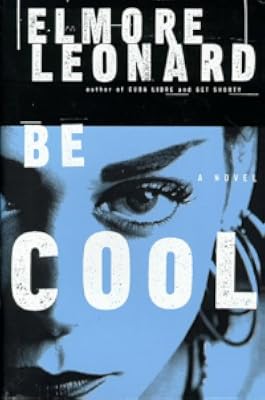
Member Recommendations
artturnerjr Tarantino is to film as Leonard is to prose.
Member Reviews
I recall someone saying how Elmore Leonard isn't old school `cause he built the school. Very true. My favorite Elmore Leonard novels are Tishomingo Blues and Pagan Babies; Rum Punch is my very favorite, thus this review. Also, in addition to reviewing the book, let me plug the audiobook read by Joe Mantegna. The voice of Joe Mantegna is pitch-perfect, his rhythm and inflections capturing each of the characters, male and female, as well as the mood and charged atmosphere of the entire story.
Perhaps readers know that Elmore Leonard listed his own `Rules of Writing'. You can easily find them with a quick Google search. Here is how Leonard follows his own rules in Rum Punch:
Rule: Never open the book with the weather or a prologue.
The show more novel's opening line: "Sunday morning, Ordell took Louis to watch the white-power demonstration in downtown Palm Beach." ----- A gripping scene right from the start; not a prologue or mention of the weather in sight.
Rule: Never use a verb other than `said' or an adverb modifying `said' to carry dialogue.
A snatch of dialogue from the first page: ""Young skinhead Nazis," Ordell said. "Look, even little Nazigirls marching down Worth Avenue. You believe it? Coming now you have the Klan, not too many here today. Some in green, must be the coneheads' new spring shade. Behind them it looks like some Bikers for Racism, better known as the Dixie Knights. We gonna move on ahead, fight through the crowd here," Ordell said, bringing Louis along.
"There's a man I want to show you. See who he reminds you of. He told me they're gonna march up South County and have their show on the steps of the fountain by city hall. You ever see so many police? Yeah, I expect you have. But not all these different uniforms at one time. They mean business too, got their helmets on, their riot ba-tons. Stay on the sidewalk or they liable to hit you over the head. They keeping the street safe for the Nazis."" ----- Right on, Elmore. No need for ornamentation here since Ordell's words speak for themselves.
Rule: Avoid using exclamation points (in other words, Leonard is telling us to let the action itself communicate power and excitement).
Vintage Elmore: "He saw the two bikers standing in kind of a crouch with their rifles, shoulders hunched, looking this way, nearer the house now than the gun range. He saw them out there in the open, cautious. Saw them both look toward the driveway at the same time and start to turn in that direction, raising their rifles. Louis heard the sound of automatic weapons, not as loud as he heard them in Ordell's gun movie or in any movie he had ever seen, and watched the two bikers drop where they were standing seem to collapse, fall without firing a shot, the sound of the automatic weapons continuing until finally it stopped. Pretty soon the jackboys appeared, the kids with their Chinese guns, curved banana clips, looking at the men on the ground and then toward the house."
Rule: Use regional dialect and jargon sparingly.
Elmore Leonard wrote to be read. When he writes dialogue, it doesn't matter if the speaker is from the inner city or the rural hinterlands, you can read it. Case in point: ""All right, go ahead," Simone said. "You find any other guns, or you find something else and you take it? The man's gonna come after you. Understand? Man that has more guns'n you ever saw in your life." ----- True to the character, in this case an older Black woman, but, again, you can read it. Every piece of dialogue in Rum Punch is equally clear.
Rule: Avoid detailed descriptions of characters and don't go into great detail describing places or things.
Here is how the author describes bail bondsman Max Cherry, one of the main characters, through the eyes of Ordell, another main character: "The man himself appeared neat, cleanshaved, had his blue shirt open, no tie, good size shoulders on him. That dark, tough-looking type of guy like Lewis, dark hair, only Max Cherry was losing his on top. Up in his fifties somewhere. He could be Eyetalian, except Ordell had never met a bail bondsman wasn't Jewish." ----- That's it-short, crisp, a few telling details.
Rule: Cut out parts the reader tend to skip.
The hardback edition of Rum Punch is 297 pages. I've read the novel three times, never skipping a page, ever. Why would I skip pages? What happens and what is said on every page drives the story.
Rule (the last and most important rule): If it sounds like writing, rewrite it.
Rum Punch does not sound like writing. That's a fact. A Victorian romance, it isn't. What Rum Punch sounds like - regarding dialogue - is a verbatim transcript from living, breathing people. And the world the characters inhabit is described in enough detail that we get a clear picture.
If you haven't read any of Elmore Leonard's 45 published novels, Rum Punch is a great place to start. show less
Having read most US noir out there, I'd somehow avoided Leonard. I think I was put off by my disappointment at Tarantino's Jackie Brown. This is a fantastic novel, though. It has the punch of the best crime writers, but unlike, say, George Pelecanos, there's less of a generic feel to his work. You sense that his other novels will offer a slightly different narrative structure and that the storylines will stay with you a little longer than those of most genre fiction. Thus some weighty themes emerge from this work beyond those of criminality and justice: growing old, trust, race, fulfilment. The book also makes me want to revisit Tarantino's film. I suspect I might have misjudged it first time round and that the knowledge that Jackie was show more white in the novel might throw interesting light on the choice of a black actress in the movie. show less
I was reading the second chapter before I realised I was reading the book Tarantino’s film, “Jackie Brown”, was based on. Like the film I enjoyed this book. It is a black humorous tale about a gun dealer and the people around him. It is entertaining and holds no punches when it comes to describing the underworld.
Being familiar with the film I was able to spot where changes had been made and elements left out when making the screen adaptation. This did not cause me any problem. The film was entertaining as was the book, and with Pam Grier, Robert De Niro, Robert Forster, Samuel L. Jackson and Michael Keaton in the cast it could not help but be a good movie.
Would I read another book by this author?
Yes.
Would I recommend this book show more and, if so, to whom?
Yes. I would recommend this book to anyone who likes a bit of entertainment fodder and likes crime thrillers. It is quite light and is full of black humour.
Did this book inspire me to anything?
It has given me the urge to rewatch Jackie Brown. show less
Being familiar with the film I was able to spot where changes had been made and elements left out when making the screen adaptation. This did not cause me any problem. The film was entertaining as was the book, and with Pam Grier, Robert De Niro, Robert Forster, Samuel L. Jackson and Michael Keaton in the cast it could not help but be a good movie.
Would I read another book by this author?
Yes.
Would I recommend this book show more and, if so, to whom?
Yes. I would recommend this book to anyone who likes a bit of entertainment fodder and likes crime thrillers. It is quite light and is full of black humour.
Did this book inspire me to anything?
It has given me the urge to rewatch Jackie Brown. show less
I recall someone saying how Elmore Leonard isn't old school `cause he built the school. Very true. My favorite Elmore Leonard novels are Tishomingo Blues and Pagan Babies; Rum Punch is my very favorite, thus this review. Also, in addition to reviewing the book, let me plug the audiobook read by Joe Mantegna. The voice of Joe Mantegna is pitch-perfect, his rhythm and inflections capturing each of the characters, male and female, as well as the mood and charged atmosphere of the entire story.
Perhaps readers know that Elmore Leonard listed his own `Rules of Writing'. You can easily find them with a quick Google search. Here is how Leonard follows his own rules in Rum Punch:
Rule: Never open the book with the weather or a prologue.
The show more novel's opening line: "Sunday morning, Ordell took Louis to watch the white-power demonstration in downtown Palm Beach." ----- A gripping scene right from the start; not a prologue or mention of the weather in sight.
Rule: Never use a verb other than `said' or an adverb modifying `said' to carry dialogue.
A snatch of dialogue from the first page: ""Young skinhead Nazis," Ordell said. "Look, even little Nazigirls marching down Worth Avenue. You believe it? Coming now you have the Klan, not too many here today. Some in green, must be the coneheads' new spring shade. Behind them it looks like some Bikers for Racism, better known as the Dixie Knights. We gonna move on ahead, fight through the crowd here," Ordell said, bringing Louis along.
"There's a man I want to show you. See who he reminds you of. He told me they're gonna march up South County and have their show on the steps of the fountain by city hall. You ever see so many police? Yeah, I expect you have. But not all these different uniforms at one time. They mean business too, got their helmets on, their riot ba-tons. Stay on the sidewalk or they liable to hit you over the head. They keeping the street safe for the Nazis."" ----- Right on, Elmore. No need for ornamentation here since Ordell's words speak for themselves.
Rule: Avoid using exclamation points (in other words, Leonard is telling us to let the action itself communicate power and excitement).
Vintage Elmore: "He saw the two bikers standing in kind of a crouch with their rifles, shoulders hunched, looking this way, nearer the house now than the gun range. He saw them out there in the open, cautious. Saw them both look toward the driveway at the same time and start to turn in that direction, raising their rifles. Louis heard the sound of automatic weapons, not as loud as he heard them in Ordell's gun movie or in any movie he had ever seen, and watched the two bikers drop where they were standing seem to collapse, fall without firing a shot, the sound of the automatic weapons continuing until finally it stopped. Pretty soon the jackboys appeared, the kids with their Chinese guns, curved banana clips, looking at the men on the ground and then toward the house."
Rule: Use regional dialect and jargon sparingly.
Elmore Leonard wrote to be read. When he writes dialogue, it doesn't matter if the speaker is from the inner city or the rural hinterlands, you can read it. Case in point: ""All right, go ahead," Simone said. "You find any other guns, or you find something else and you take it? The man's gonna come after you. Understand? Man that has more guns'n you ever saw in your life." ----- True to the character, in this case an older Black woman, but, again, you can read it. Every piece of dialogue in Rum Punch is equally clear.
Rule: Avoid detailed descriptions of characters and don't go into great detail describing places or things.
Here is how the author describes bail bondsman Max Cherry, one of the main characters, through the eyes of Ordell, another main character: "The man himself appeared neat, cleanshaved, had his blue shirt open, no tie, good size shoulders on him. That dark, tough-looking type of guy like Lewis, dark hair, only Max Cherry was losing his on top. Up in his fifties somewhere. He could be Eyetalian, except Ordell had never met a bail bondsman wasn't Jewish." ----- That's it-short, crisp, a few telling details.
Rule: Cut out parts the reader tend to skip.
The hardback edition of Rum Punch is 297 pages. I've read the novel three times, never skipping a page, ever. Why would I skip pages? What happens and what is said on every page drives the story.
Rule (the last and most important rule): If it sounds like writing, rewrite it.
Rum Punch does not sound like writing. That's a fact. A Victorian romance, it isn't. What Rum Punch sounds like - regarding dialogue - is a verbatim transcript from living, breathing people. And the world the characters inhabit is described in enough detail that we get a clear picture.
If you haven't read any of Elmore Leonard's 45 published novels, Rum Punch is a great place to start. show less
You know those American films where the characters speak so quickly you can't quite work out what they've said, but can roughly follow things by the flow of the plot? A lot of this is like that but once you're used to the dialect the story just flows, peopled with lots of naughty characters and no wasted words. In fact he actually skips words which are grammatically required but which the sense can do without. There's a refreshing lack of political correctness. I actually googled Leonard to see what colour he is (white). Jackie’s a likable heroine and there’s a feel-good air to the novel. No great shakes but I’d happily read other stuff by him.
You can understand why Quentin Tarantino wanted a crack at directing an Elmore Leonard story, as he has a very similar style. I had seen Jackie Brown, the movie based on this novel, multiple times, and had in fact just watched it again before starting the novel at long last. The only problem this led to for me was that I kept picturing Pam Grier whenever Jackie Burke was mentioned.
If you've seen the movie, you know the basics, but there are so many additional elements left out of Tarantino's movie that it still makes this an enjoyable read. We get to see more of Melanie's character, as well as a whole sub-plot involving the theft of a gun stash from a Nazi Ordell calls "The Big Guy." Louis gets more definition as well, and we see him show more start to rise into the character Ordell wants him to be, even though he's still not great at it.
I haven't read The Switch, which is apparently the first outing for Ordell and Louis, a job referenced throughout the book and the way they met Melanie, but it's not a necessary read to understand their motivations here. It's just a nice bit of history for the three.
I've been meaning to read more Elmore Leonard. Finally read my first last year, going to try to get to a few more this year. Definitely a fun crime storyteller. show less
If you've seen the movie, you know the basics, but there are so many additional elements left out of Tarantino's movie that it still makes this an enjoyable read. We get to see more of Melanie's character, as well as a whole sub-plot involving the theft of a gun stash from a Nazi Ordell calls "The Big Guy." Louis gets more definition as well, and we see him show more start to rise into the character Ordell wants him to be, even though he's still not great at it.
I haven't read The Switch, which is apparently the first outing for Ordell and Louis, a job referenced throughout the book and the way they met Melanie, but it's not a necessary read to understand their motivations here. It's just a nice bit of history for the three.
I've been meaning to read more Elmore Leonard. Finally read my first last year, going to try to get to a few more this year. Definitely a fun crime storyteller. show less
I had this one hanging around forever. I'd tried to start it a couple of times and couldn't really get into it for some reason. Anyway, I made a go of it this time.
The book, as you may know, is the basis for the movie Jackie Brown. I apparently forgot/didn't know that (I didn't see the movie), and it wasn't until the end that I said to myself, "hey, isn't this the plot of Jackie Brown?"
In my defense, the main character in the book is named Jackie Burke, and her physical description is more Bridget Fonda than Pam Grier, but I probably still should have put it together before that.
Jackie is a flight attendant who moves money from the Bahamas for a guy named Ordell Robbie. She doesn't really know what he's up to, until she gets picked show more up by the ATF and strikes a deal with them to bring down Ordell in exchange for her own immunity.
There is a cast of colorful characters to help or hinder her along the way: Max Cherry, a bail bondsman, Louis Gara, an ex-con acquaintance of Ordell's who works for Max, Ordell's various women: Melanie, Simone, Sheronda, and an array of bit players.
Elmore Leonard certainly does keep things moving, and that's pretty important in this sort of book. You can picture the characters easily, practically hear their voices when you read their dialogue. I'm not sure why I had a hard time getting into it at first - it's a solid, quick-moving novel. show less
The book, as you may know, is the basis for the movie Jackie Brown. I apparently forgot/didn't know that (I didn't see the movie), and it wasn't until the end that I said to myself, "hey, isn't this the plot of Jackie Brown?"
In my defense, the main character in the book is named Jackie Burke, and her physical description is more Bridget Fonda than Pam Grier, but I probably still should have put it together before that.
Jackie is a flight attendant who moves money from the Bahamas for a guy named Ordell Robbie. She doesn't really know what he's up to, until she gets picked show more up by the ATF and strikes a deal with them to bring down Ordell in exchange for her own immunity.
There is a cast of colorful characters to help or hinder her along the way: Max Cherry, a bail bondsman, Louis Gara, an ex-con acquaintance of Ordell's who works for Max, Ordell's various women: Melanie, Simone, Sheronda, and an array of bit players.
Elmore Leonard certainly does keep things moving, and that's pretty important in this sort of book. You can picture the characters easily, practically hear their voices when you read their dialogue. I'm not sure why I had a hard time getting into it at first - it's a solid, quick-moving novel. show less
Members
- Recently Added By
Lists

Read the book and saw the movie
1,170 works; 195 members

Best Noir Fiction
160 works; 14 members

Books Set in Florida
25 works; 8 members

The American novels that should have won the Booker prize
16 works; 3 members

BBC Radio 4 Bookclub
341 works; 13 members

Books Read in 2016
4,666 works; 199 members

Books Read in 2021
5,361 works; 114 members

Southern Fiction
212 works; 52 members

Global Reads: Books by American Authors
10 works; 1 member

Reading LIst
648 works; 1 member
Author Information

181+ Works 40,888 Members
Elmore John Leonard, Jr. 10/11/25 -- 8/20/13 Elmore John Leonard, Jr., popularly known as mystery and western writer Elmore Leonard, was born in New Orleans, Louisiana on October 11, 1925. He served in the United States Naval Reserve from 1943 to 1946. He received a Ph.D. in English from the University of Detroit in 1950. After graduating, he show more wrote short stories and western novels as well as advertising and education film scripts. In 1967, he began to write full-time and received several awards including the 1977 Western Writers of America award and the 1984 Writers of America Edgar Allan Poe award. His other works include Get Shorty, Out of Sight, Hombre, Mr. Majestyk, 3:10 to Yuma, and Rum Punch. Many of his works were adapted into movies. Library of America recently announced plans to publish the first of a three-volume collection of his books beginning in the Fall of 2014. Leonard died on August 20, 2013 from complications of a stroke he had earlier. He was 87 years old. (Bowker Author Biography) show less
Awards and Honors
Distinctions
Notable Lists
Series
Belongs to Publisher Series
Stile libero [Einaudi] (Big)
Work Relationships
Is contained in
Has the adaptation
Common Knowledge
- Canonical title
- Rum Punch
- Original title
- Rum Punch
- Alternate titles
- Rommipunssi; Jackie Brown
- Original publication date
- 1992
- People/Characters
- Jackie Burke; Ordell Robbie; Max Cherry; Louis Gara
- Important places
- Florida, USA
- Related movies
- Jackie Brown (1997 | IMDb)
- Dedication
- For Jackie, Carole, and Larry
- First words
- Sunday morning, Ordell took Louis to watch the white-power demonstration in downtown Palm Beach.
- Last words
- (Click to show. Warning: May contain spoilers.)"I don't know," Jackie said, and he saw her eyes begin to smile. "Does it matter?"
- Original language
- English
Classifications
Statistics
- Members
- 1,685
- Popularity
- 13,259
- Reviews
- 18
- Rating
- (3.68)
- Languages
- 11 — Danish, Dutch, English, Finnish, French, German, Italian, Norwegian (Bokmål), Norwegian, Russian, Spanish
- Media
- Paper, Audiobook, Ebook
- ISBNs
- 47
- ASINs
- 12