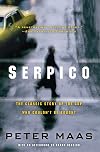
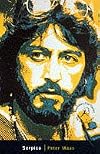
Serpico
by Peter Maas
On This Page
Description
The 1960s was a time of social and generational upheaval felt with particular intensity in the melting pot of New York City. A culture of corruption pervaded the New York Police Department, where payoffs, protection, and shakedowns of gambling rackets and drug dealers were common practice. The so-called blue code of silence protected the minority of crooked cops from the sanction of the majority. Into this maelstrom came a working class, Brooklyn-born, Italian cop with long hair, a beard, show more and a taste for opera and ballet. Frank Serpico was a man who couldn't be silenced -- or bought -- and he refused to go along with the system. He had sworn an oath to uphold the law, even if the perpetrators happened to be other cops. For this unwavering commitment to justice, Serpico nearly paid with his life. show lessTags
Recommendations

















Member Reviews
I'm guessing most people, if familiar at all, are more familiar with the fictionalized film with Pacino. But this book is probably more in line with the more recent, and wonderful, documentary on the man. The author, the grizzled investigative crime journalist [[Peter Maas]], punches well above his weight both in the narrative construction and the writing. The story starts with Serpico shot and near death and then alternates between the aftermath of that violent confrontation and what led Serpico to the moment. More of the details of the corruption in NYPD is exposed here than in either of the film versions, providing a better explanation of the difficulties and danger he faced in standing as an honest cop. Without this context, Serpico show more might just seem like a renegade - but he's way more than that.
5 bones!!!!!
Highly Recommended! show less
5 bones!!!!!
Highly Recommended! show less
Maas is supposed to be a recognized journalist but his soap opera-ish style and almost apologetic tone for having written a boring biography made it unreadable to me. he wanted to write a biography that wasn’t a biography. He wanted to write an interesting and dramatic novel about a Great Man in an exciting, literary way. I think he failed.
The sexist, womanizing, homophobic, and racist tone runs unabashedly through the book. While that in and of itself isn’t enough to turn me away since you have to expect to come across historical artifacts when you read older material, this coupled with the hyperbolized portrait of Mr. Serpico breaks down my belief that the facts presented in this book will be accurate. Maas’s attempt at show more objectivity seems feeble at best. I think i’m going to have to find another biography to read since i want facts about Serpico not anthropological grazing in the work of his journalist/biographer. show less
The sexist, womanizing, homophobic, and racist tone runs unabashedly through the book. While that in and of itself isn’t enough to turn me away since you have to expect to come across historical artifacts when you read older material, this coupled with the hyperbolized portrait of Mr. Serpico breaks down my belief that the facts presented in this book will be accurate. Maas’s attempt at show more objectivity seems feeble at best. I think i’m going to have to find another biography to read since i want facts about Serpico not anthropological grazing in the work of his journalist/biographer. show less
In tracing one man’s career in NYPD, Peter Maas is able to construct an impressive diagram of a large police department’s workings. Or, more specifically, its failings.
The research involved and the effort in organizing that research into a coherent book are staggering. If, along the way, Maas occasionally sees things too simply, it’s forgivable.
Frank Serpico was a rarity: an honest policeman who realized his loyalty should lie with the public he was paid to protect, not with cops who profited from misery. Years of trying to effect changes in-department slowly left the bearded officer from the Village more and more jaded until, finally, four badges walked side-by-side to enact unprecedented public disclosure.
Serpico’s story is a show more triumph of moral courage, the telling of his story a triumph of journalism. show less
The research involved and the effort in organizing that research into a coherent book are staggering. If, along the way, Maas occasionally sees things too simply, it’s forgivable.
Frank Serpico was a rarity: an honest policeman who realized his loyalty should lie with the public he was paid to protect, not with cops who profited from misery. Years of trying to effect changes in-department slowly left the bearded officer from the Village more and more jaded until, finally, four badges walked side-by-side to enact unprecedented public disclosure.
Serpico’s story is a show more triumph of moral courage, the telling of his story a triumph of journalism. show less
Frank Serpico was a NY cop who not only refused to participate in corruption, but took measures to expose it and root it out, risking his life in the process. This book is a well written account of this man's life and career.
Pretty good account of a detective who fought against police corruption. Became a movie.
A great true story about a cop who gets in over his head. Al Pacino plays the guy in the movie Serpico. He's fabulous.
It was awhile ago. But I remeber liking it. Read it after I saw the movie.
Members
- Recently Added By
Lists

Read the book and saw the movie
1,170 works; 195 members
Author Information

17+ Works 2,937 Members
Peter Maas was born in New York on June 27, 1929. He graduated from Duke University in 1949 and served in the U. S. Navy during the Korean War. After the war, he became a journalist and wrote for such magazines as Collier's, Look, Saturday Evening Post, and New York Magazine. His nonfiction works include Marie, Manhunt, and Underboss. The Valachi show more Papers and Serpico were adapted into films. He died on August 23, 2001 at the age of 72. (Bowker Author Biography) show less
Awards and Honors
Distinctions
Work Relationships
Has the adaptation
Common Knowledge
- Original publication date
- 1973
- People/Characters
- Frank Serpico
- Related movies
- Serpico (1973 | IMDb); Serpico (1976 | IMDb)
- Dedication
- This is in memory of Madeleine;
and also for Vincenzo and Maria Giovanna - First words
- It is a warm September afternoon in New York as I watch Frank Serpico, age thirty-five, the son of a Neapolitan shoe-maker, walk with the help of a cane toward the entrance of a fashionable Manhattan hotel.
- Last words
- (Click to show. Warning: May contain spoilers.)All Frank Serpico ever wanted was to be good cop. Perhaps that was the trouble, he had wanted it too much.
- Original language
- English
Classifications
- Genres
- Biography & Memoir, General Nonfiction, Nonfiction
- DDC/MDS
- 363.2 — Society, government, & culture Social problems and social services Public Safety - Police, Crime Investigation Police services
- LCC
- HV7911 .S4 .M3 — Social sciences Social pathology. Social and public welfare. Criminology Social pathology. Social and public welfare. Criminal justice administration Police. Detectves. Constabulary
- BISAC
Statistics
- Members
- 652
- Popularity
- 44,535
- Reviews
- 9
- Rating
- (3.78)
- Languages
- 7 — English, Finnish, French, Hungarian, Italian, Spanish, Turkish
- Media
- Paper, Audiobook, Ebook
- ISBNs
- 31
- ASINs
- 17