On This Page
Description
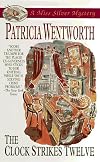
Miss Silver investigates the murder of a great British industrialist Though they share a manor house, the Paradines are not close, and their patriarch does nothing to discourage the petty jealousies that divide wealthy families. A cold figure, James Paradine prefers work to his relations, but on New Year's Eve he convenes the household. Valuable plans have been stolen from his office, and only one person could be to blame. He knows the culprit's name, and gives the thief until midnight to show more come forward. By midnight, James Paradine is dead. Was it the thief who killed him, or could it have been someone else, acting on different motives entirely? The local constables are baffled, and it is left to prim detective Maud Silver to out the murderer. show lessTags
Recommendations
















Member Recommendations

Member Reviews
1 [The Clock Strikes Twelve] by [[Patricia Wentworth]]
Rating: 3.5* of five
Formula One: Hero and heroine kept apart by Forces
Formula Two: Murdered person has pots of money
Formula Three: Women Are Just As Good As Men (until they find The Man when they become soft, pliant cuddlebugs)
Formula Four: Servants know all. Fear them.
Mixed properly, a light froth of story cocktail goodness is now served. (I typoed "swerved" and had a long stare at it before changing it.) This outing is less frothy, fruity Mai Tai than Boilermaker made with Everclear.
Miss Silver appears at the 39% mark, hacking away in her usual chronic-bronchitis bark, to solve the family crime of grumpy old tyrant-with-a-heart-of-gold James Paradine's defenestration. (Close show more enough, go with it.) Family secrets, lies, and half-truths are revealed in all their ugly, warty glory.
The Women, now, the women are utterly uninspired and uninspiring. Controlling Old Maid, Fretful Mother, Domineering Spinster, Breathless Insipid Heroine, and Plucky Babe are joined by a small assortment of Servants, loyal but uneducated and, to a woman, unattractive.
The Men are, this being World War II, Doing Their Bit as wealthy industrialists. But they're still handsome and manly! The exception is the Club Bore, a *distant* cousin with body odor. Okay, Author Wentworth doesn't actually say that, but the implication is clear. Other than him, we have the Heir Apparent with girl trouble, the Oily Seducer without money, the Spiffy Stud whose marriage to Breathless Insipid Heroine is under serious siege, the Solid Brick whose Loaf of Happiness in Life is getting moldy with Fretful Mother's eternal dampening tears.
The Plans. They disappear, are noticed to be gone, reappear, and provide Author Wentworth the chance to garnish the plotroast with some wartime paranoia and xenophobic references to The Germ-ans. As it was mid-war when the book came out, I can understand the urgency to use these tropes since Author Wentworth would not be able to as soon as the war was over and no matter how it ended. I still wish they'd been more, I don't know, heartfelt? Organic to the story?
Because this story isn't a World War II story. It's the story of Phyllida Paradine Wray (B.I.H.), adopted daughter of Grace Paradine (C.O.M.). Grace is the sister of James, the murderee. Grace is the tragically unmarried and rigidly controlling universal confidante. Those two things don't make the third without serious alchemy. That alchemy is missing in this book. She's just a controlling old horror. Everyone says how much they rely on Grace, how her common sense and her insight help them through problems. But we never see this, never experience Grace in helper mode. Nor do we even get a clear sense of the conditions that would lead a person in trouble to summit Mount Bosom to seek the oracle.
My vision of Grace Paradine, a Helen Hokinson cartoon character/caricature referred to as "The Club Lady"
So that central failing of character-building renders the rest of the plot flatter, rougher, and less cocktail than carbonated beverage. Then the B.I.H., Phyllida, whose act of rebellion in marrying the Spiffy Stud is frankly unbelievable given Grace the C.O.M.'s harridanity, has no realitymdash;she exists to be the stakes in a frankly distasteful and overheated game played, apparently, over her head. She's just, well, insipid and not a little masochistic.
It is the Dom/sub nature of the relationships in this book that provide the depth charge. It's flavorless as Everclear, since it's uninflected and nuanceless, but like Everclear it's pervasive and powerfully mind altering. Our carbonated beverage was already a disappointment. We were promised a Mai Tai when we got sold a Miss Silver mystery. But then we got (in effect) a good beer spoiled: A bunch of nasty abusers masquerading as Doms, a story of surpassing sordidness with no one to invest in. That makes the resolution of the story, while clearly arrived at by traveling through the plot, unsatisfying.
But the saving grace, for me, why I got as high as three and a half stars, was the grace notes that make Miss Silver's world: Her aesthetic of bog-oak brooches and beaded kid slippers, the country-house splendor that Author Wentworth clearly sees vanishing before her eyes, the frustrations of wartime rationing that are organic to the milieu presented without fuss but with reason.
Miss Silver's idea of loveliness
This isn't top-drawer Miss Silver but it's still Miss Silver and thus possesses certain charms. By the end of the story I was ready for it to be over, but I wasn't ever bored. That counts for a lot. show less
Rating: 3.5* of five
Formula One: Hero and heroine kept apart by Forces
Formula Two: Murdered person has pots of money
Formula Three: Women Are Just As Good As Men (until they find The Man when they become soft, pliant cuddlebugs)
Formula Four: Servants know all. Fear them.
Mixed properly, a light froth of story cocktail goodness is now served. (I typoed "swerved" and had a long stare at it before changing it.) This outing is less frothy, fruity Mai Tai than Boilermaker made with Everclear.
Miss Silver appears at the 39% mark, hacking away in her usual chronic-bronchitis bark, to solve the family crime of grumpy old tyrant-with-a-heart-of-gold James Paradine's defenestration. (Close show more enough, go with it.) Family secrets, lies, and half-truths are revealed in all their ugly, warty glory.
The Women, now, the women are utterly uninspired and uninspiring. Controlling Old Maid, Fretful Mother, Domineering Spinster, Breathless Insipid Heroine, and Plucky Babe are joined by a small assortment of Servants, loyal but uneducated and, to a woman, unattractive.
The Men are, this being World War II, Doing Their Bit as wealthy industrialists. But they're still handsome and manly! The exception is the Club Bore, a *distant* cousin with body odor. Okay, Author Wentworth doesn't actually say that, but the implication is clear. Other than him, we have the Heir Apparent with girl trouble, the Oily Seducer without money, the Spiffy Stud whose marriage to Breathless Insipid Heroine is under serious siege, the Solid Brick whose Loaf of Happiness in Life is getting moldy with Fretful Mother's eternal dampening tears.
The Plans. They disappear, are noticed to be gone, reappear, and provide Author Wentworth the chance to garnish the plotroast with some wartime paranoia and xenophobic references to The Germ-ans. As it was mid-war when the book came out, I can understand the urgency to use these tropes since Author Wentworth would not be able to as soon as the war was over and no matter how it ended. I still wish they'd been more, I don't know, heartfelt? Organic to the story?
Because this story isn't a World War II story. It's the story of Phyllida Paradine Wray (B.I.H.), adopted daughter of Grace Paradine (C.O.M.). Grace is the sister of James, the murderee. Grace is the tragically unmarried and rigidly controlling universal confidante. Those two things don't make the third without serious alchemy. That alchemy is missing in this book. She's just a controlling old horror. Everyone says how much they rely on Grace, how her common sense and her insight help them through problems. But we never see this, never experience Grace in helper mode. Nor do we even get a clear sense of the conditions that would lead a person in trouble to summit Mount Bosom to seek the oracle.
My vision of Grace Paradine, a Helen Hokinson cartoon character/caricature referred to as "The Club Lady"
So that central failing of character-building renders the rest of the plot flatter, rougher, and less cocktail than carbonated beverage. Then the B.I.H., Phyllida, whose act of rebellion in marrying the Spiffy Stud is frankly unbelievable given Grace the C.O.M.'s harridanity, has no realitymdash;she exists to be the stakes in a frankly distasteful and overheated game played, apparently, over her head. She's just, well, insipid and not a little masochistic.
It is the Dom/sub nature of the relationships in this book that provide the depth charge. It's flavorless as Everclear, since it's uninflected and nuanceless, but like Everclear it's pervasive and powerfully mind altering. Our carbonated beverage was already a disappointment. We were promised a Mai Tai when we got sold a Miss Silver mystery. But then we got (in effect) a good beer spoiled: A bunch of nasty abusers masquerading as Doms, a story of surpassing sordidness with no one to invest in. That makes the resolution of the story, while clearly arrived at by traveling through the plot, unsatisfying.
But the saving grace, for me, why I got as high as three and a half stars, was the grace notes that make Miss Silver's world: Her aesthetic of bog-oak brooches and beaded kid slippers, the country-house splendor that Author Wentworth clearly sees vanishing before her eyes, the frustrations of wartime rationing that are organic to the milieu presented without fuss but with reason.
Miss Silver's idea of loveliness
This isn't top-drawer Miss Silver but it's still Miss Silver and thus possesses certain charms. By the end of the story I was ready for it to be over, but I wasn't ever bored. That counts for a lot. show less
It's New Year's Eve, 1940, and the Paradine family is gathered for dinner and a low-key celebration in light of the ongoing war. Things are thrown off-kilter right away when patriarch James announces that his niece's estranged husband will be joining them. The atmosphere sours further when James makes an announcement at dinner that threatens to expose one of the people present as a thief, unless they visit him in his study before midnight to confess. When James is found dead the next morning, the suspect pool is small indeed, and Miss Silver is brought in by the most likely suspect to clear his name. This seventh entry in the Miss Silver series has a lot of moving parts, plotwise, but it all comes together neatly in the end. And as show more usual for a Wentworth novel, at least one romantic entanglement is resolved along with the murder. show less
The Clock Strikes Twelve starts off with an interesting premise: It's New Year's Eve 1941. A country house family gathering. Secret government blueprints disappear. The assistant (and former something-in-law) who delivered the blueprints is called back to the house, and the man in charge sets an ultimatum to everyone who might have had access to the blueprints.
So far, so good. But also, so similar to two Sherlock Holmes stories, and there is also a particular Poirot story that jumps to mind.
Anyway, plots don't exactly thicken but characters are assembled, backstories are revealed, ... a lot of time is spent on describing details upon details. I'm sure this was all supposed to help flesh out characters etc. but just didn't work for show more me. I lost interest. None of the remaining characters had anything compelling about them. And I really couldn't have cared less about the thwarted relationship angle.
So, for me, this just dragged, and in the end, the solution was just meh.
As for Miss Silver...ugh, I wish someone had given her some cough syrup.
She coughs about 38 times throughout the entire book, and since she only makes an appearance half-way through, the coughing is noticeably condensed.
This one was not for me. show less
So far, so good. But also, so similar to two Sherlock Holmes stories, and there is also a particular Poirot story that jumps to mind.
Anyway, plots don't exactly thicken but characters are assembled, backstories are revealed, ... a lot of time is spent on describing details upon details. I'm sure this was all supposed to help flesh out characters etc. but just didn't work for show more me. I lost interest. None of the remaining characters had anything compelling about them. And I really couldn't have cared less about the thwarted relationship angle.
So, for me, this just dragged, and in the end, the solution was just meh.
As for Miss Silver...ugh, I wish someone had given her some cough syrup.
She coughs about 38 times throughout the entire book, and since she only makes an appearance half-way through, the coughing is noticeably condensed.
This one was not for me. show less
A good old-fashioned mystery set on New Year's Eve in a grand home with all the family present. The plot is in the style of Agatha Christie, with Miss Silver being Miss Marple's doppelgänger even to her knitting. And although I enjoyed this, in my opinion Christie did it better.
Very much of its time, with a lovely scene in a shop and ration coupons, the book doesn't feel dated. The murder seems quite generic, on New Year's Eve James Parradine discovers the loss of some important blueprints that could have a significant impact on the war effort and the thief had to be a member of the family. At dinner that night he announces that he's aware that a member of the family has been disloyal and that he will wait in his study after dinner until midnight for a confession and the next day he's discovered dead. However there are some dark undercurrents as within the book there's an interesting psychological examination of obsessive possessiveness over another.
Patricia Wentworth - The Clock Strikes Twelve-The era is a time during te World War 1. The clock rings in a New Year at midnight just as someone is murdered. There are more than a few unlikeable personalities running around within this book. It kind of makes the reader wish they would all get picked by the police just for being the nerve-racking menaces which they are.
A party takes place on News Year. This reminds me of a Sherlock Holmes mystery of “Who done it”. A house holiday celebration. A budding romance. A murder at midnight. A room full of sour relations who are suspects. Although, the mystery is a typical spin-off of classic murderous fiction, the plot is well written in the Wentworth style. Eventually, the services of Miss show more Silver are called in. She has her hands full with a room full of suspects all of which have a motive for murder. show less
A party takes place on News Year. This reminds me of a Sherlock Holmes mystery of “Who done it”. A house holiday celebration. A budding romance. A murder at midnight. A room full of sour relations who are suspects. Although, the mystery is a typical spin-off of classic murderous fiction, the plot is well written in the Wentworth style. Eventually, the services of Miss show more Silver are called in. She has her hands full with a room full of suspects all of which have a motive for murder. show less
A Classic Murder Mystery in the Agatha Christie mould. This is more realistic with the lives of the characters, not all squeaky clean and perfect. All the characters had motives and it kept me guessing until quite late in the book. You also have some resolutions for the charcters after the denoument of the mystery.
Members
- Recently Added By
Lists

British Mystery
469 works; 14 members

Christmas Reading
142 works; 5 members

Books With Complete Sentence Titles
501 works; 17 members

Books Read in 2023
5,638 works; 147 members

Books Read in 2025
4,128 works; 98 members
Author Information

90+ Works 14,843 Members
Some Editions
Series

Belongs to Publisher Series
Βίπερ (163)
Work Relationships
Common Knowledge
- Canonical title
- The Clock Strikes Twelve
- Original title
- The Clock Strikes Twelve
- Original publication date
- 1944
- People/Characters
- Maud Silver; Frank Abbott (Inspector); Frank Ambrose; Grace Paradine; James Paradine; Elliot Wray (show all 13); Phyllida Wray; Albert Pearson; Mark Paradine; Irene Ambrose; Brenda Ambrose; Lydia Pennington; Dick Paradine
- Important places
- England, UK; Birleton, England, UK
- Important events
- World War II (1939 | 1945); New Year; World War II, British Home Front
- First words
- Mr James Paradine leaned forward and took up the telephone receiver.
- Last words
- (Click to show. Warning: May contain spoilers.)'I wish you every happiness,' she said.
Classifications
Statistics
- Members
- 467
- Popularity
- 65,399
- Reviews
- 13
- Rating
- (3.63)
- Languages
- Dutch, English, French, German
- Media
- Paper, Audiobook, Ebook
- ISBNs
- 24
- UPCs
- 1
- ASINs
- 20