On This Page
Description
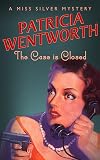
In this classic British mystery, a revised will, a troubled upper-class marriage, and a crazed witness shake up a seemingly solved murder case.Marion Grey is growing used to the idea that her husband will never leave prison. After the horrors of a very public trial she's almost able to find relief in her resignation. But when new evidence suggests her husband may be innocent after all, she hires a professional—Miss Maud Silver—to clear his name.
It begins with a chance encounter on a show more busy train, when a friend of Marion's meets a half-mad woman who claims to know something of the Grey case. With her is a man who disappeared during the trial—and may have information that could set Marion's husband free. But who is he, and where has he gone? To find out, demure governess-turned-detective Miss Silver must track him down before becoming a victim herself.
In a series that's a delightful blend of Downton Abbey and Agatha Christie, retired schoolteacher and sleuth Miss Silver "has her place in detective fiction as surely as Lord Peter Wimsey or Hercule Poirot" (Manchester Evening News).
. show less
Tags
Recommendations
















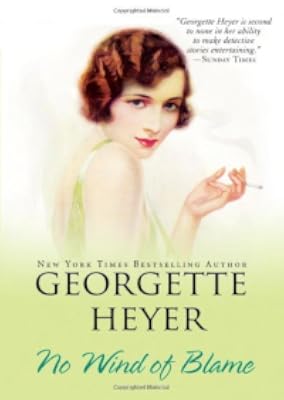


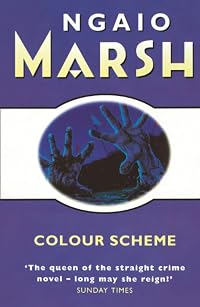

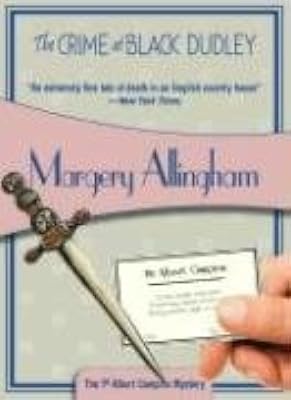
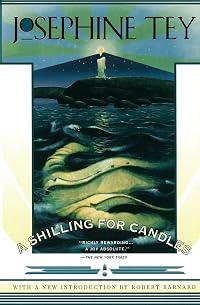


Member Recommendations

Member Reviews
Rating: 3.5* of five
Sexist, silly, and slow.
Trust in me all in all, or trust me not at all, folks, this offers the modern reader mysteries few of the pleasures we presently expect. The pace is killed dead as a rock by the documents the author plops right in the beginning, and later the documentary urge is revived right at the end. It's deadly dull because it goes on too long. It works to get dreary information fed to you, the reader, but wowee toledo does it bog the pace down.
The author relies quite heavily on coincidence as well as Death by Documents. The number of fortuitous encounters between Miss Hilary Carew and Mrs Mercer! Gracious goodness me, the way they practically bounce off each other like billiard balls you'd think England show more was some teeny-tiny little island or something! I live on a quite small barrier island off the south shore of a bigger island and I don't coincidentally run into people I absolutely *must* encounter above once a week. /sarcasm
The sexism is really surprising. Miss Hilary Carew wants her big, dashing Captain Henry Cunningham to Save Her from Them! This despite the fact that she does a damned good job of saving herself, thank you kindly, and Henry shows up only when muscle is genuinely required. Dishrag Mercer lives in terror of her abusive husband, who never lifts a finger against her just utters horrifying threats and brandishes a knife there's no evidence whatsoever that he knows how to use. When unwelcome guests invade her home, Mrs Marion Grey simply doesn't throw them out, she endures and endures and then finally, when Miss Hilary Carew her cousin as well as roommate arrives, she simply retires to her room in a State of Nerves. The lower-class women are dimwits and cry positive rivers of annoying, soppy tears. That sexism is there at all is the surprise, since none of the women really need the men to solve their problems. Miss Maud Hephzibah Silver least of all, of course.
And there's the other latter-day reader's lament. Where the hell does Miss Silver (casually dismissed for being a woman more than once) keep herself? She appears at convenient moments with convenient facts. Outside that, the twenty-first century reader's expectations of becoming intimate with our sleuth is an unmet need. We don't see Miss Silver do diddly in the way of detecting or even walking around, she just seems to use Floo Powder and apparates onto the scene of whatever action she can best bring to a screeching halt as she omnisciently moves the dramatis personae into the proper configuration for the ending to occur.
Since I've kvetched this little opus into the weeds, why did I give it three and a half stars? Because it's a surprisingly astute and subtle indictment of the annoying tropes it deploys. Miss Silver, Miss Carew and company aren't dishrags the way the poor women are. There are several quite formidable housekeepers and chambermaids. The latter is the one who asks the question that is at the heart of the (not terribly challenging) mystery. The author, a redoubtable soul in her own right, seems to me to be draping the fig-leaf of sexist silliness onto her competent women. She was sixty the year this book was published...1937...and seems to me to be sighing somewhat impatiently at the continued necessity to pretend that women are silly little chits without the ability to Think in their scatterbrains.
Happen I agree, Ma Wentworth. show less
Sexist, silly, and slow.
Trust in me all in all, or trust me not at all, folks, this offers the modern reader mysteries few of the pleasures we presently expect. The pace is killed dead as a rock by the documents the author plops right in the beginning, and later the documentary urge is revived right at the end. It's deadly dull because it goes on too long. It works to get dreary information fed to you, the reader, but wowee toledo does it bog the pace down.
The author relies quite heavily on coincidence as well as Death by Documents. The number of fortuitous encounters between Miss Hilary Carew and Mrs Mercer! Gracious goodness me, the way they practically bounce off each other like billiard balls you'd think England show more was some teeny-tiny little island or something! I live on a quite small barrier island off the south shore of a bigger island and I don't coincidentally run into people I absolutely *must* encounter above once a week. /sarcasm
The sexism is really surprising. Miss Hilary Carew wants her big, dashing Captain Henry Cunningham to Save Her from Them! This despite the fact that she does a damned good job of saving herself, thank you kindly, and Henry shows up only when muscle is genuinely required. Dishrag Mercer lives in terror of her abusive husband, who never lifts a finger against her just utters horrifying threats and brandishes a knife there's no evidence whatsoever that he knows how to use. When unwelcome guests invade her home, Mrs Marion Grey simply doesn't throw them out, she endures and endures and then finally, when Miss Hilary Carew her cousin as well as roommate arrives, she simply retires to her room in a State of Nerves. The lower-class women are dimwits and cry positive rivers of annoying, soppy tears. That sexism is there at all is the surprise, since none of the women really need the men to solve their problems. Miss Maud Hephzibah Silver least of all, of course.
And there's the other latter-day reader's lament. Where the hell does Miss Silver (casually dismissed for being a woman more than once) keep herself? She appears at convenient moments with convenient facts. Outside that, the twenty-first century reader's expectations of becoming intimate with our sleuth is an unmet need. We don't see Miss Silver do diddly in the way of detecting or even walking around, she just seems to use Floo Powder and apparates onto the scene of whatever action she can best bring to a screeching halt as she omnisciently moves the dramatis personae into the proper configuration for the ending to occur.
Since I've kvetched this little opus into the weeds, why did I give it three and a half stars? Because it's a surprisingly astute and subtle indictment of the annoying tropes it deploys. Miss Silver, Miss Carew and company aren't dishrags the way the poor women are. There are several quite formidable housekeepers and chambermaids. The latter is the one who asks the question that is at the heart of the (not terribly challenging) mystery. The author, a redoubtable soul in her own right, seems to me to be draping the fig-leaf of sexist silliness onto her competent women. She was sixty the year this book was published...1937...and seems to me to be sighing somewhat impatiently at the continued necessity to pretend that women are silly little chits without the ability to Think in their scatterbrains.
Happen I agree, Ma Wentworth. show less
My first Patricia Wentworth Book.
"The Case Is Closed", written in 1937, is the first Patricia Wentworth book that I've read. I picked it up because it was chosen for an It's Saturday, Forget The Pandemic Buddy Read at BookLikes and was very pleased at how much fun it turned out to be.
For a book written eighty-three years ago, it has a very modern feel. The plot was gnarly enough to be interesting. The task is to prove the innocence of a man already convicted of murder and sentenced to life imprisonment. His guilt seems irrefutable, although he denies the crime. Then, a chance meeting on a train leads a young woman to believe that the man has been framed.
The main character Hilary made the book for me. She's easy to like, hard to deter, show more has the courage (or lack of sense of threat) to take risks and has a lively self-deprecating sense of humour. Her one weakness, it seemed to me, was her taste in men. Her amore, Henry, is an ass. It would be nice to think that his kind has become extinct but I doubt it. What turned me off most was that his starting point was disbelief. It so narcissistic that you want to send him for counselling or just slap him.
It's clear that this is an early novel from Wentworth as some of the exposition creaked and some of the repetition of data suggested that Wentworth assumed her reader's had very poor memories. She also makes a mess of some of the legal aspects of the book, having things happen at an inquest which could only have happened at a trial where they would have been subject to challenge.
I was surprised to find that the book contained some very well-written action scenes in which our heroine is placed in peril, although I've been told that Wentworth often does this to her heroines.
Although this is tagged as a Miss Silver book, Miss Silver seemed to be a deus ex machina who coughs a lot and likes to knit in public who barely makes an appearance. The book is carried by young Hilary's irrepressible spirit.
I'll be back for more Wentworth and more Miss Silver. "Miss Silver Comes To Stay" is already in my TBR pile.
If you'd like a feel for the experience of reading "The Case Is Closed", take a look below at the posts I made as part of the Buddy Read.
Buddy Read Notes
3%. Just grabbed a chapter before breakfast...
...and what a strong, contemporary start - being on the wrong train and then a chance meeting with a strange old woman. It’s very cinematic.
I like the language. The main character is someone who gets angry but can’t stay angry. I know how that feels and I loved this description which makes anger feel like your life’s blood, draining away when anger is replaced by grief:
It was just as if someone had suddenly jabbed a knife into her. It hurt just like that. One moment there she was, quite comfortably angry with Henry, and the next all stabbed and defenceless, with the anger.running away and a horrid cold sinking feeling inside her.
I also liked the first visual impression of the strange old lady:
She had on a black felt hat and a grey coat with a black fur collar—the neat inconspicuous clothes of a respectable woman who has stopped bothering about her appearance but is tidy from habit and training.
I’m at an age now when I know exactly how that feels.
23%. -intriguing but a little clumsy
I've just read through the evidence presented against Geoffrey Grey and it leaves me a little ambivalent about the book.
On the pro side (bearing in mind that this was written in 1937) the details are presented with a minimum of repetition, there is some characterisation from the way the evidence is presented, theories are explored and discounted and one is left with the view that the case against Geoffrey Grey was substantial and that the alibis of the other possible suspects are strong.
On the con side, this is pretty much a complete infodump. It also seems to me unlikely that an inquest, which is held to establish the cause of death and which has no brief in the event of a killing to attempt to decide who carried out the killing, would take the evidence described or reach the conclusions described. Equally, a trial would not have allowed many of the statements to be made or to go unchallenged and would have given the defendant time to prepare and respond. I know this is being done to heighten the drama but my inner pedant is tutting and calling foul.
That said, I now really want to know how this result can be overturned.
34%.- just met Mercer...
...what a finely judged menace he projects. How quickly and deftly Wentworth made me despise him.
I like Hilary. I know I’m supposed to like her but it’s not as easy to achieve as it sounds. I find it refreshing that she’s so young and so unschooled in these things and yet is competent, determined and shows empathy for others.
I declined the audiobook because the narrator in the version I was offered sounded too old. I’m glad not to have her between me and the text, suppressing Hilary’s vitality.
40%. - Is it just me, or is Henry playing Darcy to Hlllary's Elizabeth Bennet?
I've just read the beautifully written chapter where Hilary goes, with a mixture of reluctance and excitement, to talk over the case with Henry. It's a perfect RomCom chapter with that shows the fire and sparkle and strength and vulnerability that sets the best of those scenes apart from their not-quite-getting-it canned-laughter wannabe brethren.
I've seen from the posts here that the consensus is that we don't like Henry, or at least that we'll only like him after Hilary has knocked some of the sharp edges off.
I'd expected him to be a bore. I found him to be a young man who is trying to live up to someone else's view of what being a man means. He seemed quite human to me. A mansplainer, socially inept, emotionally distant on the outside and trying hard not to listen to his own emotions because he suspects they'll make him weaker rather than stronger - but those are all things he can get over with the right training.
As Hilary told me that she would refuse to be trampled by Henry's high horse and raised her chin to tell him that any wife would leave him or be broken by him, a light went on in my mind and I thought, "I recognise this: Henry is Darcy is a lounge suit and Hilary is Elizabeth Bennet with a little of the entitlement rubbed off".
45%. - just spent a chapter inside Henry’s head...
...and I retract the Darcy comment.
The man thinks of Hilary as a dog to be trained. My mother repeatedly gave me a piece of relationship advice that repelled me: "As you train your pup, you’ll have your dog". I think someone gave Henry the same advice and he took it to heart.
I doubt that dogs would like him much.
62%.- well, that excitement was unexpected
I’ve just read the incident on the fog-bound road. I thought that was well done and not at all what I was expecting. This was very tense and really put Hilary at risk.
Hilary is the making of this novel. I love the imp that lives in her head and the rhymes it supplies her with. Here's an example of Hilary's interior monologue when she is lost in the countryside in the fog at night, trying to get away from her pursuers.
"Suppose there wasn’t any house. Suppose this wasn’t a real place at all. Suppose she had got into a nightmare where an endless path went on, and on, and on through an everlasting fog. That was a very stupid thought. If you had one single grain of sense you didn’t let yourself think that sort of thought when you were trying to find your way in a fog. Here Hilary’s imp cocked a snook at her and said rudely: “If you had a grain of sense you wouldn’t have come.” He made a sort of jingle of it, and it went echoing round and round inside her head:
“You’d have stayed at home, you wouldn’t have come.
You wouldn’t have come, you’d have stayed at home.” show less
"The Case Is Closed", written in 1937, is the first Patricia Wentworth book that I've read. I picked it up because it was chosen for an It's Saturday, Forget The Pandemic Buddy Read at BookLikes and was very pleased at how much fun it turned out to be.
For a book written eighty-three years ago, it has a very modern feel. The plot was gnarly enough to be interesting. The task is to prove the innocence of a man already convicted of murder and sentenced to life imprisonment. His guilt seems irrefutable, although he denies the crime. Then, a chance meeting on a train leads a young woman to believe that the man has been framed.
The main character Hilary made the book for me. She's easy to like, hard to deter, show more has the courage (or lack of sense of threat) to take risks and has a lively self-deprecating sense of humour. Her one weakness, it seemed to me, was her taste in men. Her amore, Henry, is an ass. It would be nice to think that his kind has become extinct but I doubt it. What turned me off most was that his starting point was disbelief. It so narcissistic that you want to send him for counselling or just slap him.
It's clear that this is an early novel from Wentworth as some of the exposition creaked and some of the repetition of data suggested that Wentworth assumed her reader's had very poor memories. She also makes a mess of some of the legal aspects of the book, having things happen at an inquest which could only have happened at a trial where they would have been subject to challenge.
I was surprised to find that the book contained some very well-written action scenes in which our heroine is placed in peril, although I've been told that Wentworth often does this to her heroines.
Although this is tagged as a Miss Silver book, Miss Silver seemed to be a deus ex machina who coughs a lot and likes to knit in public who barely makes an appearance. The book is carried by young Hilary's irrepressible spirit.
I'll be back for more Wentworth and more Miss Silver. "Miss Silver Comes To Stay" is already in my TBR pile.
If you'd like a feel for the experience of reading "The Case Is Closed", take a look below at the posts I made as part of the Buddy Read.
Buddy Read Notes
3%. Just grabbed a chapter before breakfast...
...and what a strong, contemporary start - being on the wrong train and then a chance meeting with a strange old woman. It’s very cinematic.
I like the language. The main character is someone who gets angry but can’t stay angry. I know how that feels and I loved this description which makes anger feel like your life’s blood, draining away when anger is replaced by grief:
It was just as if someone had suddenly jabbed a knife into her. It hurt just like that. One moment there she was, quite comfortably angry with Henry, and the next all stabbed and defenceless, with the anger.running away and a horrid cold sinking feeling inside her.
I also liked the first visual impression of the strange old lady:
She had on a black felt hat and a grey coat with a black fur collar—the neat inconspicuous clothes of a respectable woman who has stopped bothering about her appearance but is tidy from habit and training.
I’m at an age now when I know exactly how that feels.
23%. -intriguing but a little clumsy
I've just read through the evidence presented against Geoffrey Grey and it leaves me a little ambivalent about the book.
On the pro side (bearing in mind that this was written in 1937) the details are presented with a minimum of repetition, there is some characterisation from the way the evidence is presented, theories are explored and discounted and one is left with the view that the case against Geoffrey Grey was substantial and that the alibis of the other possible suspects are strong.
On the con side, this is pretty much a complete infodump. It also seems to me unlikely that an inquest, which is held to establish the cause of death and which has no brief in the event of a killing to attempt to decide who carried out the killing, would take the evidence described or reach the conclusions described. Equally, a trial would not have allowed many of the statements to be made or to go unchallenged and would have given the defendant time to prepare and respond. I know this is being done to heighten the drama but my inner pedant is tutting and calling foul.
That said, I now really want to know how this result can be overturned.
34%.- just met Mercer...
...what a finely judged menace he projects. How quickly and deftly Wentworth made me despise him.
I like Hilary. I know I’m supposed to like her but it’s not as easy to achieve as it sounds. I find it refreshing that she’s so young and so unschooled in these things and yet is competent, determined and shows empathy for others.
I declined the audiobook because the narrator in the version I was offered sounded too old. I’m glad not to have her between me and the text, suppressing Hilary’s vitality.
40%. - Is it just me, or is Henry playing Darcy to Hlllary's Elizabeth Bennet?
I've just read the beautifully written chapter where Hilary goes, with a mixture of reluctance and excitement, to talk over the case with Henry. It's a perfect RomCom chapter with that shows the fire and sparkle and strength and vulnerability that sets the best of those scenes apart from their not-quite-getting-it canned-laughter wannabe brethren.
I've seen from the posts here that the consensus is that we don't like Henry, or at least that we'll only like him after Hilary has knocked some of the sharp edges off.
I'd expected him to be a bore. I found him to be a young man who is trying to live up to someone else's view of what being a man means. He seemed quite human to me. A mansplainer, socially inept, emotionally distant on the outside and trying hard not to listen to his own emotions because he suspects they'll make him weaker rather than stronger - but those are all things he can get over with the right training.
As Hilary told me that she would refuse to be trampled by Henry's high horse and raised her chin to tell him that any wife would leave him or be broken by him, a light went on in my mind and I thought, "I recognise this: Henry is Darcy is a lounge suit and Hilary is Elizabeth Bennet with a little of the entitlement rubbed off".
45%. - just spent a chapter inside Henry’s head...
...and I retract the Darcy comment.
The man thinks of Hilary as a dog to be trained. My mother repeatedly gave me a piece of relationship advice that repelled me: "As you train your pup, you’ll have your dog". I think someone gave Henry the same advice and he took it to heart.
I doubt that dogs would like him much.
62%.- well, that excitement was unexpected
I’ve just read the incident on the fog-bound road. I thought that was well done and not at all what I was expecting. This was very tense and really put Hilary at risk.
Hilary is the making of this novel. I love the imp that lives in her head and the rhymes it supplies her with. Here's an example of Hilary's interior monologue when she is lost in the countryside in the fog at night, trying to get away from her pursuers.
"Suppose there wasn’t any house. Suppose this wasn’t a real place at all. Suppose she had got into a nightmare where an endless path went on, and on, and on through an everlasting fog. That was a very stupid thought. If you had one single grain of sense you didn’t let yourself think that sort of thought when you were trying to find your way in a fog. Here Hilary’s imp cocked a snook at her and said rudely: “If you had a grain of sense you wouldn’t have come.” He made a sort of jingle of it, and it went echoing round and round inside her head:
“You’d have stayed at home, you wouldn’t have come.
You wouldn’t have come, you’d have stayed at home.” show less
Months after her cousin's husband is convicted of murdering his uncle, Hilary Carew is drawn into the closed case by a chance encounter on a train with the dead man's housekeeper, whose strange talk and actions make Hilary suspect there might be more to the murder than came out at the trial. Plus, she needs a distraction from having broken her engagement to Henry over a silly quarrel. It isn't long before circumstances compel her to consult with Henry about the case, and he in turn consults our Miss Silver, who helps them both find the truth about the case. Not one but two romantic subplots are tidily arranged along with the murder. Some of the bits of this series are silly and like me they definitely show their age (this one written in show more 1937), but they are appealing nonetheless. Miss Silver has something in common with Miss Marple, but she is much more active despite her incessant knitting. I hope at some point we find out that she's selling all her knitted items on the black market or trading them for some illicit merchandise. show less
This book is simply a fun read. It was my first Miss Silver mystery and while I enjoyed Miss Silver, she wasn't the center of the novel. That role goes to Hilary Carew who is a passionate young woman and highly impulsive, but also brave and resourceful. She was the chief source of interest for me. The plot was melodramatic and unrealistic, but that was part of the fun!
The Case Is Closed - Wentworth
Audio performance by Diana Bishop
3.5 stars
This is the second book in Wentworth’s Miss Silver series. Miss Silver is a retired governess turned private detective. She has been compared to Miss Marple. Wentworth has been compared to Agatha Christie; another writer in the golden age of British mysteries. Her books were popular and the series went on for years and years, but I see Miss Silver and Wentworth as being ‘B list’ in comparison to Miss Marple, Peter and Harriet Whimsy, and Albert Campion.
This was a pleasant, if predictable, mystery with lot’s of 1930’s atmosphere. I enjoyed it and will probably look for more of Miss Silver when I need an undemanding audiobook. I will say that Wentworth show more wrote a more believable romance than Agatha Christie. Believable, but very much of its time. show less
Audio performance by Diana Bishop
3.5 stars
This is the second book in Wentworth’s Miss Silver series. Miss Silver is a retired governess turned private detective. She has been compared to Miss Marple. Wentworth has been compared to Agatha Christie; another writer in the golden age of British mysteries. Her books were popular and the series went on for years and years, but I see Miss Silver and Wentworth as being ‘B list’ in comparison to Miss Marple, Peter and Harriet Whimsy, and Albert Campion.
This was a pleasant, if predictable, mystery with lot’s of 1930’s atmosphere. I enjoyed it and will probably look for more of Miss Silver when I need an undemanding audiobook. I will say that Wentworth show more wrote a more believable romance than Agatha Christie. Believable, but very much of its time. show less
Classic detective fiction told with wit and verve. Thoroughly enjoyed this atmospheric and entertaining classic.
Plot
A seemingly closed case is ripped open by a chance encounter on a train. Hilary, obsessing over her ex fiancé Henry hops on the wrong train and meets a woman whose knowledge of a closed case could lead to clearing the convicted man's name. This man is married to her cousin, and the conviction ruined their lives. Trying to pursue this slight chance leads to danger and excitement and of course, gives Hilary and Henry a second chance
Great read, love it.
Plot
A seemingly closed case is ripped open by a chance encounter on a train. Hilary, obsessing over her ex fiancé Henry hops on the wrong train and meets a woman whose knowledge of a closed case could lead to clearing the convicted man's name. This man is married to her cousin, and the conviction ruined their lives. Trying to pursue this slight chance leads to danger and excitement and of course, gives Hilary and Henry a second chance
Great read, love it.
One of the things I really like about this series is how skilful Patricia Wentworth is in building tension throughout the book. The story starts when, trying to hide from her ex-fiancée, Hilary catches the wrong train and encounters a women who seems to know all about her cousin-in-law's murder trial and conviction. At first Hilary dismisses the woman a being one of those ghoulish women who'd followed the case, but it quickly becomes apparent that she is involved and may have evidence that could prove her cousin-in-law's innocence. Miss Silver makes her appearance quite a way into the book, but quickly uncovers fairly significant evidence.
Members
- Recently Added By
Lists

Crime and Mysteries to Read
746 works; 31 members

British Mystery
469 works; 14 members

Books Read in 2014
2,343 works; 89 members

Books With Complete Sentence Titles
501 works; 17 members

Books Read in 2020
4,379 works; 124 members
Author Information

Some Editions
Series

Belongs to Publisher Series
Colecção Vampiro (676)
Work Relationships
Common Knowledge
- Canonical title
- The Case is Closed
- Original title
- The Case is Closed
- Original publication date
- 1937
- People/Characters
- Maud Silver; Hilary Carew; Marion Grey; Henry Cunningham; Alfred Mercer; Louisa Mercer (show all 9); James Everton; Bertie Everton; Geoffrey Grey
- Important places
- London, England, UK; England, UK
- First words
- Hilary Carew sat in the wrong train and thought bitterly about Henry.
- Last words
- (Click to show. Warning: May contain spoilers.)Henry agreed.
Classifications
Statistics
- Members
- 514
- Popularity
- 58,495
- Reviews
- 15
- Rating
- (3.52)
- Languages
- 7 — Czech, Dutch, English, French, German, Italian, Russian
- Media
- Paper, Audiobook, Ebook
- ISBNs
- 24
- ASINs
- 18