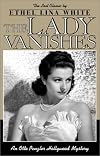
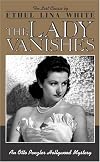
The Lady Vanishes
by Ethel Lina White
On This Page
Description
First published in 1936 and adapted for the screen as The Lady Vanishes by Alfred Hitchcock in 1938, Ethel Lina White's suspenseful mystery remains her best-known novel, worthy of acknowledgement as a classic of the genre in its own right. Then the rhythm of the train changed, and she seemed to be sliding backwards down a long slope. Click-click-click-click. The wheels rattled over the rails, with a sound of castanets. Iris Carr's holiday in the mountains of a remote corner of Europe has show more come to an end, and since her friends left two days before, she faces the journey home alone. Stricken by sunstroke at the station, Iris catches the express train to Trieste by the skin of her teeth and finds a companion in Miss Froy, an affable English governess. But when Iris passes out and reawakens, Miss Froy is nowhere to be found. The other passengers deny any knowledge of her existence and as the train speeds across Europe, Iris spirals deeper and deeper into a strange and dangerous conspiracy. show lessTags
Recommendations



















Member Reviews
The Lady Vanishes by Ethel Lina White was a stellar read. It kept me on the edge of my seat, anxious for the characters both to find out what was going on and also to emerge from this adventure safely. I have seen the 1938 Alfred Hitchcock film many years ago so I had a vague idea of what was going to happen but there were changes that Hitchcock made, including changing the name from “The Wheel Spins” to ‘The Lady Vanishes”.
Socialite Iris Carr is coming home from her holidays in a remote corner of Europe, travelling alone as she got into a quarrel with one of her friends over a man. Unfortunately she suffers from too much sun as she waits for the train to arrive. She barely makes the train but is soon taken under the wing of show more another English woman, who gets her to eat and rest. When Iris wakes up, her friend, Miss Froy has disappeared and none of the other passengers will admit to ever seeing her. In fact many suspect that Iris is suffering from delusion brought on by her sunstoke while others are avoiding the truth in order not to get involved. Iris remains isolated in her mission to find Miss Froy and the claustrophobic setting of an express train, her lack of language skills and overall sense of urgency adds to the pressure. By continuing to make inquiries, Iris has now put herself in danger as well.
It’s been awhile since a book has affected me as strongly as The Lady Vanishes did. The author did a fantastic job of setting the suspense and keeping up the tension. Of course there is a slight dated quality to the story by the inclusion of sinister foreign political elements and the strong message that it is only the English who are sensible, reliable and clever. Nevertheless, this is a classic mystery that continues to beguile it's readers today. show less
Socialite Iris Carr is coming home from her holidays in a remote corner of Europe, travelling alone as she got into a quarrel with one of her friends over a man. Unfortunately she suffers from too much sun as she waits for the train to arrive. She barely makes the train but is soon taken under the wing of show more another English woman, who gets her to eat and rest. When Iris wakes up, her friend, Miss Froy has disappeared and none of the other passengers will admit to ever seeing her. In fact many suspect that Iris is suffering from delusion brought on by her sunstoke while others are avoiding the truth in order not to get involved. Iris remains isolated in her mission to find Miss Froy and the claustrophobic setting of an express train, her lack of language skills and overall sense of urgency adds to the pressure. By continuing to make inquiries, Iris has now put herself in danger as well.
It’s been awhile since a book has affected me as strongly as The Lady Vanishes did. The author did a fantastic job of setting the suspense and keeping up the tension. Of course there is a slight dated quality to the story by the inclusion of sinister foreign political elements and the strong message that it is only the English who are sensible, reliable and clever. Nevertheless, this is a classic mystery that continues to beguile it's readers today. show less
A rip-roaringly good yarn of suspense and tension on a train journey.
The movie adaptation diverges from the book in a number of ways. Some I think are improvements, some maybe not. I actually prefer the book's motive for the villains. But I prefer the characters in the movie. In the movie, some people are combined and some are replaced, and it just results in a tighter storyline and also some welcome comedic relief.
The tension in this book is really well done, especially because Miss Carr is truly, truly, truly on her own in this dilemma, to a degree beyond what the movie depicts. The book also gives her more of a back story to explain how it is that she's gotten so cut off from the support of other people.
Ultimately I thought it was a show more top-notch story from the Golden Age of Detective Fiction, and it completely holds its own against the more well-known authors from the 20's and 30's. show less
The movie adaptation diverges from the book in a number of ways. Some I think are improvements, some maybe not. I actually prefer the book's motive for the villains. But I prefer the characters in the movie. In the movie, some people are combined and some are replaced, and it just results in a tighter storyline and also some welcome comedic relief.
The tension in this book is really well done, especially because Miss Carr is truly, truly, truly on her own in this dilemma, to a degree beyond what the movie depicts. The book also gives her more of a back story to explain how it is that she's gotten so cut off from the support of other people.
Ultimately I thought it was a show more top-notch story from the Golden Age of Detective Fiction, and it completely holds its own against the more well-known authors from the 20's and 30's. show less
''So you saw Miss Froy no more...She is nothing but a delirium - a dream.''
A young British socialite, frustrated, disillusioned and fed up with the pretentiousness of her noisy friends and the life she has been leading, decides to end her holidays in an unnamed (and probably fictional) country somewhere in Central Europe and return to England. Surrounded by fellow travellers who are hollower than the hollowest kind of void, she finds herself in the company of the dull, yet sympathetic, Miss Froy. When Miss Froy simply vanishes into thin air, Iris does everything in her power to find her while her efforts are hindered and blocked by suspicious strangers and men who simply dismiss her as a ''hysterical woman''. Little do they know...
Ethel show more Lina White created one of the most famous mystery books (and it is a pity that it became so well-known thanks to a lousy adaptation by the greatest fraud in the History of Cinema., Alfred ''I will bore you to Death with my nonsense'' Hitchcock). Iris is a character who tells it like it is and I loved her immensely. Her determination to proceed and stay true to herself while every male character tries to coax her into submission and docility is outstanding. The claustrophobic setting of the train that never stops mirrors Iris's non-stop mind and strength. Even Hare, who is dashing and enticing, is a male figure whose motives remained unclear - at least to me- even at the end of the novel. The dialogue is surprisingly lively and modern (a characteristic of the works of women writers during the 30s) and the constant comings and goings make you feel as if you are a passenger on a train that will keep travelling until Judgement Day.
No need for more. This is one of the finest examples of the genre, a quintessentially British mystery.
*Do yourselves a favour. Ditch the Hitchcock atrocity and watch the 2013 adaptation by BBC One. Thank me later.*
Many thanks to Pushkin Vertigo and NetGalley for the ARC in exchange for an honest review.
My reviews can also be found on https://theopinionatedreaderblog.wordpress.com/ show less
A young British socialite, frustrated, disillusioned and fed up with the pretentiousness of her noisy friends and the life she has been leading, decides to end her holidays in an unnamed (and probably fictional) country somewhere in Central Europe and return to England. Surrounded by fellow travellers who are hollower than the hollowest kind of void, she finds herself in the company of the dull, yet sympathetic, Miss Froy. When Miss Froy simply vanishes into thin air, Iris does everything in her power to find her while her efforts are hindered and blocked by suspicious strangers and men who simply dismiss her as a ''hysterical woman''. Little do they know...
Ethel show more Lina White created one of the most famous mystery books (and it is a pity that it became so well-known thanks to a lousy adaptation by the greatest fraud in the History of Cinema., Alfred ''I will bore you to Death with my nonsense'' Hitchcock). Iris is a character who tells it like it is and I loved her immensely. Her determination to proceed and stay true to herself while every male character tries to coax her into submission and docility is outstanding. The claustrophobic setting of the train that never stops mirrors Iris's non-stop mind and strength. Even Hare, who is dashing and enticing, is a male figure whose motives remained unclear - at least to me- even at the end of the novel. The dialogue is surprisingly lively and modern (a characteristic of the works of women writers during the 30s) and the constant comings and goings make you feel as if you are a passenger on a train that will keep travelling until Judgement Day.
No need for more. This is one of the finest examples of the genre, a quintessentially British mystery.
*Do yourselves a favour. Ditch the Hitchcock atrocity and watch the 2013 adaptation by BBC One. Thank me later.*
Many thanks to Pushkin Vertigo and NetGalley for the ARC in exchange for an honest review.
My reviews can also be found on https://theopinionatedreaderblog.wordpress.com/ show less
Iris Carr is a privileged young Englishwoman enjoying a holiday somewhere in Europe with a large group of friends. But when her crowd is ready to leave, Iris decides to stay an extra day and enjoy the beauties of the mountains by herself. When she boards the train to go home, she is immediately isolated from the other passengers because she doesn't speak the native language. So when a talkative English spinster named Miss Froy introduces herself, Iris is glad to have the company, even though Miss Froy is rather a bore. After a long chat, Iris takes a nap in her compartment; but when she wakes up, Miss Froy is gone! Eventually she begins to worry, so she finds a young Englisman to act as interpreter and ask the other passengers where show more Miss Froy went. To Iris' shock, they all claim not to remember Miss Froy and say Iris must be imagining things. Iris knows she didn't imagine Miss Froy, but without any evidence to the contrary, how can she be sure? And if the lady does exist, why won't anyone admit to seeing her?
Recently I watched Alfred Hitchcock's "The Lady Vanishes" and really enjoyed it, but I had no idea it was based on a book! I'm glad I discovered the novel, though, because with all due deference to Hitchcock, the book is better. While the movie is a somewhat straightforward thriller, the book has more psychological tension because it keeps you in the dark about Iris' mental state for much longer. Are the other passengers involved in some sort of unlikely but sinister conspiracy, meaning that she and Miss Froy are both in danger? Or, perhaps even worse, is Iris having a mental breakdown and imagining the whole thing? Either way, she's trapped in a nightmarish situation, and the book does an excellent job of heightening this tension. I also think the book's ending is better than the movie's; while the film ends with a dramatic shootout, the novel has a much more subtle conclusion. So I would definitely recommend this novel to anyone who likes psychological thrillers, especially if you've seen or plan to see the movie! show less
Recently I watched Alfred Hitchcock's "The Lady Vanishes" and really enjoyed it, but I had no idea it was based on a book! I'm glad I discovered the novel, though, because with all due deference to Hitchcock, the book is better. While the movie is a somewhat straightforward thriller, the book has more psychological tension because it keeps you in the dark about Iris' mental state for much longer. Are the other passengers involved in some sort of unlikely but sinister conspiracy, meaning that she and Miss Froy are both in danger? Or, perhaps even worse, is Iris having a mental breakdown and imagining the whole thing? Either way, she's trapped in a nightmarish situation, and the book does an excellent job of heightening this tension. I also think the book's ending is better than the movie's; while the film ends with a dramatic shootout, the novel has a much more subtle conclusion. So I would definitely recommend this novel to anyone who likes psychological thrillers, especially if you've seen or plan to see the movie! show less
I picked this one up a few years ago in a Kindle sale as it had been recommended by Heather. Recently Judy read and reviewed it, which reminded me that I had it in the stacks. Written in 1936, it was made into an Alfred Hitchcock movie in 1938. I adore Alfred Hitchcock movies, and his version of this is good, but I think the book is better.
This moves slowly and the set up made me slightly crazy because there is a lot of nothing happening at first. But then it pays off because you can understand why no one is particularly bothered to take the main character's side. Iris Carr is vacationing in an unnamed European city - she is with a group of friends at the beginning, and they are rude and self-indulgent, making it difficult for the other show more guests at the hotel where they are staying to enjoy themselves. When her friends depart, Iris remains behind for another day to get some time to herself - she is not obnoxious on her own, but she is also not very nice. The next day while she is waiting for her train, something happens and she passes out - is it heat stoke, was she hit from behind? She comes around just in time to catch her train - things are very confusing for her because she does not speak the language. Once on the train, she meets up with another English lady and is relieved to have someone to talk with, even though she finds her slightly boring. Iris falls asleep, and when she wakes up, the lady is missing. Where has she gone and why will no one admit that she was there?
This is a slowly unfolding mystery, and the author does a good job of creating tension and making you wonder if the main character is a reliable witness. I thought it could have been shorter and the pacing could have been better, but it was well done. show less
This moves slowly and the set up made me slightly crazy because there is a lot of nothing happening at first. But then it pays off because you can understand why no one is particularly bothered to take the main character's side. Iris Carr is vacationing in an unnamed European city - she is with a group of friends at the beginning, and they are rude and self-indulgent, making it difficult for the other show more guests at the hotel where they are staying to enjoy themselves. When her friends depart, Iris remains behind for another day to get some time to herself - she is not obnoxious on her own, but she is also not very nice. The next day while she is waiting for her train, something happens and she passes out - is it heat stoke, was she hit from behind? She comes around just in time to catch her train - things are very confusing for her because she does not speak the language. Once on the train, she meets up with another English lady and is relieved to have someone to talk with, even though she finds her slightly boring. Iris falls asleep, and when she wakes up, the lady is missing. Where has she gone and why will no one admit that she was there?
This is a slowly unfolding mystery, and the author does a good job of creating tension and making you wonder if the main character is a reliable witness. I thought it could have been shorter and the pacing could have been better, but it was well done. show less
Iris Carr is a young spoiled rich orphan who runs with a fast self-interested set and she resents anyone who is not part of her crowd. She finds older people particularly boring and trying. Sychophants, so-called friends, have always taken care of her and run interference for her, so that she does not have to adapt to different circumstances or people. She only has to think of herself. That's the impression you come away with upon intially meeting Iris in the book. She is staying at a hotel deep in the mountains of some eastern European country that is almost feudal in its politics. The atmosphere engendered by the author even from the start is troubling, dark and threatening. Iris' crowd has left the hotel and she stays behind, then show more finds it too lonely so decides to take the train and travel back to England, to a place that is familiar and not so strange where no one speaks English. Before boarding the train Iris is hurt or suffers sunstroke, and suffers illness throughout the train ride. This is an important element in the tale that ensues. She meets a Winifred Froy, who is a middle-aged non-descript woman, with a surprisingly young outlook and manner. She tries to help Iris who is feeling sick. Iris falls asleep and upon waking finds Miss Froy is gone. No one admits to seeing Miss Froy and blame Iris' sunstroke for her confusion. Iris desperately tries to find Miss Froy, but people are put off by her manner, which at times is insulting, outlandish or crazy. At times the reader is put off by Iris and at other times in sympathy with her. Tension is maintained throughout the story and the reader is kept on the edge of his/her seat. The characters are developed almost as cariacatures - the maiden English ladies with their prejudices and timetables, the beautiful couple together for an illicit tryst with ill-concealed disdain for anyone else, the good and godly pastor and his protective good-hearted wife, the doubting curly-haired flippant young engineer (love interest), the shy, thin-skinned scholarly professor, the dark and dread doctor, and, ultimately, the all powerful baroness. Altogether I found it a wonderfully written book that I read in one seating, I couldn't bear to put it down. show less
Rating: 3* of five
The Publisher Says: The ingenious classic thriller behind Hitchcock's famous film, set on a steam train travelling across 1930s Europe and boasting “intrigue, mystery, and spine-chilling horror” (Saturday Review)
First published as The Wheel Spins in 1936 and adapted for the screen by Alfred Hitchcock in 1938, Ethel Lina White’s The Lady Vanishes established the author as one of the greatest crime writers of the Golden Age.
After a summer holiday in a remote corner of Europe, the glamorous socialite Iris Carr is looking forward to returning to the comforts of home. But having stayed on at the resort after her friends’ departure, Iris now faces the journey home alone. On the train to Trieste, she is pleased to show more meet a kindly governness, Miss Froy, and strikes up a conversation. Iris warms to her companion, and is alarmed when she wakes from a sleep to find that Miss Froy has suddenly disappeared from the train without a trace. Worse still, she is horrified to discover that none of the other passengers on the train will admit to having ever seen such a woman.
Doubting her sanity and fearing for her life, Iris is determined to find Miss Froy before the train journey is over. Only one of her fellow passengers seems to believe her story. With his help, Iris begins to search the train for clues to the mystery of the vanished lady at the center of this ingenious classic thriller.
I RECEIVED A DRC FROM THE PUBLISHER VIA NETGALLEY. THANK YOU.
My Review: I am old enough to have seen this film on Saturday-afternoon TV in my kidhood. I liked it fine. I still like it fine.
It shows its age, though, as much as I show mine. Creaky turns of phrase, deeply offensive-to-21st-century norms stereotypes and assumptions, and the fidelity of Hitchcock's adaptation all conspired against my finishing the read. Still worth your time and cash if you've never read a Golden-Age writer of top caliber, haven't seen the film multiple times, or are deeply curious about how good work turns sour with time through no fault of its own.
Pushkin Vertigo thinks $9.99 is the right price. Not quite so sure, me. show less
The Publisher Says: The ingenious classic thriller behind Hitchcock's famous film, set on a steam train travelling across 1930s Europe and boasting “intrigue, mystery, and spine-chilling horror” (Saturday Review)
First published as The Wheel Spins in 1936 and adapted for the screen by Alfred Hitchcock in 1938, Ethel Lina White’s The Lady Vanishes established the author as one of the greatest crime writers of the Golden Age.
After a summer holiday in a remote corner of Europe, the glamorous socialite Iris Carr is looking forward to returning to the comforts of home. But having stayed on at the resort after her friends’ departure, Iris now faces the journey home alone. On the train to Trieste, she is pleased to show more meet a kindly governness, Miss Froy, and strikes up a conversation. Iris warms to her companion, and is alarmed when she wakes from a sleep to find that Miss Froy has suddenly disappeared from the train without a trace. Worse still, she is horrified to discover that none of the other passengers on the train will admit to having ever seen such a woman.
Doubting her sanity and fearing for her life, Iris is determined to find Miss Froy before the train journey is over. Only one of her fellow passengers seems to believe her story. With his help, Iris begins to search the train for clues to the mystery of the vanished lady at the center of this ingenious classic thriller.
I RECEIVED A DRC FROM THE PUBLISHER VIA NETGALLEY. THANK YOU.
My Review: I am old enough to have seen this film on Saturday-afternoon TV in my kidhood. I liked it fine. I still like it fine.
It shows its age, though, as much as I show mine. Creaky turns of phrase, deeply offensive-to-21st-century norms stereotypes and assumptions, and the fidelity of Hitchcock's adaptation all conspired against my finishing the read. Still worth your time and cash if you've never read a Golden-Age writer of top caliber, haven't seen the film multiple times, or are deeply curious about how good work turns sour with time through no fault of its own.
Pushkin Vertigo thinks $9.99 is the right price. Not quite so sure, me. show less
Members
- Recently Added By
Lists

Read the book and saw the movie
1,170 works; 193 members

H.R.F. Keating's 100 Best Crime & Mystery Books
100 works; 8 members

Books mentioned in Julian Symons’ Bloody Murder
438 works; 6 members

A Novel Cure
742 works; 23 members

Ten Train Thrillers
10 works; 1 member

Art Bourgeau's Favorites [Mystery Lovers Companion, 1986]
124 works; 2 members

Books Read in 2025
4,128 works; 98 members
Author Information

35+ Works 1,130 Members
Some Editions
Awards and Honors
Notable Lists
Series
Belongs to Publisher Series
Pan 70th Anniversary (Book 4)
Work Relationships
Is contained in
Common Knowledge
- Canonical title*
- La dama desaparece
- Original title
- The Wheel Spins
- Alternate titles
- The Lady Vanishes
- Original publication date
- 1936
- People/Characters
- Winifred Froy (governess); Max Hare (an engineer); Iris Carr; Edna Barnes (vicar's wife); Kenneth Barnes (vicar); Frau Kummer (show all 8); Laura Parminter / Mrs "Todhunter"; Peveril Brown, Sir Peveril / Mr. "Todhunter"
- Important places
- Balkans (in an imaginary country)
- Related movies
- The Lady Vanishes (1938 | IMDb); The Lady Vanishes (2013 | IMDb); The Lady Vanishes (1979 | IMDb)
- First words
- The day before the disaster, Iris Carr had her first premonition of danger.
- Quotations
- Their formal bow, when Iris squeezed by them, was conditional recognition before the final fade-out.
"We'll speak to you during the journey," it seemed to say, "but at Victoria we become strangers." - Last words
- (Click to show. Warning: May contain spoilers.)It was the herald who had rushed on ahead, to tell her that the young mistress had come home.
- Original language
- English
*Some information comes from Common Knowledge in other languages. Click "Edit" for more information.
Classifications
Statistics
- Members
- 506
- Popularity
- 59,487
- Reviews
- 24
- Rating
- (3.69)
- Languages
- 8 — Czech, Dutch, English, German, Italian, Polish, Portuguese, Spanish
- Media
- Paper, Audiobook, Ebook
- ISBNs
- 53
- ASINs
- 28