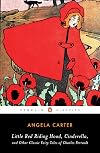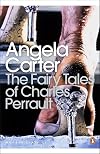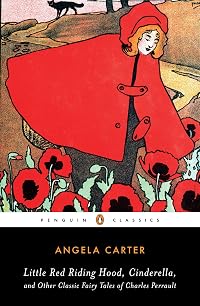
The Fairy Tales of Charles Perrault
by Charles Perrault, Angela Carter (Translator)
On This Page
Description
Charles Perrault was born more than 300 years ago, in 1628. He wrote many books, but he will be remembered forever for just one: Stories or Tales from Times Past, with Morals: Tales of Mother Goose. The book contained only eight fairy tales, and they have become classics around the world. You have probably heard some of these stories in your own life!- Sleeping Beauty
- Little Red Riding Hood
- Blue Beard
- Puss In Boots
- The Fairies
- Cinderella
- Ricky With The Tuft
- Little Tom Thumb
show more Many of these stories were already well-known to people even in Charles Perrault's time, but they had never been written down. They were stories told orally (which means spoken out loud), around the fire or at bedtime, to entertain and teach children. Some stories that Perrault wrote down were popular all over Europe, and some were also written down later in Germany as Grimm Fairy Tales.
Cinderilla; or, The Little Glass Slipper:
"ONCE there was a gentleman who married, for his se-cond wife, the proudest and most haughty woman that was ever seen. She had, by a former husband, two daughters of her own humour and they were indeed exactly like her in all things. He had likewise, by another wife, a young daughter, but of unparalleled goodness and sweetness of temper, which she took from her mother, who was the best creature in the world.."
. show less
Tags
Recommendations
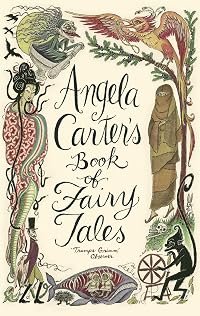
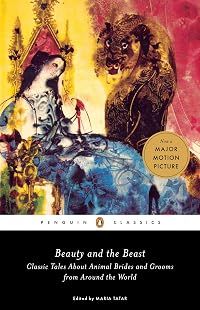
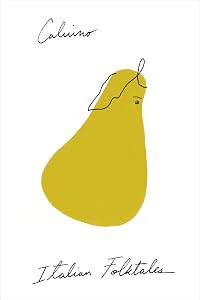
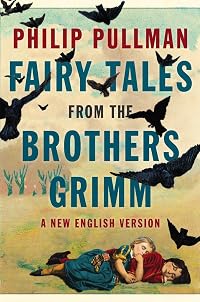
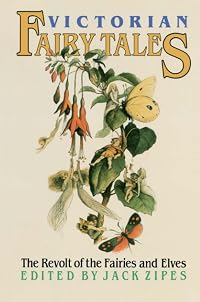

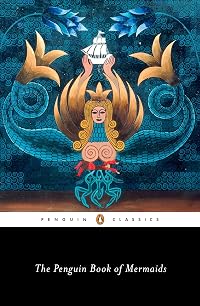

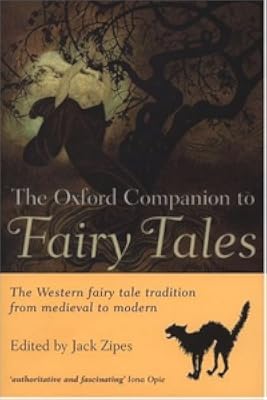
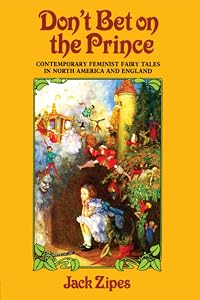
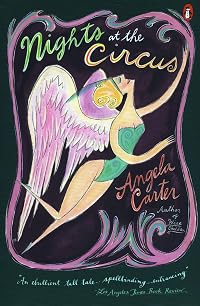





Member Recommendations
Member Reviews
This slim volume caught my eye because the author listed on the cover is Angela Carter. I didn't read the synopsis on the back really...other than that she adapted Perrault's fairy tales. Being relatively familiar with Carter's other work, I was hoping for more scintillating and perverse adaptations, but these seemed pretty much run-of-the-mill to me. In that respect, this was just OK. However, there were a few of the fairy tales with which I was not familiar, so that was nice to add to the ol' backlog. I hadn't given much thought to how long it has been since I've read any fairy tales until I read this book, and I found the sometimes-inconsistent themes and sometimes-meandering plots pretty fascinating over and above the show more sometimes-goofy morals included at the end of each story. I know that folklore was often intended to serve as some sort of mandate on behavior and moral code for children (once upon a time), but I wonder anymore if these "oldies" are just too quaint to scare a child into obeying his or her parents or to never talk to strangers. I certainly can't recall learning any real life lessons from reading fairy tales as a child--I loved them, but they were pretty much just wild entertainment for me. Of course, the wisdom intended in some of the stories is obvious, but after reading this, I am kind of tempted to read up on the psychology and sociology that might not appear so glaringly.... (*sigh* all I need is another self-imposed homework assignment) show less
I borrowed this from the library a little while ago, and I liked it.
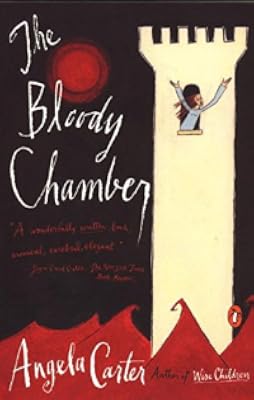
These are some old, old Fairy Tales redone by Angela Carter. I think I was spoilt because I read The Bloody Chamber before I read this, so my expectations were pretty high. Although that being said, these fairy tales are some classic, solid fairy tales and there's nothing wrong with them at all.
I do think that Carter's interpretation of them is probably my favourite, the language is pretty accessible and she manages to weave in some of her own tone and style. I do like a good fairy tale every now and again, and I did find these readable, but some of the stories stuck with me more than others.
The writing is subtle, solid and enjoyable but I know these fairy tales almost show more too well, dare I say? Anyway, regardless, Angela Carter remains to be one of the authors I really, really like and I look forward to reading more of her work soon. c: show less
These are some old, old Fairy Tales redone by Angela Carter. I think I was spoilt because I read The Bloody Chamber before I read this, so my expectations were pretty high. Although that being said, these fairy tales are some classic, solid fairy tales and there's nothing wrong with them at all.
I do think that Carter's interpretation of them is probably my favourite, the language is pretty accessible and she manages to weave in some of her own tone and style. I do like a good fairy tale every now and again, and I did find these readable, but some of the stories stuck with me more than others.
The writing is subtle, solid and enjoyable but I know these fairy tales almost show more too well, dare I say? Anyway, regardless, Angela Carter remains to be one of the authors I really, really like and I look forward to reading more of her work soon. c: show less
Fairy tales originate in the oral tradition of short stories which were told and handed down from generation to generation. They have apparently existed in all cultures. While some fairy tales were included or incorporated into literary form in earlier centuries, fairy tales in Western culture were not established into a literary genre until the late Seventeenth century. By writing them down, the fairy tales became fixed.
Many of the most well-known fairy tales, such as "Little Red Riding Hood", "Bluebeard", "Puss in Boots", "The Sleeping Beauty" and "Cinderella" were thus first recorded in written form by the French author Charles Perrault (1628 - 1703).
As the fairy tales circulated in spoken form, they may have varied in content and show more form. Histoires ou contes du temps passé ou Les Contes de ma Mère l'Oye (Stories or Fairy Tales from Past Times with Morals or Mother Goose Tales (1697) are described as "works derived from pre-existing folk tales." Recent scholarship has shown that Perrault's fairy tales were not true recordings of folklore, but rather a type of aristocratic fairy tales mixing folklore elements with Perrault's imagination and including elements from French fashion and aristocratic life and style.
More than one hundred years later, between 1812 and 1857 the Brothers Grimm, Jacob Grimm and Wilhelm Grimm, rewrote Perrault's fairy tales, suggesting that they had roots in the ancient oral folk tradition.
The fairy tales written by Perrault have been translated into hundreds of editions into more than a hundred languages. They are now almost considered indistinguishable from their sources, or in fact, the source of the tales themselves.
Angela Carter was not the first or only writer to translate Perrault's fairy tales, but her translation is notable, especially in view of the development of her own later work, particularly The Bloody Chamber.
The fairy tales of Charles Perrault is a translation of Perrault's Mother Goose Tales of 1697, including all tales from that original edition. Angela Carter's translations are short but spiced with a modern touch that is unusual to readers familiar with the style of the Brothers Grimm. This makes each of the stories a light read. For each story a moral and an alternative moral are proposed at the end of the story.
In the Modern Classics Penguin edition, Angela Carter's translation is preceded by an intertesting 32-pages long introduction and afterword by Jack Zipes, editor of the The Oxford Companion to Fairy Tales. This edition seems especially interesting to readers interested in the development of narrative technique in the work of Angela Carter. show less
Many of the most well-known fairy tales, such as "Little Red Riding Hood", "Bluebeard", "Puss in Boots", "The Sleeping Beauty" and "Cinderella" were thus first recorded in written form by the French author Charles Perrault (1628 - 1703).
As the fairy tales circulated in spoken form, they may have varied in content and show more form. Histoires ou contes du temps passé ou Les Contes de ma Mère l'Oye (Stories or Fairy Tales from Past Times with Morals or Mother Goose Tales (1697) are described as "works derived from pre-existing folk tales." Recent scholarship has shown that Perrault's fairy tales were not true recordings of folklore, but rather a type of aristocratic fairy tales mixing folklore elements with Perrault's imagination and including elements from French fashion and aristocratic life and style.
More than one hundred years later, between 1812 and 1857 the Brothers Grimm, Jacob Grimm and Wilhelm Grimm, rewrote Perrault's fairy tales, suggesting that they had roots in the ancient oral folk tradition.
The fairy tales written by Perrault have been translated into hundreds of editions into more than a hundred languages. They are now almost considered indistinguishable from their sources, or in fact, the source of the tales themselves.
Angela Carter was not the first or only writer to translate Perrault's fairy tales, but her translation is notable, especially in view of the development of her own later work, particularly The Bloody Chamber.
The fairy tales of Charles Perrault is a translation of Perrault's Mother Goose Tales of 1697, including all tales from that original edition. Angela Carter's translations are short but spiced with a modern touch that is unusual to readers familiar with the style of the Brothers Grimm. This makes each of the stories a light read. For each story a moral and an alternative moral are proposed at the end of the story.
In the Modern Classics Penguin edition, Angela Carter's translation is preceded by an intertesting 32-pages long introduction and afterword by Jack Zipes, editor of the The Oxford Companion to Fairy Tales. This edition seems especially interesting to readers interested in the development of narrative technique in the work of Angela Carter. show less
Ratings
Members
- Recently Added By
Lists

Favorite Childhood Books
1,646 works; 514 members

Shaking a Leg
111 works; 3 members
Author Information

990+ Works 9,245 Members
Charles Perrault was born in Paris on January 12, 1628. He was the son of an upper-class burgeois family and attended the best schools, becoming a lawyer in 1651. After being a lawyer for some time, he was appointed chief clerk in the king's building, superintendent's office in 1664. While there, he induced Colbert to establish a fund called Liste show more des Bienfaits du Roi, to give pensions to writers and savants not only in France but in Europe. He took part in the creation of the Academy of Sciences as well as the restoration of the Academy of Painting. When the Academy of Inscriptions and Belles-Lettres was founded by Colbert in 1663, Perrault was made secretary for life. Having written but a few popular poems, he was elected to the French Academy in 1671, and on the day of his inauguration he invited the public to be admitted to the meeting, a privilege that has ever since been continued. Perrault laid the foundations for a new literary genre, the fairy tale, with his works derived from pre-existing folk tales. The best known of his tales include Le Petit Chaperon rouge (Little Red Riding Hood), Cendrillon (Cinderella), Le Chat Botté (Puss in Boots), La Belle au bois dormant (The Sleeping Beauty) and La Barbe bleue (Bluebeard). His stories continue to be printed and have been adapted to opera, ballet (for example, Tchaikovsky's Sleeping Beauty), theatre, and film. He also wrote Parallèles des Anciens et des Modernes (the Parallels between the Ancients and the Moderns), from 1688 to 1697, which compared the authors of antiquity unfavorably to more modern writers, and caused a debate that lasted for years. Charles Perrault died on May 16, 1703. (Bowker Author Biography) show less

A powerful and disturbing writer, Angela Carter created haunting fiction about travelers surviving their passage through a disintegrating universe. Often based on myth or fairy tale-borrowed or invented for the occasion-her work evokes the most powerful aspects of sexuality and selfhood, of life and death, of apocalypse. Carter's most successful show more novels include The Magic Toyshop (1967), which received the John Llewellyn Rhys Prize and Several Perceptions (1968), winner of the Somerset Maugham Award. The Passion of New Eve (1977), a story of the end of the world and its possible new beginning with failed mankind replaced by a self-generating womankind. She translated many fairy tales and wrote several collections of short stories, including The Bloody Chamber (1979) which won the Cheltenham Festival of Literature Award and was the basis for the powerful movie A Company of Wolves. She worked as a journalist and as a professor at Brown and the University of Texas. She published two nonfiction books of interest: Nothing Sacred, selected writings, and The Sadeian Woman (1979). (Bowker Author Biography) show less
Some Editions
Awards and Honors
Notable Lists
Common Knowledge
- Canonical title
- The Fairy Tales of Charles Perrault
- Original title
- The Fairy Tales of Charles Perrault
- Alternate titles
- Little Red Riding Hood, Cinderella, and Other Classic Fairy Tales of Charles Perrault
- Original publication date
- 1977
- Disambiguation notice
- This is the Penguin Modern Classics edition of Perrault's fairy tales as imagined by Angela Carter. The book carries Carter's name as author, which reflects her role in the creation of the text.
Please do not combine oth... (show all)er versions with this work.
Classifications
Statistics
- Members
- 188
- Popularity
- 173,105
- Reviews
- 3
- Rating
- (3.62)
- Languages
- English
- Media
- Paper, Audiobook, Ebook
- ISBNs
- 7
- ASINs
- 2