On This Page
Description
Babar and Celeste have many adventures as they travel around the world.Tags
Recommendations





























Member Recommendations
themulhern The book about ballooning explains the balloon adventure in the children's story.
Member Reviews
Royal pachyderm newlyweds Babar and Celeste set out on their honeymoon voyage in this sequel to Jean de Brunhoff's The Story of Babar, finding that their balloon ride ends in disaster when a storm sends them crash-landing on an island inhabited by "fierce and savage cannibals." Escaping with the help of an obliging whale, the couple endure many more hardships, from being stranded together on a reef to being forced to perform in a circus, before being reunited with the Old Lady who aided Babar in his first adventure, and being returned to their own land. Here, however, they discover that their travails are far from over, as a war with the rhinoceros nation has developed in their absence...
As mentioned in my review of the first volume, show more the Babar books have garnered quite a bit of critical attention over the last few decades, with accusations of colonialist apologia/celebration coming from some (see the collection of essays, Should We Burn Babar?: Essays on Children's Literature and the Power of Stories), and counter-claims of self-conscious colonialist parody coming from others (see the essay, Freeing the Elephants: What Babar Brought, published in The New Yorker magazine). It wasn't clear to me, reading The Story of Babar, which interpretation was the correct one, and I'm afraid it still isn't. Unfortunately, even without the issue of the colonialist narrative (whatever one makes of it), I found The Travels of Babar painfully offensive. The overtly racist visual depiction of the "savage cannibals" that Babar and Celeste encounter on the tropical island where they land - black skin, exaggerated red lips - was painful to see, and while I accept that it was a product of its time, I cannot see it as anything but a relic of a very ugly past. I think that it cannot be an accident that Gopnick, who penned the defense above, chose to base his argument primarily on the first and third Babar titles (The Story of Babar and Babar the King), and neglected to mention this one. It certainly does not lend itself to the notion that there is no harm in de Brunhoff's work... show less
As mentioned in my review of the first volume, show more the Babar books have garnered quite a bit of critical attention over the last few decades, with accusations of colonialist apologia/celebration coming from some (see the collection of essays, Should We Burn Babar?: Essays on Children's Literature and the Power of Stories), and counter-claims of self-conscious colonialist parody coming from others (see the essay, Freeing the Elephants: What Babar Brought, published in The New Yorker magazine). It wasn't clear to me, reading The Story of Babar, which interpretation was the correct one, and I'm afraid it still isn't. Unfortunately, even without the issue of the colonialist narrative (whatever one makes of it), I found The Travels of Babar painfully offensive. The overtly racist visual depiction of the "savage cannibals" that Babar and Celeste encounter on the tropical island where they land - black skin, exaggerated red lips - was painful to see, and while I accept that it was a product of its time, I cannot see it as anything but a relic of a very ugly past. I think that it cannot be an accident that Gopnick, who penned the defense above, chose to base his argument primarily on the first and third Babar titles (The Story of Babar and Babar the King), and neglected to mention this one. It certainly does not lend itself to the notion that there is no harm in de Brunhoff's work... show less
I loved Babar as a child. I loved both the books and the show based off of them. That said, this particular installment in the series is distasteful and disappointing. The depictions of the cannibalistic tribe come off as racially offensive. I'm usually able to accept pejorative content by considering the publishing date, but this is just too gross to overlook. The story itself isn't that great either.
Deadpan again. The Old Lady is just so delighted to have two naked elephants in her living room. And where she finds a nightdress for Celeste I can not fathom. Arthur does an obnoxious thing and starts a whole war; there's a point there. I wonder if Rataxes is ever seen again.
When I was a kid the gash in Babar (or Celeste's) rear from a spear, and the other spear being pushed with great vigor into that same rear gave me the willies. Lots of anger in the story, against the cannibals, the ship's captain, and rather justifiably on Rataxes part against Arthur.
When I was a kid the gash in Babar (or Celeste's) rear from a spear, and the other spear being pushed with great vigor into that same rear gave me the willies. Lots of anger in the story, against the cannibals, the ship's captain, and rather justifiably on Rataxes part against Arthur.
Babar and his wife Celeste share a most unusual honeymoon adventure in this 1934 French to English translation. Readers will be reminded of the early publication date through the blackface representations of the savages the new couple come across upon the crash landing of their hot air balloon. The story progresses as the couple faces new obstacles, including being forced to perform in a circus and returning home to find their elephant nation at war. An endearing old lady emerges in the middle of the story who is both a friend and savior to the young couple in more ways than one. The cultural markers in this book point out the need for librarians to ensure they have a diversified collection to balance out the stereotypical show more representations mentioned earlier. show less
The Travels of Babar tells of King Babar's and Queen Celeste's wedding trip in a balloon. It is an unlucky trip. They are captured by cannibals, and then after they escape, they are put in a circus. they escape and reunite with a kind old woman that they had met. She helps them get back to their kingdom. The book is dated, especially in the way it shows other cultures like the African people who are shown as cannibals.
I agree with the other reviewers that this is deeply disturbing from an adult pov. But I did enjoy these books as a child, and was not brainwashed by them. They weren't my favorites, but I did like the vocabulary, because it made me feel smart, and the clever problem-solving. Well, fortunately there are lots better books avl. to children now; these can just fade away.
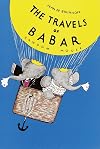
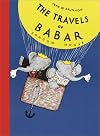
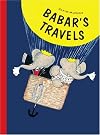
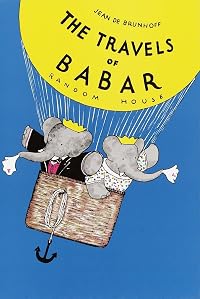
In this book Babar and Celeste go to their wedding trip in there yellow balloon. The pictures are nice.
Members
- Recently Added By
Author Information

181+ Works 8,628 Members
Jean de Brunhoff 1899 - 1937 Jean de Brunhoff (born December 9, 1899) was a French writer and illustrator known for creating the Babar books, the first of which appeared in 1931. He was the fourth and youngest child of Maurice de Brunhoff, a publisher. After the first book Histoire de Babar (The Story of Babar), six more titles followed before show more Jean de Brunhoff died of tuberculosis at the age of 37. He was buried in Père Lachaise Cemetery in Paris. Many people credit Jean's wife, Cécile de Brunhoff, as the real creator of Babar. After Jean's death, his brother Michel de Brunhoff, who was the editor of French Vogue, oversaw the publication in book form of his two last books, Babar and His Children and Babar and Father Christmas. The Babar series continues to be an international bestseller. Babar the elephant is an iconic character who has also been paid tribute by many museums worldwide. (Bowker Author Biography) show less
Some Editions
Series

Belongs to Publisher Series
Albums Babar (2)
Work Relationships
Is contained in
Common Knowledge
- Canonical title
- The Travels of Babar
- Original title
- Le voyage de Babar
- Alternate titles
- Babar's Travels
- Original publication date
- 1935-10-3 (UK) (UK)
- People/Characters
- Babar; Celeste
- Important places
- France
- First words
- Babar, the young King of the elephants, and his wife, Queen Celeste, have just left for their wedding trip in a balloon.
- Last words
- (Click to show. Warning: May contain spoilers.)"I am going to try to rule my kingdom wisely," answers Babar, "and if you will remain with us, you can help me make my subjects happy."
- Original language*
- Französisch
*Some information comes from Common Knowledge in other languages. Click "Edit" for more information.
Classifications
Statistics
- Members
- 997
- Popularity
- 26,289
- Reviews
- 10
- Rating
- (3.59)
- Languages
- 7 — Dutch, English, Finnish, French, German, Spanish, Swedish
- Media
- Paper, Ebook
- ISBNs
- 47
- ASINs
- 13