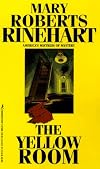
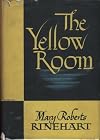
The Yellow Room
by Mary Roberts Rinehart
On This Page
Description
In a nearly empty house, a young woman finds herself alone with a killer As far as Carol Spencer is concerned, the war has spoiled everything. She and Don had been engaged for years and were on the verge of marriage when he was shot down in the South Pacific, leaving Carol on the verge of spinsterhood at twenty-four. She wants to take some kind of job in the war effort, but her invalid mother demands that Carol accompany her to the family's summer home in Maine. But when they arrive at the show more faded mansion, they find it completely locked up. The servants are gone, the lights are dark-and there is a body in the closet. There is a killer on the grounds of the abandoned Spencer estate, and the police believe it is Carol. As war rages across the seas, Carol Spencer fights a private battle of her own-to prove her own innocence, and to save her mother's life. show lessTags
Recommendations


























Member Reviews
I haven't read The Yellow Room in years and wasn't sure I'd read it before until the finding of the body in the Spencers' linen closet at their summer home. The setting is World War II. Details of life for Americans back then are interesting. Sometimes one runs across old spellings, such as Tia Juana for Tijuana (assuming that's not a typo). As is usual for a Mary Roberts Rinehart mystery, the main characters are from the well-to-do set, even if the Spencers are what young Carol's friends call 'the new poor'.
Carol Spencer is our heroine. She's still wearing her engagement ring even though her Don's plane was shot down over a year ago. Her mother is a demanding, selfish widow who refuses to economize. She's the one who demands that show more Crestview, that summer home in Bayside, Maine, be opened. She wants someplace cool for her son, Captain Gregory Spencer, to stay while he's on leave to receive the Congressional Medal of Honor -- not to mention get married to a beautiful redhead named Virginia. Carol knows her big brother would rather be in New York City or Newport, but Mrs. Spencer's mind is made up.
Carol's beautiful older sister, Elinor, married a filthy rich, though pompous, man named Howard Hilliard. Elinor is just as selfish as her mother. She's two years younger than Greg, the only person in the world she cares about besides herself. (Carol, eight years younger than Elinor, has always been the family afterthought.)
Aside from those rich persons who are members of Bayside's 'summer colony,' the Spencers aren't exactly liked. Greg is a boozer. Elinor is hoity toity. Only Carol is 'just folks'. (If Carol is such a good person, why hasn't she enlisted in the Wacs [Women's Army Corps], or the Waves [U.S. Army Naval Reserve (Women's Reserve)], or become a Nurse's Aide, or do some other volunteer work for the war effort? Her family won't let her. Back then, a well-bred young lady of good family rarely defied her family.
Luckily for Carol, she's managed to ditch her mother at the Hilliard mansion in Newport. Unluckily, one of the two new servant girls accompanying Carol and Maggie, the Spencers' faithful cook, finds that body in the linen closet. All of the phones in the house are missing, so Carol goes to the Chief of Police on foot. (Gasoline was rationed during WWII and the Spencers' cars at Crestview ran out of gas before they left last summer.)
The Yellow Room is in Crestview. There are signs it was occupied. It wouldn't have been Lucy Norton, the caretaker's wife. She was staying in the servants' wing while getting the house ready. There are good reasons why neither Lucy nor George Smith, last of the Spencers' gardners, are available when Carol got to the house. Carol has no idea who the corpse was, but can the same be true for the other Spencers?
Someone or someones has been going to considerable trouble to try to prevent the corpse from being identified. Pity for that someone that Major Jerry Dane and his man, Alex, are staying in Bayside while Jerry recovers from a war wound.
There are plenty of red herrings. I didn't remember them and got misled again. Was the wrong man arrested for murder? Some ugly secrets come out, but there are heroic and unselfish acts, too. All in all, this is a good classic cozy. show less
Carol Spencer is our heroine. She's still wearing her engagement ring even though her Don's plane was shot down over a year ago. Her mother is a demanding, selfish widow who refuses to economize. She's the one who demands that show more Crestview, that summer home in Bayside, Maine, be opened. She wants someplace cool for her son, Captain Gregory Spencer, to stay while he's on leave to receive the Congressional Medal of Honor -- not to mention get married to a beautiful redhead named Virginia. Carol knows her big brother would rather be in New York City or Newport, but Mrs. Spencer's mind is made up.
Carol's beautiful older sister, Elinor, married a filthy rich, though pompous, man named Howard Hilliard. Elinor is just as selfish as her mother. She's two years younger than Greg, the only person in the world she cares about besides herself. (Carol, eight years younger than Elinor, has always been the family afterthought.)
Aside from those rich persons who are members of Bayside's 'summer colony,' the Spencers aren't exactly liked. Greg is a boozer. Elinor is hoity toity. Only Carol is 'just folks'. (If Carol is such a good person, why hasn't she enlisted in the Wacs [Women's Army Corps], or the Waves [U.S. Army Naval Reserve (Women's Reserve)], or become a Nurse's Aide, or do some other volunteer work for the war effort? Her family won't let her. Back then, a well-bred young lady of good family rarely defied her family.
Luckily for Carol, she's managed to ditch her mother at the Hilliard mansion in Newport. Unluckily, one of the two new servant girls accompanying Carol and Maggie, the Spencers' faithful cook, finds that body in the linen closet. All of the phones in the house are missing, so Carol goes to the Chief of Police on foot. (Gasoline was rationed during WWII and the Spencers' cars at Crestview ran out of gas before they left last summer.)
The Yellow Room is in Crestview. There are signs it was occupied. It wouldn't have been Lucy Norton, the caretaker's wife. She was staying in the servants' wing while getting the house ready. There are good reasons why neither Lucy nor George Smith, last of the Spencers' gardners, are available when Carol got to the house. Carol has no idea who the corpse was, but can the same be true for the other Spencers?
Someone or someones has been going to considerable trouble to try to prevent the corpse from being identified. Pity for that someone that Major Jerry Dane and his man, Alex, are staying in Bayside while Jerry recovers from a war wound.
There are plenty of red herrings. I didn't remember them and got misled again. Was the wrong man arrested for murder? Some ugly secrets come out, but there are heroic and unselfish acts, too. All in all, this is a good classic cozy. show less
The Yellow Room, originally published in 1945, is one of Mary Roberts Rinehart’s best books, in my opinion. It is an old-fashioned, very entertaining example of the more traditional mystery genre. There is a pretty young girl, a murder, intrigue involving the young woman's family, and, of course, a dashing war hero in love with the heroine, and only too willing to use every means at his disposal to help her. Rinehart creates a fun and exciting atmosphere for mystery lovers to enjoy, as well as a pretty good brain teaser.
Young Carol Spencer is a likable heroine trying to recover from the loss of her fiancee in the South Pacific. She longs to keep busy and wants to make herself useful in the war effort. She has been forced to care for show more her mother, however, because her selfish sister Elinor is too busy with her society functions to help. When Carol leaves New York and travels to Maine, to open up their home there, she discovers many unsettling mysteries. Lucy, the maid, is missing, and it is soon discovered that she is in the hospital with an injured leg. Someone unknown had chased her in the night until she fell down the stairs. It could be that certain someone who has been hiding in the yellow room, even though no one was living in the Spencer's Maine home. Worse, there is a very dead young woman in the closet. When it is discovered that woman arrived asking about Carol, our heroine becomes a suspect in the eyes of the local police.
Dane is a war veteran whose past is a bit of a mystery. His meddling in the case is unappreciated by the local police. Carol hasn't a clue who to turn to, who to trust. When her brother arrives on the scene, rather than shedding light on the matter, the mystery becomes even murkier. Carol's snotty sister's car was seen the night of the murder, even though she was supposedly in New York. Was Carol's brother involved somehow? Who has been stealing her mother's fine china from the house? What was the dead girl's relationship to her brother and sister?
Dane uses every man and instinct at his disposal to root out the real killer, and get to the bottom of things. Shots in the night and the mysterious actions of someone unknown, yet moving easily among her Maine neighbors, can only spell great danger for Carol.
This mystery is very old-fashioned, and likewise so is the charming romance. The product of a more romantic era, The Yellow Room is very much a mystery where you can sense changes the war brought about in young men. The mores of a bygone era are at the forefront in this enjoyable and atmospheric mystery from one of the greats in the genre. For those who like their mysteries old-fashioned, and a bit on the romantic side, The Yellow Room is a lot of fun. show less
Young Carol Spencer is a likable heroine trying to recover from the loss of her fiancee in the South Pacific. She longs to keep busy and wants to make herself useful in the war effort. She has been forced to care for show more her mother, however, because her selfish sister Elinor is too busy with her society functions to help. When Carol leaves New York and travels to Maine, to open up their home there, she discovers many unsettling mysteries. Lucy, the maid, is missing, and it is soon discovered that she is in the hospital with an injured leg. Someone unknown had chased her in the night until she fell down the stairs. It could be that certain someone who has been hiding in the yellow room, even though no one was living in the Spencer's Maine home. Worse, there is a very dead young woman in the closet. When it is discovered that woman arrived asking about Carol, our heroine becomes a suspect in the eyes of the local police.
Dane is a war veteran whose past is a bit of a mystery. His meddling in the case is unappreciated by the local police. Carol hasn't a clue who to turn to, who to trust. When her brother arrives on the scene, rather than shedding light on the matter, the mystery becomes even murkier. Carol's snotty sister's car was seen the night of the murder, even though she was supposedly in New York. Was Carol's brother involved somehow? Who has been stealing her mother's fine china from the house? What was the dead girl's relationship to her brother and sister?
Dane uses every man and instinct at his disposal to root out the real killer, and get to the bottom of things. Shots in the night and the mysterious actions of someone unknown, yet moving easily among her Maine neighbors, can only spell great danger for Carol.
This mystery is very old-fashioned, and likewise so is the charming romance. The product of a more romantic era, The Yellow Room is very much a mystery where you can sense changes the war brought about in young men. The mores of a bygone era are at the forefront in this enjoyable and atmospheric mystery from one of the greats in the genre. For those who like their mysteries old-fashioned, and a bit on the romantic side, The Yellow Room is a lot of fun. show less
Carol Spencer arrives at her family’s summer home (called Crestview) in Bayside, Maine, with a cook and two maids, only to discover a dead woman in the house’s linen closet. The victim had been bashed on the head and then lit on fire, although the fire had died out before spreading.
Carol, still grieving her dead fiancé during the final year of World War II, teams up with a convalescing soldier, Major Jerry Dane, to find out who the pretty dead blonde was and how it was that she had come to move in as a squatter at Crestview. And while it’s obvious that the victim had been living in Crestview’s Yellow Room, her clothes are all gone — except for the silver fox fur coat and red negligée she was wearing — as well as her purse show more and any identification or ration book.
Mary Roberts Rinehart’s whodunit remains as suspenseful and clever as it was when it was first published 70 years ago in 1945; as cliché as it sounds, I couldn’t put it down, finishing it in a day. I never foresaw the solution. Reading it as part of Kindle Unlimited was just the icing on a delicious cake. show less
Carol, still grieving her dead fiancé during the final year of World War II, teams up with a convalescing soldier, Major Jerry Dane, to find out who the pretty dead blonde was and how it was that she had come to move in as a squatter at Crestview. And while it’s obvious that the victim had been living in Crestview’s Yellow Room, her clothes are all gone — except for the silver fox fur coat and red negligée she was wearing — as well as her purse show more and any identification or ration book.
Mary Roberts Rinehart’s whodunit remains as suspenseful and clever as it was when it was first published 70 years ago in 1945; as cliché as it sounds, I couldn’t put it down, finishing it in a day. I never foresaw the solution. Reading it as part of Kindle Unlimited was just the icing on a delicious cake. show less
Rating: 3.5* of five
The Book Report: Poor Carol Spencer. She has a tiresome semi-invalid mama, a married older sister in love with her own comfort, a war hero brother who, despite being 10 years her elder acts like a schoolboy, and a dead body. Of her brother's previous unknown trollop. Oh, also wife. Plus she's a mother. (Not Carol, the dead trollop/wife.)
Who killed the trollop...errr, lady? Why? And importantly, why in the Spencer family summer home when no Spencers were there? Why did the killer then go on to kill the Spencers' housekeeper while that worthy was in the hospital with a broken leg? (And my haven't things changed since 1945 when this book was published...imagine being admitted to a hospital for a broken leg now, unless show more it required orthopedic surgery to reconstruct!)
Was it the brother, who understandably did not wish to remain married to a trollop since he's from the summer-home class and, not that much is made of this, engaged to a bombshell of a rich girl? Was it the sister, selfish chilly nasty piece of work that she is? Was it one of the elderly neighbors, for reasons unknown but probably having to do with their mysteriously absent grandson and sole living descendant? Or was it Carol's own missing, presumed dead, fiancé, the boy from the little house down the hill from her big, fancy one?
My Review: Very much a product of its time, this story has aged less well than some of Rinehart's earlier ones because the mere existence of a murder and the presence of a sleuth are considered to be enough to make the story work. The major, gaping holes (characters appear then vanish never to be heard of again, gods come out of more boxes than UPS ever saw, the sleuth learns things that we don't which is a major cheat) weren't really a big issue in mysteries of the day. They were part and parcel of Dame Agatha's bag of tricks, too.
The local cop is fat and shrewd, but not imaginative enough to outmatch the sleuth, and his deputy is an idiot who sleeps a lot. The local spinster busybody has a horse-face and a crush on the Spencer brother, so she elects to lie about something she saw. The Irish cook starts out with two maids, who suddenly vanish from mention, but still takes trays to Miss Carol and brings her endless cups of coffee. That woman ain't no cook, since the stove is an old coal range and speaking from experience, you turn your back on the fire in one of those babies and you ain't cookin' you's burnin'.
But I reserve my main snort of disgust for the romantic subplot that Rinehart, God bless her cotton socks, felt was crucial to a successful story. This has to be the most inept romance I've ever seen in all my days. The sleuth, a war hero recovering from his wounds sustained in about four battles if Rinehart's to be believed, is Major Dane, a well-born member of the pre-war FBI and now some sort of unspecified spook for the war effort. Carol sees him as trying to frame her brother one minute, trying to frame her sister the next, and then swoons into his arms with a "daaarrrling!" and a kiss. Dane, for his part, seems annoyed by her privileged cluelessness...yet he's supposed to be the grandson of a Senator and a scion himself. Which is it?
So why read this book, since there are so many flaws in it? Back in 1945, a series character wasn't strictly speaking necessary for a writer to get a mystery published, and Rinehart was America's Dame Agatha, so no hook there since this book has no repeat characters. I don't make any kind of a case for you to seek it out. But if one swims your way for some reason, and there's an afternoon you'd like to wile away with a complete read, this will not hurt you in the least. Won't fascinate you, and no one anywhere will make a case (unless I'm completely wrong about the subject) that the characters will haunt your dreams. Heck, they're already fuzzing out of my mental TV screen. But there is pleasure to be had in just relaxing with a perfectly okay book. No demands, no strings, won't change your life, just...nice.
Literary Afternoon Delight. show less
The Book Report: Poor Carol Spencer. She has a tiresome semi-invalid mama, a married older sister in love with her own comfort, a war hero brother who, despite being 10 years her elder acts like a schoolboy, and a dead body. Of her brother's previous unknown trollop. Oh, also wife. Plus she's a mother. (Not Carol, the dead trollop/wife.)
Who killed the trollop...errr, lady? Why? And importantly, why in the Spencer family summer home when no Spencers were there? Why did the killer then go on to kill the Spencers' housekeeper while that worthy was in the hospital with a broken leg? (And my haven't things changed since 1945 when this book was published...imagine being admitted to a hospital for a broken leg now, unless show more it required orthopedic surgery to reconstruct!)
Was it the brother, who understandably did not wish to remain married to a trollop since he's from the summer-home class and, not that much is made of this, engaged to a bombshell of a rich girl? Was it the sister, selfish chilly nasty piece of work that she is? Was it one of the elderly neighbors, for reasons unknown but probably having to do with their mysteriously absent grandson and sole living descendant? Or was it Carol's own missing, presumed dead, fiancé, the boy from the little house down the hill from her big, fancy one?
My Review: Very much a product of its time, this story has aged less well than some of Rinehart's earlier ones because the mere existence of a murder and the presence of a sleuth are considered to be enough to make the story work. The major, gaping holes (characters appear then vanish never to be heard of again, gods come out of more boxes than UPS ever saw, the sleuth learns things that we don't which is a major cheat) weren't really a big issue in mysteries of the day. They were part and parcel of Dame Agatha's bag of tricks, too.
The local cop is fat and shrewd, but not imaginative enough to outmatch the sleuth, and his deputy is an idiot who sleeps a lot. The local spinster busybody has a horse-face and a crush on the Spencer brother, so she elects to lie about something she saw. The Irish cook starts out with two maids, who suddenly vanish from mention, but still takes trays to Miss Carol and brings her endless cups of coffee. That woman ain't no cook, since the stove is an old coal range and speaking from experience, you turn your back on the fire in one of those babies and you ain't cookin' you's burnin'.
But I reserve my main snort of disgust for the romantic subplot that Rinehart, God bless her cotton socks, felt was crucial to a successful story. This has to be the most inept romance I've ever seen in all my days. The sleuth, a war hero recovering from his wounds sustained in about four battles if Rinehart's to be believed, is Major Dane, a well-born member of the pre-war FBI and now some sort of unspecified spook for the war effort. Carol sees him as trying to frame her brother one minute, trying to frame her sister the next, and then swoons into his arms with a "daaarrrling!" and a kiss. Dane, for his part, seems annoyed by her privileged cluelessness...yet he's supposed to be the grandson of a Senator and a scion himself. Which is it?
So why read this book, since there are so many flaws in it? Back in 1945, a series character wasn't strictly speaking necessary for a writer to get a mystery published, and Rinehart was America's Dame Agatha, so no hook there since this book has no repeat characters. I don't make any kind of a case for you to seek it out. But if one swims your way for some reason, and there's an afternoon you'd like to wile away with a complete read, this will not hurt you in the least. Won't fascinate you, and no one anywhere will make a case (unless I'm completely wrong about the subject) that the characters will haunt your dreams. Heck, they're already fuzzing out of my mental TV screen. But there is pleasure to be had in just relaxing with a perfectly okay book. No demands, no strings, won't change your life, just...nice.
Literary Afternoon Delight. show less
The Yellow Room by Mary Rinehart Roberts is a vintage mystery that has all the ingredients I was looking for in a well aged mystery, a large country summer house that belongs to a wealthy family, set in a quaint Maine village. It’s timing is World War II and Carol Spencer, the youngest daughter of the family has arrived to open the house for the summer. Her brother Gregory, a WW II hero has come home to the states to receive a medal from the President and to hopefully get married.
Unfortunately a corpse of an unknown women is found in he house and we eventually discover she is connected to he Spencer family. The mystery is quire convoluted and the story takes a number of twists and turns before being solved. Carol is aided by Jerry show more Dane, who is recovering from a war wound. Relying on his FBI background, he works on the complicated mystery while at the same time he and Carol fall in love.
I found this mystery holds up well and the author writes with confidence. Granted there were some old fashioned touches but overall The Yellow Room was a pleasant read. show less
Unfortunately a corpse of an unknown women is found in he house and we eventually discover she is connected to he Spencer family. The mystery is quire convoluted and the story takes a number of twists and turns before being solved. Carol is aided by Jerry show more Dane, who is recovering from a war wound. Relying on his FBI background, he works on the complicated mystery while at the same time he and Carol fall in love.
I found this mystery holds up well and the author writes with confidence. Granted there were some old fashioned touches but overall The Yellow Room was a pleasant read. show less
Carol Spencer has just arrived at the family’s summer estate with two servants in tow. They are to open the house for the arrival of Carol’s brother Greg, a war hero who is on leave to receive the Congressional Medal of Honor. Of course rationing means that gasoline, sugar, electricity and phones are all in short supply, but their mother insists Greg would want to spend time at the Maine retreat. But before they can unpack they make a gristly discovery – the charred corpse of a young woman is found in the linen closet.
I’d never heard of this author before, but came across this novel and thought I’d give it a try. This really started off with a bang. I was engaged and interested in the murder and found most of the characters show more intriguing. But about half-way through I began to feel that Rinehart had made this unnecessarily complicated. There are so many suspects, so many secrets, so many crimes committed that it stretches credulity too far. The final explanation is far-fetched and unrealistic. show less
I’d never heard of this author before, but came across this novel and thought I’d give it a try. This really started off with a bang. I was engaged and interested in the murder and found most of the characters show more intriguing. But about half-way through I began to feel that Rinehart had made this unnecessarily complicated. There are so many suspects, so many secrets, so many crimes committed that it stretches credulity too far. The final explanation is far-fetched and unrealistic. show less
So many people have told me to read Mary Roberts Rinhart since I'm a Golden Age mystery fan. I just never seemed to get around to it, but I finally took the time. This book was published in 1945. Ms. Rinehart is an American author and she writes about American places. In this case the mystery is set in WWII Maine. So many of the Golden Age moments are in this book. The femme fatale, the hard-nosed blonde, the young ingenue, the dashing officer,the bumbling policeman, and a few old men and women and local characters too. There are lots of red herrings and tons of suspects when a partially burned body of a young female is found in a closed closet in a house in Maine that has been shut up for awhile. I liked the setting and of course the show more era. It was interesting to see that wartime imposed some hardships and restrictions on people at home just as it did in Europe. The mystery is tricky and a bit convoluted, but I did enjoy the book - so much so that I plan to read Ms. Rinehart's enite backlist in the coming months. I thought I'd plumbed the depths of the Golden Age authors, so it was refreshing to see that there are more still out there. show less
Members
- Recently Added By
Author Information

142+ Works 8,183 Members
Mary Roberts Rinehart was born in the City of Allegheny, Pennsylvania on August 12, 1876. While attending Allegheny High School, she received $1 each for three short stories from a Pittsburgh newspaper. After receiving inspiration from a town doctor who happened to be a woman, she developed a curiosity for medicine. She went on to study nursing at show more the Pittsburgh Training School for Nurses at Homeopathic Hospital. After graduating in 1896, she began her writing career. The first of her many mystery stories, The Circular Staircase (1908), established her as a leading writer of the genre; Rinehart and Avery Hopwood successfully dramatized the novel as The Bat (1920). Her other mystery novels include The Man in Lower Ten (1909), The Case of Jennie Brice (1914), The Red Lamp (1925), The Door (1930), The Yellow Room (1945), and The Swimming Pool (1952). Stories about Tish, a self-reliant spinster, first appeared in the Saturday Evening Post and were collected into The Best of Tish (1955). She wrote more than 50 books, eight plays, hundreds of short stories, poems, travelogues and special articles. Three of her plays were running on Broadway at one time. During World War I, she was the first woman war correspondent at the Belgian front. She died September 22, 1958 at the age of 82. (Bowker Author Biography) show less
Some Editions
Series
Belongs to Publisher Series
Work Relationships
Is contained in
Common Knowledge
- Canonical title
- The Yellow Room
- Original publication date
- 1945
- People/Characters
- Carol Spencer (24 years old, her fiancé, Don, was shot down); Captain Gregory 'Greg' Spencer (Carol's war hero brother); Mrs. Spencer (widow of George, mother of Greg, Elinor, & Carol); Elinor Spencer Hilliard (married a still-rich man); Howard Hilliard (Elinor's pompous husband); Caswell (the Hilliards' elderly butler) (show all 41); Virginia Demarest (Greg's fiancée); Maggie (the Spencers' cook for 20 years); Freda (the Spencers' young and rather timid housemaid); Nora (the Spencers' not very talkative parlormaid-waitress); Lucy Norton (wife of Joe Norton, the Spencers' caretaker at Crestview); George Smith (the last of the Spencers' gardeners at Crestview); Harry Miller ('Hank,' of Miller market); Floyd (village chief of police); Old William (takes down the winter stuff); Colonel Henry Richardson (Don's father); Major Jerry Dane (wounded by the Germans in Italy, staying at the Burtons'); Jim Mason (Floyd's assistant); Alex (lost an eye in Italy, former policeman, looks after Major Dane); Dr. Harrison; Starr (a male reporter, not Brenda); Llieutenant Wylie (State Police); Bessie Content (telephone switchboard day operator); Mrs. Floyd; Mrs. Nathaniel Ward (their grandson, Terry, is flying in the Pacific); Louise Stimson (an attractive young widow); Marcia Dalton (currently a Nurse's Aide); Peter Croswell (a burly, red-faced member of the 'summer colony'); Ida Crosswell (Peter's Crosswell's mouse-like wife); Mr. Campbell (the district attorney); Mr. Allison (owns the local Five-&-Ten [cents store]); Tim Murphy (Brooklyn Irishman, a cop turned private investigator); Sam Thompson (runs Sam's hamburger stand); Marguerite Barlbour (a bleached blonde); Annie Holden (at the china shop); Mr. Nathaniel Ward (their grandson, Terry, is flying in the Pacific); Terry Ward (pilot in the Pacific theater of operations, grandson of the Wards); Mr. Hart (Howard Hilliard's lawyer); Alice (works for the Wards); Mrs. Jarvis Gates; Pete (the two year-old boy the Gates wish to adopt)
- Important places
- Bayside, Maine, USA
- Important events
- World War II (1939 | 1945); World War II, American Home Front
- First words
- As she sat in the train that June morning Carol Spencer did not look like a young woman facing anything unusual.
- Last words
- (Click to show. Warning: May contain spoilers.)"Hell!" he said. "We may even have a little time for a honeymoon, sweetheart." And sat down abruptly on the nearest chair.
- Disambiguation notice
- not the same as the 1891 novella, The Yellow Room, by Anonymous
Classifications
Statistics
- Members
- 366
- Popularity
- 85,808
- Reviews
- 12
- Rating
- (3.69)
- Languages
- English, German, Italian
- Media
- Paper, Audiobook, Ebook
- ISBNs
- 13
- ASINs
- 16