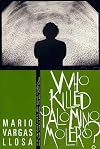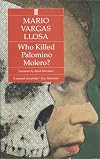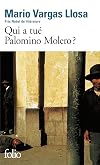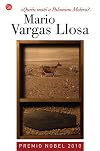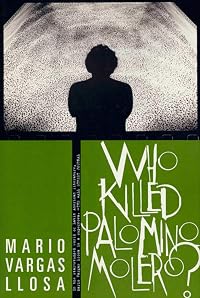
Who Killed Palomino Molero?
by Mario Vargas Llosa
On This Page
Description
This wonderful detective novel is set in Peru in the 1950s. Near an Air Force base in the northern desert, a young airman is found murdered. Lieutenant Silva and Officer Lituma investigate. Lacking a squad car, they have to cajole a local cabbie into taking them to the scene of the crime. Their superiors are indifferent; the commanding officer of the air base stands in their way; but Silva and Lituma are determined to uncover the truth.Who Killed Palomino Molero, an entertaining and show more brilliantly plotted mystery, takes up one of Vargas Llosa's characteristic themes: the despair at how hard it is to be an honest man in a corrupt society. show lessTags
Recommendations
















Member Reviews
I'm a Mario Vargas Llosas fan.
It would be easy to dismiss this short book as just another detective story in a world awash in detective stories. It's actually much more. It provides insights into the human condition. Yes it's set in a Peruvian seaside marginal village in an uncertain time frame. It would be too easy to dismiss this story as that's not me. Between the lines one sees racial prejudice, male-female differences, inequality, mental health issues, lines of authority, attitudes toward priests, attitudes toward the military, attitudes toward police, conspiracy theories, morality, search for truth, role of doubt, caste, music, age, etc. An amazing stew.
There are two central characters, a lieutenant in the Guardia Civil, and his show more constant companion and assistant. The assistant is the narrator of this story. Almost immediately we learn that Palomino Molero has been brutally murdered. Solving the murder is the lieutenant's responsibility. The assistant is constantly amazed at the lieutenant's ability to gain information from the many people he has to talk with. They start with the boy's distraught mother who describes her son as a gentle boy whose ability to sing and play the guitar is what everyone knows about him. She can't understand why the Air Force "took" him as he was exempt since her other sons were dead. They move on to speak to the Air Force where they learn Palomino enlisted. Our first learning, don't believe everybody. The Colonel, commanding the base, tells them Palomino was a deserter and they had already investigated his murder and reported their findings as something that happened off base, matter closed. No need for the Guardia Civil to investigate. Second learning, they were unlikely to get any help from the Air Force. Some doors close quickly.
Rather than give away the whole plot I'll summarize what happens. The lieutenant begins putting together potential explanations of events and follows up by reaching out to people. As everyone looks to him they begin to come to him with things that might be relevant. The assistant is amazed with the various ways the lieutenant approaches informants. Some begin to come forward by themselves.
Eventually the story begins to center on the Colonel's daughter and her strange and belligerent behavior. They eventually have their theory of what happened and report their findings. Rather than the result merely reflecting positively on their ability to uncover the real story, many begin to suspect this was actually a coverup because the big guys needed to have the real people protected. Oh well.
This is a quick read well worth your time. show less
It would be easy to dismiss this short book as just another detective story in a world awash in detective stories. It's actually much more. It provides insights into the human condition. Yes it's set in a Peruvian seaside marginal village in an uncertain time frame. It would be too easy to dismiss this story as that's not me. Between the lines one sees racial prejudice, male-female differences, inequality, mental health issues, lines of authority, attitudes toward priests, attitudes toward the military, attitudes toward police, conspiracy theories, morality, search for truth, role of doubt, caste, music, age, etc. An amazing stew.
There are two central characters, a lieutenant in the Guardia Civil, and his show more constant companion and assistant. The assistant is the narrator of this story. Almost immediately we learn that Palomino Molero has been brutally murdered. Solving the murder is the lieutenant's responsibility. The assistant is constantly amazed at the lieutenant's ability to gain information from the many people he has to talk with. They start with the boy's distraught mother who describes her son as a gentle boy whose ability to sing and play the guitar is what everyone knows about him. She can't understand why the Air Force "took" him as he was exempt since her other sons were dead. They move on to speak to the Air Force where they learn Palomino enlisted. Our first learning, don't believe everybody. The Colonel, commanding the base, tells them Palomino was a deserter and they had already investigated his murder and reported their findings as something that happened off base, matter closed. No need for the Guardia Civil to investigate. Second learning, they were unlikely to get any help from the Air Force. Some doors close quickly.
Rather than give away the whole plot I'll summarize what happens. The lieutenant begins putting together potential explanations of events and follows up by reaching out to people. As everyone looks to him they begin to come to him with things that might be relevant. The assistant is amazed with the various ways the lieutenant approaches informants. Some begin to come forward by themselves.
Eventually the story begins to center on the Colonel's daughter and her strange and belligerent behavior. They eventually have their theory of what happened and report their findings. Rather than the result merely reflecting positively on their ability to uncover the real story, many begin to suspect this was actually a coverup because the big guys needed to have the real people protected. Oh well.
This is a quick read well worth your time. show less
"The boy had been both hung and impaled on the old carob tree. His position was so absurd that he looked more like a scarecrow or a broken marionette than a corpse. Before or after they killed him, they slashed him to ribbons: his nose and mouth were split open; his face was a crazy map of dried blood, bruises, cuts, and cigarette burns." So begins Mario Vargas Llosa's short, riveting detective novel set in a small town in 1950s Peru. After reading for the third time, I asked myself: what makes `Who Killed Palomino Molero?' so gripping, so totally absorbing? On reflection, I think there are several good reasons:
The way the story is told: we follow the path of two policeman from the local force, Lieutenant Silva and his young assistant, show more Lituma, as they make their rounds on foot, usually under a blazing hot sun, to solve the case. The 3rd person narrator frequently dips into the mind of Lituma, making for most effective storytelling - it is as if the emotions and actions of all the characters are intensified by Lituma's feelings and musings.
The arch of the story: the guts of the novel, the plot, follows what Aristotle outlines in his Poetics. Each successive scene develops and reveals the details of motive and character as the lieutenant and Lituma converse with one key player in the murder's drama in each chapter. We encounter unexpected twists along the way, but, ultimately, there is a sense of inevitability in how events unfold and ultimately conclude.
The subplot: nothing like a little lust to add some spice to a murder mystery. Lieutenant Silva yearns for chubby Doña Adriana, owner of the local rundown, hole-in-the-wall restaurant. As the mystery is resolved in the last chapter, so also is Lieutenant Silva's relationship with his chubby object of sexual hunger. Aristotle would be pleased.
So, all in all, a novel well worth the read and at 150 pages of large print, a novel that can be read in a day. And if you are unacquainted with Mario Vargas Llosa, winner of the 2010 Nobel Prize in Literature, finishing this short work might motivate you to tackle one of his longer novels. show less
"The boy had been both hung and impaled on the old carob tree. His position was so absurd that he looked more like a scarecrow or a broken marionette than a corpse. Before or after they killed him, they slashed him to ribbons: his nose and mouth were split open; his face was a crazy map of dried blood, bruises, cuts, and cigarette burns." So begins Mario Vargas Llosa's short, riveting detective novel set in a small town in 1950s Peru. After reading for the third time, I asked myself: what makes `Who Killed Palomino Molero?' so gripping, so totally absorbing? On reflection, I think there are several good reasons:
The way the story is told: we follow the path of two policeman from the local force, Lieutenant Silva and his young assistant, show more Lituma, as they make their rounds on foot, usually under a blazing hot sun, to solve the case. The 3rd person narrator frequently dips into the mind of Lituma, making for most effective storytelling - it is as if the emotions and actions of all the characters are intensified by Lituma's feelings and musings.
The arch of the story: the guts of the novel, the plot, follows what Aristotle outlines in his Poetics. Each successive scene develops and reveals the details of motive and character as the lieutenant and Lituma converse with one key player in the murder's drama in each chapter. We encounter unexpected twists along the way, but, ultimately, there is a sense of inevitability in how events unfold and ultimately conclude.
The subplot: nothing like a little lust to add some spice to a murder mystery. Lieutenant Silva yearns for chubby Doña Adriana, owner of the local rundown, hole-in-the-wall restaurant. As the mystery is resolved in the last chapter, so also is Lieutenant Silva's relationship with his chubby object of sexual hunger. Aristotle would be pleased.
So, all in all, a novel well worth the read and at 150 pages of large print, a novel that can be read in a day. And if you are unacquainted with Mario Vargas Llosa, winner of the 2010 Nobel Prize in Literature, finishing this short work might motivate you to tackle one of his longer novels. show less
An entertaining, brisk read, which opens with the discovery of a soldier’s mutilated body. The murder mystery is fairly straightforward, though Vargas Llosa mixes in elements of class and race, and the parallel story of Lieutenant Silva pursuing Dona Adriana, a married woman, is just as interesting. There are elements of comedy as well, such as when Silva brings Officer Lituma along to spy on Adriana from a rocky crag with binoculars while she strips down to her slip and goes swimming, only to get caught in the act by a young woman who is involved in the case. I only knocked my rating down a bit because it’s so short, and it seemed to me the story could have been fleshed out more.
I'm just not sure about this one. Because there were numerous overly crude behaviors/speech (especially related to appearance & sexuality) throughout -- enough to yank me out of the storyline repeatedly. Still, is it an unflinching look at life in a Peruvian small town like where events take place? Likely so. Is it an examination of racism, classism, sexism, & power imbalances in society? Yes. Is it a product of the the times in which it was written? Also yes... & some things just don't stand the test of time. There's some value to be found but I also had to muck through loads of icky stuff to get there. I did not enjoy it nor can I recommend it.
Interesting look at a foreign culture.Structure of narrator a bit confusing for me jumping between assistant cop's internal angst and the third person narrator. I found the last pages the most interesting as the locals gossip and stretch the findings out of shape to suit their biases. Reminds me of current social media distortions of events.
It was pretty obvious who killed whom from the start and the story was not built around the clever detectives observing clues to work it out, but rather a social narrative as they worked toward the solution of the crime based on informer tip. I liked it especially as it was short.
It was pretty obvious who killed whom from the start and the story was not built around the clever detectives observing clues to work it out, but rather a social narrative as they worked toward the solution of the crime based on informer tip. I liked it especially as it was short.
Palomino Molero is a young airman in the Peruvian Air Force who is found brutally murdered near his base by a goatherd. The local Guardia Civil is notified, and Lieutenant Silva and Officer Lituma undertake an investigation. The pair soon find out that Palomino left the base several days before his murder, and suspect that his killers will be found there. The commanding officer, Colonel Mindreau, a haughty white officer, condescendingly tells the pair (who are cholos, like the murdered airman) that he has investigated the case and concluded that no one on the base knows anything about the crime. The lieutenant is far from convinced, however, particularly when the colonel becomes enraged and flustered after he is questioned further. The show more officers are hampered by their inability to interview anyone on the base by the colonel, until an anonymous tip points them in the right direction.
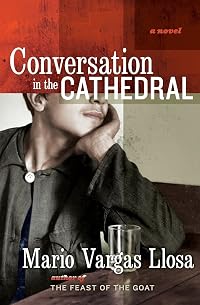
Who Killed Palomino Molero? is a mystery set in mid-20th century Peru, which lightly touches on class and racial differences, corruption, and power. It does not have the complexity or power of Vargas Llosa's better known novels, such as The Time of the Hero or The Conversation in the Cathedral, but it was still an enjoyable read. show less
Who Killed Palomino Molero? is a mystery set in mid-20th century Peru, which lightly touches on class and racial differences, corruption, and power. It does not have the complexity or power of Vargas Llosa's better known novels, such as The Time of the Hero or The Conversation in the Cathedral, but it was still an enjoyable read. show less
Members
- Recently Added By
Lists

Global Mysteries
90 works; 6 members
Talk Discussions
Past Discussions
MVL: Who Killed Palomino Molero? in Author Theme Reads (January 2011)
Author Information

386+ Works 34,500 Members
Mario Vargas Llosa was born in Arequipa, Peru on March 28, 1936. He studied literature and law at the National University of San Marcos and received a Ph.D from the University of Madrid in 1959. He is a writer, politician, and journalist. His works vary in genre from literary criticism and journalism to comedies, murder mysteries, historical show more novels, and political thrillers. His books include The Time of the Hero, The Green House, Conversation in the Cathedral, Aunt Julia and the Scriptwriter, The Feast of the Goat, and The War of the End of the World. He has received numerous awards including the Rómulo Gallegos International Novel Prize, the Premio Leopoldo Alas in 1959, the Premio Biblioteca Breve in 1962, the Premio Planeta in 1993, the Miguel de Cervantes Prize in 1994, the Jerusalem Prize in 1995, and the Nobel Prize in Literature in 2010. (Bowker Author Biography) show less
Some Editions
Awards and Honors
Notable Lists
Series
Belongs to Publisher Series
ラテンアメリカ文学選集 (6)
RBA Narrativa Actual (13)
Work Relationships
Is contained in
Has as a study
Common Knowledge
- Canonical title
- Who Killed Palomino Molero?
- Original title
- ¿Quién mató a Palomino Molero?
- Original publication date
- 1986 (original Spanish) (original Spanish); 1987 (English: Mac Adam) (English: Mac Adam); 1987 (French) (French)
- People/Characters*
- Lituma
- Important places*
- Talara, Perù; Piura, Perù; Amotape, Perù
- Dedication
- To Jose Miguel Oviedo
- First words
- "Sons of bitches." Lituma felt the vomit rising in his throat. "Kid, they really did a job on you."
- Quotations*
- «...Niente è facile, Lituma. Le verità che più sembrano verità, se le guardi da vicino, se le giri e le rigiri, lo sono solo a mezzo oppure non lo sono più.»
- Last words
- (Click to show. Warning: May contain spoilers.)"Sons of bitches."
- Publisher's editor*
- Alfaguara
- Original language*
- Español
*Some information comes from Common Knowledge in other languages. Click "Edit" for more information.
Classifications
Statistics
- Members
- 936
- Popularity
- 28,421
- Reviews
- 26
- Rating
- (3.48)
- Languages
- 17 — Danish, Dutch, English, French, German, Hebrew, Hungarian, Italian, Japanese, Norwegian (Bokmål), Norwegian, Polish, Portuguese, Romanian, Spanish, Swedish, Turkish
- Media
- Paper, Audiobook, Ebook
- ISBNs
- 63
- ASINs
- 17