
Sergio Toppi (1932–2012)
Author of The Collected Toppi, Vol. 07: Sharaz-De: Tales from the Arabian nights
About the Author
Image credit: self portrait
Series
Works by Sergio Toppi
Magalhaes : ensimmäinen purjehdus maailman ympäri ; Pizarro : Andien sydämessä (1981) — Author — 3 copies
I racconti della vita 2 copies
Americani Storia Del Popli A Fumetti — Illustrator — 1 copy
pizarro no coração dos andes 1 copy
Futur drugi 1 copy
Storie di uomini in armi nei disegni di Sergio Toppi - Illustrazioni originali in mostra a Cagliari — Illustrator — 1 copy
Il calumet di pietra rossa 1 copy
Sacsahuaman 1 copy
Samurai e altre storie 1 copy
Archimede 1 copy
Magia & Miecz 1 copy
Associated Works
Comic Art n.108 - Ottobre 1993 — Cover artist — 1 copy
Comic Art n.129 - Luglio 1995 — Cover artist — 1 copy
Comic Art n.137 - Marzo 1996 — Cover artist — 1 copy
Comic Art n.113 - Marzo 1994 — Cover artist — 1 copy
Comic Art n.114 - Aprile 1994 — Cover artist — 1 copy
Comic Art n.118 - Agosto 1994 — Cover artist — 1 copy
Comic Art n.112 - Febbraio 1994 — Cover artist — 1 copy
Magic Boy n.31 - Febbraio 1991 — Illustrator — 1 copy
Magic Boy n.32 - Marzo 1991 — Illustrator — 1 copy
Comic Art n.138 - Aprile 1996 — Cover artist — 1 copy
Comic Art n.128 - Giugno 1995 — Cover artist — 1 copy
Corriere dei Ragazzi - 16 Dicembre 1973 — Cover artist — 1 copy
Comic Art n.140 - Giugno 1996 — Cover artist — 1 copy
Comic Art n.143 - Settembre 1996 — Cover artist — 1 copy
Fumo di china n.100 Maggio/Giugno 2002 — Cover artist — 1 copy
Comic Art n.146 - Dicembre 1996 — Cover artist — 1 copy
Comic Art n.120 - Ottobre 1994 — Cover artist — 1 copy
Comic Art n.119 - Settembre 1994 — Cover artist — 1 copy
Comic Art n.107 - Settembre 1993 — Cover artist — 1 copy
Comic Art n.88 - Febbraio 1992 — Cover artist — 1 copy
Comic Art n.156 - Novembre 1997 — Cover artist — 1 copy
Tagged
Common Knowledge
- Birthdate
- 1932
- Date of death
- 2012-09
- Gender
- male
- Nationality
- Italy
- Birthplace
- Milan, Italy
- Place of death
- Milan, Italy
- Associated Place (for map)
- Milan, Italy
Members
Reviews
THE NIGHT, O LORD, IS STILL THE REALM OF BIRDS OF PREY.
THE DAWN THAT WILL BRING ME DEATH IS FAR AWAY.
GRANT ME THIS, MY KING: THAT TO BRIGHTEN THE HOURS AHEAD
I MIGHT RECOUNT STORIES ANCIENT AND RARE
TILL THE NEW DAY ROBS ME OF SPEECH AND BEING.
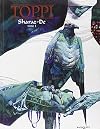
Sharaz-De: Tales from the Arabian Nights is a long series of unimaginable stories that began with a king destroyed by his queen's infidelity, he changed into a cruel king who hated woman and decreed that every day a woman of age will be sent to his bed show more and on the next morning, she was beheaded. After a long while, Sharaz-de decided to go to the king and offer herself to him. But unlike the poor women before her, she began to weave a story to entertain the king until dawn breaks. The king became captivated by her tales and he let her live. This continued with every single chapter in this book.
Like the King, I was utterly captivated and overwhelmed by the work of Sergio Toppi. It took me days to finish this graphic novel because every chapter in this book was breathtakingly well-drawn with poetic words and literature. All but two of the chapters in this book was cleverly drawn by black ink and heavy lines and details while the other two was cleverly managed by watercolour painting that invoke elusive quality of a dream in his stories with extensive details as he did with his craftmanship. Toppi had managed to bring his masterful skills with his medium, bringing to life surreal stories that was embedded with realism.
Every human and non-human characters were exquisitely detailed from every wrinkles, expressions and emotions that had painstakingly obvious in each and every pages. Every technical lines brought out the realistic tones and shadings. He cleverly uses white space to provide dimension and chaotic elements to create the details on his characters and the extensive settings.
Although the novel was intensely filled with African elements in character and setting details, the core of this novel doesn't distract the interpretative and poetic details of the Persian stories. I utterly enjoyed the darker depth the stories was portrayed in ink and the fantasy elements and often cautionary and foreboding tales were cleverly written in the dialogues and the art that made reading through the graphic novel as an experience itself.
Having tried reading the original 1001 Arabian Nights, Toppi's graphic novel was the perfect companion that rivalled Yoshitaka Amano's work on Arabian Nights. It's a great collectible item and are sought by many of his fans across continents. A master of his art, Toppi is certainly an artist of great potential.
The ARC is gratefully supplied by the publisher Archaia and the graphic novel will be published on 13th November 2012. show less
THE DAWN THAT WILL BRING ME DEATH IS FAR AWAY.
GRANT ME THIS, MY KING: THAT TO BRIGHTEN THE HOURS AHEAD
I MIGHT RECOUNT STORIES ANCIENT AND RARE
TILL THE NEW DAY ROBS ME OF SPEECH AND BEING.
Sharaz-De: Tales from the Arabian Nights is a long series of unimaginable stories that began with a king destroyed by his queen's infidelity, he changed into a cruel king who hated woman and decreed that every day a woman of age will be sent to his bed show more and on the next morning, she was beheaded. After a long while, Sharaz-de decided to go to the king and offer herself to him. But unlike the poor women before her, she began to weave a story to entertain the king until dawn breaks. The king became captivated by her tales and he let her live. This continued with every single chapter in this book.
Like the King, I was utterly captivated and overwhelmed by the work of Sergio Toppi. It took me days to finish this graphic novel because every chapter in this book was breathtakingly well-drawn with poetic words and literature. All but two of the chapters in this book was cleverly drawn by black ink and heavy lines and details while the other two was cleverly managed by watercolour painting that invoke elusive quality of a dream in his stories with extensive details as he did with his craftmanship. Toppi had managed to bring his masterful skills with his medium, bringing to life surreal stories that was embedded with realism.
Every human and non-human characters were exquisitely detailed from every wrinkles, expressions and emotions that had painstakingly obvious in each and every pages. Every technical lines brought out the realistic tones and shadings. He cleverly uses white space to provide dimension and chaotic elements to create the details on his characters and the extensive settings.
Although the novel was intensely filled with African elements in character and setting details, the core of this novel doesn't distract the interpretative and poetic details of the Persian stories. I utterly enjoyed the darker depth the stories was portrayed in ink and the fantasy elements and often cautionary and foreboding tales were cleverly written in the dialogues and the art that made reading through the graphic novel as an experience itself.
Having tried reading the original 1001 Arabian Nights, Toppi's graphic novel was the perfect companion that rivalled Yoshitaka Amano's work on Arabian Nights. It's a great collectible item and are sought by many of his fans across continents. A master of his art, Toppi is certainly an artist of great potential.
The ARC is gratefully supplied by the publisher Archaia and the graphic novel will be published on 13th November 2012. show less
THE NIGHT, O LORD, IS STILL THE REALM OF BIRDS OF PREY.
THE DAWN THAT WILL BRING ME DEATH IS FAR AWAY.
GRANT ME THIS, MY KING: THAT TO BRIGHTEN THE HOURS AHEAD
I MIGHT RECOUNT STORIES ANCIENT AND RARE
TILL THE NEW DAY ROBS ME OF SPEECH AND BEING.
Sharaz-De: Tales from the Arabian Nights is a long series of unimaginable stories that began with a king destroyed by his queen's infidelity, he changed into a cruel king who hated woman and decreed that every day a woman of age will be sent to his bed show more and on the next morning, she was beheaded. After a long while, Sharaz-de decided to go to the king and offer herself to him. But unlike the poor women before her, she began to weave a story to entertain the king until dawn breaks. The king became captivated by her tales and he let her live. This continued with every single chapter in this book.
Like the King, I was utterly captivated and overwhelmed by the work of Sergio Toppi. It took me days to finish this graphic novel because every chapter in this book was breathtakingly well-drawn with poetic words and literature. All but two of the chapters in this book was cleverly drawn by black ink and heavy lines and details while the other two was cleverly managed by watercolour painting that invoke elusive quality of a dream in his stories with extensive details as he did with his craftmanship. Toppi had managed to bring his masterful skills with his medium, bringing to life surreal stories that was embedded with realism.
Every human and non-human characters were exquisitely detailed from every wrinkles, expressions and emotions that had painstakingly obvious in each and every pages. Every technical lines brought out the realistic tones and shadings. He cleverly uses white space to provide dimension and chaotic elements to create the details on his characters and the extensive settings.
Although the novel was intensely filled with African elements in character and setting details, the core of this novel doesn't distract the interpretative and poetic details of the Persian stories. I utterly enjoyed the darker depth the stories was portrayed in ink and the fantasy elements and often cautionary and foreboding tales were cleverly written in the dialogues and the art that made reading through the graphic novel as an experience itself.
Having tried reading the original 1001 Arabian Nights, Toppi's graphic novel was the perfect companion that rivalled Yoshitaka Amano's work on Arabian Nights. It's a great collectible item and are sought by many of his fans across continents. A master of his art, Toppi is certainly an artist of great potential.
The ARC is gratefully supplied by the publisher Archaia and the graphic novel will be published on 13th November 2012. show less
THE DAWN THAT WILL BRING ME DEATH IS FAR AWAY.
GRANT ME THIS, MY KING: THAT TO BRIGHTEN THE HOURS AHEAD
I MIGHT RECOUNT STORIES ANCIENT AND RARE
TILL THE NEW DAY ROBS ME OF SPEECH AND BEING.
Sharaz-De: Tales from the Arabian Nights is a long series of unimaginable stories that began with a king destroyed by his queen's infidelity, he changed into a cruel king who hated woman and decreed that every day a woman of age will be sent to his bed show more and on the next morning, she was beheaded. After a long while, Sharaz-de decided to go to the king and offer herself to him. But unlike the poor women before her, she began to weave a story to entertain the king until dawn breaks. The king became captivated by her tales and he let her live. This continued with every single chapter in this book.
Like the King, I was utterly captivated and overwhelmed by the work of Sergio Toppi. It took me days to finish this graphic novel because every chapter in this book was breathtakingly well-drawn with poetic words and literature. All but two of the chapters in this book was cleverly drawn by black ink and heavy lines and details while the other two was cleverly managed by watercolour painting that invoke elusive quality of a dream in his stories with extensive details as he did with his craftmanship. Toppi had managed to bring his masterful skills with his medium, bringing to life surreal stories that was embedded with realism.
Every human and non-human characters were exquisitely detailed from every wrinkles, expressions and emotions that had painstakingly obvious in each and every pages. Every technical lines brought out the realistic tones and shadings. He cleverly uses white space to provide dimension and chaotic elements to create the details on his characters and the extensive settings.
Although the novel was intensely filled with African elements in character and setting details, the core of this novel doesn't distract the interpretative and poetic details of the Persian stories. I utterly enjoyed the darker depth the stories was portrayed in ink and the fantasy elements and often cautionary and foreboding tales were cleverly written in the dialogues and the art that made reading through the graphic novel as an experience itself.
Having tried reading the original 1001 Arabian Nights, Toppi's graphic novel was the perfect companion that rivalled Yoshitaka Amano's work on Arabian Nights. It's a great collectible item and are sought by many of his fans across continents. A master of his art, Toppi is certainly an artist of great potential.
The ARC is gratefully supplied by the publisher Archaia and the graphic novel will be published on 13th November 2012. show less
TAROT OF THE ORIGINS REVIEW
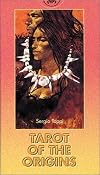
I’ve just spent a happy half hour looking through my Tarot of the Origins with a magnifying glass.
Strong abstract design, bold use of colour, strikingly dramatic composition and complex, satisfying pen-and-wash textures – these are the qualities Sergio Toppi’s artwork has given to the cards that makes them my favourite deck. Simply considered as paintings, every one is beautiful and satisfying. The imagery locates the various figures in a fairly show more consistently-imagined prehistoric or “primitive” situation: the landscape itself often no more than a suggestion of rainforest or rocky desert, with an occasional standing stone or tree. And there are birds and wild animals – rhino, hippo, ape, bison, deer and a gigantic bear. Almost every card has a human figure, often shown in extreme close-up that leaves little room for any background, and many of the figures are adorned with either tattoos or jewellery of gold or bone, or both. Each face is like a portrait of a real individual.
The structure of the deck matches that of traditional decks, with four suits of ten numbered cards and four court cards, plus 22 trumps. The symbolism of the trumps is broadly in line with tradition, but many are renamed, so we have II to VI respectively entitled The Great Mother, The Mother, The Father, The Shaman and Union, VIII Abundance, X to XII Time, Creative Power and The Sacrifice, XIV to XVI The Source, The Demon and The Menhir, and XX The Prey.
The four (renamed) suits are colour-coded, with the card illustration having a limited palette in which the ‘key’ colour predominates: this I find very visually pleasing as well as technically helpful in doing a reading. The suit of Soul is blue-toned, Jewels yellow, Nature green and Blood red. The Soul (water) suit is supposed to equate to Chalices, Jewels (earth) to Pentacles, Nature (fire) to Wands, and Blood (air) to Swords – but the correspondence, to my mind, is less than exact – which is fine by me, as it actually makes me think in a fresh way about the elements and the nature of the suits. The “pip” cards are numbered, but each number also has a name, which appears in the LWB but not on the card: in order from Ace to Ten they are called Etching, Age, Mask, Bones, Stone, Rite, Era, Spirit, Birth and Environment. The four court cards are Child, Animal, Woman and Man.
On the face of it, the concerns addressed by the cards seem limited to basic survival and the expression of rudimentary spiritual or creative urges, which ought to make them less than helpful in reading for a twenty-first century client. But thinking behind our thin veneer of civilisation, reading between the lines of the LWB, letting one’s intuition work on the images (or vice versa), and using the technique I think of as ‘scrying’ – finding suggestive patterns or shapes in the card backgrounds – gives results no less relevant than the various medieval magicians, merchants and apprentices met in RWS and its variants. A few key cards are given the potential for quite sophisticated and original meanings: the Chariot for example, according to the LWB, may stand for “the means used for circulating ideas, non-decorative etchings”- in other words, communication. Most of the LWB meanings are clear and useful, with the exception of the note about XV the Demon, which I can’t quite make sense of – “to wear a mask which reveals who we are”. show less
I’ve just spent a happy half hour looking through my Tarot of the Origins with a magnifying glass.
Strong abstract design, bold use of colour, strikingly dramatic composition and complex, satisfying pen-and-wash textures – these are the qualities Sergio Toppi’s artwork has given to the cards that makes them my favourite deck. Simply considered as paintings, every one is beautiful and satisfying. The imagery locates the various figures in a fairly show more consistently-imagined prehistoric or “primitive” situation: the landscape itself often no more than a suggestion of rainforest or rocky desert, with an occasional standing stone or tree. And there are birds and wild animals – rhino, hippo, ape, bison, deer and a gigantic bear. Almost every card has a human figure, often shown in extreme close-up that leaves little room for any background, and many of the figures are adorned with either tattoos or jewellery of gold or bone, or both. Each face is like a portrait of a real individual.
The structure of the deck matches that of traditional decks, with four suits of ten numbered cards and four court cards, plus 22 trumps. The symbolism of the trumps is broadly in line with tradition, but many are renamed, so we have II to VI respectively entitled The Great Mother, The Mother, The Father, The Shaman and Union, VIII Abundance, X to XII Time, Creative Power and The Sacrifice, XIV to XVI The Source, The Demon and The Menhir, and XX The Prey.
The four (renamed) suits are colour-coded, with the card illustration having a limited palette in which the ‘key’ colour predominates: this I find very visually pleasing as well as technically helpful in doing a reading. The suit of Soul is blue-toned, Jewels yellow, Nature green and Blood red. The Soul (water) suit is supposed to equate to Chalices, Jewels (earth) to Pentacles, Nature (fire) to Wands, and Blood (air) to Swords – but the correspondence, to my mind, is less than exact – which is fine by me, as it actually makes me think in a fresh way about the elements and the nature of the suits. The “pip” cards are numbered, but each number also has a name, which appears in the LWB but not on the card: in order from Ace to Ten they are called Etching, Age, Mask, Bones, Stone, Rite, Era, Spirit, Birth and Environment. The four court cards are Child, Animal, Woman and Man.
On the face of it, the concerns addressed by the cards seem limited to basic survival and the expression of rudimentary spiritual or creative urges, which ought to make them less than helpful in reading for a twenty-first century client. But thinking behind our thin veneer of civilisation, reading between the lines of the LWB, letting one’s intuition work on the images (or vice versa), and using the technique I think of as ‘scrying’ – finding suggestive patterns or shapes in the card backgrounds – gives results no less relevant than the various medieval magicians, merchants and apprentices met in RWS and its variants. A few key cards are given the potential for quite sophisticated and original meanings: the Chariot for example, according to the LWB, may stand for “the means used for circulating ideas, non-decorative etchings”- in other words, communication. Most of the LWB meanings are clear and useful, with the exception of the note about XV the Demon, which I can’t quite make sense of – “to wear a mask which reveals who we are”. show less
This is my first exposure to Sergio Toppi and it has served as a scrumptious introduction to The Arabian Nights. Extraordinary effort is evident on every page, and the script does not waste a word in conveying the story. Toppi's masterpiece (among many, I'm sure) is easily my new favorite graphic novel to come from literary roots.
Awards


You May Also Like


Associated Authors
Statistics
- Works
- 116
- Also by
- 28
- Members
- 871
- Popularity
- #29,394
- Rating
- 3.6
- Reviews
- 32
- ISBNs
- 128
- Languages
- 10
