
Philippe Druillet
Author of The 6 Voyages of Lone Sloane Vol. 1
About the Author
Image credit: http://commons.wikimedia.org/wiki/User:Badseed
Series
Works by Philippe Druillet
Druillet 30x30 4 copies
A ma mer — Contributor — 1 copy
Lone Sloane 1 copy
ITAI ED. 2019 GOLD 1 copy
La notte 1 copy
La citta fiore 1 copy
Associated Works
Adèle Blanc-Sec, tome 7 : Tous des Monstres ! (1994) — Illustrator, some editions — 103 copies, 1 review
Tagged
Common Knowledge
- Canonical name
- Druillet, Philippe
- Birthdate
- 1944-06-28
- Gender
- male
- Nationality
- France
- Birthplace
- Toulouse, Haute-Garonne, France
- Associated Place (for map)
- Haute-Garonne, France
Members
Reviews
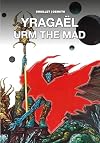
It's absolute gorgeous nonsense. Lovecraftian high fantasy with elements of sci-fi and horror. You need a magnifying glass to really appreciate Druillet's artwork in all its glory, and it's even more impressive when you take into account that this was all done by hand in the pre-digital era. AI will never be able to produce anything like this.
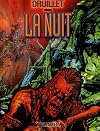
In a nutshell: Mad Max meets the Fabulous Furry Freak Brothers. I expected this to basically be a Blue Oyster Cult song in comic book form, and it certainly was that - minus a bit of cleverness perhaps.
OK, so some bikers who get burned by the sun are being exterminated by the cops and the "palefaces". They decide to rise up and seize the production facility the produces the drugs they need to stay alive.
It's barely coherent as a premise, and this is not helped by the dialog, which is in the show more form "HA HA HA! BLOOD! CRAP! NIGHT!". Maybe it's a translation issue, or maybe this was kinda just shat out in a bender of grief (included are extra helpings of explanation that this was produced right after the death of Druillet's wife, probably to make up for the merits lacking in the work itself).
The art is deceptively complex: it appears simple and drug-addled, but on closer inspection there is a lot of complex detail, but on further inspection this detail is just extra lines. Filler, added perhaps as a texture, providing no form, no information, no *detail*. It's like Druillet saw the hints of intricacy that Moebius tosses into his work, and is aping that style without understanding it.
Kinda fun, in a trashy 80s Italian dystopian sci-fi film sorta way, but I wouldn't call it *good*. show less
OK, so some bikers who get burned by the sun are being exterminated by the cops and the "palefaces". They decide to rise up and seize the production facility the produces the drugs they need to stay alive.
It's barely coherent as a premise, and this is not helped by the dialog, which is in the show more form "HA HA HA! BLOOD! CRAP! NIGHT!". Maybe it's a translation issue, or maybe this was kinda just shat out in a bender of grief (included are extra helpings of explanation that this was produced right after the death of Druillet's wife, probably to make up for the merits lacking in the work itself).
The art is deceptively complex: it appears simple and drug-addled, but on closer inspection there is a lot of complex detail, but on further inspection this detail is just extra lines. Filler, added perhaps as a texture, providing no form, no information, no *detail*. It's like Druillet saw the hints of intricacy that Moebius tosses into his work, and is aping that style without understanding it.
Kinda fun, in a trashy 80s Italian dystopian sci-fi film sorta way, but I wouldn't call it *good*. show less

This volume collects some of the earliest comics by Métal Hurlant co-founder Phillipe Druillet. There is not much depth to the neo-human protagonist Lone Sloane, even if he is "partly a god." He is a thorn in the side of every society and authority that he interacts with, and his stigma of blazing red eyes seems to be a heritage from Moorcock's Elric, whom Druillet had earlier adapted to comics.
The basic genre of these stories is psychedelic space opera, and the first half of the book is show more made up of distinct adventures. The first of these has Sloane encountering the Throne of the Black God (another Elric motif?), which becomes his interdimensional conveyance until he is reunited with his spaceship the O Sidarta. Other episodes introduce villains like the savage ruler Shonga and the sorcerer Torquedara Varenkor, who suppose they can use Sloane in their plans. Rose, the "rocket brain" (ships's computer?) that serves Sloane, becomes a woman who aids him. And the end of this sequence is a visit to a post-human Earth, populated by "horned dwarfs ... tattooed women ... masked priests" who have "fled the universe of Elric the Necromancer."
The second half of the book has a more coherent and continuous narrative set on the anarchic pleasure world Delirius. It culminates in a heist that triggers "a revolutionary farce on an artificial and decadent planet." In this tale, there is a cult called the Red Redemption that seeks to use Sloane as a pawn in their schemes under the power of an interstellar empire. I seem to perceive some influence on Star Wars here, although both could just be drawing on a common heritage of planetary romance.
The page compositions throughout--frequently two-page spreads and sometimes rotated ninety degrees--are consistently striking, and the illustrations are a riot of detail and op-art colors. Sequential panels are often used, but they are never conventional rectangles, and they are sometimes so exotically shaped and arranged that it is necessary for the artist to supply little traffic-directing arrows to guide the reader.
No credit is given in the 1973 Dragon's Dream/Heavy Metal US edition for either translation or lettering work. The hand lettering uses a fantasy-inflected style, and it varies greatly in size. (I was unsure whether that resulted from differing scaling of the original art, translation demands altering the quantity of text, or both.) Sometimes it is so tiny that I had to resort to a magnifying glass! That tool, along with bright overhead lighting, was also helpful when text was given in black ink on dark-colored text boxes.
Admittedly, the text is almost superfluous in this book, where the exotic and elaborate images are the real prize, and the stories are mostly piles of tropes. show less
The basic genre of these stories is psychedelic space opera, and the first half of the book is show more made up of distinct adventures. The first of these has Sloane encountering the Throne of the Black God (another Elric motif?), which becomes his interdimensional conveyance until he is reunited with his spaceship the O Sidarta. Other episodes introduce villains like the savage ruler Shonga and the sorcerer Torquedara Varenkor, who suppose they can use Sloane in their plans. Rose, the "rocket brain" (ships's computer?) that serves Sloane, becomes a woman who aids him. And the end of this sequence is a visit to a post-human Earth, populated by "horned dwarfs ... tattooed women ... masked priests" who have "fled the universe of Elric the Necromancer."
The second half of the book has a more coherent and continuous narrative set on the anarchic pleasure world Delirius. It culminates in a heist that triggers "a revolutionary farce on an artificial and decadent planet." In this tale, there is a cult called the Red Redemption that seeks to use Sloane as a pawn in their schemes under the power of an interstellar empire. I seem to perceive some influence on Star Wars here, although both could just be drawing on a common heritage of planetary romance.
The page compositions throughout--frequently two-page spreads and sometimes rotated ninety degrees--are consistently striking, and the illustrations are a riot of detail and op-art colors. Sequential panels are often used, but they are never conventional rectangles, and they are sometimes so exotically shaped and arranged that it is necessary for the artist to supply little traffic-directing arrows to guide the reader.
No credit is given in the 1973 Dragon's Dream/Heavy Metal US edition for either translation or lettering work. The hand lettering uses a fantasy-inflected style, and it varies greatly in size. (I was unsure whether that resulted from differing scaling of the original art, translation demands altering the quantity of text, or both.) Sometimes it is so tiny that I had to resort to a magnifying glass! That tool, along with bright overhead lighting, was also helpful when text was given in black ink on dark-colored text boxes.
Admittedly, the text is almost superfluous in this book, where the exotic and elaborate images are the real prize, and the stories are mostly piles of tropes. show less
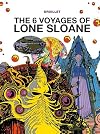
Some classic Heavy Metal-era comics.
These are short, simple, and largely incoherent stories from the drug-addled early 70s. Each is a dozen pages or less, appearing as (or intended for) installments in a monthly magazine. Consequently, the stories move pretty fast, with no time for backstory or in-depth explanation. This gives the comics a making-it-up-as-we-go-along feel, though there are often hints that there is more to the story than available space allowed.
Druillet's art, which tends to show more add superfluous lines to provide the illusion of intricacy or detail, works pretty well here. This is because the subjects are, for the most part, ornately-costumed characters or hallucinatory mind-states. Druillet is clearly one of those artists who has gobbled up every available resource depicting religious or tribal artifacts, but has never cracked a technical manual, architectural blueprints, or an engineering text. This sort of thing is usually defended as "the technology is so alien that it would look nothing like what we have now", but really it's ignorance - and it makes even more insulting the use of historical Asian designs as "alien".
Anyways, as it goes with Druillet, despite all the obvious flaws these are pretty fun little comics. show less
These are short, simple, and largely incoherent stories from the drug-addled early 70s. Each is a dozen pages or less, appearing as (or intended for) installments in a monthly magazine. Consequently, the stories move pretty fast, with no time for backstory or in-depth explanation. This gives the comics a making-it-up-as-we-go-along feel, though there are often hints that there is more to the story than available space allowed.
Druillet's art, which tends to show more add superfluous lines to provide the illusion of intricacy or detail, works pretty well here. This is because the subjects are, for the most part, ornately-costumed characters or hallucinatory mind-states. Druillet is clearly one of those artists who has gobbled up every available resource depicting religious or tribal artifacts, but has never cracked a technical manual, architectural blueprints, or an engineering text. This sort of thing is usually defended as "the technology is so alien that it would look nothing like what we have now", but really it's ignorance - and it makes even more insulting the use of historical Asian designs as "alien".
Anyways, as it goes with Druillet, despite all the obvious flaws these are pretty fun little comics. show less
Lists
Awards


You May Also Like


Associated Authors
Statistics
- Works
- 41
- Also by
- 3
- Members
- 814
- Popularity
- #31,348
- Rating
- 3.8
- Reviews
- 14
- ISBNs
- 88
- Languages
- 6
- Favorited
- 3