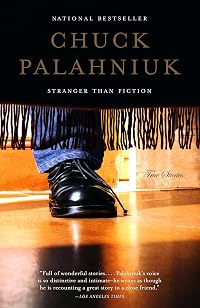
Stranger Than Fiction: True Stories
by Chuck Palahniuk
On This Page
Description
From the bestselling author of Fight Club and Diary, a collection of essays and journalistic pieces that prove that real life has imagination beaten cold in the strangeness and wonder departmentsChuck Palahniuk’s world has always been, well, different from yours and mine. The pieces that comprise Stranger Than Fiction, his first nonfiction collection, prove just how different, in ways both highly entertaining and deeply unsettling. Encounters with alternative culture heroes Marilyn Manson show more and Juliette Lewis; the peculiar wages of fame attendant on the big budget film production of the movie Fight Club; life as an assembly-line drive train installer by day, hospice volunteer driver by night; the really peculiar lives of submariners; the really violent world (and mangled ears) of college wrestlers; the underground world of iron-pumping anabolic steroid gobblers; the immensely upsetting circumstances of his father’s murder and the trial of his killer—each essay or vignette offers a unique facet of existence as lived in and/or observed by one of our most flagrantly daring and original literary talents. show less
Tags
Recommendations


Member Reviews
Surprised so many seem to loathe this. As Palahniuk repeatedly makes clear his process largely consists of stealing material from real world stories, which is also what's happening here. It's more than 20 years old and contains material from the 90s so it's well dated, which is sometimes fun in its own right.
We get reporting from a collection of wrestling wannabes with references to how something weird called “ultimate fighting” is poaching good wrestlers with more money. We get a POV of something as whacky as “dressing up like a dog and a bear” and just walking the streets to great consternation. The teenagers “yakking on the payphones” are maybe walking their kids or grandkids around a furry convention today. In “You Are show more Here” he delivers a great gutpunch to everyone crowding a convention hall, paying to get seven minutes to pitch their life stories, and getting shut down.
In part 2 there are interviews. We get Juliette Lewis lying about Scientology and asking a gay man about his experiences with women, in a game that looks designed to unveil dirty secrets much like Scientologists do to their members. Marilyn Manson lays out tarot cards and reflects on his career with Rose McGowan just heading out long before any abuse allegations. Other profiles have certainly lost some interest due to time erosion.
The final part is short & personal and contains reflections on working with AIDS patients and the strange death of Palahniuk's father (though this loses some of the effect having been told in part previously in the same collection).
Not groundbreaking stuff, but working writer stuff, that often shares the wry tone of his fiction. The reflections on Fight Club coming from around the time of the adaptation and shortly after are perhaps the most interesting, as are the laments about literary fiction having no audience, and writers being cursed to be defined by their one big hit. It'd be interesting reading later reflections on the same. show less
We get reporting from a collection of wrestling wannabes with references to how something weird called “ultimate fighting” is poaching good wrestlers with more money. We get a POV of something as whacky as “dressing up like a dog and a bear” and just walking the streets to great consternation. The teenagers “yakking on the payphones” are maybe walking their kids or grandkids around a furry convention today. In “You Are show more Here” he delivers a great gutpunch to everyone crowding a convention hall, paying to get seven minutes to pitch their life stories, and getting shut down.
In part 2 there are interviews. We get Juliette Lewis lying about Scientology and asking a gay man about his experiences with women, in a game that looks designed to unveil dirty secrets much like Scientologists do to their members. Marilyn Manson lays out tarot cards and reflects on his career with Rose McGowan just heading out long before any abuse allegations. Other profiles have certainly lost some interest due to time erosion.
The final part is short & personal and contains reflections on working with AIDS patients and the strange death of Palahniuk's father (though this loses some of the effect having been told in part previously in the same collection).
Not groundbreaking stuff, but working writer stuff, that often shares the wry tone of his fiction. The reflections on Fight Club coming from around the time of the adaptation and shortly after are perhaps the most interesting, as are the laments about literary fiction having no audience, and writers being cursed to be defined by their one big hit. It'd be interesting reading later reflections on the same. show less
With this collection of short stories, Chuck Palahniuk manages to find the dark underbelly of America, specifically the Pacific Northwest, and express it in stories about seemingly common events. Palahniuk covers a wide range of topics and introduces us to wrestlers, body builders, and men who build their own stone castles. In addition to some stories about him and when Fight Club was released, all these stories could have happened anywhere. They all seem normal on the surface but turn darker after a closer inspection. Palahniuk has said that most of his characters and plot lines come from actual people and events and this book makes it easy to see why.
Ancora Palahniuk. Vista la qualità degli ultimi libri, non vorrei che l'autore - o il suo agente - volesse far uscire un libro all'anno solo per pagare le spese della propria sussistenza. Vista la qualità letteraria di questo e del precedente, Cavie, verrebbe da pensare che è cosi' che vanno le cose. Il testo è interessante, a tratti. Quello sui castelli americani, ad esempio, racconta fatti che mi hanno incuriosito: sono andato sul web a cercare - su Google Earth - il castello citato. Anche altri racconti sono curiosi; a volte anche dolorosi, nel loro minimalismo spinto. Però rimane un patchwork di altalenante maestria. Come si dice di alcuni dischi, "consigliato ai fans". Poi mi rimarrà a lungo la curiosità di come scrive Amy show more Hempel, visto che non si trovano traduzioni italiane... E anche dove diavolo è quel castello che ho tanto cercato sul web... show less
There are some essays in here which are definitely Palahniuk and some which read like any journalist could have written them (a few of the profile pieces). This is a good read for fans and it gives some insight into the author's thoughts on literary and social topics. Fans will also enjoy the personal essays in the third section. My favourite by far is "You Are Here." It's packed full of great lines and musings on the industry. The book is not boring by any means and shouldn't be overlooked, but it is not his best work... although I'm not sure it's intended to be anything more than a collection. If you find it, read it.
Stranger than fiction moves outside of Palahniuk's normal literary fiction genre as a publication of collected personal stories and articles written by Palahniuk for magazine articles. While it did not prove to be as outlandishly strange as I expected, it proved to be something even warmer and more endearing than I would have imagined possible based on Palhniuk's novels, all the while he manages to keep the dark humor that at times made me laugh out loud.
Prior to reading Stranger than Fiction I had always regarded Plahniuk's work in some sort of literature limbo. Something more than pulp, yet somehow something less than literary. This is not to say I do not love his works. I have two other unread Palahniuk novels that I refuse to pick show more up. There are only so many of his works available, and new Palaniuk experiences are not to be squandered frivolously. It is just that I did not know where or how to classify them within the spectrum if written material. With my reading of Stranger than Fiction I now have no doubt that his works are those of a literary writer.
Imagine a small farming town, where the residents have an annual combine tractor crash derby. What types of images come to mind? Palahniuk includes a story on just such an event held each year in Washington, and the intimate portrait he paints of the event is simply amazing. It takes on a gritty and truthful level of realism, where people are not poor caricatures of small town rednecks. It is a portrait of competent hard working people who come together to escape the vicissitudes of a hard farming life.
Another article contains the stories of some of the personalities involved in a set of wrestling matches held to win spots for an Olympic trial. In my mind I always had some dim and disdainful view of what Greco-Roman wrestling was, and I am sure that most other people have some similarly stereo-typed views of it. After reading Palahniuk's story however, I know I will never view wrestling the same way again. There is something there far deeper than I imagined. Something that is both tragic and in some ways inpspiring, and it took him giving it a face for me to recognize it.
The stories cover oddities such as the combine derby, interviews and profiles of both famous and unknown people, and personal stories from Palahniuk's past. Each one has that same intimate personal feel. The interviews especially impressed me as they are not just a set of cheap question and answers. Palahniuk spends time with the interviewee, then tells a story that makes you feel as though you were sitting in the room with them experiencing their lives, not some outsider peering into someone's life picking over a pile of facts or pre-canned facades. They are masterful displays of his writing talent.
If you are not familiar with Palahniuk's works, or only know of him from the movie adaptation of Fight Club, pick up his novels and start reading them today. If you follow his works but have not yet read Stranger than Fiction pick it up today. My only suggestion is that you should not sit down and read it all at once. Each story is like a rich dessert, and they should be savored one at a time and spread out through other readings rather than gobbling them up all at once. show less
Prior to reading Stranger than Fiction I had always regarded Plahniuk's work in some sort of literature limbo. Something more than pulp, yet somehow something less than literary. This is not to say I do not love his works. I have two other unread Palahniuk novels that I refuse to pick show more up. There are only so many of his works available, and new Palaniuk experiences are not to be squandered frivolously. It is just that I did not know where or how to classify them within the spectrum if written material. With my reading of Stranger than Fiction I now have no doubt that his works are those of a literary writer.
Imagine a small farming town, where the residents have an annual combine tractor crash derby. What types of images come to mind? Palahniuk includes a story on just such an event held each year in Washington, and the intimate portrait he paints of the event is simply amazing. It takes on a gritty and truthful level of realism, where people are not poor caricatures of small town rednecks. It is a portrait of competent hard working people who come together to escape the vicissitudes of a hard farming life.
Another article contains the stories of some of the personalities involved in a set of wrestling matches held to win spots for an Olympic trial. In my mind I always had some dim and disdainful view of what Greco-Roman wrestling was, and I am sure that most other people have some similarly stereo-typed views of it. After reading Palahniuk's story however, I know I will never view wrestling the same way again. There is something there far deeper than I imagined. Something that is both tragic and in some ways inpspiring, and it took him giving it a face for me to recognize it.
The stories cover oddities such as the combine derby, interviews and profiles of both famous and unknown people, and personal stories from Palahniuk's past. Each one has that same intimate personal feel. The interviews especially impressed me as they are not just a set of cheap question and answers. Palahniuk spends time with the interviewee, then tells a story that makes you feel as though you were sitting in the room with them experiencing their lives, not some outsider peering into someone's life picking over a pile of facts or pre-canned facades. They are masterful displays of his writing talent.
If you are not familiar with Palahniuk's works, or only know of him from the movie adaptation of Fight Club, pick up his novels and start reading them today. If you follow his works but have not yet read Stranger than Fiction pick it up today. My only suggestion is that you should not sit down and read it all at once. Each story is like a rich dessert, and they should be savored one at a time and spread out through other readings rather than gobbling them up all at once. show less
A collection of essays and interviews about isolation, personal mission, adventure, and mortality. These essays focus on great creatives and personal experiences but they have a lot of layers that would benefit any reader. Some of the topics seemed designed to shock or beggar belief, but they are all well executed and thoughtful.
Fans of Palahniuk will find this collection significantly more subdued than his fiction, but equally as gripping.
A comment in the critical quotes, which mentions that this is one of the few nonfiction collections to be united by a single, coherent theme, is spot-on, and makes the collection as compulsively readable as his novels. Palahniuk proves here that he is an enormously gifted storyteller, with a friendly, nonjudgmental voice that begs to be read.
Recommended, even for those too wary to read his fictional works.
A comment in the critical quotes, which mentions that this is one of the few nonfiction collections to be united by a single, coherent theme, is spot-on, and makes the collection as compulsively readable as his novels. Palahniuk proves here that he is an enormously gifted storyteller, with a friendly, nonjudgmental voice that begs to be read.
Recommended, even for those too wary to read his fictional works.
Members
- Recently Added By
Published Reviews
"So Stranger Than Fiction, Palahniuk's first nonfiction book and a collection of the journalism pieces he's written between novels, actually seems more like a companion piece to any of his fiction than a completely different animal altogether (since, after all, fiction and nonfiction are supposed to be opposites). "
added by jam13
Lists

Books Read in 2010
631 works; 11 members

Short Nonfiction Collections
51 works; 4 members
Author Information

101+ Works 104,145 Members
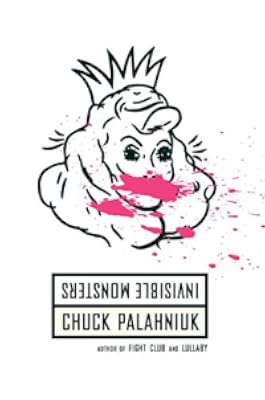
Chuck Palahniuk was born in Pasco, Washington on February 21, 1962. He received a BA in journalism from the University of Oregon in 1986. Before becoming a full-time author, he worked as a journalist and as a diesel mechanic. He has written numerous novels including Survivor, Invisible Monsters, Lullaby, Diary, Haunted, Rant, Snuff, Pygmy, show more Tell-All, Damned, Doomed, Beautiful You, and Make Something Up: Stories You Can't Unread. Fight Club was made into a film by director David Fincher and Choke was made into a film by director Clark Gregg. He is also the author of Fugitives and Refugees, a nonfiction profile of Portland, Oregon, and the nonfiction collection Stranger Than Fiction. (Bowker Author Biography) show less
Some Editions
Awards and Honors
Distinctions
Series
Belongs to Publisher Series
Common Knowledge
- Original title
- Stranger Than Fiction: True Stories
- Original publication date
- 2004
- People/Characters
- Chuck Palahniuk; Marilyn Manson ; The Rocket Guy; Juliette Lewis
- Dedication
- For Mick and Chick and Chimp
- First words
- A pretty blonde tilts her cowboy hat farther back on her head.
- Quotations
- In these places I found the truest stories. In support groups. In hospitals. Anywhere people had nothing left to lose, that's where they told the most truth.
Classifications
Statistics
- Members
- 3,582
- Popularity
- 4,579
- Reviews
- 41
- Rating
- (3.45)
- Languages
- 8 — English, French, German, Italian, Portuguese, Russian, Spanish, Turkish
- Media
- Paper, Audiobook, Ebook
- ISBNs
- 30
- ASINs
- 15