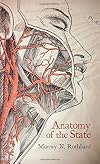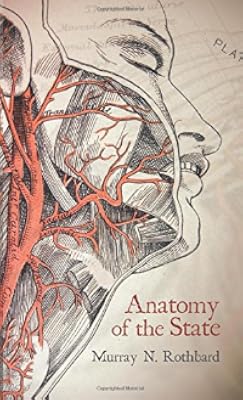
Anatomy of the State
by Murray Rothbard
On This Page
Description
Murray Rothbard was known as the state's greatest living enemy, and this book is his most powerful statement on the topic. He explains what a state is and what it is not. He shows how it is an institution that violates all that we hold as honest and moral, and how it operates under a false cover. He shows how the state wrecks freedom, destroys civilization, and threatens all lives and property and social wellbeing, all under the veneer of "good intentions".Tags
Recommendations

















Member Reviews
The state is a parasite that uses a variety of psychological, economic and violent tools to force people to sustain its boundless expansion. It rings true to some extent but rather onesidedly. The author contrasts the state with "the people". One is bad, one is good. A thought immediately springs to mind: what about corporations? If corporations are not the state but rather "the people" and corporations are known to behave rather badly when unchecked - then both sides are bad. One is bad, the other is bad, everything is bad. But if corporations are small states and "the people" are good then what is the proposed way of organising labor and allocating resources among "the people"? Can "the people" survive without the state?
In the end the show more text felt like an angry pamphlet against immoral power abusers. Perhaps the author is right and we are all just subjects to a number of ever growing parasites that have encompassed the earth but what do i do about it? show less
In the end the show more text felt like an angry pamphlet against immoral power abusers. Perhaps the author is right and we are all just subjects to a number of ever growing parasites that have encompassed the earth but what do i do about it? show less
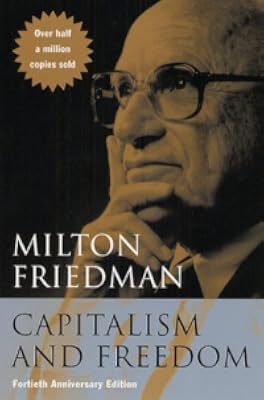
"Anatomy of the State" is a short book by Murray Rothbard, which will make you – I hope – think deeply about 'the State,' its functions, motivations, constraints, and ambitions. Murray Rothbard was an American economist, economic historian, political theorist, and activist who died in 1995. Rothbard believed the private sector could perform most of the state's functions, yet he does not appear to be a Milton Friedman follower.
The background is critical if you wish to understand the book and provides vital context to the writing.
You may interpret the text in two ways. First, it is an honest expose of how states function. Second, you may assess the book as a cynical attack on states and their existence.
I agree with a few points; show more for instance, he states the state fears people with independent minds and the ability to think critically. I agree with this point, considering propaganda's rise and critical thought's decline.
However, I disagree when he says that states force their citizens to pay for their services, contrasting it with a more benevolent approach corporations pursue when they expect citizens to pay for goods and services.
The book, however, will make you pause and analyze the state's functioning and your role as a citizen.
You do not have to agree with everything he wrote, and examining his propositions with a critical mind is vital.
The writing is terse, and the book is short, which may fool you into believing it is easy to 'consume. Do not make this mistake! show less
The background is critical if you wish to understand the book and provides vital context to the writing.
You may interpret the text in two ways. First, it is an honest expose of how states function. Second, you may assess the book as a cynical attack on states and their existence.
I agree with a few points; show more for instance, he states the state fears people with independent minds and the ability to think critically. I agree with this point, considering propaganda's rise and critical thought's decline.
However, I disagree when he says that states force their citizens to pay for their services, contrasting it with a more benevolent approach corporations pursue when they expect citizens to pay for goods and services.
The book, however, will make you pause and analyze the state's functioning and your role as a citizen.
You do not have to agree with everything he wrote, and examining his propositions with a critical mind is vital.
The writing is terse, and the book is short, which may fool you into believing it is easy to 'consume. Do not make this mistake! show less
Of the books my friends have recommended lately this has been the best. Rothbard does a fantastic job at exposing the state for what it is, and not what the state has taught us it is. Moreover he goes beyond the tired libertarian rhetoric “thieves with guns" and "a monopoly on force" and actually shows what’s wrong with these things. Most interesting, I founds, was Rothbard's attack on "nullification" and showing how it is just as wrong as any other government action for the protection of individual liberty. I'm so glad for the recommendation.
This is a very concise statement of the world's foremost anarcho-capitalist, Murray Rothbard's, view of the state. It's pretty dense and not particularly suited to the audiobook format, although the argument doesn't rely on weird redefinitions or anything else -- more, that the impact of relatively simple statements takes some reflection to consider. Probably better as a print book, although the narration was technically fine.
Rothbard's beliefs are certainly extreme, but even if you don't agree fully with them, they seem to be a logically consistent belief system and are worth learning about.
Rothbard's beliefs are certainly extreme, but even if you don't agree fully with them, they seem to be a logically consistent belief system and are worth learning about.
Nekem úgy tűnik az emberek többsége az államot egy szükséges és alapvetően jó intézménynek tartja. Az átlagembernek konkrétan persze rengeteg gondja van az állam bizonyos intézményivel, az éppen hatalmon lévőkkel meg még több, de az állam létét és jóságát mégsem kérdőjelezi meg. Bosszankodik egy sort, hogy az állam rosszul és drágán működik, és hogy az éppen hatalmon lévők lopnak, de bízik abban, hogy a következő választás után majd jobb lesz. Aztán többnyire nem lesz.
Ebben a nagyon rövid könyvben Rothbard célja szerintem összesen annyi, hogy megkérdőjelezze ezt az általánosan elfogadott nézetet. Egy mondattal összefoglalva a könyvet: Az állam rossz és gonosz. Ha pusztán show more annyit elér az író, hogy az olvasó elgondolkodik az állam szerepén, már elérte a célját.
Sajnos a könyv nem túl meggyőző, nem fejti ki elég részletesen az elveit. Vannak nagyon jó és elgondolkodtató részletek benne, de végig olyan érzésem volt, mintha hosszabb munkákból ollóztak volna össze egy rövid kivonatot. show less
Ebben a nagyon rövid könyvben Rothbard célja szerintem összesen annyi, hogy megkérdőjelezze ezt az általánosan elfogadott nézetet. Egy mondattal összefoglalva a könyvet: Az állam rossz és gonosz. Ha pusztán show more annyit elér az író, hogy az olvasó elgondolkodik az állam szerepén, már elérte a célját.
Sajnos a könyv nem túl meggyőző, nem fejti ki elég részletesen az elveit. Vannak nagyon jó és elgondolkodtató részletek benne, de végig olyan érzésem volt, mintha hosszabb munkákból ollóztak volna össze egy rövid kivonatot. show less
Jan 9, 2016Hungarian
Ratings
Members
- Recently Added By
Lists

Ancap Part 1 - Novice
11 works; 1 member

Books Read in 2023
5,547 works; 145 members
Author Information

126+ Works 4,781 Members
Classifications
- Genres
- Nonfiction, Economics, General Nonfiction, Politics and Government, Philosophy
- DDC/MDS
- 320.1 — Society, government, & culture Political science Types of Government The State
- LCC
- JC585 — Political Science Political theory Political theory. The state. Theories of the state Purpose, functions, and relations of the state
- BISAC
Statistics
- Members
- 320
- Popularity
- 99,621
- Reviews
- 5
- Rating
- (3.87)
- Languages
- 5 — Czech, English, Hungarian, Portuguese (Portugal), Spanish
- Media
- Paper, Audiobook, Ebook
- ISBNs
- 20
- ASINs
- 2