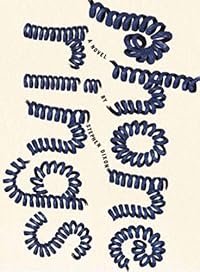
Interstate
by Stephen Dixon
On This Page
Description
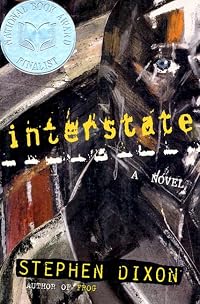
On a highway, goons draw alongside a car and open fire on a man and his two daughters, killing one of the girls. The novel offers seven scenarios. In one, the man seeks revenge, in another he turns to religion, in a third he gives his daughters a pep talk, just before they hit the road, on the best way to protect oneself. By the author of Frog.Tags
Recommendations















Member Reviews
It would be easy to assume that Interstate comes across as a kind of MFA writing exercise: in eight different sections, tell and retell the horrific story of a shooting on an interstate, in which a father and his older daughter watch his younger daughter die. But this is not some postmodern version of the filmGroundhog Day, nor does it come across as a novel built more on style and flash than substance and heart. Dixon has serious themes he is exploring, and the novel's structure is in service to those themes.
At the heart of the novel is Dixon's blistering exploration of violence in American society. The most obvious example is the anguish that Nathan Frey feels over the inexplicable death of his young daughter Julie, and the show more repercussions of this death for Nathan, his wife, and his daughter Margo. I can see why some readers couldn't finish this novel. I found the opening two sections to be so wrenching, so visceral, that I had to pace myself, and read short sections in brief sittings. I have read books with disturbing subject matter before, but Dixon's novel affected me even more than usual. Dixon's writing style, with many long, run-on sentences, brings the reader directly into Nathan's memories, into his tortured recollections of this terrible event. The result is an almost claustrophobic connection with Nathan, but also an inspired reconstruction of how we talk to ourselves and, most important, how we relive and recreate memories of traumas. Dixon's exploration of the instability of memory is fascinating. Which of the retellings of these events on the interstate is true? Can we ever fix one version of reality firmly? What roles do fantasy and magical thinking have in how we experience past traumas?
In addition to the the shooting on the interstate, Dixon expands his study of violence in American culture to consider other kinds of violence, including road rage, revenge killings, generational shifts in violence and the socio-economic causes of those changes, the violence of American culture as seen in video games, and even an exasperated parent's feelings of impatience and the small but indelible acts of violence with children that those feelings generate. He explores these different manifestations throughout the different versions of the shooting, sometimes in graphic descriptions of Nathan's actions, sometimes through conversations he has with Margo and Julie (conversations that he often pitches way above their ability to understand), and sometimes through Nathan's pained recollections of his impatience with his daughters.
I struggled with this book, but I am very grateful that I read it. There are many novels that explore violence in America, but few that stayed with me for weeks, that made me think about the effects of violence in such a visceral way, that take on all the different acts of violence, big and small, that come together to create a culture of violence in the US. This is not an easy book to read, but it's a crucial book, especially to read on the heels of tragedies like the Sandy Hook shootings, and the killing of Trayvon Martin. It reminds us of the devastating personal toll of violence, and of the myriad acts of violence, large and small, that surround us -- and that we sometimes enact ourselves -- every day. show less
At the heart of the novel is Dixon's blistering exploration of violence in American society. The most obvious example is the anguish that Nathan Frey feels over the inexplicable death of his young daughter Julie, and the show more repercussions of this death for Nathan, his wife, and his daughter Margo. I can see why some readers couldn't finish this novel. I found the opening two sections to be so wrenching, so visceral, that I had to pace myself, and read short sections in brief sittings. I have read books with disturbing subject matter before, but Dixon's novel affected me even more than usual. Dixon's writing style, with many long, run-on sentences, brings the reader directly into Nathan's memories, into his tortured recollections of this terrible event. The result is an almost claustrophobic connection with Nathan, but also an inspired reconstruction of how we talk to ourselves and, most important, how we relive and recreate memories of traumas. Dixon's exploration of the instability of memory is fascinating. Which of the retellings of these events on the interstate is true? Can we ever fix one version of reality firmly? What roles do fantasy and magical thinking have in how we experience past traumas?
In addition to the the shooting on the interstate, Dixon expands his study of violence in American culture to consider other kinds of violence, including road rage, revenge killings, generational shifts in violence and the socio-economic causes of those changes, the violence of American culture as seen in video games, and even an exasperated parent's feelings of impatience and the small but indelible acts of violence with children that those feelings generate. He explores these different manifestations throughout the different versions of the shooting, sometimes in graphic descriptions of Nathan's actions, sometimes through conversations he has with Margo and Julie (conversations that he often pitches way above their ability to understand), and sometimes through Nathan's pained recollections of his impatience with his daughters.
I struggled with this book, but I am very grateful that I read it. There are many novels that explore violence in America, but few that stayed with me for weeks, that made me think about the effects of violence in such a visceral way, that take on all the different acts of violence, big and small, that come together to create a culture of violence in the US. This is not an easy book to read, but it's a crucial book, especially to read on the heels of tragedies like the Sandy Hook shootings, and the killing of Trayvon Martin. It reminds us of the devastating personal toll of violence, and of the myriad acts of violence, large and small, that surround us -- and that we sometimes enact ourselves -- every day. show less
One of Dixon's most cohesive treatises on the horrors that float just beneath the surface of American life, ,em>Interstate charters you a ride on the stream of consciousness of a man experiencing the ultimate fear: the death of a child.
Full review: http://www.davidlouisedelman.com/reviews/dixon.cfm
Full review: http://www.davidlouisedelman.com/reviews/dixon.cfm
multiperspectives on a highway shooting
5.96
5.96
Ratings
Members
- Recently Added By
Lists

Most Disturbing Books
124 works; 27 members

National Book Award Finalists - Fiction
377 works; 12 members
Author Information

39+ Works 1,248 Members
Stephen Dixon was a hyper-realistic author of novels and short stories. Working on a portable typewriter, he published 18 novels and about 600 stories.Mr. Dixon played with syntax and diction and used narrative tricks that made his fiction compelling and challenging. In his very short short story Wife in Reverse, Mr. Dixon started with a woman¿s show more death and ended years earlier, when she meets her husband. Mr. Dixon started teaching at the writing seminars at Johns Hopkins University in 1980 and stayed until he retired in 2007. Porochista Khakpour, a novelist and memoirist, said Mr. Dixon had been the reason she studied at Hopkins. Dixon¿s honors include several O. Henry Awards and Pushcart Prizes, as well as a Guggenheim Fellowship and two National Endowment of the Arts grants. He was a finalist for the National Book Award in 1991, for Frog, and in 1995, for Interstate. Stephen Bruce Ditchik was born on June 6, 1936, in Manhattan, the fifth of seven children. His father, Abraham, was a dentist; his mother, Florence (Leder) Ditchik, was a chorus girl and beauty queen and later an interior designer. His mother changed their last name to Dixon after her husband went to prison for extortion. After graduation Dixon moved to Washington, where he worked for pulp crime magazines and as a radio reporter. Later, back in Manhattan, he was an editor at CBS News. But after starting to write short stories he knew he found his calling. He wrote for major magazines like Esquire and Playboy and for literary reviews and journals, none of them too obscure for him to send pitches to. Stephen Dixon passed away on 11/06/2019 at the age of 83. (Bowker Author Biography) show less
Awards and Honors
Awards
Common Knowledge
- Canonical title
- Interstate
Classifications
Statistics
- Members
- 131
- Popularity
- 248,552
- Reviews
- 3
- Rating
- (3.88)
- Languages
- English, Spanish
- Media
- Paper, Ebook
- ISBNs
- 5
- ASINs
- 3