
On This Page
Description
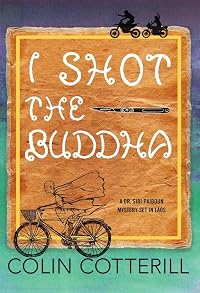
Laos, 1975. The Communist Pathet Lao has taken over this former French colony. Dr. Siri Paiboun, a seventy-two-year-old Paris-trained doctor, is appointed national coroner. Although he has no training for the job, there is no one else: the rest of the educated class have fled.He is expected to come up with the answers the party wants, but crafty and charming Dr. Siri is immune to bureaucratic pressure. At his age, he reasons, what can they do to him? And he knows he cannot fail the dead who show more come into his care without risk of incurring their boundless displeasure. Eternity could be a long time to have the spirits mad at you.
. show less
Tags
Recommendations





















Member Recommendations
Littlemissbashful Eccentric characters, mystical goings on, wily old folk and wry humour with intriguing plot points.
Member Reviews
Dr. Siri is a wonderful person: witty, sarcastic, but with a kind and caring heart. This latter is exemplified in his treatment of his morgue assistant, Mr. Geung, who has Down's Syndrome. Siri treats him as he would any other human, and gives him work that both fits and challenges his abilities. I liked Siri's communing with the dead, and how he used his dreams to help solves mysteries. The neighborhood dog, Saloop knew Siri was a shaman before he did! Siri appreciated both science and spiritualism (p. 141). I had to skip over a few of the autopsy sections - too much information! But I could appreciate Siri's coroner's lunches, when he and a colleague hashed over a case because in college, when we put up bird carcasses as study skins, show more I often ate chicken for lunch and didn't see a problem with that when other students did!
I learned much about Lao politics and culture. I was particularly fascinated by the Hmong people, who believe in tree spirits as do many indigenous cultures. I want to read more about the Hmong. They have been cruelly treated and evicted from their lands. Many now live in the United States, and fortunately, more of their stories and writings are being published. I realized we have some children's picture books by Hmong writers in our library (for example, "The Most Beautiful Thing" and "A Map into the World" by Kao Kalia Yang) and have found more adult books for possible purchase as well.
I often read about the author after I've read a book I liked. Colin Cotterill lived in Laos for a few years and formed an organization to help children. From the beautiful descriptions of the Laos country and people (even Crazy Rajid, whom Siri aided), it is evident that the author loves and respects Laos. For example, as a naturalist, I resonated with Cotterill's including Siri's observations of his world, such as applauding a tern who somersaulted over his beak, but still caught a fish (p. 95) Cotterill also writes beautifully with wonderful figures of speech: The Yak-40 lifted uncomfortably, like an overfed goose. (p. 123). I wouldn't want to fly in that plane! show less
I learned much about Lao politics and culture. I was particularly fascinated by the Hmong people, who believe in tree spirits as do many indigenous cultures. I want to read more about the Hmong. They have been cruelly treated and evicted from their lands. Many now live in the United States, and fortunately, more of their stories and writings are being published. I realized we have some children's picture books by Hmong writers in our library (for example, "The Most Beautiful Thing" and "A Map into the World" by Kao Kalia Yang) and have found more adult books for possible purchase as well.
I often read about the author after I've read a book I liked. Colin Cotterill lived in Laos for a few years and formed an organization to help children. From the beautiful descriptions of the Laos country and people (even Crazy Rajid, whom Siri aided), it is evident that the author loves and respects Laos. For example, as a naturalist, I resonated with Cotterill's including Siri's observations of his world, such as applauding a tern who somersaulted over his beak, but still caught a fish (p. 95) Cotterill also writes beautifully with wonderful figures of speech: The Yak-40 lifted uncomfortably, like an overfed goose. (p. 123). I wouldn't want to fly in that plane! show less
Dr. Siri Paiboun, one of the last doctors left in Laos after the communist takeover in 1972, has been drafted to be national coroner even though untrained. But this independent seventy-two-year-old has an outstanding qualification for it: curiosity. With the help of his newly appointed and ambitious secretary, Dtui, and Mr. Geung, the Down syndrome-afflicted morgue assistant, Dr. Paiboun performs autopsies and begins asking questions to solve the mysteries relating to the death of the wife of a government official and of the unidentified body fished out of the river-a body that was not drowned, but tortured with electricity. As it turns out, all is not peaceful and calm in the new communist paradise of Laos.
I really liked Dr. Siri who show more was irreverent, funny and very sarcastic about the communist government. With two murder cases, this was a complex story that was sometimes hard to follow because of the Laos and Vietnamese names of characters. There was also a quirky part where Siri could communicate with the dead he worked on and get information, even though he was agnostic and committed to science. I enjoyed the story and plan to read more in this series. show less
I really liked Dr. Siri who show more was irreverent, funny and very sarcastic about the communist government. With two murder cases, this was a complex story that was sometimes hard to follow because of the Laos and Vietnamese names of characters. There was also a quirky part where Siri could communicate with the dead he worked on and get information, even though he was agnostic and committed to science. I enjoyed the story and plan to read more in this series. show less
What a concept--an aging doctor is appointed coroner by the new Communist regime in Laos, c. 1976. He has no experience, no resources, and a devoted but fairly useless staff. Furthermore, his superiors would prefer his reports not to raise any uncomfortable questions. Dr. Siri, however, isn't too concerned with what his superiors would prefer, and sets about to do his job as well as possible under the circumstances. Well, you know he's going to get himself in trouble. But you can't imagine the KIND of trouble...administrators and bureaucrats are the least of his problems. Dogs hate him, spirits of the dead visit him, and an entire village takes him for a thousand year shaman come back to exorcise the evil spirt, the Phibob. This book show more was great sport; I love Siri's irreverence, his wit and his compassion. The supernatural element works just fine for me here. And Siri is no slouch as a detective. This is the first in a series, and I warn you, the author has made it impossible to stop with the first one.
Review written in 2010 show less
Review written in 2010 show less
A mystery, the first in a series, set in Laos in the 1970s, in which the elderly Dr. Siri, reluctantly employed as a coroner working in an underfunded and rather primitive hospital, finds himself embroiled in a case that may have massive diplomatic implications.
The mystery plot itself was only mildly interesting to me (and perhaps undermined a bit by a prologue scene that gives a little too much away), but the novel as a whole was definitely worth reading for the interesting setting, the dry humor, and the likeably crotchety main character. It does contain some supernatural elements, which is something that I'm not normally a fan of in stories that aren't explicitly fantasy, and Dr. Siri's visions of the dead end up being an eensy bit show more of a deus ex machina for the plot. But on the whole, I'd say that aspect of things worked better for me than I'd have expected.
I'm not sure if I'm going to read further in this series or not, just because I'm not generally that much of a mystery reader, but I certainly wouldn't mind spending a little more time with Dr. Siri. show less
The mystery plot itself was only mildly interesting to me (and perhaps undermined a bit by a prologue scene that gives a little too much away), but the novel as a whole was definitely worth reading for the interesting setting, the dry humor, and the likeably crotchety main character. It does contain some supernatural elements, which is something that I'm not normally a fan of in stories that aren't explicitly fantasy, and Dr. Siri's visions of the dead end up being an eensy bit show more of a deus ex machina for the plot. But on the whole, I'd say that aspect of things worked better for me than I'd have expected.
I'm not sure if I'm going to read further in this series or not, just because I'm not generally that much of a mystery reader, but I certainly wouldn't mind spending a little more time with Dr. Siri. show less
This is an unusual mystery novel. The main character, 72-year-old Dr. Siri Paiboun, is the head coroner in Laos in 1976 -- the only coroner in the country at that time. He had the job thrust upon him after the Communist revolution -- when he wanted to retire. Call him a disillusioned Communist, he was once filled with revolutionary zeal, but now sees that the new system is probably just about as flawed as the old one -- just different flaws.
He'd come to believe two conflicting ideas with equal conviction: that communism was the only way man could be truly content; and that man, given his selfish ways, could never practice communism with any success.
He's dealing with the bodies of a woman who died suddenly at lunch; a dead man found in a show more lake; and a hairdresser who may or may not be a suicide, among others. A possible conspiracy is involved with one of the cases and, as a result, someone may be trying to kill him. And, oh, by the way, he sees dead people. Not just the bodies in the morgue, but their spirits. He apparently has a gift that's going to lead to some really strange experiences. (Not that seeing dead people in and of itself isn't strange enough.)
This book is interesting in providing a view into a very different time, place, and worldview. The mystery is pretty good, too. I like Dr. Siri, who has been shoved into a job he never wanted in what he thought would be the years of his retirement. I normally like stories with a paranormal element, but this one was challenging in that regard. Like I said, it involves a very different worldview. But Dr. Siri's bewilderment with that aspect of events in the story -- and his attempts to find scientific explanations -- rather put me at ease regarding even the strangest stuff. show less
He'd come to believe two conflicting ideas with equal conviction: that communism was the only way man could be truly content; and that man, given his selfish ways, could never practice communism with any success.
He's dealing with the bodies of a woman who died suddenly at lunch; a dead man found in a show more lake; and a hairdresser who may or may not be a suicide, among others. A possible conspiracy is involved with one of the cases and, as a result, someone may be trying to kill him. And, oh, by the way, he sees dead people. Not just the bodies in the morgue, but their spirits. He apparently has a gift that's going to lead to some really strange experiences. (Not that seeing dead people in and of itself isn't strange enough.)
This book is interesting in providing a view into a very different time, place, and worldview. The mystery is pretty good, too. I like Dr. Siri, who has been shoved into a job he never wanted in what he thought would be the years of his retirement. I normally like stories with a paranormal element, but this one was challenging in that regard. Like I said, it involves a very different worldview. But Dr. Siri's bewilderment with that aspect of events in the story -- and his attempts to find scientific explanations -- rather put me at ease regarding even the strangest stuff. show less
Rating: 3.875* of five
The Book Report: In the Vientiane, Laos, of November 1976, green-eyed Dr. Siri Paiboun is the seventy-two-year-old coroner...the only one in the newly liberated by communism country...charged with discovering why Mrs. Nitnoy, powerful leader of the Laos Women's Union and wife of Member of Parliament Kham, suddenly keeled over dead. Her husband insists it was her peasant taste for raw pork. The judge Dr. Siri works for thinks that sounds reasonable, and also unnecessary to investigate.
Dr. Siri knows otherwise. Not because he's that good a coroner, since he's only had the job for ten reluctant months...he knows because Mrs. Nitnoy told him so.
After she was dead.
So begins a fascinating look into the chaotic world of show more Southeast Asia in the wake of the Vietnam War, told from the out-of-the-Anglophone-ordinary viewpoint of the Southeast Asians left to pick up the pieces. The story follows Dr. Siri as he is manipulated from behind the scenes in someone's quest to hide truths from the doctor, someone who clearly doesn't know...heck, even the good doctor doesn't know!...that Dr. Siri is the latest incarnation of legendary thousand-plus-year-old shaman Yeh Ming, and so has the ability to see spirits and call on ancient energies intrinsic to Laos's beautiful forested mountains.
Dr. Siri is called upon to use his increasing skills as a coroner to look into the deaths of three Vietnamese nationals, in Laos for purposes both secret and unknown to anyone Siri knows; then is sent to the ethnically Hmong south to deal with the sudden and unexpected deaths of Army officers in charge of an economic revitalization program that doesn't seem to be revitalizing anything so much as devitalizing the men in charge; and while among the Hmong, who worryingly seem to know him better than he knows himself, Siri finally gets to know Yeh Ming, his fellow traveler in this green-eyed body in a country of brown-eyed people.
With a combination of mundane detective skills, spirit guidance, and help from a formidable nurse, an eidetic Down's syndrome laborer, an old friend in high places, and a new friend in clandestine ones, Siri ties all the malefactors in knots and delivers them to the proper authorities (whether spiritual or mundane) with ribbons on.
My Review: This book is such a welcome addition to my series-mystery-loving world. Dr. Siri is a delight. He's too old, and too weary, and too smart to be scared by petty bureaucratic thuggery. He values his comfort...oh yeah baby, the older we get, the more we do!...but his idea of comfort includes doing the real right thing, not the easy right thing.
Cotterill gives Dr. Siri a deep and rich backstory reaching into Laos's colonial French past, extending into the jungles of Pathet Lao communist resistance, and through to the time of victory and the inevitable Animal Farm-esque disillusion that accompanies regime change. "Throw the crooks out!" the cry goes up, but the unsaid and often unrealized second part of that cry is, "and let our crooks have a turn!" Dr. Siri sees this, knows it, and frankly doesn't care. He's got no children, so no grandchildren, and so no, or a very small, stake in this Brave New World. Except, well, you know, there IS justice in the world, imperfect and piecemeal though it may be, but justice demands a good man's best be given and a heavy price be paid both for administering and evading it.
He might only have one (metaphorical) eye, but Siri is honor bound to use it among the blind he lives with. It's this quality that makes him irresistible, and gives Cotterill's creation a semblance of life that brings him out of the pages of the book and into the imagination of the reader who lives in a world where ideals of fairness and decency and selflessness have degenerated into "don't tread on me" selfishness and mock-"liberty" that curiously resembles "don't tell me what I can do with what's mine" greed. It's these very things that Siri grimaces at.
Just like me. show less
The Book Report: In the Vientiane, Laos, of November 1976, green-eyed Dr. Siri Paiboun is the seventy-two-year-old coroner...the only one in the newly liberated by communism country...charged with discovering why Mrs. Nitnoy, powerful leader of the Laos Women's Union and wife of Member of Parliament Kham, suddenly keeled over dead. Her husband insists it was her peasant taste for raw pork. The judge Dr. Siri works for thinks that sounds reasonable, and also unnecessary to investigate.
Dr. Siri knows otherwise. Not because he's that good a coroner, since he's only had the job for ten reluctant months...he knows because Mrs. Nitnoy told him so.
After she was dead.
So begins a fascinating look into the chaotic world of show more Southeast Asia in the wake of the Vietnam War, told from the out-of-the-Anglophone-ordinary viewpoint of the Southeast Asians left to pick up the pieces. The story follows Dr. Siri as he is manipulated from behind the scenes in someone's quest to hide truths from the doctor, someone who clearly doesn't know...heck, even the good doctor doesn't know!...that Dr. Siri is the latest incarnation of legendary thousand-plus-year-old shaman Yeh Ming, and so has the ability to see spirits and call on ancient energies intrinsic to Laos's beautiful forested mountains.
Dr. Siri is called upon to use his increasing skills as a coroner to look into the deaths of three Vietnamese nationals, in Laos for purposes both secret and unknown to anyone Siri knows; then is sent to the ethnically Hmong south to deal with the sudden and unexpected deaths of Army officers in charge of an economic revitalization program that doesn't seem to be revitalizing anything so much as devitalizing the men in charge; and while among the Hmong, who worryingly seem to know him better than he knows himself, Siri finally gets to know Yeh Ming, his fellow traveler in this green-eyed body in a country of brown-eyed people.
With a combination of mundane detective skills, spirit guidance, and help from a formidable nurse, an eidetic Down's syndrome laborer, an old friend in high places, and a new friend in clandestine ones, Siri ties all the malefactors in knots and delivers them to the proper authorities (whether spiritual or mundane) with ribbons on.
My Review: This book is such a welcome addition to my series-mystery-loving world. Dr. Siri is a delight. He's too old, and too weary, and too smart to be scared by petty bureaucratic thuggery. He values his comfort...oh yeah baby, the older we get, the more we do!...but his idea of comfort includes doing the real right thing, not the easy right thing.
Cotterill gives Dr. Siri a deep and rich backstory reaching into Laos's colonial French past, extending into the jungles of Pathet Lao communist resistance, and through to the time of victory and the inevitable Animal Farm-esque disillusion that accompanies regime change. "Throw the crooks out!" the cry goes up, but the unsaid and often unrealized second part of that cry is, "and let our crooks have a turn!" Dr. Siri sees this, knows it, and frankly doesn't care. He's got no children, so no grandchildren, and so no, or a very small, stake in this Brave New World. Except, well, you know, there IS justice in the world, imperfect and piecemeal though it may be, but justice demands a good man's best be given and a heavy price be paid both for administering and evading it.
He might only have one (metaphorical) eye, but Siri is honor bound to use it among the blind he lives with. It's this quality that makes him irresistible, and gives Cotterill's creation a semblance of life that brings him out of the pages of the book and into the imagination of the reader who lives in a world where ideals of fairness and decency and selflessness have degenerated into "don't tread on me" selfishness and mock-"liberty" that curiously resembles "don't tell me what I can do with what's mine" greed. It's these very things that Siri grimaces at.
Just like me. show less
Dr Siri Paiboun, a 72-year-old coroner, gets caught up in two different murder investigations. Set in Communist Laos in 1976, there's plenty of diplomatic intrigue as a backdrop. In one case, three men are found dead under suspicious circumstances involving the Vietnamese government. In the other case, a Laotian official's wife dies and his mistress commits suicide: what's up with that? I found some parts of the story a bit hard to believe, but enjoyed getting to know Dr Siri, a delightful amateur detective who consistently outsmarts the officials. I am not completely hooked on this series yet, but I have the next book on my Kindle so will read at least one more.
Members
- Recently Added By
Lists

Favorite Series
238 works; 94 members

Crime and Mysteries to Read
746 works; 31 members

Murder Mysteries
57 works; 11 members

Majkia's Mystery/ Thriller TBR
86 works; 3 members

Global Reads: Books Set in East Asia
139 works; 12 members

Tagged Doctors
15 works; 5 members

Ghosts
278 works; 18 members

Global Mysteries
90 works; 6 members

1970s Narratives
40 works; 6 members

Best Mysteries With a Historical Setting
292 works; 160 members

Book Worlds We'd Like To Visit
322 works; 158 members

Ghost Stories That Thrill Us
256 works; 115 members
Author Information

54+ Works 8,133 Members
Colin Cotterill is an author and cartoonist. He was born in London in 1952, and trained as a Physical Education teacher, before setting off on a world tour that hasn't ended yet. Along the way, he has held various teaching positions in Israel, Australia, the U. S., Japan, and Southeast Asia. He would eventually become involved in child protection, show more and it was his work with trafficked children that motivated him to write his first novel, The Night Bastard. The reaction was so positive that he decided to take time off and write full-time. Two of his subsequent novels are child-protection based: Evil in the Land Without, and Pool and its role in Asian Communism. Cotterill may be best known as the author of the Dr. Siri Paiboun series, set in the People's Democratic Republic of Laos. Titles in the series include: Six and a Half Deadly Sins, the Woman Who Wouldn't Die, Love Songs from a Shallow Grave, The Merry Misogynist, Thirty-Three Teeth and The Coroner's Lunch. He also pens the Jim Jurree series, set in southern Thailand. Titles in this series include: The Axe Factor, Grandad, There's a Head on the Beach and Killed at the Whim of a Hat. (Bowker Author Biography) show less
Some Editions
Awards and Honors
Series

Belongs to Publisher Series
Work Relationships
Is contained in
Common Knowledge
- Canonical title
- The Coroner's Lunch
- Original title
- The Coroner's Lunch
- Original publication date
- 2004-12-15
- People/Characters
- Dr Siri Paiboun; Nurse Dtui; Geung Watajak; Civilai Songsawat; Inspector Phosy; Judge Haeng Somboun (show all 11); Tshaj; Auntie Suab; Yeh Ming; Lah; Nguyen Hong (Vietnamese coroner)
- Important places
- Vientiane, Laos; Laos; Vietnam
- Dedication
- With the kindest thanks and lots of love
to the following folks:
Pornsawan, Bouasawan, Chantavone, Sounieng, Ketkaew, Dr Pongruk, Bounlan, Don, Souk, Soun, Michael and his secretary, Somdee, David L., Nok, Dtee... (show all), Siri, Yayoi and Steph. - First words
- Tran, Tran, and Hok broke through the heavy end-of-wet-season clouds.
- Quotations
- Most of the results from Siri’s morgue relied on archaic color tests: combinations of chemicals or litmus samples. These were more suitable for telling what wasn’t, rather than what was.
We, my children, are no longer common coroners. We are investigators of death.
He couldn’t imagine why old men would chase new-hatched chicks when there were pretty hens in the yard.
Nguyen Hong changed, Siri put together his carbon copy of the autopsy report. Then the two set off for a real coroner's lunch in the canteen. Given the topic of their conversation, they were guaranteed a table to themselves. ... (show all)(p. 94)
They looked out at the sleek white tern flying a foot from the surface of the river. It swooped down for a fish, thrust its beak in too deep, and crashed, somersaulting with the current.
I bet that hurt.
The bat... (show all)tered tern, its feathers flustered, broke triumphantly through the surface of the water with the fish in its beak. The two old friends put down their plastic cups and applauded. (p. 95)
"When we cut down a tree for our huts, or to make space to plant crops, we ask for permission from the tree spirits. We make offerings, sacrifices sometimes, as our own shaman sees fit. Usually, the spirits will move on witho... (show all)ut blaming us. After all, we have to live together, share what resources we have. That's the way it has always been.
"Some of the trees in these parts are as old as the land itself. The spirits have become powerful here. When the soldiers came, they didn't ask permission. They didn't show any respect. They didn't sacrifice a buffalo or consult a shaman. They just started cutting. And they cut and cut and hauled the timber away in trucks. They cut hundreds, thousands of trees.
"Can you imagine? Even the most benevolent spirits have become evil. They all seek revenge." [Tshaj, Hmong headman] (p. 140)
Socialism is a great cosmos, but trust is the atmosphere that holds the stars together.
"I'm sneaking in to the embassy this afternoon when all the dignitaries are at the reception. You people are never short of receptions, are you?"
"That's why it's called the Communist 'Party', and not the Communist 'si... (show all)t down and get some work done'." - Last words
- (Click to show. Warning: May contain spoilers.)As soon as he opened the lid, his smile faded. Whatever joy that had surrounded them vanished like incense smoke. Lying in the box, like a charred corpse in a coffin, was the black prism on its leather thong. Not some other black prism, the one worn smooth from years of hands. The one that had been destroyed and scattered on the land in Khamuan.
"Given the bad luck you've been having lately, I figured you could use a lucky charm. Like it?" - Blurbers
- Rozan, S. J.; Pawel, Rebecca
- Original language
- English
- Canonical DDC/MDS
- 823.92
- Canonical LCC
- PR6053.O778
Classifications
Statistics
- Members
- 1,839
- Popularity
- 11,862
- Reviews
- 150
- Rating
- (3.85)
- Languages
- 7 — Dutch, English, French, German, Italian, Japanese, Swedish
- Media
- Paper, Audiobook, Ebook
- ISBNs
- 48
- ASINs
- 17