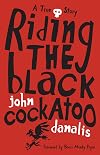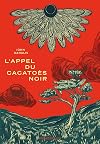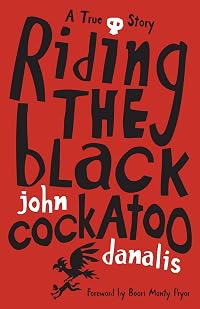
Riding the black cockatoo: a true story
by John Danalis
On This Page
Description
This is the compelling story of how the skull of an Aboriginal man, found on the banks of the Murray river over 40 years ago, came to be returned to his Wamba Wamba descendants. A story of awakening, atonement, forgiveness and friendship.Tags
Recommendations











Member Reviews
I selected this book, somewhat tentatively to read as a contribution to Indigenous Literature Week. I am so glad I did. It was a great choice and this is a book that I know I shall read again.
Firstly, this is a story that is currently on the UK senior school reading list. It makes a refreshing changing from Hamlet and Mice and Men which were on the reading list when I was doing my English Lit exams in the mid 1980s. Secondly, as I got into the story I felt that I needed to read with a paper and pen at my side to jot down some things that I could look up.
The story is essentially triggered by event that happened when John was a mature student at university in 2005. He selected a class that focused on Indigenous reading as he had several show more times in the past. Each previous time he had changed his mind and moved to a different class. This time it was different.
As so many of us do, John spoke something and then wished he had not.What he shared with his fellow class mates was that as he was growing up, his parents, well actually his father, had acquired the skull of an Aborigine. The very moment he says that sentence the eyes of his class mates are upon him, each one showing their horror at the fact.
The skull had been nicked named Mary, although it was later established that the deceased individual had been male and had died from syphilis. What follows next is that John seeks the skull at his parents home whilst they are away and then begins the journey on recovering the skull from his parents and returning the skull to the area and tribe that he came from.
The journey of research and determination is an informative one and that was probably one of the things that drew me to the book, the research and the question of would it be possible to return the skull to the land from where it came? John starts with the department at the library whose focus is on Indigenous Studies, from there he is directed to various archives and people who assist him and point him the direction to succeed in his quest. There are similarities and coincidences throughout the journey and as the story unfolds John develops further as an individual, learning about the importance of "Mary" finding the way home.
Throughout his research John is told of the events and challenges faced by the Aborigines, the fact that a nameless individual appears on the back of Australian coins in much the same way as the kangaroo and Koala does. He is also told of the tragedy of the "Stolen Generation" and the very fact, which I found very sobering that it is easier to track the fate of someone through the camps in Nazi Germany during the Second World War than those affected by the policy of the "Stolen Generation". Mary was identified as being from the Wamba Wamba tribe, in the Swan Hill area.
John felt a degree of curiosity, yet acknowledging respect for the beliefs of the Indigenous Tribes, and it is the way his journey and his research are displayed through the book that makes this a great book. The kids that will read this through their studies are very lucky. That said, this is not just for kids. It is a great book with an amazing amount of depth and provides lots of information and angles for exploring for those interested in the Aboriginal culture. show less
Firstly, this is a story that is currently on the UK senior school reading list. It makes a refreshing changing from Hamlet and Mice and Men which were on the reading list when I was doing my English Lit exams in the mid 1980s. Secondly, as I got into the story I felt that I needed to read with a paper and pen at my side to jot down some things that I could look up.
The story is essentially triggered by event that happened when John was a mature student at university in 2005. He selected a class that focused on Indigenous reading as he had several show more times in the past. Each previous time he had changed his mind and moved to a different class. This time it was different.
As so many of us do, John spoke something and then wished he had not.What he shared with his fellow class mates was that as he was growing up, his parents, well actually his father, had acquired the skull of an Aborigine. The very moment he says that sentence the eyes of his class mates are upon him, each one showing their horror at the fact.
The skull had been nicked named Mary, although it was later established that the deceased individual had been male and had died from syphilis. What follows next is that John seeks the skull at his parents home whilst they are away and then begins the journey on recovering the skull from his parents and returning the skull to the area and tribe that he came from.
The journey of research and determination is an informative one and that was probably one of the things that drew me to the book, the research and the question of would it be possible to return the skull to the land from where it came? John starts with the department at the library whose focus is on Indigenous Studies, from there he is directed to various archives and people who assist him and point him the direction to succeed in his quest. There are similarities and coincidences throughout the journey and as the story unfolds John develops further as an individual, learning about the importance of "Mary" finding the way home.
Throughout his research John is told of the events and challenges faced by the Aborigines, the fact that a nameless individual appears on the back of Australian coins in much the same way as the kangaroo and Koala does. He is also told of the tragedy of the "Stolen Generation" and the very fact, which I found very sobering that it is easier to track the fate of someone through the camps in Nazi Germany during the Second World War than those affected by the policy of the "Stolen Generation". Mary was identified as being from the Wamba Wamba tribe, in the Swan Hill area.
John felt a degree of curiosity, yet acknowledging respect for the beliefs of the Indigenous Tribes, and it is the way his journey and his research are displayed through the book that makes this a great book. The kids that will read this through their studies are very lucky. That said, this is not just for kids. It is a great book with an amazing amount of depth and provides lots of information and angles for exploring for those interested in the Aboriginal culture. show less
I zipped through this book following in amazement at how John Danalis went from a casual comment to a full journey into the world of reconciliation as he tries to return an Aboriginal skull (which has sat in his parents' loungeroom for 40 years) to its rightful resting place. I loved the simplicity and sincerity with which he told his tale and so opoenly explained all his thoughts and feelings. I know it was his story, but I kept wondering what his wife and children thought and felt as he went on this journey.
A fascinating, moving memoir.
Ratings
Members
- Recently Added By
Author Information
5 Works 117 Members
Awards and Honors
Awards
Common Knowledge
- Canonical title
- Riding the black cockatoo: a true story
- Original publication date
- 2009
- People/Characters
- John Danalis; Gary Murray (Wamba Wamba Elder); Jason Tamiru (Yorta Yorta songman); Bob Weatherall (Kamilaroi Elder); Jida Murray-Gulpilil (dancer, musician and cultural man); Mary (Wamba Wamba man whose remains were returned to his country)
- Important places
- Wamba Wamba country (NSW side of Murray River near Swan Hill)
- Important events
- Repatriation of Aboriginal skull - Mary - to Wamba Wamba country
- Epigraph
- The door that shuts you out is the same door that lets you in. (Old Indian saying)
- Dedication
- To my mother and father who said 'Yes'. To Bianca and Ebony, our future.
- First words
- Have you ever blurted something out in conversation, and a nanosecond later wished that you'd kept your trap shut?
- Last words
- (Click to show. Warning: May contain spoilers.)I can't say I felt healed. I just felt good. As though I belonged. As though I had come home.
- Blurbers
- Pryor, Boori Monty; Murray, Wyrker Milloo Gary
Classifications
- Genre
- Nonfiction
- DDC/MDS
- 305.89915 — Society, government, & culture Social sciences, sociology & anthropology Social group - Age, Gender, Ethnicity Ethnic and national groups Other ethnic and national groups Papuans; Aboriginal Australians and Tasmanians; Malayo-Polynesian and related peoples; miscellaneous peoples
- LCC
- GN666 .D36 — Geography, Anthropology and Recreation Anthropology Anthropology Ethnology. Social and cultural anthropology Ethnic groups and races By region or country
- BISAC
Statistics
- Members
- 84
- Popularity
- 381,588
- Reviews
- 3
- Rating
- (4.38)
- Languages
- English, French
- Media
- Paper, Audiobook, Ebook
- ISBNs
- 5
- ASINs
- 2