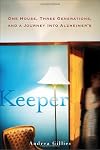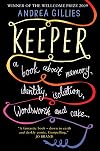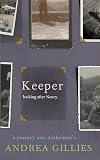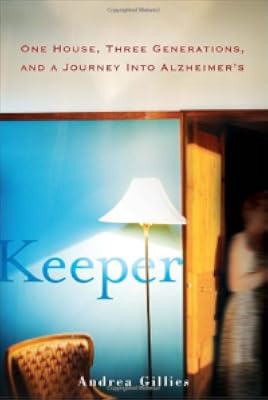
Keeper: One House, Three Generations, and a Journey into Alzheimer's
by Andrea Gillies
On This Page
Description
'Keeper' is a very humane and honest exploration of living with Alzheimer's, giving an illuminating account of the disease itself. Gillies tells about the time she and her family spent living with someone with dementia, in a big Victorian house in the far, far north of Scotland.Tags
Recommendations
























Member Reviews
So many memoirs suffer from simplistic writing, a lack of reflection, or anger that reflects not enough emotional distance from the memories.
This memoir has none of those problems, which is amazing considering the difficulty of Gillies' subject - two or more years of living with and caring for her mother in law with severe Alzheimers. The writing is beautiful, starkly honest, unafraid of all the grim details of the illness. She's in touch with all her own feelings, including anger, but she's able to transform these feelings into art.
So many memoirs also fall down when the writers try to integrate their research into the story, so that every other chapter becomes a dry recitation. Somehow Gillies avoids this too. The whole book is show more engrossing, powerful - one of the best memoirs I've ever read. show less
This memoir has none of those problems, which is amazing considering the difficulty of Gillies' subject - two or more years of living with and caring for her mother in law with severe Alzheimers. The writing is beautiful, starkly honest, unafraid of all the grim details of the illness. She's in touch with all her own feelings, including anger, but she's able to transform these feelings into art.
So many memoirs also fall down when the writers try to integrate their research into the story, so that every other chapter becomes a dry recitation. Somehow Gillies avoids this too. The whole book is show more engrossing, powerful - one of the best memoirs I've ever read. show less
Keeper by Andrea Gillies is a thorough look at the emotional and financial cost of caring for a person with Alzheimer's that includes a good bit of writing about the science behind the disease. I came away from it thinking that good institutions really are the best place for people so afflicted. In the case of Gillies' mother in law, Nancy wanted constant motion. Gillies could have spent a solid 5 hours caring for her, trying to amuse her taking her on walks and to a restaurant for apple pie, but when they got home and Gillies put Nancy in a chair and went to make coffee upon her return Nancy was bemoaning the fact that she never did anything with her life but sit in a chair. She never got to go anywhere. Like the man in the movie show more Memento Nancy had no short term memory, she was unable to make new memories, and she really had no idea what had happened in her life 10 minutes ago. She was also losing her long term memory and worse yet, her emotional control. She was verbally and physically abusive of everyone in the family, suspicious, dirty (she would dump her whole dinner, or worse yet, the contents of her toilet in the bookcase). Being in a home with others and constant care gave her the stimulation and discipline she needed. Gillies complains of finally succumbing to "Caregiver Dementia" herself, she was deeply depressed and thought of death, her children knew Granny had dementia but still couldn't help but be hurt when she attacked them. This is no way for people to live, but we put such praise toward people who are willing, and able, to keep their older loved ones at home we don't see that this is not always the best situation for anyone. Not a cheerful book, but a very honest one. It won both the 2009 Wellcome Trust Book Prize, the United Kingdom's popular science writing award and the 2010 Orwell Prize. I can see why. show less
I first came across Andrea Gillies in the Family section of the Guardian, sharing an extract from her journal of her time looking after her mother-in-law, who was in the advanced stages of suffering from Alzheimer's. The piece aroused the ire of many a sensitive Grauniad reader, who felt Gillies was invading her mother-in-law's privacy in setting down plainly the messy reality of mental degeneration. How you are supposed to prepare to deal with an illness if no one talks about it in any detail, I have no idea.
The journal eventually evolved into Keeper, a memoir-cum-science-book spanning the three years Gillies spent looking after Nancy, moving to a large house on the coast with her husband, their three children, Nancy, and Nancy's show more husband Morris. Gillies does not pull her punches: the harsh reality of the effects of Alzheimer's, from the aimless wandering to physical violence to embarrassing public nudity, are all set down unflinchingly. So, too, are the emotions Nancy's behaviour provokes in Gillies and, to a lesser extent, her family; she explores not just the practical, clinical realities of the illness, but also the impact that it has on those who are caring.
Interspersed with the personal perspective are reflections on the impact of dementia on art and creativity in the "famous", and some truly excellent passages of 'popular science'. Gillies has clearly done her research, and perhaps more importantly, she has a real gift for conveying the scientific and clinical detail of what is happening to the patient as the disease progresses in terms that the average non-scientific reader can instantly relate to. I do slightly wish that she'd provided a bibliography, as she makes frequent reference in the text to the books that she reads about Alzheimer's, which seem to be of wildly varying quality and approach.
I was drawn to this in the first instance because of my own very slight experience of dementia - my paternal grandmother suffered from vascular dementia for several years, and her sister died of Alzheimer's; a lot of the descriptions of Nancy's behaviour rang very true when I remember their reactions to the world. But very early on in the book, Andrea Gillies highlights some crucial data points that show the very real need for more people to read this book, beyond those who have been directly affected: the ageing of the population, coupled with a dementia rate that is expected to double in the next 20 years, is leading towards an explosion in the numbers of dementia patients - and correspondingly, in the number of people who will have to care for them, in particular because the UK system is geared towards home care for as long as possible, something that Gillies sets out in heartrending detail.
Dementia is not sexy. It's messy. It's embarrassing. It's expensive. It's upsetting. But it's happening, and more and more of us are going to have to deal with it firsthand. I can think of no better preparation than to read Keeper. Highly recommended - not just by me, but by the judges of the inaugural Wellcome Prize for Science Writing, who gave it the nod despite it astoundingly attracting no reviews in any major UK newspaper. show less
The journal eventually evolved into Keeper, a memoir-cum-science-book spanning the three years Gillies spent looking after Nancy, moving to a large house on the coast with her husband, their three children, Nancy, and Nancy's show more husband Morris. Gillies does not pull her punches: the harsh reality of the effects of Alzheimer's, from the aimless wandering to physical violence to embarrassing public nudity, are all set down unflinchingly. So, too, are the emotions Nancy's behaviour provokes in Gillies and, to a lesser extent, her family; she explores not just the practical, clinical realities of the illness, but also the impact that it has on those who are caring.
Interspersed with the personal perspective are reflections on the impact of dementia on art and creativity in the "famous", and some truly excellent passages of 'popular science'. Gillies has clearly done her research, and perhaps more importantly, she has a real gift for conveying the scientific and clinical detail of what is happening to the patient as the disease progresses in terms that the average non-scientific reader can instantly relate to. I do slightly wish that she'd provided a bibliography, as she makes frequent reference in the text to the books that she reads about Alzheimer's, which seem to be of wildly varying quality and approach.
I was drawn to this in the first instance because of my own very slight experience of dementia - my paternal grandmother suffered from vascular dementia for several years, and her sister died of Alzheimer's; a lot of the descriptions of Nancy's behaviour rang very true when I remember their reactions to the world. But very early on in the book, Andrea Gillies highlights some crucial data points that show the very real need for more people to read this book, beyond those who have been directly affected: the ageing of the population, coupled with a dementia rate that is expected to double in the next 20 years, is leading towards an explosion in the numbers of dementia patients - and correspondingly, in the number of people who will have to care for them, in particular because the UK system is geared towards home care for as long as possible, something that Gillies sets out in heartrending detail.
Dementia is not sexy. It's messy. It's embarrassing. It's expensive. It's upsetting. But it's happening, and more and more of us are going to have to deal with it firsthand. I can think of no better preparation than to read Keeper. Highly recommended - not just by me, but by the judges of the inaugural Wellcome Prize for Science Writing, who gave it the nod despite it astoundingly attracting no reviews in any major UK newspaper. show less
This memoir, written by a Scottish journalist, is a grim but honest account of what it is like to be a caretaker for older relatives, but especially with someone who is spiraling down into Alzheimer's disease. I'm not sure why I chose to read it (my father had dementia before his passing, but not Alzheimer's). It was difficult to get through but I finished it. I awarded it 3/5 stars, mainly for the author's perseverance in keeping a journal and committing to writing this book. I am basing this rating on my reaction to the story and my trouble with the subject matter, not the author's talent, nor her ability to make it through those couple of horrifying years. The difficulty for Ms. Gillies was that her father-in-law was confined to a show more wheelchair and was so depressed that he parked himself in front of the tv while the other family members dealt with his wife's severe dementia and physical limitations. She works from home as a writer (or tried to) and her husband has a career that had him traveling at times. They also have 3 children who must have had a tremendously difficult time dealing with all the emotional scenes at home.
I would have been satisfied with just a short story about this time in the author's family's life. It was hard to stomach the scenes dealing with the lack of hygiene and memory that her mother-in-law lost to this illness, which caused her to need to be cared for as a newborn baby would. The older woman needed to be reassured of the same things over and over, due to permanent short term memory loss-- and she would frequently become agitated--cursing at or smacking her grandchildren. All in all, I commend Ms. Gillies for writing this, and for being such an angel in caring for her husband's parents. We never know our own strength until we are put in certain circumstances, but I was left feeling depressed after finishing this story.
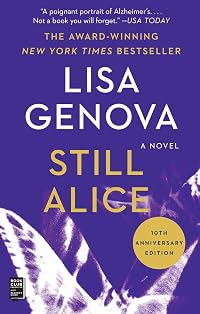
I did enjoy, and very highly recommend, Lisa Genova's novel about a professor going through Alzheimer's at a young age: Still Alice . show less
I would have been satisfied with just a short story about this time in the author's family's life. It was hard to stomach the scenes dealing with the lack of hygiene and memory that her mother-in-law lost to this illness, which caused her to need to be cared for as a newborn baby would. The older woman needed to be reassured of the same things over and over, due to permanent short term memory loss-- and she would frequently become agitated--cursing at or smacking her grandchildren. All in all, I commend Ms. Gillies for writing this, and for being such an angel in caring for her husband's parents. We never know our own strength until we are put in certain circumstances, but I was left feeling depressed after finishing this story.
I did enjoy, and very highly recommend, Lisa Genova's novel about a professor going through Alzheimer's at a young age: Still Alice . show less
I've met Andrea through Twitter and when I had an ugly exerience with a relative with Alzheimers and tweeted about it, Andrea was extremely supportive and helpful. After that I decided to buy the book. I haven't regretted that for a second. It's beautifully written, full of the latest research and very personal. I cannot believe how anybody can do what Andrea did for her mother-in-law. If you know anyone with Alzheimers, this is a good book to read. But it won't cheer you up.
Andrea Gillies es una periodista británica que decidió dejarlo todo para dedicarse a cuidar a su suegra, Nancy, con principios de alzhéimer, en una vieja casa en el norte de Escocia. Las amapolas del olvido es el relato estremecedor, enternecedor, maravillosamente bien narrado, de su experiencia como cuidadora, como persona que se dedica íntegramente al bienestar de otro y a intentar ayudarle a vivir y a morir. La historia de Andrea y Nancy y su día a día (unas veces cómico, otras trágico) compone un extraordinario diario novelado que incluye reflexiones sobre el ser, la falta de pasado o el funcionamiento de la mente y alberga toda una lección de humanidad.
Mar 5, 2012Spanish
En este libro, la periodista Andrea Gillies nos cuenta, en primera persona, el extraordinario amor y dedicación de ella hacia su suegra cuando le diagnosticaron Alzhéimer. Nos cuenta sus quehaceres diarios con ella, su día a día, para que comprendamos este tipo de dolencia y sobre todo, aprendamos a querer y respetar a quienes, por desgracia, lo padecen. Toda una lección de cariño, respeto y humanidad.
Jul 4, 2011Spanish
1
Members
- Recently Added By
Author Information
8 Works 401 Members
Awards and Honors
Awards
Common Knowledge
- Important places
- Scotland, UK
Classifications
- Genres
- Nonfiction, Biography & Memoir, General Nonfiction
- DDC/MDS
- 616.8 — Applied science & technology Medicine & health Diseases, Allergies, Skin Conditions Nervous Disorders: Autism, Anorexia, OCD
- LCC
- RC523 .G476 — Medicine Internal medicine Internal medicine Neurosciences. Biological psychiatry. Neuropsychiatry Psychiatry Psychopathology Psychoses
- BISAC
Statistics
- Members
- 184
- Popularity
- 178,611
- Reviews
- 7
- Rating
- (3.87)
- Languages
- English, French, Spanish
- Media
- Paper, Ebook
- ISBNs
- 9
- ASINs
- 4