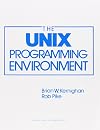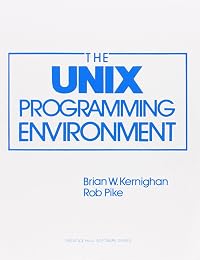
The UNIX Programming Environment
by Brian W. Kernighan (Author), Rob Pike (Author)
Prentice Hall Software Series
On This Page
Description
Designed for first-time and experienced users, this book describes the UNIX® programming environment and philosophy in detail. Readers will gain an understanding not only of how to use the system, its components, and the programs, but also how these fit into the total environment.Tags
Recommendations








Member Reviews
This is one of the best technical books I've ever read. In a strange way it's still the best introduction to Linux, even though there are many outdated details. After all, _all_ technical are full of outdated details -- but it's the rare book indeed that can rise above implementation and express an entire philosophy of development concisely and readably.
This book, copyright 1984, is not one's typical software read. Typical books on software deal with the latest and greatest that's coming down the pike. Instead, this book is a reminder of what is great in the UNIX operating system. It harkens back to the days when assembly coding was common and programming in C was considered more cutting edge.
So why is this worth a programmer's time to read over thirty years later in an era of object-orientation and machine-learning? The answer to this question is not vexing; indeed, it is simple. Great ideas transformed into great inventions deserve great study.
This book's epilog sums up this advice in describing four elements of UNIX's style:
1. "Let the machine do the work."
2. "Let other people do show more the work. Use programs that already exist as building blocks in your programs..."
3. "Do the job in stages. Build the simplest thing that will be useful, and let your experience with that determine what (if anything) is worth doing next."
4. "Build tools. Write programs that mesh with the existing environment, enhancing it rather than merely adding to it." show less
So why is this worth a programmer's time to read over thirty years later in an era of object-orientation and machine-learning? The answer to this question is not vexing; indeed, it is simple. Great ideas transformed into great inventions deserve great study.
This book's epilog sums up this advice in describing four elements of UNIX's style:
1. "Let the machine do the work."
2. "Let other people do show more the work. Use programs that already exist as building blocks in your programs..."
3. "Do the job in stages. Build the simplest thing that will be useful, and let your experience with that determine what (if anything) is worth doing next."
4. "Build tools. Write programs that mesh with the existing environment, enhancing it rather than merely adding to it." show less
This book captures the spirit of UNIX better than any book I have read. Small, simple programs that do one thing really well glued together. Amazingly powerful and beautiful.
Still a great book even after all these years. Chapters 1-5 should be read by all UNIX and Linux users. The rest of the book is useful for UNIX developers.
Just don't expect it to explain how to use X/KDE/Gnome etc.
Just don't expect it to explain how to use X/KDE/Gnome etc.
Although an updated version would be even better, it's amazing how good of an introduction to UNIX this book remains more than twenty years after its publication.
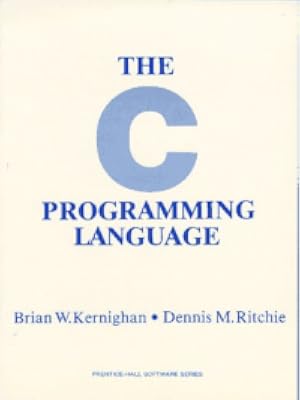
This book, as well as "The C Programming Language" by Kernighan and Ritchie are the bibles of Unix and C programming, in my opinion. These are from the command line days, but they are still timeless reading. Highly recommended.
Plot's a bit dry.
Members
- Recently Added By
Author Information

Brian W. Kernighan is a professor in the Department of Computer Science at Princeton University. His many books include Millions, Billions, Zillions (Princeton) and the computing classic The C Programming Language (Prentice Hall).

Series

Common Knowledge
- Canonical title
- The UNIX Programming Environment
- Original publication date
- 1984
Classifications
- Genres
- Technology, Nonfiction, General Nonfiction
- DDC/MDS
- 001.6425 — Computer science, information & general works Computer science, knowledge & systems Knowledge and learning in general [Formerly: Data Processing] [formerly : Electronic] [formerly : Computer programs and programming] [formerly : Software & its use]
- LCC
- QA76.6 .K495 — Science Mathematics Mathematics Instruments and machines Calculating machines Electronic computers. Computer science
- BISAC
Statistics
- Members
- 714
- Popularity
- 39,684
- Reviews
- 11
- Rating
- (4.22)
- Languages
- 7 — Dutch, English, French, German, Italian, Korean, Spanish
- Media
- Paper
- ISBNs
- 11
- ASINs
- 1