On This Page
Description
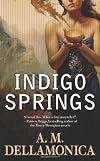
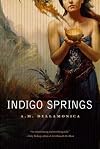
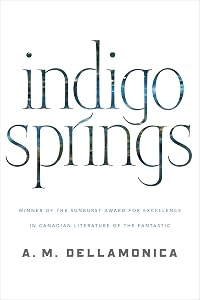
After accessing the magical power of the "vitagua" that leaks into her grandfather's house, Astrid and her friends unwittingly embark on a journey fraught with power, change, and a future too devastating to contemplate.Tags
Recommendations





Member Recommendations
Member Reviews
This unique contemporary fantasy is probably going to be one of my top reads for the year.
When Astrid inherited her father's run-down old house, she expects a life of small-town drudgery. With her step-brother and her old friend Sahara as housemates, she's simply eager to have everyone she loves together in the same house. Then she finds her father had a secret: the house hides a well of pure, blue magic. Her father had a knack for enchanting everyday objects with this magic, and used them to brighten the lives of strangers even as he was regarded as the town drunk and eccentric. However, Astrid's friend Sahara has no intention of doing the same old-same old. Sahara wants to find out where the magic comes from. She wants to know what it show more can do. And she doesn't mind using her enemies--and-friends--to get what she wants.
This book hooked me right away. It follows a narrative structure like one of my very favorite books, The Sparrow, and alternates between the past and the present. From the events in the present, it's immediately clear that everything has gone horribly wrong. It's disturbing, fascinating, and beautiful all at once. I had to read on as fast as possible because I needed to find out what happened. Really, the events of the past were even more important than what would happen in the future. And when everything converged... wow. There's not a single stock character in this book. Astrid is a complicated and conflicted heroine, and Sahara is a force of nature who reminds me of a few people I've known in my own life. Not only is this book a keeper, but I intend to buy the sequel as soon as it comes out next year. show less
When Astrid inherited her father's run-down old house, she expects a life of small-town drudgery. With her step-brother and her old friend Sahara as housemates, she's simply eager to have everyone she loves together in the same house. Then she finds her father had a secret: the house hides a well of pure, blue magic. Her father had a knack for enchanting everyday objects with this magic, and used them to brighten the lives of strangers even as he was regarded as the town drunk and eccentric. However, Astrid's friend Sahara has no intention of doing the same old-same old. Sahara wants to find out where the magic comes from. She wants to know what it show more can do. And she doesn't mind using her enemies--and-friends--to get what she wants.
This book hooked me right away. It follows a narrative structure like one of my very favorite books, The Sparrow, and alternates between the past and the present. From the events in the present, it's immediately clear that everything has gone horribly wrong. It's disturbing, fascinating, and beautiful all at once. I had to read on as fast as possible because I needed to find out what happened. Really, the events of the past were even more important than what would happen in the future. And when everything converged... wow. There's not a single stock character in this book. Astrid is a complicated and conflicted heroine, and Sahara is a force of nature who reminds me of a few people I've known in my own life. Not only is this book a keeper, but I intend to buy the sequel as soon as it comes out next year. show less
(solid 3.5)
This is a hard book to review, mostly because I'm so conflicted. Do I like the book? I like parts of it. Very much! And then there are aspects of the book I'm just very . . . confused on, so much so that it brings my rating (and enjoyment of the novel) from 5 to 3.5.
Book content warnings:
transphobia (??)
When it comes to fantasy apocalyptic novels, Indigo Springs is the most original book I've ever read, by far. It begins with our protag, Astrid, already in police custody and being questioned by our 1st-person PoV character. Through him--and Astrid--we learn how the world fell into (magical) chaos.
Besides that, the book has bi representation! Astrid is bisexual and actually says the word. :O I know, right? Thought it's show more upsetting that both her women love interests turn out to be villains (:////) and only her male love interest turns out to be the 100% amazingly pure good character (make that really upsetting, because the main villain is the evil, manipulative, sex-crazy bisexual stereotype).
And then we come to why I'm very, very confused about this book: Astrid's mom and whether this book is transphobic or contains trans rep. Honestly? It's probably neither, and that's what makes me so frustrated. I wish this whole issue was left out entirely.
Astrid's mom is introduced as a very unstable character who lives within a delusion, which is the actual book the word uses. This delusion includes calling Astrid a boy, thinking of themself as the character of a book they love (a detective), and . . . thinking they're male. They also peculiarly grow bristly hair that keeps on growing despite how they pluck them every night (I'm using "they" pronouns for this character because nothing was ever, ever clear about this character or their actual preferred pronouns until the very end, and even then, I was left confused).
It became clear that this delusion was the cause of magical contamination. Contamination that is generally understood to be bad, and harmful, and could turn people insane.
After learning this . . . it's hard not to go back to Astrid's mom and think--especially after learning Astrid's mom discovered the concept of gender dysphoria and wanted to start taking testosterone--trans people = insanity according to this book ?? ESPECIALLY after Astrid siphoned the magical contamination out of her mother and all this dysphoria was gone! Her mother was even wearing a bra again, and how happy Astrid was at that!!
But then at the very end,Astrid's mother was truly healed, and they became . . . male. Thinking of the book's viewpoint on this issue previously, this doesn't make sense? And it confuses me. I mean, of course I'm . . . glad? But it just confuses me more, and I'm just not sure where this book stands. It leaves me feeling uneasy.
Anyway, besides those issues, this book is so original and well written. The climax falls a little flat and is over too soon, but I've never read something so creative. I'll probably read on. show less
This is a hard book to review, mostly because I'm so conflicted. Do I like the book? I like parts of it. Very much! And then there are aspects of the book I'm just very . . . confused on, so much so that it brings my rating (and enjoyment of the novel) from 5 to 3.5.
Book content warnings:
transphobia (??)
When it comes to fantasy apocalyptic novels, Indigo Springs is the most original book I've ever read, by far. It begins with our protag, Astrid, already in police custody and being questioned by our 1st-person PoV character. Through him--and Astrid--we learn how the world fell into (magical) chaos.
Besides that, the book has bi representation! Astrid is bisexual and actually says the word. :O I know, right? Thought it's show more upsetting that both her women love interests turn out to be villains (:////) and only her male love interest turns out to be the 100% amazingly pure good character (make that really upsetting, because the main villain is the evil, manipulative, sex-crazy bisexual stereotype).
And then we come to why I'm very, very confused about this book: Astrid's mom and whether this book is transphobic or contains trans rep. Honestly? It's probably neither, and that's what makes me so frustrated. I wish this whole issue was left out entirely.
Astrid's mom is introduced as a very unstable character who lives within a delusion, which is the actual book the word uses. This delusion includes calling Astrid a boy, thinking of themself as the character of a book they love (a detective), and . . . thinking they're male. They also peculiarly grow bristly hair that keeps on growing despite how they pluck them every night (I'm using "they" pronouns for this character because nothing was ever, ever clear about this character or their actual preferred pronouns until the very end, and even then, I was left confused).
It became clear that this delusion was the cause of magical contamination. Contamination that is generally understood to be bad, and harmful, and could turn people insane.
After learning this . . . it's hard not to go back to Astrid's mom and think--especially after learning Astrid's mom discovered the concept of gender dysphoria and wanted to start taking testosterone--trans people = insanity according to this book ?? ESPECIALLY after Astrid siphoned the magical contamination out of her mother and all this dysphoria was gone! Her mother was even wearing a bra again, and how happy Astrid was at that!!
But then at the very end,
Anyway, besides those issues, this book is so original and well written. The climax falls a little flat and is over too soon, but I've never read something so creative. I'll probably read on. show less
This is the first book in the Astrid Lethewood series. I believe the sequel to this book, Blue Magic, ties up this duology. It was a creative and somewhat ambiguous story that can best be described as a urban fantasy apocalyptic eco-thriller. It reminds a bit of Elizabeth Hand in the somewhat vague writing style. It might not be a book for everyone but I enjoyed the creative ideas in here.
Astrid inherits a house from her dead father. We hear from her both in the present and past. As the story slowly unravels we find out that Astrid’s house hides a magic spring but the magic curses most of the people it contacts. She is supposed to guard the world from it. But her housemates interfere and the magic ends up corrupting the world; show more resulting in giants animals and human mutations.
This was a really cool concept; it was a blend of fantasy, urban fantasy, eco-thriller, and apocalyptic genres. It is a bit confusing when you start to read it because the chapters are told from two perspectives and those are not designated at the beginning of the chapter. The first perspective is from a negotiator that is sent to question Astrid in the present while the world is in the middle of a magical apocalypse. The second perspective is Astrid’s in the past (which she thinks is the present). It is awkward to get used to the switches at first, but the strangeness of the writing style really matched the weirdness of the story.
Astrid is a fascinating heroine. In the scenes from the past she seems relatively normal. She lives with a childhood guy friend (who obviously wishes that he could be more to her), and her girlfriend from college (who was Astrid’s lover until she left Astrid). Astrid also has a mother who is delusional and thinks she’s a man. Yep, there is a lot of gender-bending in this book...but it really matches the mixed up reality that is thematic throughout the book.
Astrid starts to loose touch with reality as she absorbs more and more magic. She doesn’t know where or when she is at some points. She also starts being able to predict the future and gets confused about what has happened and what will happen. As you can imagine this leads to ambiguity in the story, which might bother some readers.
None of these characters are good characters, they are all very human. They all do noble things and they all do evil things. But all of them are just as interesting, screwed up, and strange as Astrid herself. Sahara is Astrid’s best friend and she ends up so corrupt by the magic she calls herself a god and starts to gain her own following.
I loved how the plot unfolded and loved hearing about how the Blue Magic was causing strange things to happen in the world. The Blue Magic basically causes an eco-disaster of sorts. Humans mutate into part-animals, animals mutate into huge monsters, and the world starts to fall apart. This whole story is about how a few bad personal decisions can destroy the whole world.
The writing is a bit confusing as tense and POV changes are really noted, you kind of have to figure them out. It makes the book hard to read at times. This book is so absolutely interesting, creative, and absolutely crazy though that I really thought it was worth the effort to read. The unraveling mystery about how the magic got out to destroy the world was just super engaging for me.
Overall this was a fascinating read. I will say that this won’t be a book everyone will enjoy. It is a bit confusing at points, the story can get very ambiguous because the heroine is confused about when and where she exists. Still I really enjoyed it because it was so very different from anything I’ve ever read and so far out there. This is a seriously crazy book, but I enjoyed it. It reminded me a bit of Elizabeth Hand’s earlier books (Black Light, Waking the Moon) in style. I would recommend to those who are okay with ambiguity and want to read an urban fantasy that is vastly different from anything else out there. show less
Astrid inherits a house from her dead father. We hear from her both in the present and past. As the story slowly unravels we find out that Astrid’s house hides a magic spring but the magic curses most of the people it contacts. She is supposed to guard the world from it. But her housemates interfere and the magic ends up corrupting the world; show more resulting in giants animals and human mutations.
This was a really cool concept; it was a blend of fantasy, urban fantasy, eco-thriller, and apocalyptic genres. It is a bit confusing when you start to read it because the chapters are told from two perspectives and those are not designated at the beginning of the chapter. The first perspective is from a negotiator that is sent to question Astrid in the present while the world is in the middle of a magical apocalypse. The second perspective is Astrid’s in the past (which she thinks is the present). It is awkward to get used to the switches at first, but the strangeness of the writing style really matched the weirdness of the story.
Astrid is a fascinating heroine. In the scenes from the past she seems relatively normal. She lives with a childhood guy friend (who obviously wishes that he could be more to her), and her girlfriend from college (who was Astrid’s lover until she left Astrid). Astrid also has a mother who is delusional and thinks she’s a man. Yep, there is a lot of gender-bending in this book...but it really matches the mixed up reality that is thematic throughout the book.
Astrid starts to loose touch with reality as she absorbs more and more magic. She doesn’t know where or when she is at some points. She also starts being able to predict the future and gets confused about what has happened and what will happen. As you can imagine this leads to ambiguity in the story, which might bother some readers.
None of these characters are good characters, they are all very human. They all do noble things and they all do evil things. But all of them are just as interesting, screwed up, and strange as Astrid herself. Sahara is Astrid’s best friend and she ends up so corrupt by the magic she calls herself a god and starts to gain her own following.
I loved how the plot unfolded and loved hearing about how the Blue Magic was causing strange things to happen in the world. The Blue Magic basically causes an eco-disaster of sorts. Humans mutate into part-animals, animals mutate into huge monsters, and the world starts to fall apart. This whole story is about how a few bad personal decisions can destroy the whole world.
The writing is a bit confusing as tense and POV changes are really noted, you kind of have to figure them out. It makes the book hard to read at times. This book is so absolutely interesting, creative, and absolutely crazy though that I really thought it was worth the effort to read. The unraveling mystery about how the magic got out to destroy the world was just super engaging for me.
Overall this was a fascinating read. I will say that this won’t be a book everyone will enjoy. It is a bit confusing at points, the story can get very ambiguous because the heroine is confused about when and where she exists. Still I really enjoyed it because it was so very different from anything I’ve ever read and so far out there. This is a seriously crazy book, but I enjoyed it. It reminded me a bit of Elizabeth Hand’s earlier books (Black Light, Waking the Moon) in style. I would recommend to those who are okay with ambiguity and want to read an urban fantasy that is vastly different from anything else out there. show less
Really fascinating. I love the characters and how complicated they are. Astrid has a monumental task as a chanter and keeper of the magic liquid in her home. Her friend Sahara is charismatic and self-serving. The people surrounding Astrid--her mother, Jacks--are wonderful, interesting characters. I love how surreal the story gets, yet I think everyone can relate to the idea of just wanting to be loved back by the one you love. Even when responsibility dictates that what it takes to get that love isn't the wisest thing, and sometimes true love is right in front of us. The story is complicated but all comes together--it leads up to the sequel (which I am going to start next!). I really like the insights into human nature through exposure show more to the extraordinary. Highly recommend. show less
Originally posted here.
I came to this book with absolutely no expectations. Prior to reading it, I knew nothing about the book or its author. The only reason I ever picked it up was because I won a copy of the second book in the series from Goodreads' First Reads program. At first, I thought that was bad luck, and I was annoyed with myself for even entering to win the second book in a series I'd never read. Well, now, I just want to pat myself on the back for being so awesome.
This book was just so incredibly cool. Dellamonica has created magic as I've never seen it before. The worldbuilding is so incredibly cool. As crazy as it is, there's a sort of normalcy to it that calls to mind magical realism. The Unreal, and the liquid magic, are show more just so incredibly unique and astounding. Oh, and, it's apocalyptic. So many things that I love are in this book!
The story alternates between past events and present ones. In the present, where we start, Will, a crisis negotiator, arrives to interrogate Astrid Lethewood. She was arrested and then apparently moved to this special facility because of her mental instability. The first chapter captured me immediately, with Astrid's craziness and everything being said making me want to know more.
I'm not usually one to cast roles for a potential movie as I'm reading a book, but I can see Astrid as no one but Summer Glau, and I do think this could make a completely amazing television show. Although I'm not sure that Summer necessarily fits what Astrid is supposed to look like, she plays crazy and intelligent better than anyone else. Astrid comes off as a sort of a weak, quiet character, possible insanity aside. Really, though, she has so much power.
In the past, we learn about how she discovered the truth of her father, Albert. He left her a big house, although he was a wastrel during most of his lifetime. In it, she finds a bunch of what appears to be junk, but then she discovers that all of those items are chantments, enchanted magical objects. One can turn a number two pencil into gold shavings. Another can make you more beautiful.
Astrid begins to recover lost memories and learns more about the magic and her father, with her friends, Jacks and Sahara at her side. Sahara is so perfectly her character. I have such a vivid mental image of her in my head as well. These three are all so well-characterized. The other figures in the story, I have less of a handle on, even Will, though you see from his perspective for about half of the book. Everything is bound up in Astrid's universe, which mostly consists of three people.
Indigo Springs may be the best urban fantasy novel I've read to date. It's vibrant, magical and edgy. I am so excited to start on Blue Magic soon. show less
I came to this book with absolutely no expectations. Prior to reading it, I knew nothing about the book or its author. The only reason I ever picked it up was because I won a copy of the second book in the series from Goodreads' First Reads program. At first, I thought that was bad luck, and I was annoyed with myself for even entering to win the second book in a series I'd never read. Well, now, I just want to pat myself on the back for being so awesome.
This book was just so incredibly cool. Dellamonica has created magic as I've never seen it before. The worldbuilding is so incredibly cool. As crazy as it is, there's a sort of normalcy to it that calls to mind magical realism. The Unreal, and the liquid magic, are show more just so incredibly unique and astounding. Oh, and, it's apocalyptic. So many things that I love are in this book!
The story alternates between past events and present ones. In the present, where we start, Will, a crisis negotiator, arrives to interrogate Astrid Lethewood. She was arrested and then apparently moved to this special facility because of her mental instability. The first chapter captured me immediately, with Astrid's craziness and everything being said making me want to know more.
I'm not usually one to cast roles for a potential movie as I'm reading a book, but I can see Astrid as no one but Summer Glau, and I do think this could make a completely amazing television show. Although I'm not sure that Summer necessarily fits what Astrid is supposed to look like, she plays crazy and intelligent better than anyone else. Astrid comes off as a sort of a weak, quiet character, possible insanity aside. Really, though, she has so much power.
In the past, we learn about how she discovered the truth of her father, Albert. He left her a big house, although he was a wastrel during most of his lifetime. In it, she finds a bunch of what appears to be junk, but then she discovers that all of those items are chantments, enchanted magical objects. One can turn a number two pencil into gold shavings. Another can make you more beautiful.
Astrid begins to recover lost memories and learns more about the magic and her father, with her friends, Jacks and Sahara at her side. Sahara is so perfectly her character. I have such a vivid mental image of her in my head as well. These three are all so well-characterized. The other figures in the story, I have less of a handle on, even Will, though you see from his perspective for about half of the book. Everything is bound up in Astrid's universe, which mostly consists of three people.
Indigo Springs may be the best urban fantasy novel I've read to date. It's vibrant, magical and edgy. I am so excited to start on Blue Magic soon. show less
This book deserves more stars than I can give it. There's nothing wrong with it, but most of it was just not a good fit for me. Still, I enjoyed it enough to finish it and will at least read the sample of the sequel, and given how much this book was Not For Me, that says something.
This is a story about some people who find out magic is way more than they can handle, basically. I liked the book's truly unusual and excellent magic; it makes intuitive sense and it's both wondrous and terrifying, exactly as magic should be. That, for me, was the heart of the story, and the reason I might want to read more in this series. This is an impressive, creative, fascinating world, and the way the narrative reveals bits and pieces keeps the suspense show more high without feeling forced or frustrating at all. So. There's a lot to like and admire here.
But I still couldn't rate it higher. (I rate on enjoyment, not quality; Ethan Frome is and will always be a one-star book to me.) So let's talk about that.
First, this is what I call a tick-tick-tick book. The first chapter takes place about three-fourths of the way through the actual plot, and for a while there's an every other chapter system: one from the first chapter's timeline followed by one from the timeline that starts at the beginning. That means you start out knowing things are going to go horribly, horribly wrong, and most of the book is about finding out how the disaster takes place. This is a perfectly fine way to tell a story, but I hate it. It's like ratcheting up on a roller coaster, hearing the tick-tick-tick of the machinery, and knowing soon, soon. I hate that feeling. I hate it. And I had to live with it for a lot of this book.
Second, a love triangle is a huge part of the story, and I -- I am so done with love triangles. They come in three kinds: the one where no one should end up with anyone else and you want to yell at the characters for spending time with each other, the kind where it's obvious what the eventual pairing should be and you want to yell at the characters for not figuring that out faster, and the kind that should end in a threesome (but usually won't), so you want to yell at the characters to just climb in bed together already. I'm not going to say which one this story is, only that the author didn't manage anything creative and new here. I spent a lot of time wishing the characters would just grow up and move on and deal with the real problems. It kept me from liking them.
Third, and this is the warnings part of this review, there's some MAJOR animal harm in this book. So so so not for me. I had to skim a number of pages and still ended up feeling shaky and distressed.
Those were the big problems for me, although there are some other questions I have, like about characterization -- let's just say that it's really tough to write a book like this with consistent characterization, so I finished the book still without much of a feel for who the main characters were -- and about the strangely closed-in, stifled feeling of the book, where the plot affects the entire world but much of the story takes place in a single house or a locked room. But, in the end, this story is trying to do a lot of things, and it does many of them not just well but differently and well. And that makes it worth reading. (Even though it upset me and set my teeth on edge. A lot.) show less
This is a story about some people who find out magic is way more than they can handle, basically. I liked the book's truly unusual and excellent magic; it makes intuitive sense and it's both wondrous and terrifying, exactly as magic should be. That, for me, was the heart of the story, and the reason I might want to read more in this series. This is an impressive, creative, fascinating world, and the way the narrative reveals bits and pieces keeps the suspense show more high without feeling forced or frustrating at all. So. There's a lot to like and admire here.
But I still couldn't rate it higher. (I rate on enjoyment, not quality; Ethan Frome is and will always be a one-star book to me.) So let's talk about that.
First, this is what I call a tick-tick-tick book. The first chapter takes place about three-fourths of the way through the actual plot, and for a while there's an every other chapter system: one from the first chapter's timeline followed by one from the timeline that starts at the beginning. That means you start out knowing things are going to go horribly, horribly wrong, and most of the book is about finding out how the disaster takes place. This is a perfectly fine way to tell a story, but I hate it. It's like ratcheting up on a roller coaster, hearing the tick-tick-tick of the machinery, and knowing soon, soon. I hate that feeling. I hate it. And I had to live with it for a lot of this book.
Second, a love triangle is a huge part of the story, and I -- I am so done with love triangles. They come in three kinds: the one where no one should end up with anyone else and you want to yell at the characters for spending time with each other, the kind where it's obvious what the eventual pairing should be and you want to yell at the characters for not figuring that out faster, and the kind that should end in a threesome (but usually won't), so you want to yell at the characters to just climb in bed together already. I'm not going to say which one this story is, only that the author didn't manage anything creative and new here. I spent a lot of time wishing the characters would just grow up and move on and deal with the real problems. It kept me from liking them.
Third, and this is the warnings part of this review,
Those were the big problems for me, although there are some other questions I have, like about characterization -- let's just say that it's really tough to write a book like this with consistent characterization, so I finished the book still without much of a feel for who the main characters were -- and about the strangely closed-in, stifled feeling of the book, where the plot affects the entire world but much of the story takes place in a single house or a locked room. But, in the end, this story is trying to do a lot of things, and it does many of them not just well but differently and well. And that makes it worth reading. (Even though it upset me and set my teeth on edge. A lot.) show less
Indigo Springs is a first novel by a writer who has been publishing short fiction for nearly two decades. It shows the skill of someone who has long practiced in making words do what she wants them to do, and also the inexperience of a first-time novelist who has a great idea but doesn’t exactly know how to execute it. It’s a terrific story with new ideas and a unique magic system that works. With a stronger structure and a more coherent ending, this would have been a contender for major prizes. As it stands, it is fun to read and offers great promise of even better work to come.
The story is told mostly in flashbacks, a tale told by a prisoner to a law enforcement agent who has been tasked with finding out where the prisoner’s show more extremely dangerous friend might be, and what can be done to stop her. The agent, Will Forrest, tells us his portion of the tale, which takes place in the present, in the first person. The flashbacks are told in a third person voice, with the prisoner, Astrid, as the viewpoint character. Astrid has recently returned to her home town, Indigo Springs, to live in the house she has inherited from her father. Her stepbrother, Jackson, an artist, also lives in the house; and soon Sahara, her best friend, arrives, on the run from her cheating boyfriend in the car she has stolen from him.
Astrid’s relationships with her two housemates are complicated. Jacks is in love with her, and she is in love with Sahara, who uses that love to manipulate her. This would be bad enough in a real-life situation, but it gets incredibly complicated when you add magic to the mix. Astrid has long been a magic apprentice, but she has mostly forgotten about her father’s work with her and vitagua, an indigo blue liquid that is the essence of magic. Her memories start to return when she discovers her father’s cache of “chantments,” small items that have been enchanted to accomplish magic tasks, such as a lipstick that makes the wearer beautiful or a scrub brush that cleans a kitchen all by itself, a la The Sorcerer’s Apprentice. Soon Astrid is using vitagua to make more and more chantments, which Sahara is sending around the country to those who might be able to tell them more about exactly how magic works.
But Astrid ultimately doesn’t need all the advice Sahara is gathering from real witches all over the United States. A fireplace repair ruptures, spreading vitagua all over the house, contaminating Sahara and filling Astrid to the brim as she absorbs it into her body. Now Astrid knows exactly what the realm of the unreal is, and voices are giving her full information on the past, present and future. She begins to have difficulty knowing which is which, and her confusion allows Sahara to recontaminate herself.
The frame for the novel, in which Astrid is a federal prisoner telling her story to a cop, lets us know that Sahara uses the magic for evil rather than good, and also that magic can get completely out of hand, transforming plant and vegetable life into unmanageable entities that are inimical to humans. How we get from Astrid rediscovering magic to the outbreak of magic that threatens the human race and destroys Will’s family, however, is not described with the loving detail lavished on the early part of the story, which is disappointing. But Dellamonica tells the story of Astrid’s gradual reintroduction to magic with true panache, making for a very enjoyable read.
As the book approaches its conclusion, things become very vague indeed. The conclusion is rushed and unsatisfactory. It appears that the story isn’t intended to truly end with this book, as Dellamonica has written a sequel, Blue Magic, to be published in 2011. If it’s as good as Indigo Springs, with the added advantage of actually finishing this tale, it’ll definitely be a winner. I await it eagerly. show less
The story is told mostly in flashbacks, a tale told by a prisoner to a law enforcement agent who has been tasked with finding out where the prisoner’s show more extremely dangerous friend might be, and what can be done to stop her. The agent, Will Forrest, tells us his portion of the tale, which takes place in the present, in the first person. The flashbacks are told in a third person voice, with the prisoner, Astrid, as the viewpoint character. Astrid has recently returned to her home town, Indigo Springs, to live in the house she has inherited from her father. Her stepbrother, Jackson, an artist, also lives in the house; and soon Sahara, her best friend, arrives, on the run from her cheating boyfriend in the car she has stolen from him.
Astrid’s relationships with her two housemates are complicated. Jacks is in love with her, and she is in love with Sahara, who uses that love to manipulate her. This would be bad enough in a real-life situation, but it gets incredibly complicated when you add magic to the mix. Astrid has long been a magic apprentice, but she has mostly forgotten about her father’s work with her and vitagua, an indigo blue liquid that is the essence of magic. Her memories start to return when she discovers her father’s cache of “chantments,” small items that have been enchanted to accomplish magic tasks, such as a lipstick that makes the wearer beautiful or a scrub brush that cleans a kitchen all by itself, a la The Sorcerer’s Apprentice. Soon Astrid is using vitagua to make more and more chantments, which Sahara is sending around the country to those who might be able to tell them more about exactly how magic works.
But Astrid ultimately doesn’t need all the advice Sahara is gathering from real witches all over the United States. A fireplace repair ruptures, spreading vitagua all over the house, contaminating Sahara and filling Astrid to the brim as she absorbs it into her body. Now Astrid knows exactly what the realm of the unreal is, and voices are giving her full information on the past, present and future. She begins to have difficulty knowing which is which, and her confusion allows Sahara to recontaminate herself.
The frame for the novel, in which Astrid is a federal prisoner telling her story to a cop, lets us know that Sahara uses the magic for evil rather than good, and also that magic can get completely out of hand, transforming plant and vegetable life into unmanageable entities that are inimical to humans. How we get from Astrid rediscovering magic to the outbreak of magic that threatens the human race and destroys Will’s family, however, is not described with the loving detail lavished on the early part of the story, which is disappointing. But Dellamonica tells the story of Astrid’s gradual reintroduction to magic with true panache, making for a very enjoyable read.
As the book approaches its conclusion, things become very vague indeed. The conclusion is rushed and unsatisfactory. It appears that the story isn’t intended to truly end with this book, as Dellamonica has written a sequel, Blue Magic, to be published in 2011. If it’s as good as Indigo Springs, with the added advantage of actually finishing this tale, it’ll definitely be a winner. I await it eagerly. show less
Members
- Recently Added By
Lists

Future Green Dragon Group Read Books
80 works; 6 members

LGBTQ+ Speculative Fiction
820 works; 51 members
Author Information
42+ Works 1,195 Members

A.M. Dellamonica is a LibraryThing Author, an author who lists their personal library on LibraryThing.
Some Editions
Awards and Honors
Awards
Notable Lists
Series

Common Knowledge
- Original publication date
- 2009-10-27
Classifications
Statistics
- Members
- 257
- Popularity
- 125,823
- Reviews
- 19
- Rating
- (3.65)
- Languages
- English
- Media
- Paper, Ebook
- ISBNs
- 5
- ASINs
- 5