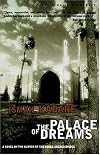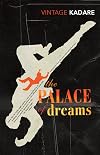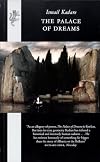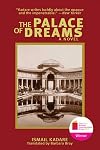
The Palace of Dreams
by Ismaïl Kadaré
On This Page
Description
The mysterious Palace of Dreams stands at the heart of a vast but fragile Balkan empire. Inside, workers assiduously sift, sort, classify, and ultimately interpret the dreams of the empire's citizens. The workers search out Master-Dreams that will provide clues to the destiny of the empire and its Sultan. Mark-Alem, scion of a noble family that has provided viziers to the Sultan from time immemorial, and whose power the Sultan distrusts, is recruited into the Palace of Dreams at the humblest show more level. He immediately feels the terrible pressure that drives his coworkers, the dread of overlooking a crucial dream whose capture and interpretation might avert political disaster. But he rapidly rises through the hierarchy--only barely ?nding his bearings in one section of the Palace's labyrinthine passages that represent the entire empire's consciousness laid bare before he is promoted to another. And the pressure only increases as he becomes familiar with the fates of subversive dreamers and personally responsible for the sorts of dreams that might ruin an entire family. A family like his own with this beautifully bound hardcover edition, The Palace of Dreams is powerfully imagined and beautifully written, a national classic from one of Albania's premiere literary voices. show lessTags
Recommendations


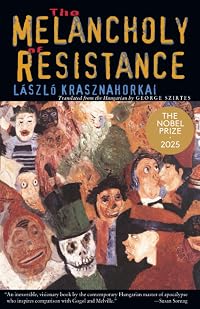
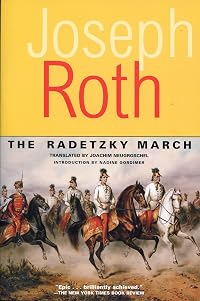
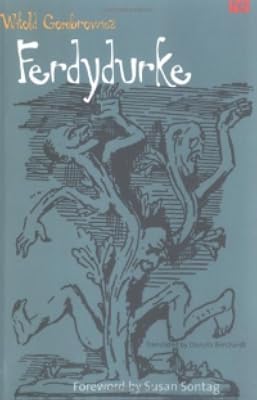
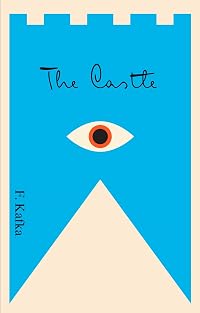









Member Recommendations
Member Reviews
This police-state parable, set in a reimagined Ottoman empire, is bloodless enough that the Hoxha regime almost overlooked it, belatedly dropping the banhammer with 20,000 copies already in the wild. The titular institution is a version of Kafka's Castle (though less fiendish and less funny), a bureaucratic maze dedicted to sifting the nocturnal reveries of the Empire for subversive symbols. There's one dramatic incident late on, but otherwise we follow our nonentity of a protagonist as he blithely navigates the Party apparatus, inadvertently getting his illustrious family into a spot of bother. The plot touches briefly on the tradition of the Balkan rhapsodes and there's some Slav/Turk/Albanian ethnic tension which is interesting, but show more this novel is slight and bland in comparison to other suppressed Iron Curtain satires like Kundera's The Joke or Jiří Gruša's The Questionnaire. show less
So people dream, right. So clearly, the best thing to do for the state, especially a state as fragmented and therefore as dependent on unity as the Ottoman empire ca 1840, is to collect those dreams, analyse them and collate them so you know what your underlings are up to. It's easily done, people are only too happy to share their dreams, and will even complain if you ignore their dreams.
So you have a huge palace in the centre of the capital where thousands of people work on these dreams, selecting them, analysing them, and every Friday presenting one Master Dream to the sultan so he knows what's going on in his empire and can make decisions.
So you start working there as the runt of the litter of a powerful family, and you have no idea show more what you're doing, but that's OK because you can always look at old interpretations of dreams so you know what to write.
Then again, who's to say if a dream interpretation is correct? Some rumours even say that the master dreams are completely fake. But that can't be true, because if that's true, who really holds the power? Especially when there are rumblings out in the Balkan provinces, and the entirety of Albania, for instance, seems to not have slept a wink in a year? Better make sure to find a good master dream, and act swiftly. Dreams can come true, like the song says.
My 2014 edition says "In these days of media surveillance, Kadare's novel hardly appears less relevant than when it was written in Albania in 1981."
Oh, sweet summer child. Hashtag fake news. show less
So you have a huge palace in the centre of the capital where thousands of people work on these dreams, selecting them, analysing them, and every Friday presenting one Master Dream to the sultan so he knows what's going on in his empire and can make decisions.
So you start working there as the runt of the litter of a powerful family, and you have no idea show more what you're doing, but that's OK because you can always look at old interpretations of dreams so you know what to write.
Then again, who's to say if a dream interpretation is correct? Some rumours even say that the master dreams are completely fake. But that can't be true, because if that's true, who really holds the power? Especially when there are rumblings out in the Balkan provinces, and the entirety of Albania, for instance, seems to not have slept a wink in a year? Better make sure to find a good master dream, and act swiftly. Dreams can come true, like the song says.
My 2014 edition says "In these days of media surveillance, Kadare's novel hardly appears less relevant than when it was written in Albania in 1981."
Oh, sweet summer child. Hashtag fake news. show less
The Palace of Dreams, written in Tirana between 1976 and 1981, takes us into an entirely different universe set at the fictitious crossroads of a 20th century dictatorship and the 14th century Ottoman Empire. Characters from those ancient times mix with contemporary characters—state employees and office clerks reminiscent of Kafka’s world—in a bureaucratic labyrinth identical to any other bureaucracy, save for its purpose: to collect, sort, interpret and finally choose the “Master-dream” of all the dreams dreamt throughout the Empire, and to decipher in it the fate of the Empire and of its rulers.
The Palace of Dreams incorporates the traits of all powerful secret institutions—one cannot help think of the Sigurimi, the show more Albanian Secret Police of the Communist era—as well as the characteristics of an almost Totemic figure, a Kafkaesque Castle whose rules no one can figure out. Kadare himself has declared that this is probably his best novel from a literary standpoint, and very likely his most courageous, an opinion the Albanian Communist regime must have agreed with, considering that shortly after its release the novel was banned.
But Kadare’s genius is such that, in the end, the Palace of Dreams has no precise signification, except that revealed by its name. It is a fabulous, otherworldly place where the “real world” doesn’t exist, sleep is reality’s only substance, and it isn’t the real, as we know from Freud, that brings the dream into being, but the other way around. Thus, at the end of the novel, one of the dreams that the main character, Mark-Alem Quprili, who works at the Palace, sorted and filed at the beginning of the novel, makes an unexpected appearance, literally acting upon the present and causing the drama the reader has been anticipating all along. show less
The Palace of Dreams incorporates the traits of all powerful secret institutions—one cannot help think of the Sigurimi, the show more Albanian Secret Police of the Communist era—as well as the characteristics of an almost Totemic figure, a Kafkaesque Castle whose rules no one can figure out. Kadare himself has declared that this is probably his best novel from a literary standpoint, and very likely his most courageous, an opinion the Albanian Communist regime must have agreed with, considering that shortly after its release the novel was banned.
But Kadare’s genius is such that, in the end, the Palace of Dreams has no precise signification, except that revealed by its name. It is a fabulous, otherworldly place where the “real world” doesn’t exist, sleep is reality’s only substance, and it isn’t the real, as we know from Freud, that brings the dream into being, but the other way around. Thus, at the end of the novel, one of the dreams that the main character, Mark-Alem Quprili, who works at the Palace, sorted and filed at the beginning of the novel, makes an unexpected appearance, literally acting upon the present and causing the drama the reader has been anticipating all along. show less
I was browsing the library shelves when I came across this book. It was clear from the blurb that I had to read it - an allegory for Soviet totalitarianism that centres around dreams! Just my sort of thing. Indeed, it is a beautiful and subtle form of dystopia. I read the whole short novel in a single sitting and was very impressed by it. The atmosphere reminded me somewhat of [b:The Unconsoled|40117|The Unconsoled|Kazuo Ishiguro|https://images.gr-assets.com/books/1342193138s/40117.jpg|6372970], especially when the protagonist Mark-Alem was lost in corridors.
The novel is set in a monolithic latter-day Ottoman empire that has a complex bureaucracy for monitoring and analysing the population’s dreams. The empire’s rulers believe, or show more wish to be seen to believe, that from dreams future events can be discerned. Mark-Alem, scion of an old family whose political power has waxed and waned, starts a job at the Tabir Sarrail, or Palace of Dreams. Mark-Alem provides a striking point of view, as he is collaborating in a gigantic system of surveillance and control that he fears and cannot understand. Yet he is within it and this gives him power. The novel does not condemn him, rather it invites the reader to sympathise with his actions despite him being complicit in a terrible system. This ambivalence is beautifully evoked.
Although the use of dreams in the novel could have been intended to be purely allegorical, I very much enjoyed it on a literal level. Dreams have always been a fascination of mine. I liked the depiction of Mark-Alem’s absorption into dreams, such that when he takes a day off he is struck by how pallid and uninteresting the waking world is.
This part from page 127 was especially appealing:
A library of dreams stretching back centuries, classified into categories as you would books! What a gorgeous and alarming thought, as well as a neat analogy for the files of the NKVD et al. show less
The novel is set in a monolithic latter-day Ottoman empire that has a complex bureaucracy for monitoring and analysing the population’s dreams. The empire’s rulers believe, or show more wish to be seen to believe, that from dreams future events can be discerned. Mark-Alem, scion of an old family whose political power has waxed and waned, starts a job at the Tabir Sarrail, or Palace of Dreams. Mark-Alem provides a striking point of view, as he is collaborating in a gigantic system of surveillance and control that he fears and cannot understand. Yet he is within it and this gives him power. The novel does not condemn him, rather it invites the reader to sympathise with his actions despite him being complicit in a terrible system. This ambivalence is beautifully evoked.
Although the use of dreams in the novel could have been intended to be purely allegorical, I very much enjoyed it on a literal level. Dreams have always been a fascination of mine. I liked the depiction of Mark-Alem’s absorption into dreams, such that when he takes a day off he is struck by how pallid and uninteresting the waking world is.
This part from page 127 was especially appealing:
’”Do you see what I mean? No history book, no encyclopedia, not all the holy tomes or suchlike put together, nor any school or university or library could supply the truth about the world in so concise and complete a form as these archives.”
“But isn’t that truth rather distorted?” Mark-Alem ventured to ask.
The archivist’s smile looked even more ironic in profile than it would have done seen full-face.
“Who can say it’s not what we see with our eyes open that is distorted, and that what’s described here isn’t the true essence of things?”
A library of dreams stretching back centuries, classified into categories as you would books! What a gorgeous and alarming thought, as well as a neat analogy for the files of the NKVD et al. show less
"The Palace of Dreams" is a fascinating novel and one of those that begs for discussion. Kadare creates a story immersed in an ominous but unidentified threat. Along the way, the author asks the reader to ponder many themes: fate, the nature of reality, national identity, and, of course, dreams. A seemingly simple tale engenders almost endless possibilities. The reader is unlikely to view dreams in the same way again. A simple but incredibly creative idea for a novel. An easy and very rewarding read from a gifted author.
Kadare's metaphor for a monolithic police state and its workings. Set in the late 19th century Ottoman Empire--I figured this out from several subtle hints in the novel--along with elements from the late 20th century, this novel tells of a young man, Mark Alem, who is employed by the Palace of Dreams, the author's surreal intelligence agency, where dreams from all over the empire are collected, sorted, interpreted, with an eye to discovering which might be a "Master-Dream" pointing to a possible coup or other upheaval in the State. When one is discovered, the sultan's secret police can nip a possible plot in the bud and do away with any perpetrators. Mark Alem starts out in the Selection Department and passes along a file containing show more what he feels might be a possibly incriminating dream: a wasteland filled with garbage, a musical instrument, a rampaging bull, and a bridge. When he is promoted to the Interpretation Section, he is faced with the very same dream. We don't know his final interpretation, but agents from the Master Dream Section become very busy....
A chilling and nightmarish novel, reminiscent of Kafka--the claustrophobic, labyrinthine corridors of the Palace are evoked frighteningly. Mark-Alem must find his way from one department to another alone, hoping for help. On his day off, he notices how pale and insipid the real world has become as compared with the inner lives of people in the Palace. Atmospheric.
Very highly recommended. I'd advise reading the author's Three-Arched Bridge first if possible to get some backstory. show less
A chilling and nightmarish novel, reminiscent of Kafka--the claustrophobic, labyrinthine corridors of the Palace are evoked frighteningly. Mark-Alem must find his way from one department to another alone, hoping for help. On his day off, he notices how pale and insipid the real world has become as compared with the inner lives of people in the Palace. Atmospheric.
Very highly recommended. I'd advise reading the author's Three-Arched Bridge first if possible to get some backstory. show less
Mark-Alem is a member of the most prominent family, the Quiprilis, in a Balkan empire ruled by a Sultan, a family that can trace it roots back centuries and which has always been at the centre of political, military, diplomatic, economic power. So it is no surprise that Mark-Alem gets a job in the Palace of Dreams, a vast bureaucratic empire charged with gathering, sifting, sorting, classifying and ultimately interpreting the thousand of dreams that citizens provide every day to officials across the empire. These can portend great or dangerous things and are considered more important to the Sultan than all his military or diplomatic resources. Mark-Alem starts in the lowly Selection but rising quickly to the more prestigious show more Interpretation and then the heights of Director for the Master-Dream section responsible for selecting one dream per week that will be of particular significance for the Sultan, and then Mark-Alem becomes assistant to the Director-General and de facto head of the whole Palace just when he thinks his world is falling apart because a violent power struggle between the Quiprilis and the Sultan with people murdered, executed, and arrested by the score---the impetus for which was a dream that was interpreted as the Quiprilis planning a coup, a dream that Mark-Alem himself saw in his first days but did not “interpret” correctly.
The book appeared in 1981 and was immediately banned by authorities in Albania. It is not hard to see why. It is a brilliant parody of the madness of the Soviet-style system….the endless efforts of control, in this case control of the future through the interpretation of dreams….the interpretation of dreams as an example of one of the most terrifying aspects of totalitarian rule: the intrusion of the state into every nook and cranny of private life until there is no such thing as a private sphere….the complete arbitrariness of the system whereby from one day to the next, someone seemingly in good stead is denounced, arrested, killed and then all family members and friends tremble for their own safety…the limitless prospects for paranoia, evidenced in the book with a dream from a grocery owner in a remote part of the empire that makes its way into the system and once “interpreted”, sets in motion a cataclysm of events…the carving out of a “reality” that bears no resemblance to any reality that sane people would ascribe to and yet which creates its own reality and determines life and death for millions….the sheer madness of a system where no one is safe because all structures of history, normal expectations, rational behavior have no weight, no influence, no predictive guidelines.
Kadare has a number of strong symbols and metaphors in the book. One is the Palace itself, a suffocating atmosphere in a vast labyrinth of interconnecting halls and passageways with no signposts for directions where one could wander for hours or days with no rescue….a pretty good representation of life under a Soviet-style regime. Or the men blinded by the state because they were thought to have the “evil eye” , a horror which could be the result of an anonymous denunciation…hence the precariousness and arbitrariness of life. Or the fact that Mark-Alem who would have once been repulsed by this, now is indifferent to it because of his experience in the Palace where “hell and heaven are indistinguishable”. Or Mark-Alem finding that he starts to live two lives: one inside the Palace that seems most real and the outside world that he finds increasingly foreign and barren…an example of the coarsening effect of the all-pervasive system.
This is not a great novel, but it is not intended to be. Its strength is in its exploration of political and social features and dangers that have resonance beyond just an analysis of totalitarian systems. show less
The book appeared in 1981 and was immediately banned by authorities in Albania. It is not hard to see why. It is a brilliant parody of the madness of the Soviet-style system….the endless efforts of control, in this case control of the future through the interpretation of dreams….the interpretation of dreams as an example of one of the most terrifying aspects of totalitarian rule: the intrusion of the state into every nook and cranny of private life until there is no such thing as a private sphere….the complete arbitrariness of the system whereby from one day to the next, someone seemingly in good stead is denounced, arrested, killed and then all family members and friends tremble for their own safety…the limitless prospects for paranoia, evidenced in the book with a dream from a grocery owner in a remote part of the empire that makes its way into the system and once “interpreted”, sets in motion a cataclysm of events…the carving out of a “reality” that bears no resemblance to any reality that sane people would ascribe to and yet which creates its own reality and determines life and death for millions….the sheer madness of a system where no one is safe because all structures of history, normal expectations, rational behavior have no weight, no influence, no predictive guidelines.
Kadare has a number of strong symbols and metaphors in the book. One is the Palace itself, a suffocating atmosphere in a vast labyrinth of interconnecting halls and passageways with no signposts for directions where one could wander for hours or days with no rescue….a pretty good representation of life under a Soviet-style regime. Or the men blinded by the state because they were thought to have the “evil eye” , a horror which could be the result of an anonymous denunciation…hence the precariousness and arbitrariness of life. Or the fact that Mark-Alem who would have once been repulsed by this, now is indifferent to it because of his experience in the Palace where “hell and heaven are indistinguishable”. Or Mark-Alem finding that he starts to live two lives: one inside the Palace that seems most real and the outside world that he finds increasingly foreign and barren…an example of the coarsening effect of the all-pervasive system.
This is not a great novel, but it is not intended to be. Its strength is in its exploration of political and social features and dangers that have resonance beyond just an analysis of totalitarian systems. show less
Members
- Recently Added By
Lists

Books Read in 2016
4,666 works; 199 members

Speculative Fiction from around the World
610 works; 18 members

Books written in uncommon languages
97 works; 8 members

Evan's Wish List
86 works; 2 members

Canon de la narrativa universal del s. XX (cicutadry)
499 works; 3 members
Author Information

180+ Works 7,881 Members
Ismail Kadare is the most prominent of contemporary Albanian writers. He has written poetry, short stories, literary criticism, and seven novels. His works have been translated and published in more than two dozen countries. An internationally known figure, he has visited and lectured in many countries. He was also a representative to Albania's show more People's Assembly. In 1990 Kadare left Albania for Paris where he became openly dissident. (Bowker Author Biography) show less
Some Editions
Awards and Honors
Series
Belongs to Publisher Series
Common Knowledge
- Canonical title
- The Palace of Dreams
- Original title
- Nëpunësi i pallatit të ëndrrave
- Alternate titles*
- Het dromenpaleis : roman
- Original publication date
- 1981 (Albanian edition) (Albanian edition); 1981; 1990 (French translation) (French translation); 1993 (English translation) (English translation)
- People/Characters
- Mark-Alem Qyprilli
- Important places
- Tabir Saray; Albania
- First words
- The curtains were letting in the uncertain light of dawn, and as usual he pulled up the blanket in the hope of dozing on a while longer....
....He was dragging himself from his slumbers in order to go to work at the Ta... (show all)bir Sarrail, the famous bureau of sleep and dreams. - Last words
- (Click to show. Warning: May contain spoilers.)He wiped the mist off the window with his hand, but what he saw outside was still no clearer; everything was distorted and iridescent. Then he realized his eyes were full of tears.
- Blurbers
- Taylor, Robert; Bawer, Bruce
- Original language
- Albanian
*Some information comes from Common Knowledge in other languages. Click "Edit" for more information.
Classifications
- Genres
- Fiction and Literature, General Fiction
- DDC/MDS
- 891.9913 — Literature & rhetoric Literatures of other languages East Indo-European and Celtic literatures Baltic and other Indo-European languages Other Indo-European languages Albanian Albanian fiction
- LCC
- PG9621 .K3 .N4413 — Language and Literature Slavic languages and literatures. Baltic languages. Albanian language Slavic. Baltic. Albanian Albanian
- BISAC
Statistics
- Members
- 741
- Popularity
- 38,231
- Reviews
- 24
- Rating
- (3.87)
- Languages
- 17 — Albanian, Catalan, Dutch, English, French, German, Greek, Hungarian, Italian, Japanese, Korean, Norwegian (Bokmål), Polish, Portuguese, Romanian, Spanish, Swedish
- Media
- Paper, Ebook
- ISBNs
- 48
- ASINs
- 4