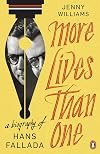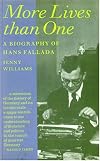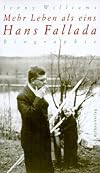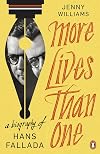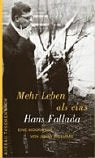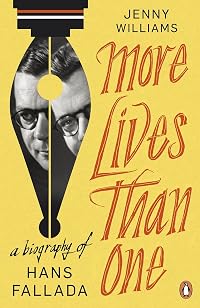
More Lives than One: A Biography of Hans Fallada
by Jenny Williams
On This Page
Description
Hans Fallada was a drug addict, womanizer, alcoholic, jailbird and thief. Yet he was also one of the most extraordinary storytellers of the twentieth century, whose novels, including Alone in Berlin, portrayed ordinary people in terrible times with a powerful humanity. This acclaimed biography, newly revised and completely updated, tells the remarkable story of Hans Fallada, whose real name was Rudolf Ditzen. Jenny Williams chronicles his turbulent life as a writer, husband and father, show more shadowed by mental torment and long periods in psychiatric care. She shows how Ditzen's decision to remain in Nazi Germany in 1939 led to his self-destruction, but also made him a unique witness to his country's turmoil. More Lives Than One unpicks the contradictory, flawed and fascinating life of a writer who saw the worst of humanity, yet maintained his belief in the decency of the 'little man'. show lessTags
Recommendations


















Member Reviews
A stunning, if somewhat depressing, biography of Hans Fallada.
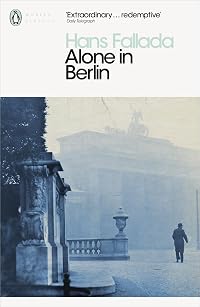
Hans Fallada was all but forgotten outside Germany when his 1947 novel, Alone in Berlin (US title: Every Man Dies Alone), was reissued in English in 2009, whereupon it became a best seller and reintroduced Hans Fallada's work to a new generation of readers.
Jenny Williams, here refers to Hans Fallada as Rudolf Ditzen - his real name, and the name he used throughout his life. Where this biography scores especially highly for me is in its clear eyed depiction of Germany throughout the first 50 years of the twentieth century.
Rudolf Ditzen grows up in the rigid, authoritarian German society of the pre-World War One Wilhelmine era and this biography throws up all kinds of show more fascinating details about everyday life and social trends. Here's one example, when Rudolf was a teenager there were an extraordinary number of suicides in Rudolf's class. This was part of a much broader wave of suicides and suicide attempts that swept through Germany in the years before World War One. Germany's strict society during this period apparently inducing despair and hopelessness amongst many of the young.
Ditzen was a deeply troubled individual, prone to bouts of mental torment resulting in regular periods in psychiatric care. He was also variously addicted to drugs and alcohol, stole and spent time in jail, and was unfaithful to his first wife. All of these behaviours were exacerbated during the Nazi era and, again, Jenny Williams perfectly evokes the living hell of everyday life for many ordinary Germans under this regime.
Ditzen is denounced by neighbours on numerous occasions throughout the 1930s and 1940s and, on one occasion, this results in a spell in prison, the confiscation of the house he owned, and plunges him into another of his regular nervous breakdowns. Ditzen is generally viewed with suspicion by the Nazis and therefore has to severely compromise his work by retreating into children's stories and innocuous historical fiction having been declared an 'undesirable author'. Whilst many contemporaries emigrated he chose to stay in Germany and was therefore perfectly placed to witness, first-hand, the everyday horrors during this era.
I read this biography before reading any of Hans Fallada's work. I now feel very well informed about his life and work, and I am feeling very enthused about reading his books. Ditzen's friend and colleague, Paul Mayer, is quoted at the end of the book: "German literature has not many realistic writers. Hans Fallada is one of them. His work, mutilated by political terror, is even as a torso important enough not to be forgotten."
This book works on so many levels, and includes memorable insights into the social history of Germany, the life of a tortured artist, and the subtle but insistent day-to-day horrors of life under a fascist regime. show less
Hans Fallada was all but forgotten outside Germany when his 1947 novel, Alone in Berlin (US title: Every Man Dies Alone), was reissued in English in 2009, whereupon it became a best seller and reintroduced Hans Fallada's work to a new generation of readers.
Jenny Williams, here refers to Hans Fallada as Rudolf Ditzen - his real name, and the name he used throughout his life. Where this biography scores especially highly for me is in its clear eyed depiction of Germany throughout the first 50 years of the twentieth century.
Rudolf Ditzen grows up in the rigid, authoritarian German society of the pre-World War One Wilhelmine era and this biography throws up all kinds of show more fascinating details about everyday life and social trends. Here's one example, when Rudolf was a teenager there were an extraordinary number of suicides in Rudolf's class. This was part of a much broader wave of suicides and suicide attempts that swept through Germany in the years before World War One. Germany's strict society during this period apparently inducing despair and hopelessness amongst many of the young.
Ditzen was a deeply troubled individual, prone to bouts of mental torment resulting in regular periods in psychiatric care. He was also variously addicted to drugs and alcohol, stole and spent time in jail, and was unfaithful to his first wife. All of these behaviours were exacerbated during the Nazi era and, again, Jenny Williams perfectly evokes the living hell of everyday life for many ordinary Germans under this regime.
Ditzen is denounced by neighbours on numerous occasions throughout the 1930s and 1940s and, on one occasion, this results in a spell in prison, the confiscation of the house he owned, and plunges him into another of his regular nervous breakdowns. Ditzen is generally viewed with suspicion by the Nazis and therefore has to severely compromise his work by retreating into children's stories and innocuous historical fiction having been declared an 'undesirable author'. Whilst many contemporaries emigrated he chose to stay in Germany and was therefore perfectly placed to witness, first-hand, the everyday horrors during this era.
I read this biography before reading any of Hans Fallada's work. I now feel very well informed about his life and work, and I am feeling very enthused about reading his books. Ditzen's friend and colleague, Paul Mayer, is quoted at the end of the book: "German literature has not many realistic writers. Hans Fallada is one of them. His work, mutilated by political terror, is even as a torso important enough not to be forgotten."
This book works on so many levels, and includes memorable insights into the social history of Germany, the life of a tortured artist, and the subtle but insistent day-to-day horrors of life under a fascist regime. show less
Ratings
Members
- Recently Added By
Author Information
2+ Works 69 Members
Jenny Williams is Senior Lecturer in German at Dublin City University.
Some Editions
Series
Belongs to Publisher Series
Aufbau Taschenbuch (7089)
Common Knowledge
- Canonical title
- More Lives than One: A Biography of Hans Fallada
- Original publication date
- 1998
- People/Characters
- Hans Fallada
Classifications
- Genres
- Biography & Memoir, Literature Studies and Criticism, Fiction and Literature
- DDC/MDS
- 833.912 — Literature & rhetoric German & related literatures German fiction 1900- 1900-1990 1900-1945
- LCC
- PT2607 .I6 — Language and Literature German, Dutch and Scandinavian literatures German literature Individual authors or works 1860/70-1960
- BISAC
Statistics
- Members
- 48
- Popularity
- 606,005
- Reviews
- 1
- Rating
- (3.80)
- Languages
- English, German
- Media
- Paper, Ebook
- ISBNs
- 7
- ASINs
- 1