On This Page
Description
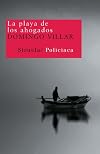
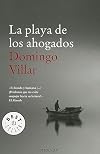
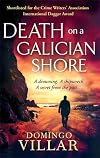
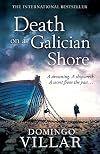
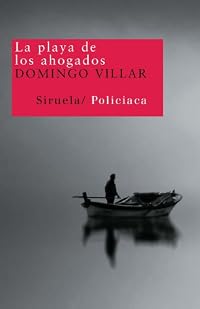
One misty autumn dawn, in a quiet fishing port in northwest Spain, the body of a sailor washes up in the harbor. Detective Inspector Leo Caldas is called in from police headquarters in the nearby city of Vigo to sign off on what appears to be a suicide; but details soon come to light that turn this routine matter into a complex murder investigation. Finding out the truth is not easy when the villagers are so suspicious of outsiders. As Caldas delves into the maritime life of the village, he show more uncovers a disturbing decade-old case of a shipwreck and two mysterious disappearances. This chilling story of violence, blackmail, and revenge has enthralled readers across Europe. show lessTags
Recommendations




































Member Recommendations

Member Reviews
The discovery of the crime in any crime fiction, regardless of the culture it is based in, obviously becomes the major focus of a police procedural styled book. Increasingly this is balanced by the life, personality and colleagues of the central investigator. How those major elements blend together is becoming one of the strongest indicators of the cultural background of the story for this reader. Whilst there are some aspects that are universal, there are also aspects that really draw on local flavour. The food, the climate, the weather, the place, and how the characters interact with their environment, and most importantly the attitude of the people around the investigation, as well as some aspects of the characterisations.
The show more central investigator in DEATH ON A GALICIAN SHORE is Inspector Leo Caldas. A policeman first, he's also a man with a longing for his estranged girlfriend, close ties to his ill uncle, and a strong relationship with his ageing father. Most interestingly, through those relationships, Caldas has a way to connect with the past. He's also a boss with a tricky underling to manage. Estevez is, to put it mildly, a bit of a loose-cannon. A man lacking sensitivity. Somehow the taciturn, and very sensitive Caldas, and the firebrand Estevez manage to work together, although the sense of exasperation and confusion in both men is always present.
Presented as a classic who and why-dunnit, the story is set in a beautiful part of the coast, in a small village in which relationships and loyalties go back many years, and there are secrets in a lot of dark places. It might seem from this description that DEATH ON A GALICIAN SHORE is a pretty sombre book, and whilst there are parts of the book that are darker and restrained, there are also lovely touches of humour and humanity. There's a longing in Caldas that's not sad, it's hopeful, there's joy in the way that his father approaches the illness of his brother, and the relationship between father and son is very well portrayed.
Perhaps it's also partially the setting, but there's something of the good old-fashioned police procedural about the way that this book proceeds. Caldas and Estevez walk the lane-ways and streets of the small towns, they poke around the fishing boats, stand in the sand, eat in the cafes, talk to people and notice the inconsistencies. There's no high tech cleverness or forensics and not a single solitary torch in sight. What there is, however, is a nicely twisty and plausible plot, peopled by some excellent characters that I'd be happy to spend a lot more time with in the future.
http://www.austcrimefiction.org/review/death-galician-shore-domingo-villar show less
The show more central investigator in DEATH ON A GALICIAN SHORE is Inspector Leo Caldas. A policeman first, he's also a man with a longing for his estranged girlfriend, close ties to his ill uncle, and a strong relationship with his ageing father. Most interestingly, through those relationships, Caldas has a way to connect with the past. He's also a boss with a tricky underling to manage. Estevez is, to put it mildly, a bit of a loose-cannon. A man lacking sensitivity. Somehow the taciturn, and very sensitive Caldas, and the firebrand Estevez manage to work together, although the sense of exasperation and confusion in both men is always present.
Presented as a classic who and why-dunnit, the story is set in a beautiful part of the coast, in a small village in which relationships and loyalties go back many years, and there are secrets in a lot of dark places. It might seem from this description that DEATH ON A GALICIAN SHORE is a pretty sombre book, and whilst there are parts of the book that are darker and restrained, there are also lovely touches of humour and humanity. There's a longing in Caldas that's not sad, it's hopeful, there's joy in the way that his father approaches the illness of his brother, and the relationship between father and son is very well portrayed.
Perhaps it's also partially the setting, but there's something of the good old-fashioned police procedural about the way that this book proceeds. Caldas and Estevez walk the lane-ways and streets of the small towns, they poke around the fishing boats, stand in the sand, eat in the cafes, talk to people and notice the inconsistencies. There's no high tech cleverness or forensics and not a single solitary torch in sight. What there is, however, is a nicely twisty and plausible plot, peopled by some excellent characters that I'd be happy to spend a lot more time with in the future.
http://www.austcrimefiction.org/review/death-galician-shore-domingo-villar show less
In the Spanish village of Panxón locals think that fisherman Juan Castelo must have committed suicide by throwing himself overboard from his boat one stormy Sunday morning. But the pathologist convinces Inspector Leo Caldas of the Vigo police that, due to the way the man’s hands were tied, it must have been murder. And so Leo begins a slow and methodical round of interviews of the taciturn locals, becoming frustrated by their unwillingness to tell him anything which advances his investigation. The one glimmer of resolution that he spots early on is that Castelo was one of three men to have survived a tragedy some years before. Some believe that the man who did not survive that tragedy might have returned from the dead to exact his show more revenge.
As with the first book in this series that is fast becoming a favourite of mine two elements really stand out as memorable. The first of these is the characters who are subtly drawn but entirely engaging. Leo is a very self-contained person, spending much of his time alone though it’s not always clear if this is a deliberate choice. His relationship with his father is a complex and uneasy one though the genuine love between the two is evident even if they often show it by getting cross with each other’s foibles. There is humour too though such as when Leo’s father is visiting his sick brother in hospital and is reminded of his Book of Idiots that has fallen into disuse. After adding the name of his brother’s doctor the Book and its new entries becomes a running joke between the men and it provided a lot of warmth to the story (not to mention an inspiration for me to start my own book as it sounded like a satisfying and healthy way to deal with the idiots one encounters in life). The other key relationship Leo has in this book is with his assistant Rafael (Rafa) Estévez who has calmed down a little since the events depicted in the first book though he is still perplexed by the Galician weather and frustrated by the locals’ inability to answer a question directly. There is some friction between the pair and you never get the sense they will be firm friends but stranger things have happened and I am anxious to see what progress is made in future books (hoping of course that there are more to come).
The setting is the other element of the novel that I simply cannot forget. I love the way Villar paints a picture of this part of Spain, incorporating descriptions of both landscape and people in such a vibrant way that I fell like I have strolled along the shore, watched the fishermen bringing in their early morning hauls, wandered over to the market and, inevitably, found a café at which to eat fresh seafood and sip a glass of wine. In addition to making me wistful for a holiday this is a big part of what makes the book so credible. The lives and environment of the key players are depicted in such a way that their murderous ways seem perfectly believable, even sensible in the circumstances.
I did think this book a bit slower than its predecessor (it’s quite a bit longer) and especially in the first half a little repetitive in the way that Leo and Rafa kept re-interviewing the same people for not much gain. But this did help to generate a sense of the frustration that Leo was experiencing (and police must often experience in real life) and I was more than happy to relax a little and soak up the ambience. The pace and complexity of the investigation kicks up a notch in the second half and I enjoyed the neat but still surprising way the resolution fell into place. Without any of the violence or junk-science common to so many procedurals and brimming with warm characters and an inviting atmosphere this book has a great story and, if only fleetingly, makes you feel like you’ve had a holiday in Spain. Delicious reading. show less
As with the first book in this series that is fast becoming a favourite of mine two elements really stand out as memorable. The first of these is the characters who are subtly drawn but entirely engaging. Leo is a very self-contained person, spending much of his time alone though it’s not always clear if this is a deliberate choice. His relationship with his father is a complex and uneasy one though the genuine love between the two is evident even if they often show it by getting cross with each other’s foibles. There is humour too though such as when Leo’s father is visiting his sick brother in hospital and is reminded of his Book of Idiots that has fallen into disuse. After adding the name of his brother’s doctor the Book and its new entries becomes a running joke between the men and it provided a lot of warmth to the story (not to mention an inspiration for me to start my own book as it sounded like a satisfying and healthy way to deal with the idiots one encounters in life). The other key relationship Leo has in this book is with his assistant Rafael (Rafa) Estévez who has calmed down a little since the events depicted in the first book though he is still perplexed by the Galician weather and frustrated by the locals’ inability to answer a question directly. There is some friction between the pair and you never get the sense they will be firm friends but stranger things have happened and I am anxious to see what progress is made in future books (hoping of course that there are more to come).
The setting is the other element of the novel that I simply cannot forget. I love the way Villar paints a picture of this part of Spain, incorporating descriptions of both landscape and people in such a vibrant way that I fell like I have strolled along the shore, watched the fishermen bringing in their early morning hauls, wandered over to the market and, inevitably, found a café at which to eat fresh seafood and sip a glass of wine. In addition to making me wistful for a holiday this is a big part of what makes the book so credible. The lives and environment of the key players are depicted in such a way that their murderous ways seem perfectly believable, even sensible in the circumstances.
I did think this book a bit slower than its predecessor (it’s quite a bit longer) and especially in the first half a little repetitive in the way that Leo and Rafa kept re-interviewing the same people for not much gain. But this did help to generate a sense of the frustration that Leo was experiencing (and police must often experience in real life) and I was more than happy to relax a little and soak up the ambience. The pace and complexity of the investigation kicks up a notch in the second half and I enjoyed the neat but still surprising way the resolution fell into place. Without any of the violence or junk-science common to so many procedurals and brimming with warm characters and an inviting atmosphere this book has a great story and, if only fleetingly, makes you feel like you’ve had a holiday in Spain. Delicious reading. show less
A local fisherman washes up dead on the shores of a small Galician village. It is assumed to be suicide, but Inspector Leo Caldas is not convinced; the strap binding his hands could not have been tightened by the dead man. A look into his past links him to a shipwreck and the loss of the experienced Captain Sousa many years before. There are rumours in the village of sightings of Sousa, but that is impossible. Caldas digs into the story of the shipwreck with the two remaining survivors, both of whom are reluctant to talk.
The plot and pace of this story are fairly pedestrian, although Villar manages to rev things up a bit and throw a few plot twists in towards the end. The unfamiliar setting adds interest, but Caldas is not really that show more engaging a central character, and the book overall was just OK. show less
The plot and pace of this story are fairly pedestrian, although Villar manages to rev things up a bit and throw a few plot twists in towards the end. The unfamiliar setting adds interest, but Caldas is not really that show more engaging a central character, and the book overall was just OK. show less
Boek over het onderzoek naar de (zelf)moord van een visser uit een klein Galicisch kustdorpje. Inspecteur Leo Caldas komt er langzaam maar zeker achter dat het te maken heeft met het vergaan van een schip op 20 december 1996. Mooie beschrijvingen van mensen en gewoontes in dit deel van Spanje.
Novela policíaca, entretenida y fácil de leer, pero sin más.
Pareja compuesta por arquetipos clásicos de investigadores, jefe de la zona del crimen y ayudante forastero garrulo.
Pareja compuesta por arquetipos clásicos de investigadores, jefe de la zona del crimen y ayudante forastero garrulo.
Excelente novela policiaca en la que el detective Leo Caldas soluciona un caso complicado. Esta segunda novela es mas compleja que la anterior, y como en aquella, logra transportar al lector a Galicia mostrandole sus paisajes, su gastronomia y sus costumbres.
Relajado, una buena lectura un poco predecible
Members
- Recently Added By
Author Information

6+ Works 785 Members
Awards and Honors
Series

Belongs to Publisher Series
Common Knowledge
- Canonical title
- Death on a Galician Shore
- Original title
- La playa de los ahogados; A praia dos afogados
- Original publication date
- 2009
- People/Characters
- Leo Caldas; Rafael Estévez
- Important places
- Vigo, Galicia, Spain; Panxón, Galicia, Spain (a.k.a., Nigrán and Panjón)
- Epigraph*
- A mi padre
- Dedication*
- A mi padre
- First words
- El inspector Leo Caldas se bajó del taxi y dio dos zancadas para evitar los charcos que inundaban la acera.
- Last words
- (Click to show. Warning: May contain spoilers.)-¿Y no crees que deberías hacerlo?
*Some information comes from Common Knowledge in other languages. Click "Edit" for more information.
Classifications
Statistics
- Members
- 345
- Popularity
- 90,958
- Reviews
- 25
- Rating
- (3.81)
- Languages
- 11 — Czech, Dutch, English, French, German, Galician, Italian, Polish, Portuguese, Spanish, Swedish
- Media
- Paper, Audiobook, Ebook
- ISBNs
- 28
- ASINs
- 6