Bad Blood: A Walk Along the Irish Border
by Colm Tóibín
On This Page
Description
Soon after the Anglo-Irish Agreement, when the tension was at a peak in Northern Ireland, Colm Tóibin travelled along the Irish border from Derry to Newry. Bad Blood tells of fear and anger, and of the historical legacy that has imprinted itself on the landscape and its inhabitants.Marches, demonstrations and funerals are rituals observed by the communities that live along this route. With insight and intelligence Tóibin listens to the stories that are told, and unfolds for the reader the show more complex unhappiness of this fraught border. show lessTags
Recommendations









Member Reviews
Colm Toibin is better known for some of his recent novels. In this travelogue (for want of a better phrase), the novelist walks the length of the border between the British-governed province of Ulster and the Republic of Ireland in the South.
He travels -- sometimes unknowingly -- between North and South, zig-zagging back and forth to capture the views and experiences of Catholics and Protestants on both sides of the border. He has an eye for the obvious -- the camouflaged British soldiers he stumbles over in ditches, for instance, and the giant markings on the roads that signal to helicopters when they can't fly any further south without crossing the border -- as well as the smaller human details, such as the family who didn't learn of show more the marriage of one of the sons of their closest neighbors for several years, because the latter lived on the other side of the border. When one of the people he encounters remembers being worried about having his house torched by the IRA during the hunger strikes at the Maze prison in the early 80s, the local police point out to him he has nothing to worry about, since his Protestant ancestors bought the land (vs being given it by the English government or expropriating it) --back in 1732. Memories are long, Toibin reminds his readers...
One interesting element to me was the extent to which Toibin (originally Catholic, from the South) is obviously far more comfortable interacting with even extremist Catholics than ordinary Protestants (he feels self-conscious in a Protestant-owned hotel; is the guest of Sinn Fein in a Catholic region) even as he obviously deplores the sectarianism. While this was written in the early 1990s (and while the visible conflict has abated) it won't be until that inner hyper-consciousness dissipates that the Irish "Troubles" will really end. I found myself thinking back to my own trip from Co. Leitrim to the North, and the still-visible signs of sectarianism -- and my nervous Catholic driver who really would rather have been on Mars.
A glaring omission in my Picador edition: appallingly, there is NO MAP! I know the geography, but not in such detail that I could follow Toibin's route.
Still, highly recommended, especially to those interested in/familiar with recent Irish history. show less
He travels -- sometimes unknowingly -- between North and South, zig-zagging back and forth to capture the views and experiences of Catholics and Protestants on both sides of the border. He has an eye for the obvious -- the camouflaged British soldiers he stumbles over in ditches, for instance, and the giant markings on the roads that signal to helicopters when they can't fly any further south without crossing the border -- as well as the smaller human details, such as the family who didn't learn of show more the marriage of one of the sons of their closest neighbors for several years, because the latter lived on the other side of the border. When one of the people he encounters remembers being worried about having his house torched by the IRA during the hunger strikes at the Maze prison in the early 80s, the local police point out to him he has nothing to worry about, since his Protestant ancestors bought the land (vs being given it by the English government or expropriating it) --back in 1732. Memories are long, Toibin reminds his readers...
One interesting element to me was the extent to which Toibin (originally Catholic, from the South) is obviously far more comfortable interacting with even extremist Catholics than ordinary Protestants (he feels self-conscious in a Protestant-owned hotel; is the guest of Sinn Fein in a Catholic region) even as he obviously deplores the sectarianism. While this was written in the early 1990s (and while the visible conflict has abated) it won't be until that inner hyper-consciousness dissipates that the Irish "Troubles" will really end. I found myself thinking back to my own trip from Co. Leitrim to the North, and the still-visible signs of sectarianism -- and my nervous Catholic driver who really would rather have been on Mars.
A glaring omission in my Picador edition: appallingly, there is NO MAP! I know the geography, but not in such detail that I could follow Toibin's route.
Still, highly recommended, especially to those interested in/familiar with recent Irish history. show less
Written in 1986, Toibin presumably embarked on this journey as a young man with journalistic intentions rather than the acclaimed novelist we know him to be today. He becomes a kind of vagrant, sometimes walking with purpose but more often going where interests him, or where his poor navigational skills or a bleak landscape take him. A significant portion of the book covers periods when he holes up for days or weeks in a town or village, in family hotels, bed and breakfasts or in the spare room of a local Shinner. He rarely strays more than five miles from the border, although while walking is often confused on which side he currently stands. He spends most of his evenings and many of his days drinking.
This isn't a well known book in show more the plethora published on the Troubles, but given the changes since it's little wonder it remains in print as a record of just how grim things got during the dark and attritious years of the PIRA's offensive.
25 years on from Bad Blood and 15 years from PIRA's second and lasting ceasefire, the border between NI and the RoI remains and, while now largely devoid of British military presence, still represents almost a century of Irish partition. Cross-border exchanges now extend beyond petrol and alcohol dashes to commerce, property investment, entertainment and education. Relations between Dublin and the United Kingdom in north-east Ireland have largely normalised.
Yet growing up in counties Tyrone and Antrim during Bad Blood's era, the border felt physically and psychologically impenetrable (and for Ulster unionists and Republic of Ireland nationalists, that was just how we wanted it, whether the latter group would care to admit it or not). In fact, it was a surprise to find just how porous it actually was. Of course it was; it was and remains mostly farmland - there is no wall. Before the age of 18, I crossed it only once, on a pioneering family day trip to Dublin Zoo. In the same period we visited the British mainland upwards of a dozen times.
Toibin captures well the intense localism of the Troubles. The killings in Fermanagh during the 70s and 80s may have been getting international headlines, but they were mostly intra-village vindictive slayings. Simple folk hating simple folk, both killers and killed widely known.
He makes a reasonable attempt at balance, yet despite his best efforts often reverts to the unsympathetic language and behaviour of an Irish nationalist. Like many from the RoI, the official term for the Province - "Northern Ireland" - sticks in his throat and he instead makes constant references to "the North". He becomes wide-eyed when discovering a Protestant couple from Omagh sign their nationality as British in a B&B guestbook. And he spends a disappointing amount of time with Sinn Fein people, even if this does serve the lasting purpose of reminding us what a nasty and murderous little group they were at this time.
Fine and enlightened writing. Interested readers may also enjoy Palentinian Walks: Notes on a Vanishing Landscape by Raja Shehadeh; and To the End of the Land by David Grossman. show less
This isn't a well known book in show more the plethora published on the Troubles, but given the changes since it's little wonder it remains in print as a record of just how grim things got during the dark and attritious years of the PIRA's offensive.
25 years on from Bad Blood and 15 years from PIRA's second and lasting ceasefire, the border between NI and the RoI remains and, while now largely devoid of British military presence, still represents almost a century of Irish partition. Cross-border exchanges now extend beyond petrol and alcohol dashes to commerce, property investment, entertainment and education. Relations between Dublin and the United Kingdom in north-east Ireland have largely normalised.
Yet growing up in counties Tyrone and Antrim during Bad Blood's era, the border felt physically and psychologically impenetrable (and for Ulster unionists and Republic of Ireland nationalists, that was just how we wanted it, whether the latter group would care to admit it or not). In fact, it was a surprise to find just how porous it actually was. Of course it was; it was and remains mostly farmland - there is no wall. Before the age of 18, I crossed it only once, on a pioneering family day trip to Dublin Zoo. In the same period we visited the British mainland upwards of a dozen times.
Toibin captures well the intense localism of the Troubles. The killings in Fermanagh during the 70s and 80s may have been getting international headlines, but they were mostly intra-village vindictive slayings. Simple folk hating simple folk, both killers and killed widely known.
He makes a reasonable attempt at balance, yet despite his best efforts often reverts to the unsympathetic language and behaviour of an Irish nationalist. Like many from the RoI, the official term for the Province - "Northern Ireland" - sticks in his throat and he instead makes constant references to "the North". He becomes wide-eyed when discovering a Protestant couple from Omagh sign their nationality as British in a B&B guestbook. And he spends a disappointing amount of time with Sinn Fein people, even if this does serve the lasting purpose of reminding us what a nasty and murderous little group they were at this time.
Fine and enlightened writing. Interested readers may also enjoy Palentinian Walks: Notes on a Vanishing Landscape by Raja Shehadeh; and To the End of the Land by David Grossman. show less
Ratings
Members
- Recently Added By
Author Information

87+ Works 25,277 Members
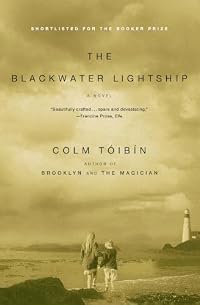
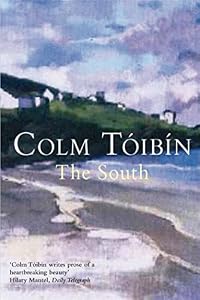
Colm Tóibín was born in Enniscorthy, Ireland in 1955. He studied history and English at University College Dublin, earning his B.A. in 1975. After graduating he moved to Barcelona for three years and taught at the Dublin School of English. In 1978 he returned to Dublin and began working on an M.A. in Modern English and American Literature. He show more wrote for In Dublin, Hibernia, and The Sunday Tribune. He became the Features Editor of In Dublin in 1981, and then a year later accepted the position of Editor for the Irish current affairs magazine Magill. His first book, Walking Along the Border, was published in 1987 and his first novel, The South, was published in 1990. He wrote for The Sunday Independent as a drama or television critic and political commentator. He writes regularly for The London Review of Books. He has written several other novels including The Story of the Night, The Blackwater Lightship, Brooklyn, The Testament of Mary, and Nora Webster. The Heather Blazing received the 1993 Encore Award and The Master received the 2006 International IMPAC Dublin Literary Award, the Stonewall Book Award, and the Lambda Literary Award. In 2015 he made The New Zealand High Profile Titles List with All The Light We Cannot See. He was short listed for the 2015 Folio Prize for his title Nora Webster. (Bowker Author Biography) show less
All Editions
Common Knowledge
- Original publication date
- 1994
- Important places
- Northern Ireland, UK; Ireland
Classifications
- Genres
- Travel, Nonfiction, General Nonfiction
- DDC/MDS
- 914.15 — History & geography Geography & travel Geography of and travel in Europe British Isles, UK, Great Britain, Scotland, Ireland Ireland
- LCC
- DA990 .U46 .T66 — History of Europe, Asia, Africa and Oceania Great Britain History of Great Britain Ireland Local history and description Northern Ireland (Ulster)
- BISAC
Statistics
- Members
- 182
- Popularity
- 179,324
- Reviews
- 2
- Rating
- (4.13)
- Languages
- English, French, Spanish
- Media
- Paper
- ISBNs
- 8
- ASINs
- 1