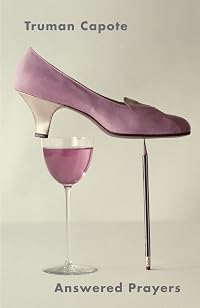
Answered Prayers
by Truman Capote
On This Page
Description
"Truman Capote's unfinished final novel is an unsparing tell-all of New York high society that sent a seismic shock through Capote's social circle--and the entire literary world."-- Dust jacket flap. "Catapulted from a childhood spent in a Missouri orphanage to the dizzying peaks of New York high society, the destitute and debauched writer P. B. Jones spends his days moving between the paltry cell of a Manhattan Y.M.C.A. and the opulent playgrounds of the metropolitan elite. Though Jones show more struggles to make ends meet, his effortless associations with the moneyed and powerful thrust him into sumptuous business offices, bohemian bars inhabited by the likes of Jean-Paul Sartre and Simone de Beauvoir, and the trendiest restaurants, where the tables are arranged by the social status of their occupants. Jones's days and nights are a riptide of dysfunctional dinner parties and hobnobbing with drunken heiresses, accompanied by a carousel of legendary female characters who populated Capote's own life, among them Colette, Jackie Kennedy, and the Duchess of Windsor. Indeed, Answered Prayers teems with the real-life secrets and confessions of Capote's most trusted friends, and these pages, when first published as a magazine serial, astounded readers but betrayed his confidantes, banishing him from the exclusive circle that was once his. Unrestrained and irreverent, Answered Prayers renders a carnival of wealth and influence so unthinkable that it satirizes itself--with the inimitable wit of one of the twentieth century's most celebrated writers."-- Provided by publisher. show lessTags
Recommendations




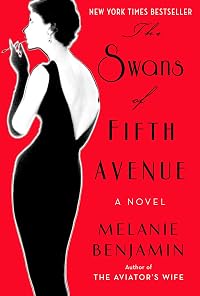
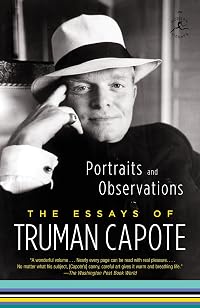
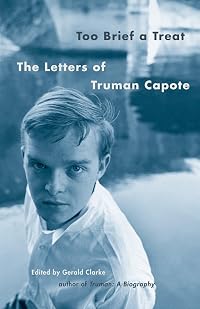
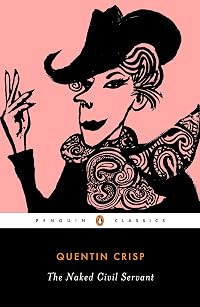




Member Recommendations
anonymous user Son dos pícaros modernos.
Member Reviews
El protagonista de la novela, ingenioso, encantador, bisexual, absolutamente amoral logró escaparse de un orfanato a los trece años, aprendió el oficio de masajista y se las ingenió para convertirse en un pícaro moderno y codearse con los ricos y los famosos, desempeñando unas veces el papel de confidente, otras el de bufón y, para los lectores de esta novela, el de divertidísimo cronista de las disparatadas vidas de la jet-set. Este libro es, en buena parte, un roman à clef y, a veces, ni siquiera necesita claves, pues por sus páginas desfilan junto a retratos tenuemente disfrazados de escritores como Tennessee Williams, actrices como Greta Garbo, millonarios como Niarchos personajes reales, como las inefables Mrs. Mathau y show more Mrs. Cooper, cuyos diálogos sobre la vida y costumbres (preferentemente sexuales) de otros miembros de la alta sociedad están reproducidos con cruel fidelidad. show less
Truman Capote‘s last, unfinished novel, which he planned as early as 1966, but never seems to have written more than a few chapters of. It was supposed to be his magnum opus, the sixties answer to Proust, but he got a little distracted by the success of In cold blood, which came out later that year, and then somewhat discouraged by the furore that broke out when he published three completed chapters in Esquire magazine in the mid-70s. The wealthy New York ladies he liked to hang out with weren’t very happy to see their juiciest private gossip appearing in print, and Capote suddenly found people weren’t returning his calls…
It would have been quite a book, if he’d ever written it, but he didn’t, so all we have are these three show more chapters (according to Capote‘s account, there were two more, which are presumed to have been either lost, destroyed, or never written in the first place). “Unspoiled monsters” introduces the narrator, the foundling, masseur, part-time sex-worker, social climber and sometime short-story writer PB Jones; ”Kate McCloud” takes Jones to Paris and Tangier and links him with a beautiful, sad and wealthy widow; and “La Côte Basque” — the chapter that caused all the trouble — is a virtuoso thirty-page slab of non-stop gossip overheard in a fashionable New York lunch spot. Over the course of the three chapters several hundred prominent names are dropped, most of which seem to belong to actual celebrities of the time, whilst corresponding quantities of cocktails, drugs and expendable sex-objects are conspicuously consumed. All good, salacious fun, reported with Capote’s characteristic verve and economy of language, but it’s hard to see where, if anywhere, it might have been going. Less Proust than a very long and very funny gossip column, really — perhaps it would never have got written even if Capote hadn’t earned enough from violent crime to keep him in gourmet lunches for the rest of his life. show less
It would have been quite a book, if he’d ever written it, but he didn’t, so all we have are these three show more chapters (according to Capote‘s account, there were two more, which are presumed to have been either lost, destroyed, or never written in the first place). “Unspoiled monsters” introduces the narrator, the foundling, masseur, part-time sex-worker, social climber and sometime short-story writer PB Jones; ”Kate McCloud” takes Jones to Paris and Tangier and links him with a beautiful, sad and wealthy widow; and “La Côte Basque” — the chapter that caused all the trouble — is a virtuoso thirty-page slab of non-stop gossip overheard in a fashionable New York lunch spot. Over the course of the three chapters several hundred prominent names are dropped, most of which seem to belong to actual celebrities of the time, whilst corresponding quantities of cocktails, drugs and expendable sex-objects are conspicuously consumed. All good, salacious fun, reported with Capote’s characteristic verve and economy of language, but it’s hard to see where, if anywhere, it might have been going. Less Proust than a very long and very funny gossip column, really — perhaps it would never have got written even if Capote hadn’t earned enough from violent crime to keep him in gourmet lunches for the rest of his life. show less
Every novel is a form of catharsis in one way or another. It's the deal we make when we buy a book: if the author packages their woes, hopes and gripes well and in an entertaining way, then we will patiently listen and even enjoy ourselves. With all the reader oriented writing Truman did in his career, in the final analysis it's clear that he ultimately did not understand for whom he was writing. In Answered Prayers we see the world through Truman's eyes as he must have experienced life on earth from his humble beginnings up until his humble death. In between he became fascinated with the sordid lives and lifestyles of the rich and famous. Answered Prayers reads in some ways as Martin Luther's accusation and is about the same show more size.
Through Answered Prayers Truman wanted to establish himself as the modern day Proust and he sincerely believed it was his masterpiece. Instead we read page after page about the diversification of vices throughout the 20th century. Almost every sentence demonstrates that Truman saw life through the eyes of inanimate objects, amongst which he counted all his living 'friends'. With great ease he rattles off litanies of then well known names and luxury brands, most of which nobody will have heard of today. Another great mistake I feel since, unlike Proust, Truman immediately dates his work and made it instantly ephemeral.
Granted the writing is as usual of a high quality and extremely mellifluousness, but that doesn't save the work in the least. How much do we really care about the main character, and by proxy about Truman himself? Do we believe everything he says? Do we care if we believe him or not?
In the end the book attempts to answer the one question Truman tried to answer all of his life for himself: "With all these unspoiled monsters, why am I the unlovable one?" show less
Through Answered Prayers Truman wanted to establish himself as the modern day Proust and he sincerely believed it was his masterpiece. Instead we read page after page about the diversification of vices throughout the 20th century. Almost every sentence demonstrates that Truman saw life through the eyes of inanimate objects, amongst which he counted all his living 'friends'. With great ease he rattles off litanies of then well known names and luxury brands, most of which nobody will have heard of today. Another great mistake I feel since, unlike Proust, Truman immediately dates his work and made it instantly ephemeral.
Granted the writing is as usual of a high quality and extremely mellifluousness, but that doesn't save the work in the least. How much do we really care about the main character, and by proxy about Truman himself? Do we believe everything he says? Do we care if we believe him or not?
In the end the book attempts to answer the one question Truman tried to answer all of his life for himself: "With all these unspoiled monsters, why am I the unlovable one?" show less
At first I was nervous - afraid that Answered Prayers would prove to be a queeny catalogue - yawn...
The queer narrator's voice is established promptly, skillfully. All too quickly I found myself carried along by the delightful prose and by the beguiling PB Jones. It is a joy just to read a page, maybe that's why it just doesn't seem to matter that this is an unfinished novel.
Here's some of my favourite bits:
"As a matter of fact, I am writing this on YMCA stationery in a Manhattan YMCA, where I have been existing the last month in a viewless second-floor cell. I'd prefer the sixth floor - so if I decided to climb out the window, it would make a vital difference."
"Perhaps what I wanted in the way of a wife was the city itself, my show more happiness there, my sense of inevitable fame, fortune. Alas, what I married was a girl."
"...her parents came to visit us: a pair of Swedish brutes from Minnesota, a mammoth twosome twice the size of their daughter."
"Mr Boatwright was the fiction editor of a women's fashion magazine...He came to my attention, or rather I came to his, when one day he spoke to our writing class. I was sitting in the front row, and I could tell, by the way his chilly crotch-watching eyes kept gravitating toward me, what was spinning around in his pretty curly-grey head."
"The editor, with a sleepy gesture meant to disguise cobra alertness, motioned me toward it (his own chair, as I later discovered, contained a little pillow with an embroidered inscription: MOTHER)."
And I'm only seven pages in. You get the picture... this is a really rewarding read if you love skillful writing. show less
The queer narrator's voice is established promptly, skillfully. All too quickly I found myself carried along by the delightful prose and by the beguiling PB Jones. It is a joy just to read a page, maybe that's why it just doesn't seem to matter that this is an unfinished novel.
Here's some of my favourite bits:
"As a matter of fact, I am writing this on YMCA stationery in a Manhattan YMCA, where I have been existing the last month in a viewless second-floor cell. I'd prefer the sixth floor - so if I decided to climb out the window, it would make a vital difference."
"Perhaps what I wanted in the way of a wife was the city itself, my show more happiness there, my sense of inevitable fame, fortune. Alas, what I married was a girl."
"...her parents came to visit us: a pair of Swedish brutes from Minnesota, a mammoth twosome twice the size of their daughter."
"Mr Boatwright was the fiction editor of a women's fashion magazine...He came to my attention, or rather I came to his, when one day he spoke to our writing class. I was sitting in the front row, and I could tell, by the way his chilly crotch-watching eyes kept gravitating toward me, what was spinning around in his pretty curly-grey head."
"The editor, with a sleepy gesture meant to disguise cobra alertness, motioned me toward it (his own chair, as I later discovered, contained a little pillow with an embroidered inscription: MOTHER)."
And I'm only seven pages in. You get the picture... this is a really rewarding read if you love skillful writing. show less
For years after Capote published In Cold Blood, he told everyone he was working on a masterpiece that would rival Proust's Remembrance of Things Past. It would be called Answered Prayers, and it would incorporate everything Capote knew about writing both fiction and nonfiction.
Unfortunately, though he thought about the work obsessively, he only wrote three chapters. Those chapters are what make up this book. And they leave you positively hungering for more. Answered Prayers is a roman a clef where the names have been changed, but certainly not to protect the innocent. I don't think there's an innocent character in this book. They're all obsessed with sex or money or power. And sometimes the name change is the only thing fictional about show more the character.
This book is a perfect companion read to Capote by Gerald Clarke because in it you get the facts that form the basis of the barely disguised fiction in this one.
This is a must read for fans of Capote. But it will leave you wishing he'd spent more time writing and less time boozing and pilling his way to the grave. show less
Unfortunately, though he thought about the work obsessively, he only wrote three chapters. Those chapters are what make up this book. And they leave you positively hungering for more. Answered Prayers is a roman a clef where the names have been changed, but certainly not to protect the innocent. I don't think there's an innocent character in this book. They're all obsessed with sex or money or power. And sometimes the name change is the only thing fictional about show more the character.
This book is a perfect companion read to Capote by Gerald Clarke because in it you get the facts that form the basis of the barely disguised fiction in this one.
This is a must read for fans of Capote. But it will leave you wishing he'd spent more time writing and less time boozing and pilling his way to the grave. show less
Over the years, I've read a couple other works by Capote. I wasn't bowled over by them (Breakfast at Tiffany's and In Cold Blood), but I wasn't exactly disappointed in them. I found this book to be a disappointment.
I wouldn't have even known about it if it weren't for the series streaming on Hulu: Feud: Capote vs. The Swans. I've only seen a few episodes, but it got me wondering about this fabulous novel that Truman was continuously promising and not following through on. One of the chapters in the book serves as the basis for the beginning of the "feud," so I was most intrigued by that chapter.
In reality, it's all fluff. Capote is basically alternating between self-loving journal entries and bitchy diatribes against the wealthy women show more who fed him and clothed him and kept him in the lap of luxury. I can understand having a bitterness toward people who are exceedingly better off, monetarily--but the way he repays the favor of their love and adoration is appalling. Perhaps if the writing were better, it would've been more enjoyable. He'd clearly blown his wad by the time he began (and never really ended) this novel. Save your time--read something else. show less
I wouldn't have even known about it if it weren't for the series streaming on Hulu: Feud: Capote vs. The Swans. I've only seen a few episodes, but it got me wondering about this fabulous novel that Truman was continuously promising and not following through on. One of the chapters in the book serves as the basis for the beginning of the "feud," so I was most intrigued by that chapter.
In reality, it's all fluff. Capote is basically alternating between self-loving journal entries and bitchy diatribes against the wealthy women show more who fed him and clothed him and kept him in the lap of luxury. I can understand having a bitterness toward people who are exceedingly better off, monetarily--but the way he repays the favor of their love and adoration is appalling. Perhaps if the writing were better, it would've been more enjoyable. He'd clearly blown his wad by the time he began (and never really ended) this novel. Save your time--read something else. show less
Agonized through this depressing curiosity. What did Capote expect of this? What did we expect of him?
Members
- Recently Added By
Published Reviews
ThingScore 50
"It was the transparent identities in [the final chapter] that did Capote in. Even to this day it is fashionable in fashionable circles to take the line that poor Truman lost his marbles ... it is clear that Capote had the raw material for a best-selling nonfiction book and should have written it as just that."
"The trouble with 'Answered Prayers' is that Capote at this stage was not amenable show more to the demands of nonfiction. He was out of control in his life and in his art. ... Nonetheless, out of this conflict Capote could occasionally create art. Between the cloudbursts of malice there are flashes of prose in 'Answered Prayers' that bring the aching reminder of a more whole writer, prose that makes the heart sing and the narrative fly." show less
"The trouble with 'Answered Prayers' is that Capote at this stage was not amenable show more to the demands of nonfiction. He was out of control in his life and in his art. ... Nonetheless, out of this conflict Capote could occasionally create art. Between the cloudbursts of malice there are flashes of prose in 'Answered Prayers' that bring the aching reminder of a more whole writer, prose that makes the heart sing and the narrative fly." show less
added by jasbro
Lists

Five star books
1,767 works; 110 members
Author Information

176+ Works 57,253 Members
Truman Capote, 1924 - 1984 Novelist and playwright Truman Streckfus Person was born in 1924 in New Orleans to a salesman and a 16-year-old beauty queen. His parents divorced when he was four years old and was then raised by relatives for a few years in Monroeville. His mother was remarried to a successful businessman, moved to New York, and Truman show more adopted his stepfather's surname. He attended Greenwich High School and never went to college. When he was 17, Capote's formal education ended when he was employed at The New Yorker magazine. He belived he did not need to go to college to be a writer, since he was writing seriously since age 11. Capote's first novel was "Other Voices, Other Rooms" (1948), which told the story of a boy growing up in the Deep South. "The Grass Harp" (1951) is about a young boy and his elderly cousin discovering that some compromise is necessary for people to live together in a community and was adapted to screen in 1996. The play "The House of Flowers" (1954) is a musical set in a West Indies bordello. Capote then wrote, "Breakfast at Tiffanys" (1958), which tells the story of how Holly Golightly goes to New York seeking happiness. Capote became preoccupied with journalism and, sparked by the murder of a wealthy family in Holcomb, Kansas, began interviewing the locals to recreate the lives of the murderers and their victims. The research and writing for this novel, "In Cold Blood" (1966), took six years for him to complete. Other works of Capote's include the classic "A Christmas Memory" (1966), which is an autobiographical account of a seven-year-old boy, his cousin, and an eccentric old lady, "Music for Chameleons" (1981), which is a collection of short pieces, interviews, stories and conversations that were published in several magazines, and "One Christmas" (1982). On August 26, 1984 in Los Angeles, Truman Capote died of liver disease complicated by phlebitis and multiple drug intoxication. Published after his death were "Conversations With Capote" (1985) and "Answered Prayers: The Untitled Novel" (1986). (Bowker Author Biography) show less
Some Editions
Awards and Honors
Notable Lists
Series
Belongs to Publisher Series
Common Knowledge
- Original title
- Answered Prayers: The Unfinished Novel
- Original publication date
- 1986
- People/Characters
- Denham "Denny" Fouts; P.B. Jones; Kate McCloud
- Important places
- Manhattan, New York, New York, USA
- Epigraph
- More tears are shed over answered prayers than unanswered ones. Saint Teresa
- First words
- Somewhere in this world there exists an exceptional philosopher named Florie Rotondo. -Unspoiled Monsters
On January 5, 1966, Truman Capote signed a contract with Random House for a new book to be called Answered Prayers. The advance against royalties was $25,000, and the delivery date was January 1, 1968. The novel, Truman maint... (show all)ained, would be a contemporary equivalent of Proust's masterpiece, Remembrance of Things Past, and would examine the small world of the very rich - part aristocratic, part cafe society - of Europe and the east coast of the United States. -Editor's Note, Joseph M. Fox, 1987 - Quotations
- Because something is true doesn't mean that it's convincing, either in life or in art.
“That's the question: is truth an illusion, or is illusion truth, or are they essentially the same? Myself, I don't care what anybody says about me as long as it isn't true.”
It is a dull town where all the essential risks have been removed. - Last words
- (Click to show. Warning: May contain spoilers.)It was an atmosphere of luxurious exhaustion, like a ripened, shedding rose, while all that waited outside was the failing New York afternoon.
- Publisher's editor*
- Sudamericana
- Canonical DDC/MDS
- 813.54
- Canonical LCC
- PS3505.A59
- Disambiguation notice
- '"Unspoiled Monsters," "Kate McCloud," and "La Côte Basque" were originally published in Esquire' T.p. verso
*Some information comes from Common Knowledge in other languages. Click "Edit" for more information.
Classifications
Statistics
- Members
- 1,181
- Popularity
- 21,219
- Reviews
- 14
- Rating
- (3.46)
- Languages
- 11 — Catalan, Chinese, English, French, German, Italian, Polish, Portuguese, Spanish, Swedish, Turkish
- Media
- Paper, Ebook
- ISBNs
- 41
- ASINs
- 8