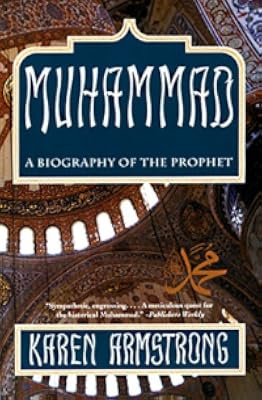
Muhammad: A Biography of the Prophet
by Karen Armstrong
On This Page
Description
This biography attempts to strip away centuries of distortion and myth and present a balanced view of the man whose religion continues to dramatically affect the course of history.Tags
Recommendations
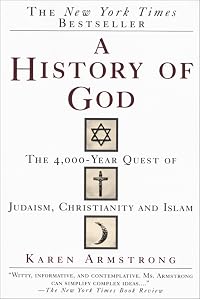
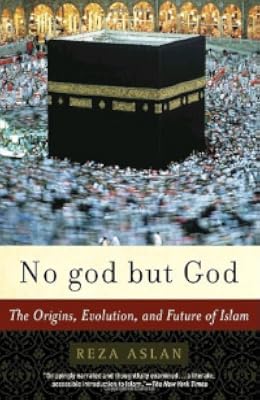

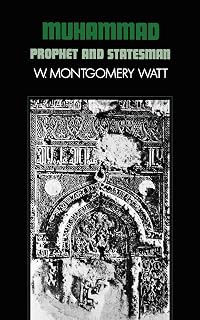
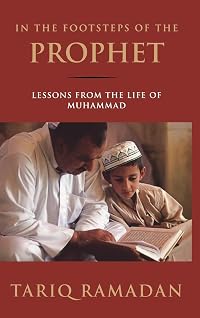





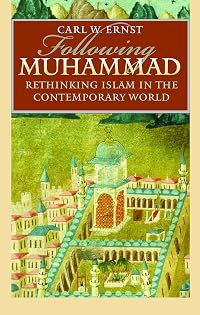
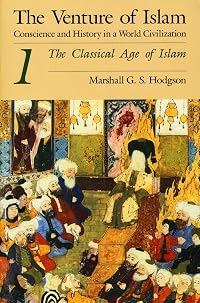
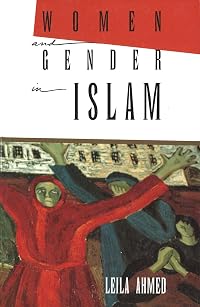
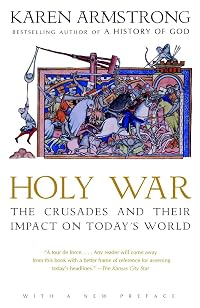

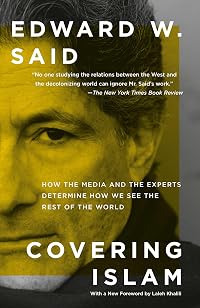
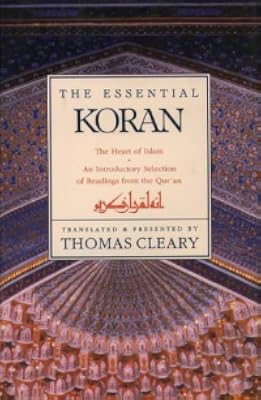
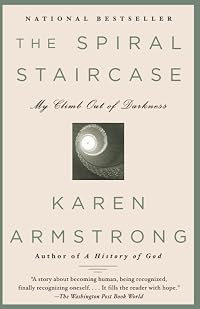
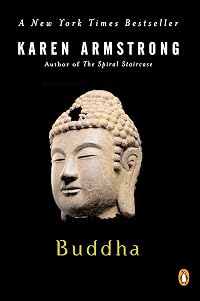


Member Recommendations

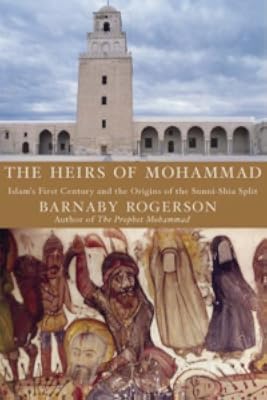
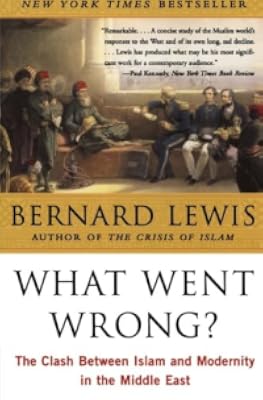
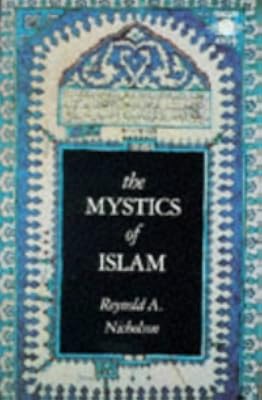
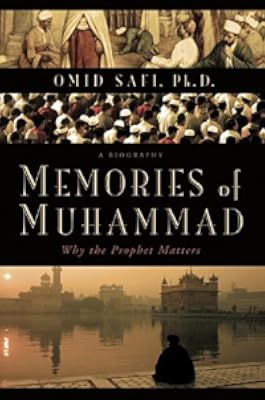
Cecrow A post 9-11 revisit by the author, this time with emphasis to address possible misconceptions by non-Islamic readers.
Member Reviews
This short biography of Muhammad should be required reading for all Americans over the age of 12. Armstrong manages, in the course of telling what is known about the life of the Prophet, to put Islam in context, explain the Sunni-Shi'a division, and much more. This is really the best introduction to Islam I have read--now I have to read her history of Islam.
I bought Armstrong's book about Muhammad about a year ago, after reading her short book about the history of Islam. I liked that book, as it covered the main topics about Islam quite well, so I thought I would enjoy reading her previous, longer book about the founder of that religion: Muhammad - A biography of the Prophet.
In Muhammad Armstrong paints a loving and sympathetic picture of the man who created the world's second largest religion (soon probably to become the first largest). The prophet is described as a gentle and caring person who possessed charismatic skills and spiritual deepness, that succeeded to transform Arabia from pagan belief to monotheistic belief in a remarkably short period of time. Armstrong depicts Muhammad in show more glowing colours, even when she admits his wrongdoings. In the 8th chapter, "Holy War", Armstrong recounts the massacre and summary executions of the Jewish community in Qurayzah and apologetically describes them as "a reminder of the desparate conditions of Arabia during Muhammad's lifetime" (p. 208). She continually reminds the reader that the word "Islam" means peace and reconciliation, but some of the events described in the book (and the atrocities committed in the name of Islam in our times) leave us wondering about the application of these virtues by Muslims throughout history.
Prof. Emanual Sivan, one of Israel's leading historians of Islam, wrote a review about Muhammad in Ha'aretz a few months ago. He described Armstrong's book as "history soaked in rose water" and claims that the author shed all sense of criticism before writing the book and failed in distinguishing between historical facts and myths which evolved long after Muhammad died. I am no expert of Islam, but I tend to agree; I feel I know more about the life of Muhammad now, but I am left with a sense of an unbalanced view of this great man.
There was one observation in the book which I liked very much. When she starts describing Muhammad's rising success as a skilled and respected politician, Armstrong mentions that the Christian world has always judged this part of the prophet's life with distrust. The Western view has traditionally seen Muhammad's political success as proof that he was an impostor using religion as a means to power. To explain this attitude, Armstrong offers the following insight:
Because the Christian world is dominated by the image of the crucified Jesus, who said that his kingdom was not of this world, we tend to see failure and humiliation as the hallmark of a religious leader. We do not expect our spiritual heroes to achieve a dazzling success in mundane terms. (p. 164) show less
In Muhammad Armstrong paints a loving and sympathetic picture of the man who created the world's second largest religion (soon probably to become the first largest). The prophet is described as a gentle and caring person who possessed charismatic skills and spiritual deepness, that succeeded to transform Arabia from pagan belief to monotheistic belief in a remarkably short period of time. Armstrong depicts Muhammad in show more glowing colours, even when she admits his wrongdoings. In the 8th chapter, "Holy War", Armstrong recounts the massacre and summary executions of the Jewish community in Qurayzah and apologetically describes them as "a reminder of the desparate conditions of Arabia during Muhammad's lifetime" (p. 208). She continually reminds the reader that the word "Islam" means peace and reconciliation, but some of the events described in the book (and the atrocities committed in the name of Islam in our times) leave us wondering about the application of these virtues by Muslims throughout history.
Prof. Emanual Sivan, one of Israel's leading historians of Islam, wrote a review about Muhammad in Ha'aretz a few months ago. He described Armstrong's book as "history soaked in rose water" and claims that the author shed all sense of criticism before writing the book and failed in distinguishing between historical facts and myths which evolved long after Muhammad died. I am no expert of Islam, but I tend to agree; I feel I know more about the life of Muhammad now, but I am left with a sense of an unbalanced view of this great man.
There was one observation in the book which I liked very much. When she starts describing Muhammad's rising success as a skilled and respected politician, Armstrong mentions that the Christian world has always judged this part of the prophet's life with distrust. The Western view has traditionally seen Muhammad's political success as proof that he was an impostor using religion as a means to power. To explain this attitude, Armstrong offers the following insight:
Because the Christian world is dominated by the image of the crucified Jesus, who said that his kingdom was not of this world, we tend to see failure and humiliation as the hallmark of a religious leader. We do not expect our spiritual heroes to achieve a dazzling success in mundane terms. (p. 164) show less
One of my friends recommended this to me as an introduction to Islam and Muhammad. I enjoyed this book. In particular there were many humanist principles which are portrayed as central to Islam that resonate, specifically: taqwa (mindfulness), charity, and hilm (patience and mercy). I also appreciated the egalitarian and pluralistic principles Muhammad espoused, both in terms of women, other faiths (people of the book), and social classes. I hope to learn more.
Readable? Yes, very. Ms. Armstrong does displace unconscious anti-Islamic preconceptions,but why does she have to do this by disparaging Christianity? I did learn a lot about Mohammed, and came to see him as a political genius who was attempting, as many of us are, to make a social system more equitable.
That was an interesting read. It's the first biography I read of Prophet Muhammad ﷺ and it made me realise how much I needed it. The author has somewhat achieved her goal of clearing the misconceptions of the West. She often compares Islam with Christianity and Judaism. I felt it was lacking in many areas. This biography is heavily political with only tidbits of his personal side. So it would've been better if she had written more of Muhammad ﷺ as a father, friend, and husband. Nonetheless, I liked it.
This book is an interesting, readable biography of Muhammad. Though one should remember that it is not a purely historical account since such an account does not exist. The book basically describes the life of Muhammad as accepted by Muslim tradition.[return][return]As a result, criticism is rare and Muhammad as a person is described in a very positive light. Despite this, the book is a good introduction to early Islam.
A meticulous quest for the historical Muhammad. This sympathetic, engrossing biography portrays Muhammad as a passionate, complex, allible human being--a charismatic leader possessed of political as well as spiritual gifts. Publishers Weekly
Members
- Recently Added By
Lists

The Emergence of the Modern Middle East
289 works; 13 members

Shaykh Hamza's Book Recommendations
439 works; 3 members
Author Information

57+ Works 36,352 Members
Karen Armstrong is one of the foremost commentators on religious affairs in both Britain and the United States. She spent seven years as a Roman Catholic nun and received a degree at Oxford University. (Publisher Provided)
Awards and Honors
Awards
Series
Belongs to Publisher Series
Work Relationships
Has as a student's study guide
Common Knowledge
- Canonical title*
- Muhammed : en biografi
- People/Characters
- Muhammad (Prophet)
- Dedication
- For Sally Cockburn, who also understands the pain and power of misrepresentation.
- First words
- It has been difficult for Western people to understand the violent Muslim reaction to Salman Rushdie's fictional portrait of Muhammad in The Satanic Verses.
- Last words
- (Click to show. Warning: May contain spoilers.)Perhaps one place to start is with the figure of Muhammad: a complex, passionate man who sometimes did things that it is difficult for us to accept, but who had genius of a profound order and founded a religion and a cultural tradition that was not based on the sword—despite the Western myth—and whose name 'Islam' signifies peace and reconciliation.
- Disambiguation notice
- Muhammed: A Prophet for Our Time (c2006) is Armstrong's second biography of Muhammed. Her first was Muhammed: A Biography of the Prophet (published in 1991). Armstrong writes in the introduction to the second biography that "... (show all)in the wake of September 11, we need to focus on other aspects of Muhammad's life. So this is a completely new and entirely different book, which, I hope, will speak more directly to the terrifying realities of our post-September 11 world." (p. 7)
*Some information comes from Common Knowledge in other languages. Click "Edit" for more information.
Classifications
- Genres
- Religion & Spirituality, Nonfiction, Biography & Memoir, History, General Nonfiction
- DDC/MDS
- 297.63 — Religion Other religions Islam Islamic Leaders and Structures The Prophet Muhammad
- LCC
- BP75 .A76 — Philosophy, Psychology and Religion Islam. Bahaism. Theosophy, etc. Islam. Bahai Faith. Theosophy, etc. Biography Muammad, Prophet, d. 632
- BISAC
Statistics
- Members
- 1,103
- Popularity
- 23,050
- Reviews
- 17
- Rating
- (3.72)
- Languages
- 12 — Arabic, Bosnian, Czech, Danish, Dutch, English, German, Indonesian, Italian, Portuguese, Spanish, Swedish
- Media
- Paper, Audiobook, Ebook
- ISBNs
- 32
- ASINs
- 10