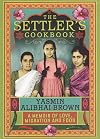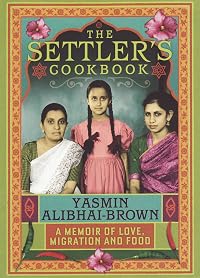
The Settlers Cookbook: A Memoir of Love, Migration and Food
by Yasmin Alibhai-Brown
On This Page
Description
"An unexpected joy of a book... it follows an emotional and culinary journey from childhood in pre-independence Uganda to London in the 21st century."-- The Sunday Times Through the personal story of Yasmin Alibhai-Brown's family and the food and recipes they've shared together, The Settler's Cookbook tells the history of Indian migration to.Tags
Recommendations













Member Reviews
Yasmin Alibhai-Brown is an outspoken journalist and commentator, with a focus on issues around race and diversity. In the prologue to The Settler's Cookbook, she explains that, coming to the UK from Uganda shortly before Idi Amin's explusion of the Asian community, she left behind her treasured collection of vinyl, her books, even her photographs, but did bring a collection of kitchen paraphernalia for her student flat. She has never been able to throw any of this away. The reader might initially be tempted to see this as a simple fear of losing possessions when so much has already gone - but then Alibhai-Brown lists the items, and for each one tells a memory that goes with it, and you realise that it's far more than a collection of show more pots and pans.
In the rest of the book, YAB interweaves the story of the Ugandan Asians with her own memories, growing up in the early 1950s under the British Empire, getting into miniskirts and rebellion in the 1960s (while the community does well in the early years of independence), and then the growing intolerance and hardships of Idi Amin's era followed by transportation to an intermittently-welcoming UK. Scattered through the narrative are recipes, for each item of food that she mentions in her memories.
All this should be very interesting, and it often is. The problem is that it reads a bit like a first draft, or as if someone was sitting there telling you their life story: there are abrupt leaps in the subject matter, lurches in tone from spiky to lyrical, florid description to mile-a-minute honesty about very private details including the break-up of YAB's first marriage or her postnatal depression.
In a way, I think this is extremely real: both in the sense that in our own lives, our attention is often elsewhere during what turn out to be important moments, and in the sense that you feel this is YAB's authentic voice, proudly outspoken, with her intelligence leading her to jump to a new subject before you have quite figured out what she is saying. But reading it was sometimes disconcerting.
Recommended for: readers interested in how one person actually experienced the process of migration, or in the story of the Ugandan Asian community. show less
In the rest of the book, YAB interweaves the story of the Ugandan Asians with her own memories, growing up in the early 1950s under the British Empire, getting into miniskirts and rebellion in the 1960s (while the community does well in the early years of independence), and then the growing intolerance and hardships of Idi Amin's era followed by transportation to an intermittently-welcoming UK. Scattered through the narrative are recipes, for each item of food that she mentions in her memories.
All this should be very interesting, and it often is. The problem is that it reads a bit like a first draft, or as if someone was sitting there telling you their life story: there are abrupt leaps in the subject matter, lurches in tone from spiky to lyrical, florid description to mile-a-minute honesty about very private details including the break-up of YAB's first marriage or her postnatal depression.
In a way, I think this is extremely real: both in the sense that in our own lives, our attention is often elsewhere during what turn out to be important moments, and in the sense that you feel this is YAB's authentic voice, proudly outspoken, with her intelligence leading her to jump to a new subject before you have quite figured out what she is saying. But reading it was sometimes disconcerting.
Recommended for: readers interested in how one person actually experienced the process of migration, or in the story of the Ugandan Asian community. show less
Ratings
Members
- Recently Added By
Lists

The Enlightened Economist
107 works; 1 member
Author Information

15+ Works 145 Members
Yasmin Alibhai-Brown writes a weekly column for the Independent and has also written for the New York Times, the Guardian, the New Statesman, and the Observer.
Series
Belongs to Publisher Series
Common Knowledge
- Canonical title*
- Mango, curry e souvenirs
*Some information comes from Common Knowledge in other languages. Click "Edit" for more information.
Classifications
- Genres
- Nonfiction, Food & Cooking, Biography & Memoir
- DDC/MDS
- 641.5092 — Applied science & technology Home economics & family management Food, Cooking & Recipes / Meals, Picnics Cooking; cookbooks > Biography And History Biography
- LCC
- TX724.5 .I4 .A75 — Technology Home economics Home economics Cooking
- BISAC
Statistics
- Members
- 52
- Popularity
- 583,350
- Reviews
- 1
- Rating
- (3.50)
- Languages
- English, Italian
- Media
- Paper, Ebook
- ISBNs
- 3
- ASINs
- 1