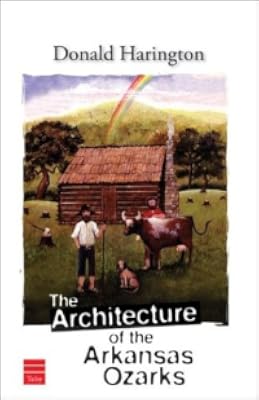
On This Page
Description
"Jacob and Noah Ingledew trudge 600 miles from their native Tennessee to found Stay More, a small town nestled in a narrow valley that winds among the Arkansas Ozarks and into the reader's imagination. The Ingledew saga - which follows six generations of 'Stay Morons' through 140 years of abundant living and prodigal loving - is the heart of Harrington's novel. Praised as one of the year's ten best novels by the American Library Association when first published, this tale continues to show more captivate readers with its fusion of lyricism and comedy."--BOOK JACKET.Title Summary field provided by Blackwell North America, Inc. All Rights Reserved show lessTags
Recommendations





























Member Reviews
It was Friday night, a week ago. I was in Seoul, alone in my hotel room, facing a long shabbat with nothing to do but read. I started reading this book at 10pm. By the time I went to sleep, at 5am, I was half-way through it. The only reason I stopped was that I wanted to give myself a few more days of pleasure, instead of finishing it all in one go.
This is an epic novel that traces several generations of the Ingledews, the first settlers of the town of Stay More in Arkansas. The town was named so by the Indian the brothers met upon arriving in Arkansas (or rather, John met, as Noah was scared shitless of the native and ran to the woods). This Indian, Fanshaw, who spoke English with a British accent, referred to the Ingledew dwelling by show more this name because John kept telling him politely to "stay more" every time he came to visit. So it is only natural that the town dwellers became knows as the Stay Morons.
This wonderful book has twenty chapters. Each chapter opens with an illustration of a building, and through the story of that building and its distinctive architecture, Harington weaves the tale of Stay More and the Stay Morons. The tale makes its way through the Civil War, the Great Depression and two World Wars, gradually building a world which entrances the reader and makes him fall in love with its inhabitants. These hillibillys, with their simple ways and their reluctance to adapt to PROG RESS, go through good and bad but stay fiercely proud of their home town. The men work hard, which makes them come down with bad cases of the Frakes, a mysterious incapacitating disease that makes life seem utterly pointless, but they also enjoy the simple pleasures in life: hunting, fornicating, or simply sitting around on the porch of the town's general store or mill. The wives are busy producing children and taking care of their homes, although most of them turn out to be much smarter than the men.
The best way I can find to describe this novel is to call it the "American 100 years of Solitude". It will make you laugh aloud, it will make you smile, it will make you ponder life and it will definitely change the way you think about early American settlers and their modern-day offspring. I don't recall how I came by this book and why I bought it, but I'm so thankful I did. show less
This is an epic novel that traces several generations of the Ingledews, the first settlers of the town of Stay More in Arkansas. The town was named so by the Indian the brothers met upon arriving in Arkansas (or rather, John met, as Noah was scared shitless of the native and ran to the woods). This Indian, Fanshaw, who spoke English with a British accent, referred to the Ingledew dwelling by show more this name because John kept telling him politely to "stay more" every time he came to visit. So it is only natural that the town dwellers became knows as the Stay Morons.
This wonderful book has twenty chapters. Each chapter opens with an illustration of a building, and through the story of that building and its distinctive architecture, Harington weaves the tale of Stay More and the Stay Morons. The tale makes its way through the Civil War, the Great Depression and two World Wars, gradually building a world which entrances the reader and makes him fall in love with its inhabitants. These hillibillys, with their simple ways and their reluctance to adapt to PROG RESS, go through good and bad but stay fiercely proud of their home town. The men work hard, which makes them come down with bad cases of the Frakes, a mysterious incapacitating disease that makes life seem utterly pointless, but they also enjoy the simple pleasures in life: hunting, fornicating, or simply sitting around on the porch of the town's general store or mill. The wives are busy producing children and taking care of their homes, although most of them turn out to be much smarter than the men.
The best way I can find to describe this novel is to call it the "American 100 years of Solitude". It will make you laugh aloud, it will make you smile, it will make you ponder life and it will definitely change the way you think about early American settlers and their modern-day offspring. I don't recall how I came by this book and why I bought it, but I'm so thankful I did. show less
This reminded me of [b:One Hundred Years of Solitude|320|One Hundred Years of Solitude|Gabriel García Márquez|https://i.gr-assets.com/images/S/compressed.photo.goodreads.com/books/1327881361l/320._SX50_.jpg|3295655], set in the Ozarks, which is what Mr. Harington set out to write. He has the elements: family saga, tragicomedy, magical realism, uncomfortable portrayals of sex & incest, but in a uniquely 'Merican style. Following the Ingledew family through 140 years and six generations, mundane and extraordinary events blend together to create the saga of Stay More, Arkansas.
TAotAO begins in the Antebellum era, when the first Ingledew brothers, Jacob and Noah Ingledew, move from Tennessee to an Arkansas valley, establishing Stay More, show more named for the phrase Jacob uses whenever a guest is preparing to leave. After the departure of the few remaining native inhabitants (a man named Fanshaw, who learned English from a British geologist, and his squaw), other settlers trickle into the valley. Despite their hereditary inability to talk to women, Jacob and his descendents manage to produce male offspring for six generations. Along the way, several wars change the world around them, although Stay Morons (as the inhabitants are called) try not to get involved in such events, with varying levels of success. A peddler from Connecticut brings outside technology to the valley again and again: clocks, scissors, photography, automobiles, etc, while preachers of various denominations attempt to convert the Stay Morons, with varying levels of success.
Mr. Harington's narrative voice is often excessively academic, discussing at length for instance the origins of the root "arc" and the way it is incorporated into every major word in the book title. In contrast, the lives of his backwoods characters are quite coarse. The narrator occasionally inserts himself into the story, implying that he grew up in Stay More, and at the very end things get very meta, with the narrator and readers becoming part of the story and the tense changing from past to present to future.
Overall, it was an interesting and mostly enjoyable (although sometimes really uncomfortable) read, one which I would recommend for a reading experience very different from the norm, but which I will probably not chose to reread (unlike OHYoS). show less
TAotAO begins in the Antebellum era, when the first Ingledew brothers, Jacob and Noah Ingledew, move from Tennessee to an Arkansas valley, establishing Stay More, show more named for the phrase Jacob uses whenever a guest is preparing to leave. After the departure of the few remaining native inhabitants (a man named Fanshaw, who learned English from a British geologist, and his squaw), other settlers trickle into the valley. Despite their hereditary inability to talk to women, Jacob and his descendents manage to produce male offspring for six generations. Along the way, several wars change the world around them, although Stay Morons (as the inhabitants are called) try not to get involved in such events, with varying levels of success. A peddler from Connecticut brings outside technology to the valley again and again: clocks, scissors, photography, automobiles, etc, while preachers of various denominations attempt to convert the Stay Morons, with varying levels of success.
Mr. Harington's narrative voice is often excessively academic, discussing at length for instance the origins of the root "arc" and the way it is incorporated into every major word in the book title. In contrast, the lives of his backwoods characters are quite coarse. The narrator occasionally inserts himself into the story, implying that he grew up in Stay More, and at the very end things get very meta, with the narrator and readers becoming part of the story and the tense changing from past to present to future.
Overall, it was an interesting and mostly enjoyable (although sometimes really uncomfortable) read, one which I would recommend for a reading experience very different from the norm, but which I will probably not chose to reread (unlike OHYoS). show less
I'm one of those idiots* who laughs when someone says "deliverance" and has heard a few jokes about, um, dishonored sisters. I've heard a little about the poverty and lack of education in some nonspecific mountain ranges over towards the east (this includes all the mountains east of the Rockies for me). I'm sorry for my ignorance. I've made my last pretty mouth joke and sent my last dueling banjos video link.
This is not to say that there may not be truth behind the lamentably lurid portrayals. I guess when life is difficult and a wider sense of the world and peoples isn't available, certain city manners and prudeness just don't develop. But maybe laughing about it all indicates a lower and meaner sense of humor than I want to own.
Why do show more I feel this now? This is a beautiful novel. The boring way to say it is that this covers 6 generations of the Ingledew family and certain significant people around them in a town called Stay More, and each chapter begins with a sketch of a building that relates to the goings on of that chapter. I wasn't sure if introducing that bit of oddness, magical realism?, near the end was a good thing?
The better way to describe the wonderful is to say I couldn't wait to get home to read this. There was so much that surprised me with how lovely and purposefully this unfolded, and a great deal of hilarity, pathos, storytime wonder, sweetness.
Thank you, again and again, karen. You're a gr god. ;o)
*We are many: "Since its recognition as a distinctive region in the late 19th century, Appalachia has been a source of enduring myths and distortions regarding the isolation, temperament, and behavior of its inhabitants. Early 20th-century writers focused on sensationalistic aspects of the region's culture, such as moonshining and clan feuding, and often portrayed the region's inhabitants as uneducated and prone to impulsive acts of violence. Sociological studies in the 1960s and 1970s helped to deconstruct these stereotypes, although popular media continued to perpetuate the image of Appalachia as a culturally backward region into the 21st century.[2]" http://en.wikipedia.org/wiki/Appalachia (citing wikipedia probably isn't the best way to lift the idiot from me....) show less
This is not to say that there may not be truth behind the lamentably lurid portrayals. I guess when life is difficult and a wider sense of the world and peoples isn't available, certain city manners and prudeness just don't develop. But maybe laughing about it all indicates a lower and meaner sense of humor than I want to own.
Why do show more I feel this now? This is a beautiful novel. The boring way to say it is that this covers 6 generations of the Ingledew family and certain significant people around them in a town called Stay More, and each chapter begins with a sketch of a building that relates to the goings on of that chapter. I wasn't sure if introducing that bit of oddness, magical realism?, near the end was a good thing?
The better way to describe the wonderful is to say I couldn't wait to get home to read this. There was so much that surprised me with how lovely and purposefully this unfolded, and a great deal of hilarity, pathos, storytime wonder, sweetness.
Thank you, again and again, karen. You're a gr god. ;o)
*We are many: "Since its recognition as a distinctive region in the late 19th century, Appalachia has been a source of enduring myths and distortions regarding the isolation, temperament, and behavior of its inhabitants. Early 20th-century writers focused on sensationalistic aspects of the region's culture, such as moonshining and clan feuding, and often portrayed the region's inhabitants as uneducated and prone to impulsive acts of violence. Sociological studies in the 1960s and 1970s helped to deconstruct these stereotypes, although popular media continued to perpetuate the image of Appalachia as a culturally backward region into the 21st century.[2]" http://en.wikipedia.org/wiki/Appalachia (citing wikipedia probably isn't the best way to lift the idiot from me....) show less
I had never heard of Donald Harington and, since I’m also interested in regional architecture, the title caught my eye. When I picked it up I also happened to be in a phase of reading regional authors (G.B. Edwards, Jean Giono, etc.). I had such a great time with Harington’s droll sense of humor, his keen eye for character and his straightforward style of relating even the most unconventional things that I was immediately propelled through many of his other books. Unlike another reviewer (woctune), I enjoy the Harington’s more “reserved” (if one can use that word with him) style. To my taste the “crazy sex with ghosts” stuff is simply preposterous, which is not to say that it isn’t funny, but to me the denizens of Stay show more More as depicted in The Architecture of the Arkansas Ozarks is note-perfect. show less
This is a good overview the history of Stay More, and an excellent novel on it's own, but it's a little blander than the usual Harington fare. There's structure and order and less crazy sex with ghosts, for example. I love his outrageousness, I think the farther he goes over the line, the better he gets. So this wasn't my absolute favorite. But I did enjoy it very much.
I've just read two of the Stay More books so far, and they were quite different, but both wonderful. In this one, the story involves early settlers dealing first with Indians, and later with the Civil War. The years sweep by children are born and new farms cut out of the forest.
The first white settler, a woman-shy bachelor, to the Arkansas Ozarks discusses with the last Indian their first batch of Arkansas sour mash whiskey:
"Why do we drink this stuff?" [Fanshaw, the Indian, asks.]
"You don't lak it?" Jacob said. "I 'low as how it aint near as good as that I brung from Tennessee, but..."
"Oh, it is fine. Ripping stuff, old boy. I simply raise the philosophical question: why do we drink it?"
Jacob pondered. "Wal, I kinder relish the taste, myself."
"Yo. But do we not more relish that which it does to us?"
"I don't feature drunkenness. I know when to stop."
"Yo. But in between? Between drunkenness and sobriety there is a wide country, and what is the Name of that Country?"
"Joy?"
"No. Not if, by joy, you mean show more that kind which, although you have never felt it and thus cannot understand it, comes to the gentleman when with the lady in one-on-top-together-fastened-between. Not a bit of it, old fellow."
"Wal, what do you call the Country, then?"
"Importance," Fanshaw uttered, and let the word hover in the air between them like a hummingbird before continuing. "We know that we are nothing, you and I. And it is true, we are as nothing in the sight of Wahkontah. We are but flies he swats in sport. But the pe-tsa-ni - firewater - permits us for a while to forget this. The fire burns away our personal insignificance, and leaves us for a while a great sense of importance."
"But aint that joy?"
"Not like - " Fanshaw began, but stopped and contemplated Jacob for a moment before declaring, "My friend, some day you must experience the one-on-top-together-fastened-between." [12-13] show less
"Why do we drink this stuff?" [Fanshaw, the Indian, asks.]
"You don't lak it?" Jacob said. "I 'low as how it aint near as good as that I brung from Tennessee, but..."
"Oh, it is fine. Ripping stuff, old boy. I simply raise the philosophical question: why do we drink it?"
Jacob pondered. "Wal, I kinder relish the taste, myself."
"Yo. But do we not more relish that which it does to us?"
"I don't feature drunkenness. I know when to stop."
"Yo. But in between? Between drunkenness and sobriety there is a wide country, and what is the Name of that Country?"
"Joy?"
"No. Not if, by joy, you mean show more that kind which, although you have never felt it and thus cannot understand it, comes to the gentleman when with the lady in one-on-top-together-fastened-between. Not a bit of it, old fellow."
"Wal, what do you call the Country, then?"
"Importance," Fanshaw uttered, and let the word hover in the air between them like a hummingbird before continuing. "We know that we are nothing, you and I. And it is true, we are as nothing in the sight of Wahkontah. We are but flies he swats in sport. But the pe-tsa-ni - firewater - permits us for a while to forget this. The fire burns away our personal insignificance, and leaves us for a while a great sense of importance."
"But aint that joy?"
"Not like - " Fanshaw began, but stopped and contemplated Jacob for a moment before declaring, "My friend, some day you must experience the one-on-top-together-fastened-between." [12-13] show less
Members
- Recently Added By
Lists

Willoyd's Tour of the USA
25 works; 1 member
Author Information

48+ Works 1,516 Members
Donald Harington was born and raised in Little Rock, Arkansas. He spent nearly all of his early summers in the Ozark mountain hamlet of Drakes Creek. He knew at an early age that he wanted to be a writer, but also wanted to be a teacher. He has taught art history at a variety of colleges in New York, New England, South Dakota and finally at his show more alma mater, the University of Arkansas, Fayetteville, where he lectured for approximately 22 years, until his retirement in 2008. Harington won the Porter Prize in 1987, the Heasley Prize at Lyon College in 1998, was inducted into the Arkansas Writers' Hall of Fame in 1999 and that same year won the Arkansas Fiction Award of Arkansas Library Association. Many of this novels take place in the fictional town of Stay More, which is loosely based on Drakes Creek. Harington died in 2009. (Publisher Fact Sheets) show less
Awards and Honors
Distinctions
Series

Work Relationships
Is contained in
Common Knowledge
- Important places
- Arkansas, USA; USA; Ozark Mountains, Arkansas, USA
Classifications
Statistics
- Members
- 235
- Popularity
- 138,857
- Reviews
- 7
- Rating
- (4.20)
- Languages
- English
- Media
- Paper, Ebook
- ISBNs
- 6
- ASINs
- 2