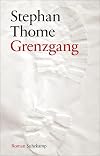
Grenzgang: Roman
by Stephan Thome
On This Page
Description
"Protagonists Kerstin Werner and Thomas Weidmann are filled with doubts, indecision, and worries, a situation exacerbated by the fact that they are now in their forties. She is divorced, has a mother with Alzheimer's and a problematic sixteen-year-old son, and is about to lose some of her income. He had been let go from a university position and has been teaching high school for some years now, having drifted away from his partner in Berlin and into a mid-life funk. They come respectively show more from Cologne and Berlin, and are now both living to live in Bergenstadt, a fictitious Hessian small town (in every sense). How they find their way to each other is what drives this accessible and satisfying read"--New Books in German website, Oct. 11, 2011. show lessTags
Recommendations















































Member Reviews
This was shortlisted for the Deutscher Buchpreis several years ago and it caught my interest because of its focus on regional customs--in this case, a tradition known as "Grenzgang" ("walking the border"), originally a physical and symbolic act of marking off the town boundaries to prevent land from being stolen by neighboring townships, but now transmuted into a festival that takes place every seven years and involves ritualized ceremonies and (predictably) the consumption of lots and lots of beer. As such, it is also a time when things happen, when couples get together or break apart, when children come of age and adults do things that propriety would usually hinder them from doing.
Although we do experience bits and pieces of the show more festival in the novel, it's not directly described in detail, and the book doesn't feature a panorama of colorful characters as one might expect from the starting premise. Instead, the Grenzgang serves as more of a backdrop and organizing principle for the novel. It centers on just two characters, both approaching middle age, both more-or-less outsiders in the community, both struggling to cope with a sense of failure and emptiness (i.e., "Grenzgänger" in a sense; the book certainly draws on this meaning).
The story jumps back and forth between the present Grenzgang and the last one seven years before; thus we witness both the moments that their lives fell apart in the past (when Thomas returns to Bergenstadt after a failed university career; when Kerstin discovers that her marriage is over and her husband is being unfaithful), and how they have adapted and gone on with their lives after these disappointments. We see a kiss between near strangers seven years ago and how they now, almost reluctantly and in spite of themselves, find themselves being drawn together--not out of love or passion, but because of the need for comfort and companionship.
This is the sort of plot that I tend to find dreadfully boring if not done well (stories of middle-class discontent don't particularly speak to me: there's enough banality in real life, I don't need to read about it). However, Thome's novel captured me with its beautiful writing and craftsmanship. There's an almost old-fashioned feel about it--in the sense that it focuses on storytelling and characterization; it takes its time and lets us get inside the characters' heads, is sympathetic towards them without hiding their faults and weaknesses. It's rich language, meant to be savored. What convinced me, ultimately, to pick up this novel was listening to Thome read an excerpt (you can find it here: http://www.literaturport.de/index.php?id=28). Not only does he read his own writing well (not all authors can), but hearing it really brings it to life: his gift for vivid, striking phrasing and imagery and dialogue that captures the tension between the characters, the way in which they constantly--and to some degree consciously--take part in a complex, wordless game of approaching and retreating, provoking reactions and judging the response of their conversation partner.
This was a first novel, but an incredibly mature one, both in its understanding of the human psyche, its mixture of sympathy, irony, and humor which manages to avoid being sentimental, and for its execution. The temporal jumps, a structure that can easily become distracting and make for frustrating reading, become an essential compositional element of the novel, for in Bergenstadt, as one of the characters observes, life seems to happen in bursts every seven years during the Grenzgang. And these bursts, these snapshots, mean that the characters always have one eye to the past, and we, the readers, are invited to compare past and present, the disintegration of a marriage, a life, and the building of a new one, the maturation of a child, loss, hope.
(Read in German; no English translation as yet) show less
Although we do experience bits and pieces of the show more festival in the novel, it's not directly described in detail, and the book doesn't feature a panorama of colorful characters as one might expect from the starting premise. Instead, the Grenzgang serves as more of a backdrop and organizing principle for the novel. It centers on just two characters, both approaching middle age, both more-or-less outsiders in the community, both struggling to cope with a sense of failure and emptiness (i.e., "Grenzgänger" in a sense; the book certainly draws on this meaning).
The story jumps back and forth between the present Grenzgang and the last one seven years before; thus we witness both the moments that their lives fell apart in the past (when Thomas returns to Bergenstadt after a failed university career; when Kerstin discovers that her marriage is over and her husband is being unfaithful), and how they have adapted and gone on with their lives after these disappointments. We see a kiss between near strangers seven years ago and how they now, almost reluctantly and in spite of themselves, find themselves being drawn together--not out of love or passion, but because of the need for comfort and companionship.
This is the sort of plot that I tend to find dreadfully boring if not done well (stories of middle-class discontent don't particularly speak to me: there's enough banality in real life, I don't need to read about it). However, Thome's novel captured me with its beautiful writing and craftsmanship. There's an almost old-fashioned feel about it--in the sense that it focuses on storytelling and characterization; it takes its time and lets us get inside the characters' heads, is sympathetic towards them without hiding their faults and weaknesses. It's rich language, meant to be savored. What convinced me, ultimately, to pick up this novel was listening to Thome read an excerpt (you can find it here: http://www.literaturport.de/index.php?id=28). Not only does he read his own writing well (not all authors can), but hearing it really brings it to life: his gift for vivid, striking phrasing and imagery and dialogue that captures the tension between the characters, the way in which they constantly--and to some degree consciously--take part in a complex, wordless game of approaching and retreating, provoking reactions and judging the response of their conversation partner.
This was a first novel, but an incredibly mature one, both in its understanding of the human psyche, its mixture of sympathy, irony, and humor which manages to avoid being sentimental, and for its execution. The temporal jumps, a structure that can easily become distracting and make for frustrating reading, become an essential compositional element of the novel, for in Bergenstadt, as one of the characters observes, life seems to happen in bursts every seven years during the Grenzgang. And these bursts, these snapshots, mean that the characters always have one eye to the past, and we, the readers, are invited to compare past and present, the disintegration of a marriage, a life, and the building of a new one, the maturation of a child, loss, hope.
(Read in German; no English translation as yet) show less
In dem hessischen Städtchen Biedenkopf gibt es den titelgebenden Grenzgang tatsächlich. Aus dem Brauchtum der alle sieben Jahre stattfindenden Grenzbegehung hat sich ein Volksfest mit verschiedenen Bräuchen entwickelt. Diesen Rhythmus nimmt der Autor zum Anlass in seinem Roman zwei Personen zu porträtieren, die irgendwie in der hessischen Provinz hängengeblieben sind - beide Male an „Grenzgang“. Die alleinerziehende Mutter Kerstin besuchte 21 Jahre vorher mit ihrer Studienkameradin Anita den Grenzgang, verliebte sich und heiratete in das Städtchen. Wiederum an Grenzgang verließ sie ihr Mann, so dass Kerstin nun mit dem 16-jährigen Sohn und der dementen Mutter alleine lebt. Der Geschichtslehrer Thomas ist der Klassenlehrer show more von Kerstins Sohn. Seine Unikarriere war sieben Jahre zuvor gescheitert, so dass er zu Grenzgang nach Hause zurückkehrte und blieb. Beider Wege haben sich an Grenzgang immer wieder gekreuzt.
Der Grenzgang als Motiv und Metapher ist natürlich sehr bestechend. Das Buch ist auch gelungen, denn Stephan Thome schreibt ausgezeichnet. Wirklich schonungslos lässt er die Einsamkeit und Verzweiflung seiner Protagonisten ahnen (z.B. als Kerstin versucht ihren Mann, der sie schon betrügt, noch einmal zu verführen).
Dennoch ist es mir ein bisschen zu viel Hadern an der Provinz, sind mir die Dialoge fast zu gestelzt, ist mir manches zu doch aufgetragen (z.B. nehme ich Kerstin den Ausflug in den Swingerclub nicht ab). Etwas mehr Leichtigkeit hätte nicht geschadet. Das Buch ist wirklich sehr „deutsch“. Allgemein wird das Buch sehr gelobt. Doch aus meiner Sicht kann es dem Vergleich zu „Fliehkräfte“, das ich ganz meisterhaft fand, nicht ganz standhalten. show less
Der Grenzgang als Motiv und Metapher ist natürlich sehr bestechend. Das Buch ist auch gelungen, denn Stephan Thome schreibt ausgezeichnet. Wirklich schonungslos lässt er die Einsamkeit und Verzweiflung seiner Protagonisten ahnen (z.B. als Kerstin versucht ihren Mann, der sie schon betrügt, noch einmal zu verführen).
Dennoch ist es mir ein bisschen zu viel Hadern an der Provinz, sind mir die Dialoge fast zu gestelzt, ist mir manches zu doch aufgetragen (z.B. nehme ich Kerstin den Ausflug in den Swingerclub nicht ab). Etwas mehr Leichtigkeit hätte nicht geschadet. Das Buch ist wirklich sehr „deutsch“. Allgemein wird das Buch sehr gelobt. Doch aus meiner Sicht kann es dem Vergleich zu „Fliehkräfte“, das ich ganz meisterhaft fand, nicht ganz standhalten. show less
Jul 25, 2015German
2
Alle sieben Jahre steht Bergenstadt kopf: Man feiert Grenzgang, das traditionelle dreitägige Volksfest, und dabei werden nicht nur die Gemeindegrenzen abgeschritten. Auch abends im Festzelt wird ausprobiert, wie weit man gehen kann. Alle sind dabei, nur zwei stehen am Rand: Thomas Weidmann und Kerstin Werner. Er ist nach gescheiterter Uni-Karriere als Lehrer ans Gymnasium Bergenstadt zurückgekehrt. Sie versorgt nach gescheiterter Ehe ihre demenzkranke Mutter und hat Ärger mit ihrem pubertierenden Sohn. Vor sieben Jahren beim letzten Grenzgang sind sich die beiden schon einmal begegnet, und damals ist etwas passiert, woran sich die beiden auch noch bei diesem Fest nur mit gemischten Gefühlen erinnern. Grenzgang ist das furiose Debüt show more eines jungen Autors, der von Anfang an aufs Ganze geht: Spannungsreich und voller überraschender Wendungen erzählt Stephan Thome von der Jagd nach dem Glück, die seine Figuren aus Berlin und Köln in die hessische Provinz und von dort in einen Swinger-Club an der Frankfurter Peripherie führt. Schnell wird klar, wie leicht vermeintliche Sicherheiten abhanden kommen können und wie dünn das Eis ist, auf dem Lebensentwürfe gründen – und daß es trotzdem keine Alternative zum Kampf um das eigene Glück gibt
Quelle: Amazon.de show less
Quelle: Amazon.de show less
Jan 27, 2011German
Ratings
Members
- Recently Added By
Lists

Fêtes worse than death? — Village festivals in fiction
37 works; 7 members
Author Information

9+ Works 209 Members
Awards and Honors
Awards
Distinctions
Series
Belongs to Publisher Series
Common Knowledge
- Canonical title*
- Grenzgang
- Original title
- Grenzgang
- Original publication date
- 2009
- People/Characters*
- Thomas Weidmann; Kerstin Werner; Karin Preiss
- Important places*
- Bergenstadt, Hessen, Deutschland; Berlin, Deutschland
- Important events*
- Grenzgang
- Dedication*
- Für Dorothee Schmidt und Martin Brendebach, die von Anfang an mit marschiert sind.
- First words*
- Trotz allem, denkt sie: Der Garten ist ein Traum.
- Last words*
- (Click to show. Warning: May contain spoilers.)"Der Stein ... die Grenze ... in Ewigkeit."
*Some information comes from Common Knowledge in other languages. Click "Edit" for more information.
Classifications
Statistics
- Members
- 80
- Popularity
- 396,766
- Reviews
- 4
- Rating
- (3.37)
- Languages
- Dutch, English, German
- Media
- Paper, Audiobook, Ebook
- ISBNs
- 7
- ASINs
- 1