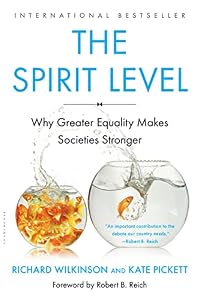
The Spirit Level: Why Greater Equality Makes Societies Stronger
by Richard Wilkinson, Kate Pickett
On This Page
Description
This eye-opening UK bestseller shows how one single factor--the gap between its richest and poorest members--can determine the health and well-being of a society. The authors also outline a new political outlook in which a shift from self-interested consumerism to a friendlier, more sustainable society is paramount.Tags
Recommendations


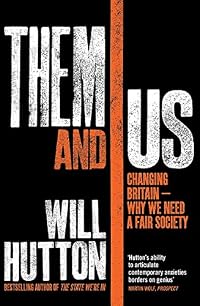
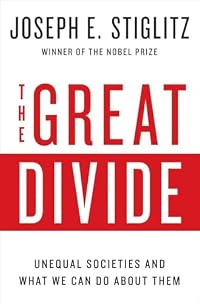

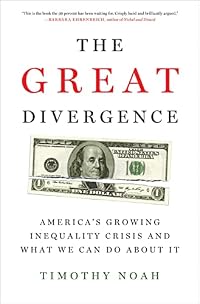
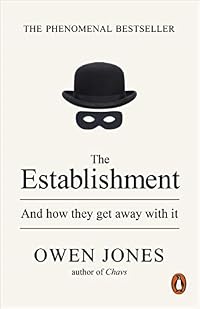


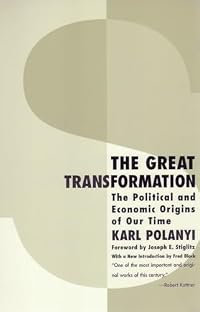
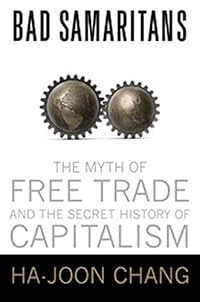



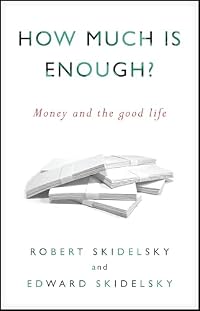
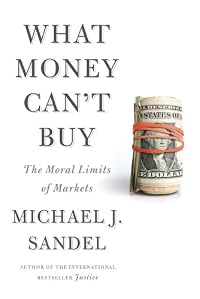
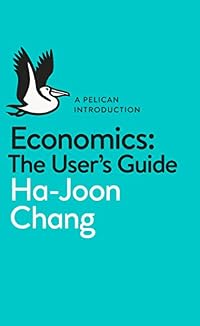
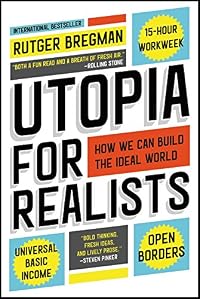
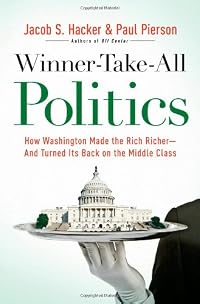
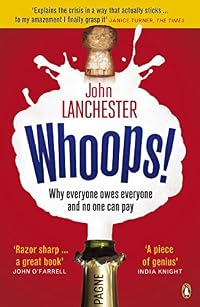


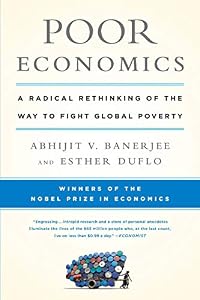
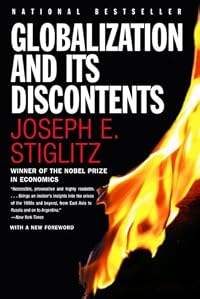
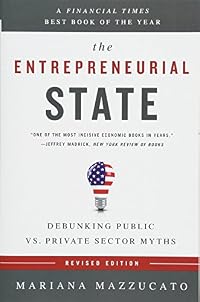
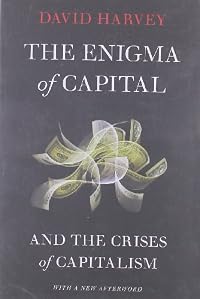
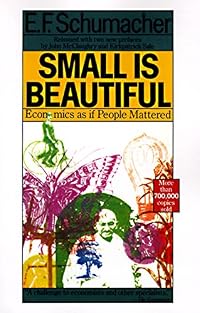

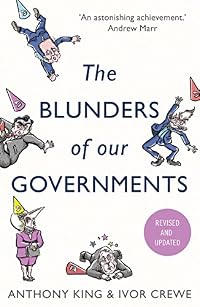
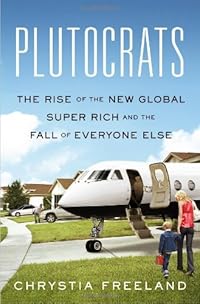
Member Recommendations
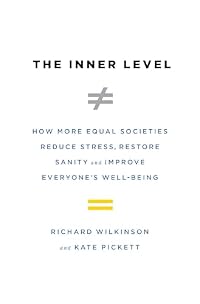
zhejw Wilkinson demonstrates how the U.S. suffers because of inequality and suggests some solutions that are neither left nor right. Bartels offers evidence for how the wealthy use the American political system to their advantage.
20

TomVeal Maybe "enjoy" isn't the right verb, but this analysis (available as a free download) raises important questions about The Spirit Level's methodology and conclusions.
02

peter_vandenbrande Wilkinson en Pickett beschrijven op macro-niveau de consequenties van ongelijkheid. Ze beschrijven vooral de relaties: "in ongelijke samenlevingen doen dit soort zich fenomenen voor". Ze kunnen echter niet zo goed duidelijk maken welke mechanismen hieraan ten grondslag liggen. "Hoe komt het dan dan ongelijkheid voor een bepaald effect zorgt?"
Mullainathan en Shafir doen dat wel. Zij beschrijven glashelder hoe het fenomeen "schaarste" mechanismen in gang zet op het cognitieve en sociaal-emtionele vlak. En ze beschrijven op basis van hun onderzoek, de relatie tussen die mechanismen en de nefaste consequenties van Wilkinson en Pickett.
Member Reviews
I am five years behind the curve in reading this book. I’ve put it off because I don’t need convincing of its thesis; I already thought that more unequal societies were worse. Still, it’s well known and much-cited, so I’ve finally got round to it. Needless to say, I found its arguments convincing and was impressed with the range of evidence marshalled. As always with such books, accessibility has resulted some slight sacrifice in academic rigour - I would have liked to see some p-values for the regressions. They could have stuck them in the notes & references for social science nerds like me. I also wondered at all the strictly linear correlations - no polynomials? These are mere nitpicks, though.
I was initially surprised and show more slightly baffled by the book’s claims to be apolitical and evidence-based, whilst presenting a very strong argument against capitalism in general and neoliberal capitalism in particular. You can protest neutral objectivity all you like, but in social science there is absolutely no such thing. This is a political book and there is no point in denying it. In chapter 13, the writers comment on alternative explanations to income inequality for their findings. One of them is neoliberalism, which is dismissed because although it may well have caused increases in inequality, it did not intend to! I found this astonishing. Income inequality probably didn’t intend to cause worse health, education, and crime outcomes either. The key point here is that it’s incredibly naive to assume that evidence of negative implications is sufficient to get neoliberal policies changed. Such a view ignores power relations, institutional structures, and the nature of neoliberalism as an ideology. Neoliberalism sees high levels of inequality as an inevitable and acceptable part of economic activity.
This professed apolitical stance is then tossed aside in the final two chapters, the former of which deals with climate change. It includes a graph I’ve seen before, comparing Human Development Index (HDI, which measures Gross National Product, life expectancy, and education levels) scores with ecological footprint per capita. One country in the world manages to reach the threshold of ‘high’ HDI whilst remaining within the average world biocapacity. Guess which one! It’s Cuba, which has been governed by a Communist dictatorship since 1965. Infant mortality rates and life expectancy there are almost identical to those of the USA. This fact causes me a certain morbid amusement. Costa Rica also does well for good reasons.
The climate change chapter was serviceable overall but inevitably superficial. The final chapter, titled 'Building the Future', was the most interesting to me. It faced up to the difficulties of creating more equal societies, noted that various policy approaches exist, and suggests some specific examples. I was pleased by the admissions that economic growth is a substitute for equality and that a steady-state economy is key to tackling climate change. The discussion of employee-owned firms was interesting, however it is unclear to me how massive multinational corporations could ever transition to such a model. As the writers concede, the ‘basic amorality of the market’ is a critical stumbling block to reducing consumerism, protecting the environment, and prioritising equality over economic growth. I also couldn’t help noting a certain contradiction in the commentary on rich countries that are already relatively equal, such as Sweden and Japan. In each case, the political impetus for pursuing equality was some sort of massive upheaval; in several cases, a world war. Despite this, the writers state hopefully that a transformative reorientation towards equality can be achieved incrementally, without revolution. I wish this was the case but find it hard to believe, especially considering the scale of change needed to reduce carbon emissions.
I am being critical of this book, but not because I didn’t like it or don’t agree with what it’s saying. It’s because I wish there was a simple answer to the acute and entrenched problems of inequality and climate change. There isn’t and a plausible complex answer hasn’t yet emerged either. (If it has, let me know ASAP!) ‘The Spirit Level’ is an excellent introduction and very useful contribution to the debate, though. I think it is a lot more anti-capitalist than it dares to admit. Presumably this is elided in order not to cause undue alarm. I was pleasantly surprised by the importance placed on climate change and the eventual recognition of vested interests as a serious barrier to change. Sadly, I can’t help feeling that since 2009 equality has receded further. In the UK, certainly, the Coalition government has worsened the situation - here’s a paper on that. ‘The Spirit Level’ is well worth reading, I just wish it had left me in a more optimistic frame of mind. show less
I was initially surprised and show more slightly baffled by the book’s claims to be apolitical and evidence-based, whilst presenting a very strong argument against capitalism in general and neoliberal capitalism in particular. You can protest neutral objectivity all you like, but in social science there is absolutely no such thing. This is a political book and there is no point in denying it. In chapter 13, the writers comment on alternative explanations to income inequality for their findings. One of them is neoliberalism, which is dismissed because although it may well have caused increases in inequality, it did not intend to! I found this astonishing. Income inequality probably didn’t intend to cause worse health, education, and crime outcomes either. The key point here is that it’s incredibly naive to assume that evidence of negative implications is sufficient to get neoliberal policies changed. Such a view ignores power relations, institutional structures, and the nature of neoliberalism as an ideology. Neoliberalism sees high levels of inequality as an inevitable and acceptable part of economic activity.
This professed apolitical stance is then tossed aside in the final two chapters, the former of which deals with climate change. It includes a graph I’ve seen before, comparing Human Development Index (HDI, which measures Gross National Product, life expectancy, and education levels) scores with ecological footprint per capita. One country in the world manages to reach the threshold of ‘high’ HDI whilst remaining within the average world biocapacity. Guess which one! It’s Cuba, which has been governed by a Communist dictatorship since 1965. Infant mortality rates and life expectancy there are almost identical to those of the USA. This fact causes me a certain morbid amusement. Costa Rica also does well for good reasons.
The climate change chapter was serviceable overall but inevitably superficial. The final chapter, titled 'Building the Future', was the most interesting to me. It faced up to the difficulties of creating more equal societies, noted that various policy approaches exist, and suggests some specific examples. I was pleased by the admissions that economic growth is a substitute for equality and that a steady-state economy is key to tackling climate change. The discussion of employee-owned firms was interesting, however it is unclear to me how massive multinational corporations could ever transition to such a model. As the writers concede, the ‘basic amorality of the market’ is a critical stumbling block to reducing consumerism, protecting the environment, and prioritising equality over economic growth. I also couldn’t help noting a certain contradiction in the commentary on rich countries that are already relatively equal, such as Sweden and Japan. In each case, the political impetus for pursuing equality was some sort of massive upheaval; in several cases, a world war. Despite this, the writers state hopefully that a transformative reorientation towards equality can be achieved incrementally, without revolution. I wish this was the case but find it hard to believe, especially considering the scale of change needed to reduce carbon emissions.
I am being critical of this book, but not because I didn’t like it or don’t agree with what it’s saying. It’s because I wish there was a simple answer to the acute and entrenched problems of inequality and climate change. There isn’t and a plausible complex answer hasn’t yet emerged either. (If it has, let me know ASAP!) ‘The Spirit Level’ is an excellent introduction and very useful contribution to the debate, though. I think it is a lot more anti-capitalist than it dares to admit. Presumably this is elided in order not to cause undue alarm. I was pleasantly surprised by the importance placed on climate change and the eventual recognition of vested interests as a serious barrier to change. Sadly, I can’t help feeling that since 2009 equality has receded further. In the UK, certainly, the Coalition government has worsened the situation - here’s a paper on that. ‘The Spirit Level’ is well worth reading, I just wish it had left me in a more optimistic frame of mind. show less
This is a must read book for everyone hence the rating. I would like to unreservedly recommend it but I cannot. It is a hard read, I kept having to put the book down because my head was hurting too much from all the blows. To say it is evangelical would be an understatement. The authors have their soap box and they are single minded in ensuring the message does not escape anyone. But what an important message, the greater the income inequality the more symptoms of a sick social malaise there are. You name it, violence, mistrust, totalitarianism, obesity, suicide, prison population, under performing children and more much more are all shown to increase the more unequal a society becomes. Contrary to common presumptions, egalitarianism is show more not a cranky far left fantasy but a very central core community spirit we all aspire to.
Right, got the message but the book bangs on and on, showing more and more statistics that prove incontrovertibly their message. This is where I begin to lose it. When evangelicals thump I tend to get wary and start to look for alternative scenarios. I am not in a position to query let alone challenge their presentation of statistics, it all looks so overwhelming convincing. I not able to nitpick about data spreads, median lines, angles or scale but have to leave that to those that understand. When data is so overwhelming then there just has to be an alternative view. None is offered. There has to be a counter approach, there has to be historical evidence that gainsays their gospel, there has to be recent changes that run counter to their all encompassing answer, inequality. It is human nature to screw up and overlook the alternate view point.
Nethertheless the message is highly important with significant implications for our society, where it is and what has to happen. We should all get our minds around the issues raised. It was with some relief when three quarters of the way through the book suddenly changed tack and began to widen its view and looked in a more expansive way as to how their findings work and are relevant. Great, I could begin to enjoy the read again. Unfortunately they found a new soap box, climate change and began again to thump away. Well meaning, earnest, very serious in intent and purpose. Maybe just not gifted writers for the masses. Yet clearly that was their intended audience with a book having scholarly origins but dumbed down for an all to read. Pity and equally well-done. At least they have made digestible the indigestible and in doing so given access to highly significant findings. Inequality damages us all, poor and the rich alike.
In their new edition postscript they do try to respond to all the criticisms aimed at their studies. But for me it is too much of the converted cherry picking what they choose to respond to, what to ignore and appeals to overwhelming numbers supporting the cause. Despite all of what I have said, I urge you, do please read this book. Put it down and then reflect. You may well find it to says deeply significant things about our society and the problems you feel but cannot isolate and expound. It did for me. show less
Right, got the message but the book bangs on and on, showing more and more statistics that prove incontrovertibly their message. This is where I begin to lose it. When evangelicals thump I tend to get wary and start to look for alternative scenarios. I am not in a position to query let alone challenge their presentation of statistics, it all looks so overwhelming convincing. I not able to nitpick about data spreads, median lines, angles or scale but have to leave that to those that understand. When data is so overwhelming then there just has to be an alternative view. None is offered. There has to be a counter approach, there has to be historical evidence that gainsays their gospel, there has to be recent changes that run counter to their all encompassing answer, inequality. It is human nature to screw up and overlook the alternate view point.
Nethertheless the message is highly important with significant implications for our society, where it is and what has to happen. We should all get our minds around the issues raised. It was with some relief when three quarters of the way through the book suddenly changed tack and began to widen its view and looked in a more expansive way as to how their findings work and are relevant. Great, I could begin to enjoy the read again. Unfortunately they found a new soap box, climate change and began again to thump away. Well meaning, earnest, very serious in intent and purpose. Maybe just not gifted writers for the masses. Yet clearly that was their intended audience with a book having scholarly origins but dumbed down for an all to read. Pity and equally well-done. At least they have made digestible the indigestible and in doing so given access to highly significant findings. Inequality damages us all, poor and the rich alike.
In their new edition postscript they do try to respond to all the criticisms aimed at their studies. But for me it is too much of the converted cherry picking what they choose to respond to, what to ignore and appeals to overwhelming numbers supporting the cause. Despite all of what I have said, I urge you, do please read this book. Put it down and then reflect. You may well find it to says deeply significant things about our society and the problems you feel but cannot isolate and expound. It did for me. show less
The evidence and argumentation is strong in this one. The core idea is simple and powerful, it reveals itself in many aspects of many different societies with very different institutional systems. The core idea is that humans long for better conditions, not only in the sense of absolute material conditions (so, please stop repeating "but hey, global poverty levels are down, time to celebrate!", because nobody is arguing against that), but in the sense of relative psychological and sociological security, solidarity, and trust, achieved by low level of inequality.
The question is simple: if you really had the choice, what kind of society would you like to live in? A society where there's more trust, more solidarity, better mental and show more physiological health, less crime, and less depression and anxiety, or a society that is worse in those aspects? It is not very difficult to come up with an answer.
The authors take a lot of data sets and many different countries, after which they proceed to show the relationships between the aspects above and inequality levels. Their conclusion is clear: having huge levels of inequality does not lead to very healthy societies. Correlation is of course not causation, and the book has a separate chapter discussing finer points that lead to its conclusions.
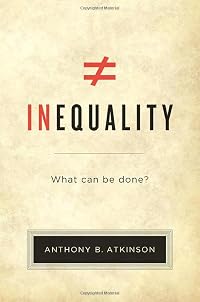
Taken together with another book, "Inequality: What Can Be Done?", the time is overdue to focus our perspective on helping each other and ourselves to have healthier environments, both mentally and physically, worth living in.
Many great accomplishments start with a small, simple, and powerful idea; and if we'll have a better future, then this book will be among the valuable few that put forward the idea of "less inequality, healthier society". show less
The question is simple: if you really had the choice, what kind of society would you like to live in? A society where there's more trust, more solidarity, better mental and show more physiological health, less crime, and less depression and anxiety, or a society that is worse in those aspects? It is not very difficult to come up with an answer.
The authors take a lot of data sets and many different countries, after which they proceed to show the relationships between the aspects above and inequality levels. Their conclusion is clear: having huge levels of inequality does not lead to very healthy societies. Correlation is of course not causation, and the book has a separate chapter discussing finer points that lead to its conclusions.
Taken together with another book, "Inequality: What Can Be Done?", the time is overdue to focus our perspective on helping each other and ourselves to have healthier environments, both mentally and physically, worth living in.
Many great accomplishments start with a small, simple, and powerful idea; and if we'll have a better future, then this book will be among the valuable few that put forward the idea of "less inequality, healthier society". show less
The thesis of this book is that greater equality creates a better society is a no-brainer for me. But we live in an age where there are some who promote greater inequality and deny the need for society at all. The authors richly illustrate the advantages of equality and the disadvantages of inequality in our world. This is probably not a work to listen to as an audiobook as I think for my mind it requires greater attention and study.
The Spirit Level is one of the few books, similar for example to Jared Diamond's Guns, Germs and Steel, that will blow your mind. Its simple message that a more equal society is a better society, even for the rich, strikes deep. Reading some of the reviews here and at Amazon, this simple truth hurts some too much. So if you are one of the USA! USA! USA! crowd or if you think obesity, diabetes or poverty are beautiful, then this book is not for you. Reality has a liberal bias.
Some conservatives have tried to undermine the message by mixing in non-OECD (i.e. non-rich) countries into their sample. Which is completely beside the point. Naturally, life in the United States of America is better than in most African nations or in Russia. But show more isn't it a rather weak claim to say that the US is better than a Second or Third World nation? Among First World nations, the (peer reviewed) statistics presented by the authors conclusively show that more equal societies score better in whatever goal one targets (health, crime, social mobility, innovation, etc.). It used to be different: The American founding fathers were deeply shocked seeing the unequal societies in Europe. The US used to be a beacon of equality and liberty (this cherished image instead of reality still lingers in many a conservative mind).
The authors could also have used the economic concept of marginal utility. A family with food insecurity will have much greater benefit from an extra one thousand dollars than a hedge fund billionaire. While the book is tight in making its case that more equality is better, it fails to develop a case how to revert the damaging policies of the Reagan revolution. Barack Obama's craven surrender in prolonging the wasteful, unpaid for Bush cronies tax relief shows how difficult it is to get this simple message across in some are more equal NewSpeak United States of America.
Highly recommended. show less
Some conservatives have tried to undermine the message by mixing in non-OECD (i.e. non-rich) countries into their sample. Which is completely beside the point. Naturally, life in the United States of America is better than in most African nations or in Russia. But show more isn't it a rather weak claim to say that the US is better than a Second or Third World nation? Among First World nations, the (peer reviewed) statistics presented by the authors conclusively show that more equal societies score better in whatever goal one targets (health, crime, social mobility, innovation, etc.). It used to be different: The American founding fathers were deeply shocked seeing the unequal societies in Europe. The US used to be a beacon of equality and liberty (this cherished image instead of reality still lingers in many a conservative mind).
The authors could also have used the economic concept of marginal utility. A family with food insecurity will have much greater benefit from an extra one thousand dollars than a hedge fund billionaire. While the book is tight in making its case that more equality is better, it fails to develop a case how to revert the damaging policies of the Reagan revolution. Barack Obama's craven surrender in prolonging the wasteful, unpaid for Bush cronies tax relief shows how difficult it is to get this simple message across in some are more equal NewSpeak United States of America.
Highly recommended. show less
Everyone—rich, poor, and middle—does worse in unequal societies than in equal ones. The social problems contemporary rich countries worry about—crime, illness, distrust, weakened communities, education—are all substantially ameliorated in countries in which there is a smaller gap between the rich and the poor. This, in a nutshell, is the argument in Richard Wilkinson and Kate Pickett’s The Spirit Level, a manifesto of what they hope will become a global movement for equality.
It’s an important argument; indeed possibly it’s the most important political argument of our time, especially as inequality grows in Anglophone countries and spreads even to to countries like Japan that have been traditionally the most equal. Because show more the argument is so important, it’s all the more too bad that Wilkinson and Pickett were not the right people for the job of writing it up. They are epidemiologists whose work has focused on the health effects of inequality in societies, and while much of the evidence they marshal in the book is epidemiological, the argument itself is one best left to sociologists. This point is not idle boundary-enforcement. Rather, it is a recognition that a book that asks a fundamentally sociological question is best served by sociological inquiry and analysis.
The Spirit Level starts with a puzzle, neatly presented in compelling graphs: As countries move from poor to rich, quality of life increases. But once countries reach a certain level of development, quality of life—on a variety of metrics, notably life expectancy, child mortality, and survey-measured questions of trust and happiness—ceases to correlate to national income. That is, once one considers only rich countries, life is not better in the richest of them. If it were, Americans would be the happiest, healthiest, and best educated people on the planet, and needless to say, we aren’t. Wilkinson and Pickett argue quite persuasively that the solution to this seeming puzzle is inequality. The rich countries that score the highest on any number of good qualities are those that are the most equal; the countries that score the lowest are unequal countries. Moreover, as the authors prove in the second chapter, this effect is not caused merely by the presence of poor people, but by the inequality itself. That is, the United States does poorly not because it has a comparatively large reserve of poor people whose health and welfare suffers and so drags down the averages; rather, poor people in the U.S. do worse than poor people elsewhere. Indeed, middle-class people do worse in the U.S. than their counterparts in more equal countries. The difference, Wilkinson and Pickett persuasively demonstrate, lies not in the size, or even relative size, of a disadvantaged population, but rather in the inequality itself.
In the book’s central section, the authors describe in detail the many ways in which inequality hurts societies. It is here that Wilkinson and Pickett shine. They translate into lay terms the statistically complex, scientific articles that have proven over the past decade or so the effects of inequality on community life, mental health, life expectancy, obesity, education, teenage births, violence, and social mobility. In each of these categories, epidemiologists and social scientists have conclusively shown the correlation between income inequality and bad outcomes. As Wilkinson and Pickett write, studies have shown this correlation not just within the set of rich countries, but also in the set of American states—a finding that makes their argument about inequality all the stronger. Where Wilkinson and Pickett do their best work is in popularizing these scholarly findings. In each chapter they explain the strength of the correlation—though they never actually use that word, apparently deeming it too technical—and give some idea, where they can, of why it exists. They do so with excitement and passion, and the reader can tell, to the book’s benefit, when they are particularly exercised about a question of bad policy, as when they discuss food and nutrition (101-2). Even in these chapters, however, some of the analysis would have been improved with recourse to social scientific and humanistic thinking, as when they express puzzlement over the finding that in more equal countries, children are more likely to aspire to low-skilled occupations (116). That discussion would have been much improved by an understanding of the differing ways worth and labor are constructed and imagined in different cultures. It would also have done Wilkinson and Pickett well to include discussion of occupational sex segregation, which would likely go a long way to explain their findings.
Indeed, Pickett and Wilkinson would have done well to include gender, race, ethnicity, or immigration at all in their book. Unfortunately, they are so focused on income inequality that they are blind to other forms of social hierarchy and stratification. The omission denies their work of a great deal of explanatory power, as when they seek to correlate an index of women’s status to income inequality and when they discuss foreign aid (58-61). This tendency is at its worst when they set out to prove that it is equality, rather than ethnic homogeneity, that causes better outcomes in Japan and Scandinavia (178). Here, they fundamentally misunderstand the issue. They argue against the notion that racism and downward pressure on minorities causes the bad outcomes they ascribe to income inequality. But they ignore the way ethnic heterogeneity decreases the cohesion and social solidarity required to have a strong culture of egalitarianism. Any book that argues that diverse countries like the U.S. and Britain should emulate homogeneous countries like Japan and Sweden simply must grapple with the question of how countries with sizable and diverse ethnic minorities can build the culture of egalitarianism that equal countries maintain. To dismiss it the way Wilkinson and Pickett do is intellectually irresponsible.
It is in the final section of three chapters—apparently conceived of as the “big ideas” section—that Pickett and Wilkinson fail. The first chapter is an odd digression into primatology and frustrating evolutionary psychology. It is clearly meant as an attempt to provide some explanation for why status and inequality are so important for humans’ health and welfare. Unfortunately, the chapter fails in that goal and serves merely as an under-theorized and under-argued example of why epidemiologists ought not attempt social theory. So too does the chapter after that, in which the authors attempt to attach their pet issue of inequality with today’s issue-du-jour of climate change. While they are surely heartfelt in their belief that decreasing inequality and decreasing carbon emissions are necessarily concurrent goals, the chapter seems a self-serving try to gain attention at a time when much of the world is focused on something else.
In the book’s final chapter, Wilkinson and Pickett try to lay out a political program. But their apparent unfamiliarity with history and and social theory hampers them. In their eagerness to show that inequality explains the differences they observe in countries, they dismiss a strawman argument that the poor outcomes in the U.S. and Britain are caused by greater neoliberalism in those countries (190). They ignore the much stronger argument that neoliberalism and the growing commodification of social goods increases and reproduces inequality—and in this omission they fail to understand the work egalitarians have cut out for them. Worse, their stories of how equality was achieved in some countries place undue emphasis on great leaders in search of legitimacy. This is particularly egregious when they discuss Japan; on the basis, apparently, of a single article in a public health journal, they give Douglas MacArthur all the credit for Japanese egalitarianism (239), ignoring considerable scholarship in Japanese history and sociology that demonstrates the opposite. In pursuing this odd (for people who are writing about equality) great man theory of social change, Wilkinson and Pickett paper over the social movements, organizing, and conflict required to create a culture of egalitarianism. This is particularly noticeable in the way they talk about trade unions (240-1), which they appear to see as primarily a mechanism for redistribution, rather than for building workers’ power. Bizarrely, they endorse a corporatist system of worker-management cooperation, rather than a model in which workers form unions to counter management’s political, social, and economic power.
Pickett and Wilkinson’s major policy prescription is for employee ownership of corporations and the creation of more cooperative enterprises. Their argument, however, is rendered ludicrous by their inclusion of Publix, United Airlines, and the Tribune Company on a list of successful employee-owned enterprises (251). Those three companies are excellent examples of why a change in mere ownership, absent a reallocation of power, is meaningless. Publix, a supermarket chain, is facing severe and mounting criticism from farmworkers and their allies for selling tomatoes picked under inhumane conditions. United is laying off workers and eviscerating wages, benefits, and pensions even while it gives executives raises. And the Tribune Company has decimated its newsroom staff and become a poster-child for breathtakingly bad management in the newspaper industry. Rather than use these bad examples, Wilkinson and Pickett would have done better to describe examples of actual cooperative enterprise and mutual aid, be it from Argentina’s contemporary factory takeover movement, early Titoist Yugoslavia, or Nova Scotia’s Catholic Antigonish Movement.
Perhaps Wilkinson and Pickett’s greatest failure, though, is that they bury their lede. Politically and intellectually, the most exciting thing in The Spirit Level is that inequality hurts not only the poor and the middle class, but also the rich. It is not terribly surprising that it is better to be working class or middle class in a more equal society. What is counterintuitive is that it is better to be rich in Japan or Sweden than in the United States or Britain. If this were better known, perhaps the rich who hold disproportionate power in the unequal countries would be happy to embrace more egalitarianism. Yet Pickett and Wilkinson wait until page 84 to mention this phenomenon, and then only repeat it again on page 108. It is only on page 180 that they finally begin a sustained discussion of how equality helps everyone. Even then, they fail to mention the ways increased educational attainment and decreased crime—both things that happen in more equal countries—benefit the rich. Ideally, Wilkinson and Pickett should have highlighted the benefit of equality to the rich early and often.
And that—the ease with which the authors could have, but did not, stress their most exciting argument—is perhaps what is most frustrating about The Spirit Level. With its exciting argument, its fine popularization of complex specialist literature, and its political import, it could have been among the most important books of the year. Instead, it is merely frustratingly mediocre. show less
It’s an important argument; indeed possibly it’s the most important political argument of our time, especially as inequality grows in Anglophone countries and spreads even to to countries like Japan that have been traditionally the most equal. Because show more the argument is so important, it’s all the more too bad that Wilkinson and Pickett were not the right people for the job of writing it up. They are epidemiologists whose work has focused on the health effects of inequality in societies, and while much of the evidence they marshal in the book is epidemiological, the argument itself is one best left to sociologists. This point is not idle boundary-enforcement. Rather, it is a recognition that a book that asks a fundamentally sociological question is best served by sociological inquiry and analysis.
The Spirit Level starts with a puzzle, neatly presented in compelling graphs: As countries move from poor to rich, quality of life increases. But once countries reach a certain level of development, quality of life—on a variety of metrics, notably life expectancy, child mortality, and survey-measured questions of trust and happiness—ceases to correlate to national income. That is, once one considers only rich countries, life is not better in the richest of them. If it were, Americans would be the happiest, healthiest, and best educated people on the planet, and needless to say, we aren’t. Wilkinson and Pickett argue quite persuasively that the solution to this seeming puzzle is inequality. The rich countries that score the highest on any number of good qualities are those that are the most equal; the countries that score the lowest are unequal countries. Moreover, as the authors prove in the second chapter, this effect is not caused merely by the presence of poor people, but by the inequality itself. That is, the United States does poorly not because it has a comparatively large reserve of poor people whose health and welfare suffers and so drags down the averages; rather, poor people in the U.S. do worse than poor people elsewhere. Indeed, middle-class people do worse in the U.S. than their counterparts in more equal countries. The difference, Wilkinson and Pickett persuasively demonstrate, lies not in the size, or even relative size, of a disadvantaged population, but rather in the inequality itself.
In the book’s central section, the authors describe in detail the many ways in which inequality hurts societies. It is here that Wilkinson and Pickett shine. They translate into lay terms the statistically complex, scientific articles that have proven over the past decade or so the effects of inequality on community life, mental health, life expectancy, obesity, education, teenage births, violence, and social mobility. In each of these categories, epidemiologists and social scientists have conclusively shown the correlation between income inequality and bad outcomes. As Wilkinson and Pickett write, studies have shown this correlation not just within the set of rich countries, but also in the set of American states—a finding that makes their argument about inequality all the stronger. Where Wilkinson and Pickett do their best work is in popularizing these scholarly findings. In each chapter they explain the strength of the correlation—though they never actually use that word, apparently deeming it too technical—and give some idea, where they can, of why it exists. They do so with excitement and passion, and the reader can tell, to the book’s benefit, when they are particularly exercised about a question of bad policy, as when they discuss food and nutrition (101-2). Even in these chapters, however, some of the analysis would have been improved with recourse to social scientific and humanistic thinking, as when they express puzzlement over the finding that in more equal countries, children are more likely to aspire to low-skilled occupations (116). That discussion would have been much improved by an understanding of the differing ways worth and labor are constructed and imagined in different cultures. It would also have done Wilkinson and Pickett well to include discussion of occupational sex segregation, which would likely go a long way to explain their findings.
Indeed, Pickett and Wilkinson would have done well to include gender, race, ethnicity, or immigration at all in their book. Unfortunately, they are so focused on income inequality that they are blind to other forms of social hierarchy and stratification. The omission denies their work of a great deal of explanatory power, as when they seek to correlate an index of women’s status to income inequality and when they discuss foreign aid (58-61). This tendency is at its worst when they set out to prove that it is equality, rather than ethnic homogeneity, that causes better outcomes in Japan and Scandinavia (178). Here, they fundamentally misunderstand the issue. They argue against the notion that racism and downward pressure on minorities causes the bad outcomes they ascribe to income inequality. But they ignore the way ethnic heterogeneity decreases the cohesion and social solidarity required to have a strong culture of egalitarianism. Any book that argues that diverse countries like the U.S. and Britain should emulate homogeneous countries like Japan and Sweden simply must grapple with the question of how countries with sizable and diverse ethnic minorities can build the culture of egalitarianism that equal countries maintain. To dismiss it the way Wilkinson and Pickett do is intellectually irresponsible.
It is in the final section of three chapters—apparently conceived of as the “big ideas” section—that Pickett and Wilkinson fail. The first chapter is an odd digression into primatology and frustrating evolutionary psychology. It is clearly meant as an attempt to provide some explanation for why status and inequality are so important for humans’ health and welfare. Unfortunately, the chapter fails in that goal and serves merely as an under-theorized and under-argued example of why epidemiologists ought not attempt social theory. So too does the chapter after that, in which the authors attempt to attach their pet issue of inequality with today’s issue-du-jour of climate change. While they are surely heartfelt in their belief that decreasing inequality and decreasing carbon emissions are necessarily concurrent goals, the chapter seems a self-serving try to gain attention at a time when much of the world is focused on something else.
In the book’s final chapter, Wilkinson and Pickett try to lay out a political program. But their apparent unfamiliarity with history and and social theory hampers them. In their eagerness to show that inequality explains the differences they observe in countries, they dismiss a strawman argument that the poor outcomes in the U.S. and Britain are caused by greater neoliberalism in those countries (190). They ignore the much stronger argument that neoliberalism and the growing commodification of social goods increases and reproduces inequality—and in this omission they fail to understand the work egalitarians have cut out for them. Worse, their stories of how equality was achieved in some countries place undue emphasis on great leaders in search of legitimacy. This is particularly egregious when they discuss Japan; on the basis, apparently, of a single article in a public health journal, they give Douglas MacArthur all the credit for Japanese egalitarianism (239), ignoring considerable scholarship in Japanese history and sociology that demonstrates the opposite. In pursuing this odd (for people who are writing about equality) great man theory of social change, Wilkinson and Pickett paper over the social movements, organizing, and conflict required to create a culture of egalitarianism. This is particularly noticeable in the way they talk about trade unions (240-1), which they appear to see as primarily a mechanism for redistribution, rather than for building workers’ power. Bizarrely, they endorse a corporatist system of worker-management cooperation, rather than a model in which workers form unions to counter management’s political, social, and economic power.
Pickett and Wilkinson’s major policy prescription is for employee ownership of corporations and the creation of more cooperative enterprises. Their argument, however, is rendered ludicrous by their inclusion of Publix, United Airlines, and the Tribune Company on a list of successful employee-owned enterprises (251). Those three companies are excellent examples of why a change in mere ownership, absent a reallocation of power, is meaningless. Publix, a supermarket chain, is facing severe and mounting criticism from farmworkers and their allies for selling tomatoes picked under inhumane conditions. United is laying off workers and eviscerating wages, benefits, and pensions even while it gives executives raises. And the Tribune Company has decimated its newsroom staff and become a poster-child for breathtakingly bad management in the newspaper industry. Rather than use these bad examples, Wilkinson and Pickett would have done better to describe examples of actual cooperative enterprise and mutual aid, be it from Argentina’s contemporary factory takeover movement, early Titoist Yugoslavia, or Nova Scotia’s Catholic Antigonish Movement.
Perhaps Wilkinson and Pickett’s greatest failure, though, is that they bury their lede. Politically and intellectually, the most exciting thing in The Spirit Level is that inequality hurts not only the poor and the middle class, but also the rich. It is not terribly surprising that it is better to be working class or middle class in a more equal society. What is counterintuitive is that it is better to be rich in Japan or Sweden than in the United States or Britain. If this were better known, perhaps the rich who hold disproportionate power in the unequal countries would be happy to embrace more egalitarianism. Yet Pickett and Wilkinson wait until page 84 to mention this phenomenon, and then only repeat it again on page 108. It is only on page 180 that they finally begin a sustained discussion of how equality helps everyone. Even then, they fail to mention the ways increased educational attainment and decreased crime—both things that happen in more equal countries—benefit the rich. Ideally, Wilkinson and Pickett should have highlighted the benefit of equality to the rich early and often.
And that—the ease with which the authors could have, but did not, stress their most exciting argument—is perhaps what is most frustrating about The Spirit Level. With its exciting argument, its fine popularization of complex specialist literature, and its political import, it could have been among the most important books of the year. Instead, it is merely frustratingly mediocre. show less
 This review was written for LibraryThing Early Reviewers.
I have heard people raving about this book for some time. I did not bother to read it because I felt that I already knew that equality was better than the alternative and that reading another moralising book wasn't going to be of much value.
I WAS WRONG on just about every account. This is the best book that I have read in a long time. It is far from being a glib peon to 'being nice' and, I strongly recommend that any of you who have not read it yet, so do.
The first thing that one notices is that it doesn't talk about what it would be nice, were we to do. The whole perspective of this book is about what is best for each of us; be we unemployed and homeless or multimillionaire heads of industry; and that is the key. This book clearly show more demonstrates that greater equality is to all our advantage.
The second thing to note about this book, is that it is not based upon opinion. It is packed with graphs produced from the official statistics of as many countries as are willing to release their records to the public. Now, I know the old saying, about "lies, d**n lies and statistics" but, in this instance, the data were not collected by the authors, and comparisons are like for like: i.e. if the argument is advanced that more people are imprisoned in countries with greater variation between highest and lowest paid personnel, ALL countries figures are included, not a selection that are convenient.
The book does come to some conclusions, not so to do, would surely have been a cop out, but these have been carefully balanced so that it is not an endorsement of either traditional left or right wing politics. We are not presented with "the World must do this or that"; suggestions as to different routes that might lead to a better place are included. Of course, reading this, or any other book does not give one all the solutions, but what it does do, is change one's perspective on the problem and show the futility of the us and them approach so commonly in use today. show less
I WAS WRONG on just about every account. This is the best book that I have read in a long time. It is far from being a glib peon to 'being nice' and, I strongly recommend that any of you who have not read it yet, so do.
The first thing that one notices is that it doesn't talk about what it would be nice, were we to do. The whole perspective of this book is about what is best for each of us; be we unemployed and homeless or multimillionaire heads of industry; and that is the key. This book clearly show more demonstrates that greater equality is to all our advantage.
The second thing to note about this book, is that it is not based upon opinion. It is packed with graphs produced from the official statistics of as many countries as are willing to release their records to the public. Now, I know the old saying, about "lies, d**n lies and statistics" but, in this instance, the data were not collected by the authors, and comparisons are like for like: i.e. if the argument is advanced that more people are imprisoned in countries with greater variation between highest and lowest paid personnel, ALL countries figures are included, not a selection that are convenient.
The book does come to some conclusions, not so to do, would surely have been a cop out, but these have been carefully balanced so that it is not an endorsement of either traditional left or right wing politics. We are not presented with "the World must do this or that"; suggestions as to different routes that might lead to a better place are included. Of course, reading this, or any other book does not give one all the solutions, but what it does do, is change one's perspective on the problem and show the futility of the us and them approach so commonly in use today. show less
Members
- Recently Added By
Published Reviews
ThingScore 94
This cultural context goes some way to explaining the stir caused by “The Spirit Level” since its publication last year. The book’s authors, Richard Wilkinson and Kate Pickett, seek to show that “more equal societies almost always do better”. ... The debate is proving useful by exposing flaws in thinking on both the left and the right, and among voters generally.
added by jcbrunner
The argument of this fascinating and deeply provoking book is easy to summarise: among rich countries, the more unequal ones do worse according to almost every quality of life indicator you can imagine. They do worse even if they are richer overall ... The evidence that Wilkinson and Pickett supply to make their case is overwhelming.
added by jcbrunner
This is a book with a big idea, big enough to change political thinking, and bigger than its authors at first intended. ... They say modestly that since dependable statistics both on health and on income distribution are internationally available, it was only a matter of time before someone put the two together. All the same, they are the first to have done so. ... With the evidence they have show more supplied, politicians now have a chance to “do genuine good”. show less
added by jcbrunner
Lists

The Guardian's 100 best books of the 21st century
100 works; 21 members

Rethinking Money
21 works; 4 members

Política - Clásicos
164 works; 2 members

The Enlightened Economist
107 works; 1 member

Bloomsbury Publishing
37 works; 2 members

John Carey's Sunday Best
82 works; 3 members

2024 Reading List
49 works; 1 member

public health, illness, dying
11 works; 1 member
Author Information
3 Works 1,660 Members

6 Works 1,671 Members
Some Editions
Awards and Honors
Notable Lists
Work Relationships
Common Knowledge
- Canonical title
- The Spirit Level: Why Greater Equality Makes Societies Stronger
- Original title
- The Spirit Level: Why Greater Equality Makes Societies Stronger
- Alternate titles
- The Spirit Level: Why Equality Is Better for Everyone; The Spirit Level: Why More Equal Societies Almost Always Do Better
- Original publication date
- 2009
- Dedication
- For our parents Don and Marion Chapman, George and Mary Guillemard
- First words
- It is a remarkable paradox that, at the pinnacle of human material and technical achievement, we find ourselves anxiety-ridden, prone to depression, worried about how others see us, unsure of our friendships, driven to consum... (show all)e with litle or no community life.
- Last words
- (Click to show. Warning: May contain spoilers.)Few tasks are more worthwhile than this: as we think the Spirit Level shows, the health of our democracies, our societies and their people, is truly dependent on greater equality.
- Blurbers
- Layard, Richard
- Original language
- English
Classifications
- Genres
- Sociology, Economics, Nonfiction, General Nonfiction, Politics and Government
- DDC/MDS
- 306.01 — Society, Government, and Culture Social sciences, sociology & anthropology Social Behavior - Dating, Marriage, Divorce Culture--philosophy
- LCC
- HM821 .W55 — Social sciences Sociology (General) Sociology Deviant behavior. Social deviance
- BISAC
Statistics
- Members
- 1,544
- Popularity
- 14,768
- Reviews
- 47
- Rating
- (4.06)
- Languages
- 12 — Chinese, Danish, English, Finnish, French, German, Italian, Norwegian (Bokmål), Polish, Portuguese, Spanish, Swedish
- Media
- Paper, Audiobook, Ebook
- ISBNs
- 27
- UPCs
- 1
- ASINs
- 10

