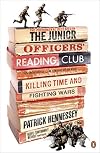
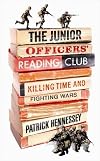
The Junior Officers' Reading Club: Killing Time and Fighting Wars
by Patrick Hennessey
On This Page
Description
A revelatory first-hand account of a young enlistee's profound coming of age and how boys grow into men amid the frenetic, sometimes exhilarating violence, frequent boredom, and almost overwhelming responsibilities that frame a soldier's experience and the way we fight today.Tags
Recommendations



Member Recommendations
Member Reviews
The Junior Officer's Reading Club is a center-of-the-road War on Terror memoir, notable mostly for the fact that Hennessey was in the British Army, and its literary pretensions. War was a chance for Hennessey to test himself against the ultimate of combat. Given that he wasn't marinating in post-9/11 propaganda and seems a decent bloke, the chance of adventure is the best explanation for why this all happened.
His story moves through Sandhurst, and then the Grenadier Guards: standing around in bearskin hats in London, peacekeeping in Kosovo, counter-insurgency in Basra, and finally all out combat in Helmand Province, Afghanistan. Hennessey writes in the easy banter of the lads, one soldier talking to another. A lot of what comes through show more is posturing. Sandhurst is all about appearing military tough in the classical 'stiff upper lip' tradition of the British Army. But the real deal is looking cool on operations, rolling out with the right soundtrack, getting the right clips to stitch together for the mates back home. And finally, playing the heroic man of action, braver and more masculine than any number of London bankers.
War itself, well, war is mostly boring, mostly waiting around in bad weather, or waiting around in decrepit buildings. And then there are flashes of action that make it all worthwhile, reconnaissance in force and storming compounds and calling in air strikes. Danger is all around: Hennessey's company suffered about 1/3rd casualties during its tour in Afghanistan. Their Afghan National Army partners took it worse, with less equipment, less training, and an "inshallah" attitude towards military discipline.
One thing that comes through is that while the Taliban might have been the adversary, the RAF is the enemy. Britain has a bad case of imperial hangover, maintaining a global-spanning interventionist battleforce on a national budget that really can't. At one point Hennessey notes that the US keeps more troops in Korea "just in case" than are in the British Army, period. And while the British Army has been continuously engaged in various post-colonial emergencies, North Ireland, and then the Balkans and the War on Terror, money goes towards ships and fighter planes.
Hennessey's open model for his book is Herr's immortal Vietnam War story Dispatches. That's a very high star to aim for, and the writing doesn't quite hit (he is perforce tied closer to his own story than Herr was), and this has the ironic post-modern weirdness of the 21st century; watching 24 while serving as wardens for an Iraqi prison, debating The OC on patrol, but in a few moments, it soars close. show less
His story moves through Sandhurst, and then the Grenadier Guards: standing around in bearskin hats in London, peacekeeping in Kosovo, counter-insurgency in Basra, and finally all out combat in Helmand Province, Afghanistan. Hennessey writes in the easy banter of the lads, one soldier talking to another. A lot of what comes through show more is posturing. Sandhurst is all about appearing military tough in the classical 'stiff upper lip' tradition of the British Army. But the real deal is looking cool on operations, rolling out with the right soundtrack, getting the right clips to stitch together for the mates back home. And finally, playing the heroic man of action, braver and more masculine than any number of London bankers.
War itself, well, war is mostly boring, mostly waiting around in bad weather, or waiting around in decrepit buildings. And then there are flashes of action that make it all worthwhile, reconnaissance in force and storming compounds and calling in air strikes. Danger is all around: Hennessey's company suffered about 1/3rd casualties during its tour in Afghanistan. Their Afghan National Army partners took it worse, with less equipment, less training, and an "inshallah" attitude towards military discipline.
One thing that comes through is that while the Taliban might have been the adversary, the RAF is the enemy. Britain has a bad case of imperial hangover, maintaining a global-spanning interventionist battleforce on a national budget that really can't. At one point Hennessey notes that the US keeps more troops in Korea "just in case" than are in the British Army, period. And while the British Army has been continuously engaged in various post-colonial emergencies, North Ireland, and then the Balkans and the War on Terror, money goes towards ships and fighter planes.
Hennessey's open model for his book is Herr's immortal Vietnam War story Dispatches. That's a very high star to aim for, and the writing doesn't quite hit (he is perforce tied closer to his own story than Herr was), and this has the ironic post-modern weirdness of the 21st century; watching 24 while serving as wardens for an Iraqi prison, debating The OC on patrol, but in a few moments, it soars close. show less
In the past several years I have read dozens of military memoirs from the Iraq and Afghanistan wars, but all have been from an American standpoint. Hennessey's is the first I've read by a British army officer. The writing, not surprisingly, is excellent. Hennessey's reasons for entering the army after what appears to have been a very privilged life and university are somewhat vague, although it seems fairly certain that he mostly wanted to test himself in ways that only the military life and the crucible of combat could provide. He got what he bargained for and perhaps even more. His attitude throughout the book remains a kind of brash, cocksure arrogance that reflects a determination not to break down under the multiple stresses of war show more and command. He sees fellow officers, friends and men under his command crippled, mutilated and killed, and he also is very much aware of the insulated indifference of the civilian populace that makes no sacrifices on "the home front." At these times his attitude widens to include anger and a certain amount of confusion and wondering how he will ever be able to readjust to a civilian role. There is a kind of hard-earned youthful wisdom expressed in his attempts to articulate the idea that what is happening to him on these foreign battlefields will probably be the defining experience of his life -
"I suddenly know that I hate this and love it at the same time because I can already feel both how glad I will be when it is over and how much I will miss it. How difficult to convey to anyone that matters something which they will never understand, and how little anything else will ever matter."
Hennessey's narrative is also filled with cultural references of his time - films, music, television. And most of it was familiar even to me, despite an ocean and forty years of living that separates us. The foul language that permeates military life and which filled the book was not a bit off-putting to me. I've been there and have lived that high-spirited boundary-testing time that almost all soldiers go through when they are finally on their own and far from home for the first time. The obscenity and the often shocking dark humor expressed here are normal; they are checkpoints of the genuineness of the experience. The juxtaposition of being shelled by enemy fire daily and an addiction to a DVD set of the American hospital soap, "Grey's Anatomy," during the lulls in battle are handled well. Readers will quickly become accustomed to such things, which represent, in many ways, the madness of war.
If there was anything at all which disappointed me in THE JUNIOR OFFICERS' READING CLUB it was that very few books were actually given. I came to the book with pen and paper at hand, hoping to harvest a list of actual books these men were reading. I came away with nothing I wished to read. But perhaps that was a cultural or age-related disconnect on my part; I don't know. Another minor shortcoming, one mentioned by other reviewers, is that the book goes on perhaps a bit too long. The Afghanistan section of the book, the part which describes the fiercest combat - the patrols, the ambushes, the shelling - almost seems to drag on, as Hennessey continues to try to "tell it all." I have read that he is now studying for the legal profession. Perhaps he figures this will be his one and only book and he just wanted to "get it all in" before hanging up his writer's hat for good. Again, I don't know.
It might be intersting now to read some memoirs from other nationalities who have been there - other members of that much-mentioned "coalition of forces." In the meantime I will recommend this one - a very good book. show less
"I suddenly know that I hate this and love it at the same time because I can already feel both how glad I will be when it is over and how much I will miss it. How difficult to convey to anyone that matters something which they will never understand, and how little anything else will ever matter."
Hennessey's narrative is also filled with cultural references of his time - films, music, television. And most of it was familiar even to me, despite an ocean and forty years of living that separates us. The foul language that permeates military life and which filled the book was not a bit off-putting to me. I've been there and have lived that high-spirited boundary-testing time that almost all soldiers go through when they are finally on their own and far from home for the first time. The obscenity and the often shocking dark humor expressed here are normal; they are checkpoints of the genuineness of the experience. The juxtaposition of being shelled by enemy fire daily and an addiction to a DVD set of the American hospital soap, "Grey's Anatomy," during the lulls in battle are handled well. Readers will quickly become accustomed to such things, which represent, in many ways, the madness of war.
If there was anything at all which disappointed me in THE JUNIOR OFFICERS' READING CLUB it was that very few books were actually given. I came to the book with pen and paper at hand, hoping to harvest a list of actual books these men were reading. I came away with nothing I wished to read. But perhaps that was a cultural or age-related disconnect on my part; I don't know. Another minor shortcoming, one mentioned by other reviewers, is that the book goes on perhaps a bit too long. The Afghanistan section of the book, the part which describes the fiercest combat - the patrols, the ambushes, the shelling - almost seems to drag on, as Hennessey continues to try to "tell it all." I have read that he is now studying for the legal profession. Perhaps he figures this will be his one and only book and he just wanted to "get it all in" before hanging up his writer's hat for good. Again, I don't know.
It might be intersting now to read some memoirs from other nationalities who have been there - other members of that much-mentioned "coalition of forces." In the meantime I will recommend this one - a very good book. show less
A British soldier recounts his time in military academy through a stint in Iraq and Afghanistan.
Hm. I have mixed feelings about this one. At first I really didn't like Hennessey - he seemed arrogant and filled with admiration for his own cleverness - but then I was briefly sucked into his account of soldiering (the details of how the British train their troops was interesting), but then again I became annoyed that the book doesn't do what it says on the tin; he occasionally and very briefly mentions a book he was reading at the time some event happened, but there's no talk of an actual book club at all or even what he thought of the books he read. I was in it for the dynamics of a bunch of soldiers holding a regular book club in a war show more zone and how that would play out, and I didn't get that at all. In the end it just felt like a dude bragging about how well read he was and also what a cool soldier he turned out to be and isn't that a paradox? I'm such a cool paradox! Blech. But points for the possibly inadvertently interesting bits. *shrug* show less
Hm. I have mixed feelings about this one. At first I really didn't like Hennessey - he seemed arrogant and filled with admiration for his own cleverness - but then I was briefly sucked into his account of soldiering (the details of how the British train their troops was interesting), but then again I became annoyed that the book doesn't do what it says on the tin; he occasionally and very briefly mentions a book he was reading at the time some event happened, but there's no talk of an actual book club at all or even what he thought of the books he read. I was in it for the dynamics of a bunch of soldiers holding a regular book club in a war show more zone and how that would play out, and I didn't get that at all. In the end it just felt like a dude bragging about how well read he was and also what a cool soldier he turned out to be and isn't that a paradox? I'm such a cool paradox! Blech. But points for the possibly inadvertently interesting bits. *shrug* show less
Apparently guarding the Queen is very dull. You get dressed up in a posh uniform, walk from your barracks across the road to Buckingham Palace, shout a few orders and then stand around for a bit. Certainly the way that the author describes it makes you wonder if he, and all the tourists who go wild with excitement, pressing themselves up against the bars of the Palace like desperate refugees trying to get into the embassy compound when word has got out that the helicopter on the roof is the last one out of town, but with video cameras, were actually at the same ceremony? What it hints at is a certain emotional distance from the mundane aspects of real life that is ultimately the key to the success of this book.
Other authors may have show more caved to the temptation of poking fun at the mundane aspects of army life and in particular officer training, perhaps turning the polishing of a boot into a five page anecdote that culminates in the author desperately trying to scrub boot polish off of his groin while trying hard to not give the appearance of masturbating wildly. Not Patrick Hennessey. Army life is dull routine, officer training is dull and hard and very physically demanding. And then, hey, in the last term it's suddenly not so painful because you are in your early twenties and have been exercising every day for nine months - no wonder you're born again fit and able to run up a hill in Wales in the rain with the equivalent of a small village in your backpack. Army life and officer training is dull, then painful, then dull and painful, then painful and dull. This dullness is conveyed excellently.
Also interesting is the focus on food. Apparently it's not the done thing to get pissed and then drive your tank or let rip with the GPMG and so active soldiers fixate on food the same way the civilians fixate on booze. Soldiers eat large helpings of cake as often as possible. What came as a surprise is just how much Haribo the British Army gets through. It was an incongruous image, some squaddie tipping back some sweets from a jolly packet with a grinning cartoon child on the front before letting rip and ventilating some child-raping, teacher-murdering Taliban shitbag.
And in the second half of the book there is ventilation aplenty. The dull routine that characterised the author's army career before Afghanistan in brutally shredded and the reader gets the payoff of Hennessey being able to give an unvarnished account of events. He brings the same honesty to the battlefield that he brought to polishing kit in the barracks and the result is one of the most compelling and, to be uncomfortably honest, exciting accounts of modern warfare I've ever read. Bullets fly, people die, women sigh. Okay, maybe not that last bit but bullets and indeed munitions of just about every type do fly, in all directions, often at once, and people do die. When it's the enemy that's good, when it's a British soldier that's bad.
The reality of war is raw, traumatic and exhilarating. Raw in that it's never fun to be shot at, traumatic when comrades are lost or injured by enemy fire or cowardly bomb attacks and exhilarating because in comparison to fighting for twelve hours straight, being in firefights, calling down fire like the wrath of God on the enemy and, at the end of it all, still standing, you can stick heli-skiing right up your arse.
This is a compelling and immediate account not of men at war, or even of the British Army at war, but of one man at war. The battles are bloody, the stories about troops trying to deal with the return to normality afterwards are thought provoking and, this being a Brit, there is humour among all the blood, sand, horror and haribo.
Hennessey may come across as arrogant and unlikable in peace, but in war he unflinchingly accepts that it's his job to kill other men and he's unflinching in his descriptions of that experience. That's the book's saving grace and what makes it worth reading. show less
Other authors may have show more caved to the temptation of poking fun at the mundane aspects of army life and in particular officer training, perhaps turning the polishing of a boot into a five page anecdote that culminates in the author desperately trying to scrub boot polish off of his groin while trying hard to not give the appearance of masturbating wildly. Not Patrick Hennessey. Army life is dull routine, officer training is dull and hard and very physically demanding. And then, hey, in the last term it's suddenly not so painful because you are in your early twenties and have been exercising every day for nine months - no wonder you're born again fit and able to run up a hill in Wales in the rain with the equivalent of a small village in your backpack. Army life and officer training is dull, then painful, then dull and painful, then painful and dull. This dullness is conveyed excellently.
Also interesting is the focus on food. Apparently it's not the done thing to get pissed and then drive your tank or let rip with the GPMG and so active soldiers fixate on food the same way the civilians fixate on booze. Soldiers eat large helpings of cake as often as possible. What came as a surprise is just how much Haribo the British Army gets through. It was an incongruous image, some squaddie tipping back some sweets from a jolly packet with a grinning cartoon child on the front before letting rip and ventilating some child-raping, teacher-murdering Taliban shitbag.
And in the second half of the book there is ventilation aplenty. The dull routine that characterised the author's army career before Afghanistan in brutally shredded and the reader gets the payoff of Hennessey being able to give an unvarnished account of events. He brings the same honesty to the battlefield that he brought to polishing kit in the barracks and the result is one of the most compelling and, to be uncomfortably honest, exciting accounts of modern warfare I've ever read. Bullets fly, people die, women sigh. Okay, maybe not that last bit but bullets and indeed munitions of just about every type do fly, in all directions, often at once, and people do die. When it's the enemy that's good, when it's a British soldier that's bad.
The reality of war is raw, traumatic and exhilarating. Raw in that it's never fun to be shot at, traumatic when comrades are lost or injured by enemy fire or cowardly bomb attacks and exhilarating because in comparison to fighting for twelve hours straight, being in firefights, calling down fire like the wrath of God on the enemy and, at the end of it all, still standing, you can stick heli-skiing right up your arse.
This is a compelling and immediate account not of men at war, or even of the British Army at war, but of one man at war. The battles are bloody, the stories about troops trying to deal with the return to normality afterwards are thought provoking and, this being a Brit, there is humour among all the blood, sand, horror and haribo.
Hennessey may come across as arrogant and unlikable in peace, but in war he unflinchingly accepts that it's his job to kill other men and he's unflinching in his descriptions of that experience. That's the book's saving grace and what makes it worth reading. show less
I should not have read this book
I certainly should not be reviewing this book
I firmly believe that British troops should not have been sent to Iraq and certainly should not be in Afghanistan. Messrs Bush and Blair and their shamefully dishonest governments have much to answer for. They are responsible for giving Patrick Hennessey and his ilk the licence to play out their violent video fantasy's for real in far away foreign countries.
This book is the memoirs of a junior British officer; a platoon leader in Iraq and Afghanistan. He describes his training at Sandhurst which is all in his words "marching , ironing and shouting". and which drives the recruits to the limits of their physical capabilities. His first tour of duty is in Baghdad, show more where he is disappointed that he has not fired a gun in anger, however his platoon receives the wonderful news that they are being sent to Afghanistan. A real chance to kick ass.
This book celebrates the glory and excitement of modern day warfare. The adrenaline rush of being able to go to foreign countries and kill as many of the inhabitants as they can. At times it reads like a glorified video game. Here is Hennessey riding in a snatch vehicle in Baghdad itching to shoot somebody:
breathing calm and regulated now, finger almost indecently flirting with the safety catch.... an incredible and unplaceable feeling of responsibility, sinister and strangely ecstatic, bewildering calm and almost elation to have this stranger perfectly lined up, a fraction of a second-two silent fractional movements and one 5.56 tracer round away from me and eternity and slowly from under his robe he takes out another bottle of coke and takes a swig
Hennessey describes the thrill of battle like this:
try and piece together what it is about the contact battle that ramps the heartbeat up so high and pumps adrenaline and euphoria through the veins in such a heady rapid mix....and wonder what compares: the winning goal scoring punch, the first kiss, the triumphant knicker peeling moment? Nowhere else sells bliss like this, surely?
Hennessey dreams about getting medals to show:
to shout from the rafters that what we had done was not wrong, not bad, but glorious and heroic, and we wern't sick to feel that it had all been such fucking good fun
Hennessey's platoon were responsible for killing nearly 200 Taliban. There was no respect for the dead and it was just bad luck if one of their own took a hit. It was all in the game. Modern weaponry and its effects is described in loving detail. The Afghani people might as well be from a different planet.
The title of the book is misleading there are two pages of the 300 devoted to the reading club. More space is given to the delights of TV programs like "24" and "Greys Anatomy". Hennessey uses quite a few cliches but on the whole his writing is tolerably good. show less
I certainly should not be reviewing this book
I firmly believe that British troops should not have been sent to Iraq and certainly should not be in Afghanistan. Messrs Bush and Blair and their shamefully dishonest governments have much to answer for. They are responsible for giving Patrick Hennessey and his ilk the licence to play out their violent video fantasy's for real in far away foreign countries.
This book is the memoirs of a junior British officer; a platoon leader in Iraq and Afghanistan. He describes his training at Sandhurst which is all in his words "marching , ironing and shouting". and which drives the recruits to the limits of their physical capabilities. His first tour of duty is in Baghdad, show more where he is disappointed that he has not fired a gun in anger, however his platoon receives the wonderful news that they are being sent to Afghanistan. A real chance to kick ass.
This book celebrates the glory and excitement of modern day warfare. The adrenaline rush of being able to go to foreign countries and kill as many of the inhabitants as they can. At times it reads like a glorified video game. Here is Hennessey riding in a snatch vehicle in Baghdad itching to shoot somebody:
breathing calm and regulated now, finger almost indecently flirting with the safety catch.... an incredible and unplaceable feeling of responsibility, sinister and strangely ecstatic, bewildering calm and almost elation to have this stranger perfectly lined up, a fraction of a second-two silent fractional movements and one 5.56 tracer round away from me and eternity and slowly from under his robe he takes out another bottle of coke and takes a swig
Hennessey describes the thrill of battle like this:
try and piece together what it is about the contact battle that ramps the heartbeat up so high and pumps adrenaline and euphoria through the veins in such a heady rapid mix....and wonder what compares: the winning goal scoring punch, the first kiss, the triumphant knicker peeling moment? Nowhere else sells bliss like this, surely?
Hennessey dreams about getting medals to show:
to shout from the rafters that what we had done was not wrong, not bad, but glorious and heroic, and we wern't sick to feel that it had all been such fucking good fun
Hennessey's platoon were responsible for killing nearly 200 Taliban. There was no respect for the dead and it was just bad luck if one of their own took a hit. It was all in the game. Modern weaponry and its effects is described in loving detail. The Afghani people might as well be from a different planet.
The title of the book is misleading there are two pages of the 300 devoted to the reading club. More space is given to the delights of TV programs like "24" and "Greys Anatomy". Hennessey uses quite a few cliches but on the whole his writing is tolerably good. show less
It's been said in almost all the reviews that I've since read about this book that the title is misleading. That's true, and whilst it meant that this book was not the cross between The Polysyllabic Spree and the latest Chris Ryan that I was expecting, I don't regret having read it.
As a civilian with tendencies towards pacifism, I've never really 'got' the army or those who join it. I think Hennessey's book went some way towards capturing what it is all about for me, and although I'll never be pro-army, I do at least feel that I have a better understanding of what soldiers actually do. The book also brought home to me how difficult it is to break out and how the crazy adrenalin-fuelled fighting leaves many bemused on return to 'normal' show more life. This is something that I should have known intellectually, but which I hadn't really consciously appreciated until reading this book.
I feel like I've learnt something, and although it ended up being more Chris Ryan than Nick Hornby, I'm still glad I read it. show less
As a civilian with tendencies towards pacifism, I've never really 'got' the army or those who join it. I think Hennessey's book went some way towards capturing what it is all about for me, and although I'll never be pro-army, I do at least feel that I have a better understanding of what soldiers actually do. The book also brought home to me how difficult it is to break out and how the crazy adrenalin-fuelled fighting leaves many bemused on return to 'normal' show more life. This is something that I should have known intellectually, but which I hadn't really consciously appreciated until reading this book.
I feel like I've learnt something, and although it ended up being more Chris Ryan than Nick Hornby, I'm still glad I read it. show less
This is one book that could have used a different editor. The text is too raw, even the edited parts feel a lot like an e-mail or journal entry, so incomplete and, a lot of the times, not really related one to the next. The über-long phrases used by the author, like two per paragraph, don't help either. And to boot the book didn't feel all that British either ... yes, a "biro" used here and there and some Worcester sauce to top it of but still not what I was looking for.
All that said the passages about his last couple of months in Sangin are probably the best war writing I've ever read, timeless.
All that said the passages about his last couple of months in Sangin are probably the best war writing I've ever read, timeless.
Members
- Recently Added By
Lists

THE WAR ROOM
813 works; 24 members
Author Information
5 Works 400 Members
Patrick Hennessey was born in 1982 and joined the British army in January 2004. His five years of service as platoon commander and company operations officer encompassed tours in Iraq and Afghanistan, where he was promoted in the field to become the youngest frontline captain in the army and earned a commendation for gallantry. He lives in London.
Awards and Honors
Distinctions
Common Knowledge
- Important places
- Afghanistan; Iraq
Classifications
- Genres
- Nonfiction, Biography & Memoir, History, General Nonfiction
- DDC/MDS
- 956.704434092 — History & geography History of Asia Middle East (Near East) Iraq 1920- 1979- 1991-
- LCC
- UA652 .G7 .H46 — Military Science Armies: Organization, distribution, military situation Armies: Organization, distribution, military situation By region or country
- BISAC
Statistics
- Members
- 377
- Popularity
- 82,690
- Reviews
- 13
- Rating
- (3.41)
- Languages
- English, Spanish
- Media
- Paper, Ebook
- ISBNs
- 9
- ASINs
- 3