Your Drug May Be Your Problem: How and Why to Stop Taking Psychiatric Medications
by Peter R. Breggin, David Cohen
On This Page
Description
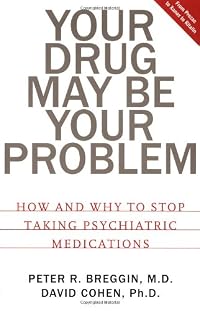
When first published in 1999, Your Drug May Be Your Problem was ahead of its time. The only book to provide an uncensored description of the dangers involved in taking every kind of psychiatric medication, it was also the first and only book to explain how to safely stop taking them. In the time elapsed, there have been numerous studies suggesting or proving the dangers of some psychiatric medications and even the FDA now acknowledges the problems more studies are under way to determine show more their long-term and withdrawal effects. In the meantime, this book continues to be ever relevant and helpful. Fully updated to include study results and new medications that have come to market, Your Drug May Be Your Problem will help countless readers exert control over their own psychiatric treatment. show lessTags
Recommendations








Member Reviews
Having spent the better part of the last 12 years on a virtual A(tenolol)to Z(oloft) tour of drugs prescribed to treat my symptoms of low self-esteem, generalized and social anxiety, and depression, I began to suspect these pretty, candy-like pills--so quickly prescribed interchangeably by psychiatrists and GP's alike--were not only affecting me in the short-term, but also manifesting long-term (if not permanent!) changes in my body--most notably a reduction in sex drive and function and excessive sweating--all without an appreciable, lasting reduction in my original symptoms. Therefore, when I stumbled across this book on Amazon.com, I was intrigued; what I found in it's pages left me with mixed feelings of horror, relief, knowing, and show more suspicion. Not only did I recognize the myriad of side-effects and withdrawal symptoms from my own experience, but Drs. Breggin and Cohen portrayed with uncanny accuracy my attempts at enlisting the help of practitioners unwilling to comply with my wishes to de-medicate. Too many times I have entered my psychiatrist's office ready to reduce, if not eliminate, the amount of medications I take, only to emerge twenty minutes later with a prescription for an ADDITIONAL drug, often with the intent to treat the side-effects of the first! This book has given me additional tools and strategies with which to broach the subject at my next appointment. Am I afraid of the probable return of the original emotional difficulties that brought me there in the first place? Absolutely. Am I dreading the all-too-familiar onslaught of dizziness, nausea, restless legs, headaches, depression, and intense emotional suffering that accompanies withdrawal? No question. But I am tired of the endless stream of side-effects and general numbing I experience on each successive drug, which inevitably stops working within a few months only to be replaced by something "better". I'm tired of being afraid of my doctor's disapproval, my mental "illness", and of living.
All this having been said, it's only fair to point out some of the obvious flaws of this book. As mentioned in previous reviews, it is repetitive in places, oddly devoid of any sense of actual experience with emotional suffering, and conspicuously one-sided. To claim that "the degree to which we suffer indicates the degree to which we are alive" is laughably new-agey and useless in a real-world context. Try sharing that bit of fluff with the person so deep in a depression that they can't get out of bed, can't care for themselves or their kids--indeed, can't even cry--and see how it is received. Also, the section on reducing your medications is a bit difficult (even dangerous) to follow if your medication comes in capsule form. Their suggestion that a capsule be opened and its contents separated into smaller doses isn't very helpful--how do you administer the smaller dosages? Couldn't it be risky? All in all, the weakest section of the book is Chapter 13, entitled "Psychological Principles for Helping Yourself and Others Without Resort to Psychiatric Medications". It's rife with mindless psychobabble, offering far too many pat fortune-cookie suggestions without any substantive plan for action. Most disburbingly, Breggin & Cohen tread a dangerous line by zealously condemning ALL use of psychiatric medications (all the while assuring the reader that they don't blame the user). Surely every schizophrenic or bipolar person (and their loved ones) won't find solace in the simple realization "that emotional crises and suffering are opportunities for accelerated personal growth" (p210), nor by focusing "on finding a rational, loving, and confident center in yourself that can rise above your emotional crisis or suffering" (p205). Common sense would suggest that sometimes, for some people, a medication can be the sanest, if not the only answer.
At any rate, this book provides a welcome counterpoint to a nation blindly medicating their children into conformity, eagerly requesting prescriptions for psychotropic drugs they see advertised during "Survivor", and assigning a convenient DSM label (with the inevitable, corresponding "miracle" pill) for every emotional fluctuation. In itself, "Your Drug May Be Your Problem" is best regarded as a jumping-off place for further research rather than the end of the line. show less
All this having been said, it's only fair to point out some of the obvious flaws of this book. As mentioned in previous reviews, it is repetitive in places, oddly devoid of any sense of actual experience with emotional suffering, and conspicuously one-sided. To claim that "the degree to which we suffer indicates the degree to which we are alive" is laughably new-agey and useless in a real-world context. Try sharing that bit of fluff with the person so deep in a depression that they can't get out of bed, can't care for themselves or their kids--indeed, can't even cry--and see how it is received. Also, the section on reducing your medications is a bit difficult (even dangerous) to follow if your medication comes in capsule form. Their suggestion that a capsule be opened and its contents separated into smaller doses isn't very helpful--how do you administer the smaller dosages? Couldn't it be risky? All in all, the weakest section of the book is Chapter 13, entitled "Psychological Principles for Helping Yourself and Others Without Resort to Psychiatric Medications". It's rife with mindless psychobabble, offering far too many pat fortune-cookie suggestions without any substantive plan for action. Most disburbingly, Breggin & Cohen tread a dangerous line by zealously condemning ALL use of psychiatric medications (all the while assuring the reader that they don't blame the user). Surely every schizophrenic or bipolar person (and their loved ones) won't find solace in the simple realization "that emotional crises and suffering are opportunities for accelerated personal growth" (p210), nor by focusing "on finding a rational, loving, and confident center in yourself that can rise above your emotional crisis or suffering" (p205). Common sense would suggest that sometimes, for some people, a medication can be the sanest, if not the only answer.
At any rate, this book provides a welcome counterpoint to a nation blindly medicating their children into conformity, eagerly requesting prescriptions for psychotropic drugs they see advertised during "Survivor", and assigning a convenient DSM label (with the inevitable, corresponding "miracle" pill) for every emotional fluctuation. In itself, "Your Drug May Be Your Problem" is best regarded as a jumping-off place for further research rather than the end of the line. show less
Ratings
Members
- Recently Added By
Author Information

29+ Works 865 Members
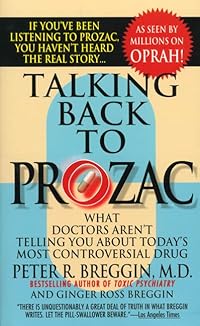
Peter R. Breggin, M.D., is a psychiatrist and expert in clinical psychopharmacology. A former teaching fellow at Harvard Medical School and full-time consultant at the National Institute of Mental Health, he has written dozens of scientific articles and more than twenty books, including the bestsellers Toxic Psychiatry and Talking Back to Prozac. show more He has served as a medical expert in criminal and civil cases involving psychiatric drugs, including product-liability suits against drug manufacturers. Dr. Breggin founded the International Center for the Study of Psychiatry and Psychology (www.ICSPP.org), taught at universities, and is on the editorial boards of several scientific journals. He lives in the Finger Lakes region with his wife, Ginger, and practices psychiatry in Ithaca, New York. show less
187 Works 3,344 Members
Classifications
- Genres
- Nonfiction, General Nonfiction
- DDC/MDS
- 615.788 — Applied Science & Technology Medicine & health Pharmacology and therapeutics Medicines grouped by effects Drugs acting on nervous system
- LCC
- RC483 .B733 — Medicine Internal medicine Internal medicine Neurosciences. Biological psychiatry. Neuropsychiatry Psychiatry Therapeutics. Psychotherapy
- BISAC
Statistics
- Members
- 95
- Popularity
- 334,378
- Reviews
- 1
- Rating
- (4.30)
- Languages
- English
- Media
- Paper, Ebook
- ISBNs
- 3
- ASINs
- 2