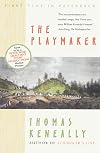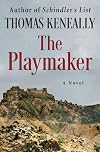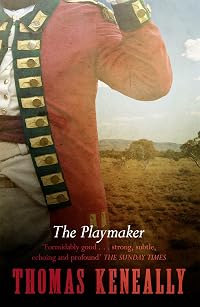
The Playmaker
by Thomas Keneally
On This Page
Description
An English lieutenant is ordered to stage a play starring prisoners of the Australian penal colony he supervises in this phantasmagoric historical fiction masterwork from the author of Schindler's ListIn the penal colony of Sydney Cove, Australia, at the farthest reaches of the late-nineteenth-century British Empire, Lieutenant Ralph Clark has received a bizarre commission. In honor of the king's birthday, Clark is charged with staging a production of the George Farquhar comedy The show more Recruiting Officer using as cast and production crew the highwaymen, whores, cutpurses, killers, and other assorted disreputables exiled there from the British Isles. Pining over the family he left behind, Clark must work miracles with only two printed scripts, a company of unstable and largely illiterate "actors," and the dubious assistance of his colleagues. But the success—or failure—of the mammoth enterprise rests largely on the shoulders of lead actress Mary Brenham, the mesmerizing and enigmatic female convict to whom Clark finds himself strangely and dangerously attracted.
Based on the lieutenant's real diaries, The Playmaker is a truly remarkable achievement. Atmospheric, dreamlike, and richly evoking time and place, featuring a monumental cast of magnificently drawn, unforgettable characters, it is a work of insight, imagination, and true genius by one of the most notable names in historical fiction. show less
Tags
Recommendations


















Member Reviews
Another chance find in a second hand bookshop, this is my third Keneally novel this year and my eighth in total, and my respect for the versatility and variety of his writing is still growing.
This is another book with strong historical roots, as it is loosely based on real historical events and characters, a recreation of the anarchic early years of the Sydney penal colony, given focus by the first play to be held there, a 1789 performance of the now largely forgotten early 18th century comedy The Recruiting Officer by George Farquhar.
Another recurrent feature of Keneally's fiction that is strong here is the friction between strict moral codes and judgments and the reality of the dilemmas faced by those who live by them. There is also show more plenty of humour, and the book is a very enjoyable read.
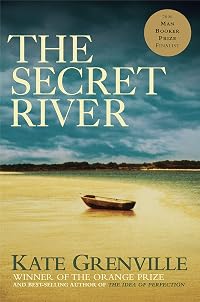
The book also made an interesting companion piece to another that I read recently, Kate Grenville's [b:The Secret River|347698|The Secret River|Kate Grenville|https://i.gr-assets.com/images/S/compressed.photo.goodreads.com/books/1388508143l/347698._SY75_.jpg|1374275] - in some ways they are complementary, though Grenville's focus is a little later. show less
This is another book with strong historical roots, as it is loosely based on real historical events and characters, a recreation of the anarchic early years of the Sydney penal colony, given focus by the first play to be held there, a 1789 performance of the now largely forgotten early 18th century comedy The Recruiting Officer by George Farquhar.
Another recurrent feature of Keneally's fiction that is strong here is the friction between strict moral codes and judgments and the reality of the dilemmas faced by those who live by them. There is also show more plenty of humour, and the book is a very enjoyable read.
The book also made an interesting companion piece to another that I read recently, Kate Grenville's [b:The Secret River|347698|The Secret River|Kate Grenville|https://i.gr-assets.com/images/S/compressed.photo.goodreads.com/books/1388508143l/347698._SY75_.jpg|1374275] - in some ways they are complementary, though Grenville's focus is a little later. show less
The 'founding' of Australia by British soldiers and convicts seemed a fantastic struggle over adversity. The ships arrived at what is now Sydney Harbor, to find a land far more barren than reported 17 years before. The crossing had been more than miserable, the rations during and after were short, the thousand or so people housed at first in tents, then wattle-and-daub, for the most part. There were many more men, both convicts and soldiers, than women, and most soldiers were not allowed to bring their wives and families, with the predictable consequences.
And death was all around. From fevers and hanging, starvation and accident, fighting and murders. Among the natives, smallpox is devastating. Everyone was a captive of this exile.
To show more raise spirits, Farquahar's The Recruiting Officer is to be performed by inmates for the birthday of George III. No one notes the irony of celebrating the king of a country they have been thrown out of, a king reputed mad and possibly dead. Amid the circumstances of misery, boredom and menial work, the play offers something new and the casting call is long. The director is in no way skilled in this work, but his natural talent becomes evident, as do the talents of the often questionable people he selects.
Many events move this story along, many characters sometimes hard to keep straight in the beginning. Keneally drops in historical note from the American colonies and that war, still fresh, the struggles of colonists in Sound America, and other notes that sometimes startle the reader to realize how long ago this takes place.
This is accurate historical fiction. All this really happened, including the performance, the liaisons, the murders, the hangings, details drawn from diaries and reports. Keneally provides an epilogue where he lists, as much as is possible, the future of each of the main characters in this narrative. It can break your heart. show less
And death was all around. From fevers and hanging, starvation and accident, fighting and murders. Among the natives, smallpox is devastating. Everyone was a captive of this exile.
To show more raise spirits, Farquahar's The Recruiting Officer is to be performed by inmates for the birthday of George III. No one notes the irony of celebrating the king of a country they have been thrown out of, a king reputed mad and possibly dead. Amid the circumstances of misery, boredom and menial work, the play offers something new and the casting call is long. The director is in no way skilled in this work, but his natural talent becomes evident, as do the talents of the often questionable people he selects.
Many events move this story along, many characters sometimes hard to keep straight in the beginning. Keneally drops in historical note from the American colonies and that war, still fresh, the struggles of colonists in Sound America, and other notes that sometimes startle the reader to realize how long ago this takes place.
This is accurate historical fiction. All this really happened, including the performance, the liaisons, the murders, the hangings, details drawn from diaries and reports. Keneally provides an epilogue where he lists, as much as is possible, the future of each of the main characters in this narrative. It can break your heart. show less
Thomas Keneally brings history to life in a story rich with detail and humanity. Lieutenant Ralph Clark is the honest and fallible playmaker, uniting the early settlers of Sydney, Australia - the 'lags', or convicts, and those sent to guard them, the officials and marines also exiled from home.
The plot meanders along from character to character, from geographical discovery to personal revelation. The historical background and individual vignettes are loosely linked together by Ralph's efforts to rehearse and stage an amateur production of Farqhar's 'The Recruiting Officer', cast with the convict inhabitants of the penal colony, but the real attraction is the descriptive and personable fleshing out of the men and women in the real show more Lieutenant Clark's journal and letters. This work of fiction really sends the reader back in time to Australia in the 1780s, and Ralph becomes a dear friend - I fell deeply for Keneally's portrait of his character, and wished him all the best with his tentative, earnest 'marriage' to one of the 'she-lags' he initially mistrusts and avoids.
Informative, evocative, with a streak of droll Australian humour to lighten the dialogue. show less
The plot meanders along from character to character, from geographical discovery to personal revelation. The historical background and individual vignettes are loosely linked together by Ralph's efforts to rehearse and stage an amateur production of Farqhar's 'The Recruiting Officer', cast with the convict inhabitants of the penal colony, but the real attraction is the descriptive and personable fleshing out of the men and women in the real show more Lieutenant Clark's journal and letters. This work of fiction really sends the reader back in time to Australia in the 1780s, and Ralph becomes a dear friend - I fell deeply for Keneally's portrait of his character, and wished him all the best with his tentative, earnest 'marriage' to one of the 'she-lags' he initially mistrusts and avoids.
Informative, evocative, with a streak of droll Australian humour to lighten the dialogue. show less
Well. Not exactly the kind of thing that I'm interested in. I will admit that it was a joy watching the play come together in the midst of the wild outback situation filled with criminal lags and wild natives. As well as watch Ralph figure out his situation and his feelings during the course of putting together of the performance. I learned a great deal about the initial stages of Britain sending its criminals to Australia, the difficulties entailed as well as how the great physical and temporal divide affected both Marine and criminal. So, a decent read.
I really thought I'd like this novel however, I gave up about halfway through and skipped to the end to read the last couple of chapters. The beginning was interesting but it just failed to keep my attention by the beginning of the middle.
Australian convicts and overseers stage a play and explore their relationships. I suppose people might find it interesting that the characters were broadly based on real people, but I put the book down feeling a bit 'meh'.
This is the novel/story 'Our Country's Good' is based on. Have both studied and been in that play, so have a fondness for the novel above and beyond its merits, I suspect.
The current three-star rating does not relate to my love of the book or its merits, it's a system I'm working out.
The current three-star rating does not relate to my love of the book or its merits, it's a system I'm working out.
Members
- Recently Added By
Lists

Harold Bloom - The Western Canon: D. The Chaotic Age
833 works; 24 members
Author Information

85+ Works 19,989 Members
Thomas Keneally was born in Sydney, Australia on October 7, 1935. Although he initially studied for the Catholic priesthood, he abandoned that idea in 1960, turning to teaching and clerical work before writing and publishing his first novel, The Place at Whitton, in 1964. Since that time he has been a full-time writer, aside from the occasional show more stint as a lecturer or writer-in-residence. He won the Booker Prize in 1982 for Schindler's Ark, which Stephen Spielberg adapted into the film Schindler's List. He won the Miles Franklin Award twice with Bring Larks and Heroes and Three Cheers for the Paraclete. His other fiction books include The Chant of Jimmy Blacksmith, Gossip from the Forest, Confederates, The People's Train, Bettany's Book, An Angel in Australia, The Widow and Her Hero, and The Daughters of Mars. His nonfiction works include Searching for Schindler, Three Famines, The Commonwealth of Thieves, The Great Shame, and American Scoundrel. In 1983, he was awarded the order of Australia for his services to Australian Literature. Thomas Keneally is the recipient of the 2015 Australia Council Award for Lifetime Achievement in Literature. The award, formerly known as the Writers' Emeritus Award, recognises 'the achievements of eminent literary writers over the age of 60 who have made an outstanding and lifelong contribution to Australian literature. (Bowker Author Biography) show less
Awards and Honors
Awards
Work Relationships
Has the adaptation
Common Knowledge
- Original publication date
- 1987
- People/Characters
- Mary Bryant
- Important places
- Australia; New South Wales, Australia; Sydney, New South Wales, Australia
Classifications
Statistics
- Members
- 308
- Popularity
- 104,106
- Reviews
- 7
- Rating
- (3.59)
- Languages
- English, French, Spanish
- Media
- Paper, Ebook
- ISBNs
- 11
- ASINs
- 2