On This Page
Description
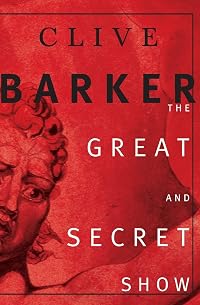
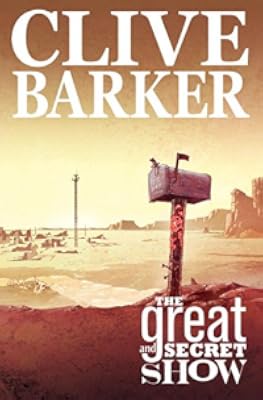
NEW YORK TIMES BESTSELLER From master storyteller Clive Barker, comes this intricately woven and meticulously constructed epic where past and future meet. In the little town of Palomo Grove, two great armies are amassing; forces shaped from the hearts and souls of America. In this New York Times bestseller, Barker unveils one of the most ambitious imaginative landscapes in modern fiction, creating a new vocabulary for the age-old battle between good and evil. Carrying its readers from the show more first stirring of consciousness to a vision of the end of the world, The Great and Secret Show is a breathtaking journey in the company of a master storyteller. show lessTags
Recommendations










Member Reviews
I last read The Great and Secret Show by Clive Barker back when I was a teenager. I loved it then. I wasn't sure how I'd react to it as an adult.
I'm happy to report the writing holds up really well. It stands the tests of time and experience. This novel is still staggeringly imaginative, exciting, and moving.
What makes this novel unique—what makes many of Mr. Barker's novels unique—is a narrative structure built on an escalating series of crises and climaxes. The conflict that opens the story would be the climax of an entire novel in the hands of a lesser writer. For Mr. Barker, however, it's just the beginning. Then he ramps up to another conflict and climax, and another, and another—building tension and emotional investment to a show more fever pitch.
His vision is so sweeping, so huge, so detailed and encompassing, he needs multiple crises and narrative climaxes in order to hold it all and do it justice.
His imagination works on a grander scale than the rest of us. It impresses me as much now as it did when I was younger.
Unfortunately, there's one aspect of The Great and Secret Show that doesn't work for me as an adult:
The love-at-first-sight romance between Howie and Jo-Beth is a lot harder for me to accept this time around.
I know it's supposed to reinforce a sense of Fate that's central to the mysteries of the story, and it's necessary to fuel one of the major conflicts between characters. On that level it works fine.
But Howie's actions demonstrate a painfully adolescent concept of love. I can't find the same emotional power in it that it wielded when I was younger. Indeed, I'm a bit embarrassed to recall how moving their relationship was for me when I was, myself, adolescent.
Mostly, though, as an adult, what I see in Howie now is yet another man who thinks it's romantic to ignore when a woman says no and to bull through every attempt she makes to set limits. Yet another man who's certain that he knows what she wants better than she knows herself. Yet another man whose concept of persistence blurs the line between romance and stalking.
It made me deeply uncomfortable. I suppose, though, I should be impressed that Mr. Barker remembers so clearly what love feels like as a teenager and depicted it so accurately.
Otherwise, I found this book to be just as enjoyable now as it was when I was teenager. It was a most welcome discovery. show less
I'm happy to report the writing holds up really well. It stands the tests of time and experience. This novel is still staggeringly imaginative, exciting, and moving.
What makes this novel unique—what makes many of Mr. Barker's novels unique—is a narrative structure built on an escalating series of crises and climaxes. The conflict that opens the story would be the climax of an entire novel in the hands of a lesser writer. For Mr. Barker, however, it's just the beginning. Then he ramps up to another conflict and climax, and another, and another—building tension and emotional investment to a show more fever pitch.
His vision is so sweeping, so huge, so detailed and encompassing, he needs multiple crises and narrative climaxes in order to hold it all and do it justice.
His imagination works on a grander scale than the rest of us. It impresses me as much now as it did when I was younger.
Unfortunately, there's one aspect of The Great and Secret Show that doesn't work for me as an adult:
The love-at-first-sight romance between Howie and Jo-Beth is a lot harder for me to accept this time around.
I know it's supposed to reinforce a sense of Fate that's central to the mysteries of the story, and it's necessary to fuel one of the major conflicts between characters. On that level it works fine.
But Howie's actions demonstrate a painfully adolescent concept of love. I can't find the same emotional power in it that it wielded when I was younger. Indeed, I'm a bit embarrassed to recall how moving their relationship was for me when I was, myself, adolescent.
Mostly, though, as an adult, what I see in Howie now is yet another man who thinks it's romantic to ignore when a woman says no and to bull through every attempt she makes to set limits. Yet another man who's certain that he knows what she wants better than she knows herself. Yet another man whose concept of persistence blurs the line between romance and stalking.
It made me deeply uncomfortable. I suppose, though, I should be impressed that Mr. Barker remembers so clearly what love feels like as a teenager and depicted it so accurately.
Otherwise, I found this book to be just as enjoyable now as it was when I was teenager. It was a most welcome discovery. show less
I reread this because I remembered the first part being really good when I read it many years ago. That part is still good. The premise is great. Then it drags on for 300 pages too long and while having a cavalcade of creative ideas it's more a Pollock painting than anything that resembles something intelligible. He smashes a trilogy's worth of worldbuilding into one novel and people seem to love it. The problem is that world and the characters just aren't very good.
To label The Great and Secret Show a horror novel would be to do it a disservice. "Arty horror" would be closer to the mark but that sounds silly and would still be inadequate. “Dark fantasy” sounds good to me though it deemphasizes the horror aspect of it a little too much, may be it is more phantasm than fantasy. Not that labels really matter, a good book is a good book regardless of whatever label you slap on it. I am only going on about it just to have some kind of intro!
To tell you what this book is about is a fairly complicated undertaking (best left to undertakers perhaps). It starts with one Randolph Jaffe’s quest for mastery of “The Art”, not just any old art but a craft or power that has the capability to tear a hole show more in the fabric of reality and create an opening to another dimension called Quiddity. Quiddity is a mystical dream sea, a sea of the mind that most people visit twice in their lives. “Once the first night you slept out of the womb. The second occasion the night you lay beside the person you loved.” That does not make much sense out of the context of the book so just imagine the weirdest goddamn sea you can and then pile on extra weirdness on top. The Quiddity sea changes you and is generally extremely bad for your complexion:
Credit Gabriel Rodríguez Pérez (from graphic novel adaptation)
Jaffe’s pursuit of the Art leads to his eventually becoming something other than human and triggers a possible supernatural apocalypse that threatens all human lives. What starts out as a man’s quest for power becomes a titanic struggle between good and evil where the battles often takes surreal forms.
Randolph Jaffe (AKA The Jaff). Again credit Gabriel Rodríguez Pérez.
That little synopsis barely scratches the surface of the novel’s plot. The Great and Secret Show is a dark fantasy of epic proportions (though “epic fantasy” has an entire different connotation, usually associated with Tolkien’s or George R.R. Martin’s kind of fantasy). With this book is Clive Barker is at the peak of his creativity, here he has created a brand new mythos about the nature of dreams and reality that is mind blowing. The storyline is quite complex but clearly narrated so there is never any problem following it. Fans of bizarre critters should have a field day with this book which is populated by some very bizarre and often disgusting creatures. For example you know how low budget horror movies from the 80s often feature shitty monsters? This book literally has shitty monsters made from actual fecal matter! There are also various other bizarre creatures made from fear and others made from dreams that I can not even begin to describe.
The book is full of horrific moments, surreal dream-like moments and even comical moments and romantic bits. I would not recommend it to anyone who is easily offended though. If you avert your eyes at Game of Thrones’ most outrageous scenes then leave The Great and Secret Show on the shelf. Barker's prose style is hard to pin down, sometime he takes flight into lyricism, other times he dives into the language of the gutter (he certainly seems to use the “C word” a lot). The multiple protagonists are all well drawn. The most memorable one being the evil Randolph Jaffe (AKA The Jaff) and the kickass heroine Tesla. I am quite impressed by how quickly Barker can introduce and develop characters that are vivid and believable, in a few pages within a single chapter mostly through dialog.
At the end of the day I can whole heartedly recommend The Great and Secret Show to anyone looking for a fantastical – or perhaps phantasmagorical – read. You won’t be disappointed (if you are, you shouldn’t be!). show less
To tell you what this book is about is a fairly complicated undertaking (best left to undertakers perhaps). It starts with one Randolph Jaffe’s quest for mastery of “The Art”, not just any old art but a craft or power that has the capability to tear a hole show more in the fabric of reality and create an opening to another dimension called Quiddity. Quiddity is a mystical dream sea, a sea of the mind that most people visit twice in their lives. “Once the first night you slept out of the womb. The second occasion the night you lay beside the person you loved.” That does not make much sense out of the context of the book so just imagine the weirdest goddamn sea you can and then pile on extra weirdness on top. The Quiddity sea changes you and is generally extremely bad for your complexion:
Credit Gabriel Rodríguez Pérez (from graphic novel adaptation)
Jaffe’s pursuit of the Art leads to his eventually becoming something other than human and triggers a possible supernatural apocalypse that threatens all human lives. What starts out as a man’s quest for power becomes a titanic struggle between good and evil where the battles often takes surreal forms.
Randolph Jaffe (AKA The Jaff). Again credit Gabriel Rodríguez Pérez.
That little synopsis barely scratches the surface of the novel’s plot. The Great and Secret Show is a dark fantasy of epic proportions (though “epic fantasy” has an entire different connotation, usually associated with Tolkien’s or George R.R. Martin’s kind of fantasy). With this book is Clive Barker is at the peak of his creativity, here he has created a brand new mythos about the nature of dreams and reality that is mind blowing. The storyline is quite complex but clearly narrated so there is never any problem following it. Fans of bizarre critters should have a field day with this book which is populated by some very bizarre and often disgusting creatures. For example you know how low budget horror movies from the 80s often feature shitty monsters? This book literally has shitty monsters made from actual fecal matter! There are also various other bizarre creatures made from fear and others made from dreams that I can not even begin to describe.
The book is full of horrific moments, surreal dream-like moments and even comical moments and romantic bits. I would not recommend it to anyone who is easily offended though. If you avert your eyes at Game of Thrones’ most outrageous scenes then leave The Great and Secret Show on the shelf. Barker's prose style is hard to pin down, sometime he takes flight into lyricism, other times he dives into the language of the gutter (he certainly seems to use the “C word” a lot). The multiple protagonists are all well drawn. The most memorable one being the evil Randolph Jaffe (AKA The Jaff) and the kickass heroine Tesla. I am quite impressed by how quickly Barker can introduce and develop characters that are vivid and believable, in a few pages within a single chapter mostly through dialog.
At the end of the day I can whole heartedly recommend The Great and Secret Show to anyone looking for a fantastical – or perhaps phantasmagorical – read. You won’t be disappointed (if you are, you shouldn’t be!). show less
What a bizarre book! By all accounts it shouldn't be the type of book I'd ever pick up, much less the kind that would keep me engrossed all the way through--but it was, and it did. I tried to explain the plot to a couple of people, and each time I ended up with a confused jumble of themes all wrapped up in a feeble explanation. "It's about... uhh... good vs. evil. And demons, the undead, nightmares that come to life, shamanic magic, a talking ape, and metaphysical horror. Among many other things."
The ironic thing is that by the time I reached the last page, I realized I didn't actually like any of the characters. Even the "good" ones. Howie and Jo Beth's relationship was so forced and sudden that it made me roll my eyes throughout. show more Grillo and Tesla were the two that came closest to being genuinely likeable, yet they fell short as well. Despite that, I still found myself eagerly dragged along by Barker's imagination. I wanted to know what would happen next, and so I went along for the ride. In the end, I'm glad I read it, but I'm not entirely sure I need to read the sequel. show less
The ironic thing is that by the time I reached the last page, I realized I didn't actually like any of the characters. Even the "good" ones. Howie and Jo Beth's relationship was so forced and sudden that it made me roll my eyes throughout. show more Grillo and Tesla were the two that came closest to being genuinely likeable, yet they fell short as well. Despite that, I still found myself eagerly dragged along by Barker's imagination. I wanted to know what would happen next, and so I went along for the ride. In the end, I'm glad I read it, but I'm not entirely sure I need to read the sequel. show less
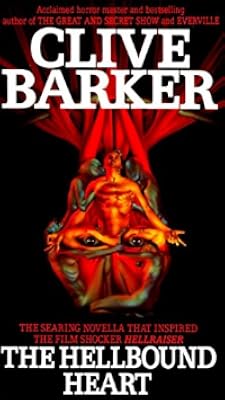
Extremely disappointing. All of Clive Barker's usual themes are certainly present: nonjudgmental eroticism, visceral body-horror, religious revelation; but they are in service of a sloppily assembled and meandering storyline. His [b: Books of Blood|761023|Books of Blood Volume One (Books of Blood #1)|Clive Barker|https://images.gr-assets.com/books/1429999423s/761023.jpg|1249260] delivered these themes with a breathtaking mastery, [b: The Hellbound Heart|52635|The Hellbound Heart|Clive Barker|https://images.gr-assets.com/books/1327312426s/52635.jpg|1093522] and its movie adaptation can at least commit to a brutally Sadeian purpose. The are some excellent ideas and some genuinely demented images in The Great and Secret Show, but the way show more it flails around is frustrating. I spent all this time committing to a door-stopper epic, only to learn too late that maybe I should've tried [b: Imajica|567704|Imajica|Clive Barker|https://images.gr-assets.com/books/1333844729s/567704.jpg|1371342] or [b: Weaveworld|52640|Weaveworld|Clive Barker|https://images.gr-assets.com/books/1329374451s/52640.jpg|942564] instead. show less
I should have known from the beginning, with my general distaste for fictional conspiracy theories, that I would throw this book across the room in frustration before too long. As usual, I finished the whole thing despite the intense eye-rolling it engendered. I prefer characters that seem more human than godlike wannabes.
Clive Barker......what can you say? Be prepared to be carried off into his personal little hell and don't make the mistake of expecting him to bring you back. He is not as nice as Koontz. Clive is a Faust of the highest degree. His writing is deep and personal. I honestly think he is a Cenobite.
Members
- Recently Added By
Lists

Best Fantasy Novels
821 works; 361 members

Jones & Newman: Best Horror Books Further Recommended Reading
577 works; 4 members

Other Wizard Fiction
45 works; 1 member

BlackDog's Complete Paperbacks From Hell List
639 works; 3 members
Author Information

381+ Works 57,041 Members
Critics of the horror story have frequently called Clive Barker the "British Stephen King". Born in Liverpool in 1952, Barker attended the University of Liverpool but moved to London in 1977, where he worked as a commercial artist and became involved with the avant-garde theatrical community. Primarily a playwright during this period, he also show more produced short fiction that he would eventually publish as part of his six-volume collection titled Books of Blood (1984-85). More than any other author of contemporary horror fiction, Barker has had a major impact on the direction of the genre. He has introduced strong elements of sex and graphic violence into his fiction, but these elements are employed with an artistic objective. Barker underscores his work with complex subtextual metaphors and artistic allusions. Preoccupied with the craft of writing and with its effect on the reader, Barker is an innovator of formula and genre, often parodying the former in order to change the philosophical contour of the latter. Barker has achieved commercial success not only with his short fiction but also with his novels, which tend to be epic in scope and to blend elements of horror with those of high fantasy. Barker is one of the more influential voices in horror cinema, having written and directed a number of films. His printed works include The Candle in the Cloud, Absolute Midnight, The Scarlet Gospels, and Black is the Devil's Rainbow: Tales of a Journeyman. His films include Dread, Tortured Souls: Animae Damanatae, and Hellraiser. (Bowker Author Biography) Clive Barker was born in October, 1952, in Liverpool, England, and graduated from Liverpool University. While a student, the resourceful Barker formed a theater company as an outlet for his career as a budding playwright. After minor success with several plays such as "Frankenstein in Love," Barker vaulted onto the horror fiction scene with the publication of his short stories, "The Books of Blood." Later books such as "The Damnation Game," "Imajica," and "Everville" have further established his reputation as a Master of Horror. Barker gained further popularity with several motion picture projects. Unhappy with previous film versions of his works, he chose to direct the successful movie "Hellraiser," which generated a string of sequels. In addition to writing and directing, Barker has produced several of the movies in both the "Hellraiser" and "Candyman" series. Besides his writing and film activities, the multitalented Barker is an actor and illustrator, with several published volumes of his artwork. Barker is a recipient of British Fantasy awards and a World Fantasy award, and resides in Los Angeles. (Bowker Author Biography) show less
Some Editions
Awards and Honors
Awards
Series

Belongs to Publisher Series
Pocket (9118)
Gallimard, Folio SF (359)
Work Relationships
Contains
Has the adaptation
Common Knowledge
- Canonical title
- The Great and Secret Show
- Original title
- The Great and Secret Show; Secret Show
- Original publication date
- 1989
- People/Characters
- Harry D'Amour; Randolph Jaffe; Kissoon; Fletcher; Trudi Katz; Howard Katz (show all 12); Joyce McGuire; Jo-Beth McGuire; Tommy Ray McGuire; Buddy Vance; Grillo ; Tesla
- Important places
- Sea of Quiddity; Palamo Grove, California, USA
- Epigraph
- Memory, prophesy and fantasy—
the past, the future and
the dreaming moment between—
are all one country,
living one immortal day.
To know that is wisdom.
To use it is the Art. - First words
- Homer opened the door.
- Last words
- (Click to show. Warning: May contain spoilers.)But until the light came - until the real insisted upon their imaginations - they stood watching the darkness, waiting, half in hope and half in fear, for that other sea to rise from dreams and claim them from the shore.
- Original language*
- English UK
- Canonical DDC/MDS
- 823.914
- Canonical LCC
- PR6052.A6475
*Some information comes from Common Knowledge in other languages. Click "Edit" for more information.
Classifications
Statistics
- Members
- 3,524
- Popularity
- 4,680
- Reviews
- 21
- Rating
- (3.85)
- Languages
- 12 — Czech, Dutch, English, French, German, Greek, Italian, Polish, Russian, Spanish, Swedish, Turkish
- Media
- Paper, Audiobook, Ebook
- ISBNs
- 45
- ASINs
- 25