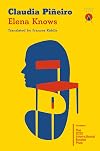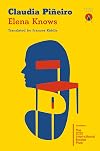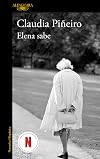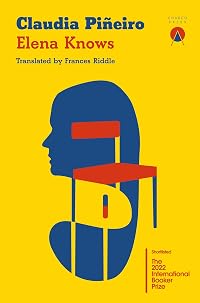
Elena Knows
by Claudia Piñeiro
On This Page
Description
SHORTLISTED for the International Booker Prize 2022 After Rita is found dead in a church she used to attend, the official investigation into the incident is quickly closed. Her sickly mother is the only person still determined to find the culprit. Chronicling a difficult journey across the suburbs of the city, an old debt and a revealing conversation, Elena Knows unravels the secrets of its characters and the hidden facets of authoritarianism and hypocrisy in our society.Tags
Recommendations



























Member Reviews
Helplessness permeates Pineiro's work. Elena, becoming shackled to immobility due to a degenerative disease must navigate the world anew with her daughter and caretaker, Rita. Their interactions are fraught, marred by their proximity and Elena’s illness (personified as Her), which requires Rita to pay round-the-clock attention to her mother. This is not to be, as Rita is found dead, hung in the belfry of a church in what the state believes is a suicide but what Elena believes to be a murder.
What follows is a journey through a day in Elena’s life as she tries to call in a favour from a lady, Isabel, which requires Elena to take transit from her residence to the other side of Buenos Aires. Regimented by medication, she faces the show more prospect of entrapment, an inability to move from any given point due to her medication as she attempts to make what should be a short journey, but to Elena, seems an eternity.
The novel, interspersed with anecdotes from her time with Rita, her interactions with government and Rita’s part. Pineiro seamlessly weaves tales of Elena and Rita battling with her insurers to get the medication she needs, to filtering through the Sisyphean process of getting a disability certificate, to Rita’s disgust at her mother’s newfound defencelessness, making Elena wear bibs and go to the salon to beautify herself, making the disease palatable for Rita to look at, all but to name a few. Throughout this Rita faces immense isolation, a realization that Elena has at the very end of the novel, where Isabela tells Elena that people are often forced by their circumstances to do things that they would have previously never considered.
This is not a typical tale from the crime shelves. This is possibly one of the best things I have read in years: it is a multifaceted exploration of illness, family, government and grief, while underscoring the importance of bodily autonomy and the dangers of its violation. 5/5 stars. show less
What follows is a journey through a day in Elena’s life as she tries to call in a favour from a lady, Isabel, which requires Elena to take transit from her residence to the other side of Buenos Aires. Regimented by medication, she faces the show more prospect of entrapment, an inability to move from any given point due to her medication as she attempts to make what should be a short journey, but to Elena, seems an eternity.
The novel, interspersed with anecdotes from her time with Rita, her interactions with government and Rita’s part. Pineiro seamlessly weaves tales of Elena and Rita battling with her insurers to get the medication she needs, to filtering through the Sisyphean process of getting a disability certificate, to Rita’s disgust at her mother’s newfound defencelessness, making Elena wear bibs and go to the salon to beautify herself, making the disease palatable for Rita to look at, all but to name a few. Throughout this Rita faces immense isolation, a realization that Elena has at the very end of the novel, where Isabela tells Elena that people are often forced by their circumstances to do things that they would have previously never considered.
This is not a typical tale from the crime shelves. This is possibly one of the best things I have read in years: it is a multifaceted exploration of illness, family, government and grief, while underscoring the importance of bodily autonomy and the dangers of its violation. 5/5 stars. show less
Elena is dying by inches. Her world is shrinking as Parkinson's makes walking, lifting her arms, raising her head, and every ignoble daily process nearly impossible. Her daughter had been her primary caretaker, but she died recently, and Elena is determined to find her killer. The book opens with Elena's second dose of levodopa in the morning as she prepares to reach the one person she thinks can help her solve the mystery of her daughter's death. Once the medication takes hold, Elena is able to shuffle along, but only as long as the dose lasts. The book ends that afternoon, after her fourth pill.
Although much of the plot centers around Elena's illness and the death of her daughter, the themes are much broader. To what extent do women show more have control over their own bodies? How do societal mores, religious beliefs, politics, and illness transgress on that control? What does it mean to be a mother, and what does it mean when a woman doesn't want to be a mother? Are you still a mother after your child dies? Can you give birth and not be a mother? Do mothers by definition know their children best?
Despite the premise, and the author's previous works, this is not a crime novel, but the story of mothers and daughters, illness, and the fallibility of the very things we think we know best. I found it engaging, thought-provoking, and surprising. Recommended. show less
Although much of the plot centers around Elena's illness and the death of her daughter, the themes are much broader. To what extent do women show more have control over their own bodies? How do societal mores, religious beliefs, politics, and illness transgress on that control? What does it mean to be a mother, and what does it mean when a woman doesn't want to be a mother? Are you still a mother after your child dies? Can you give birth and not be a mother? Do mothers by definition know their children best?
Despite the premise, and the author's previous works, this is not a crime novel, but the story of mothers and daughters, illness, and the fallibility of the very things we think we know best. I found it engaging, thought-provoking, and surprising. Recommended. show less
Trapped in a Body
One would not normally find this book to be one that broke an “unable to concentrate” phase, but I was engrossed in Elena Knows from its very beginning.
Elena Knows. Knows what? At first I thought the title was a weird translation from Argentinian Spanish, but no, it’s spot on. Elena sabe.
Elena is severely physically disabled from Parkinson’s disease. She can barely walk and her whole body is disfigured. The most disabled for normal everyday functioning is the painful walking, difficulty in eating, the constant unattractive drooling, and the inability to raise her head which is forever tilted down. She can’t see faces, and people turn away from hers.
Elena needs 24 hour care. She can manage tasks like shopping show more but it’s a huge effort. She’s aware like all of us, of how people see her. She’s looked after by her daughter Rita who has assisted her in daily living. Rita is cold and we feel she’s doing the care from duty rather than love.
When the book starts we realize that Rita has died. She was the found hanging from a rope in the local church’s belfry and the police, her priest, and every one in her suburb of Buenos Aires assume suicide. But Elena knows otherwise.
Elena believes that Rita was murdered. There had been a thunderstorm that day and Rita had been suspicious of storms and would never go to church in the middle of one. Elenor begins to investigate the true cause of Rita’s death. Elena knows.
Throughout the book there are flashbacks to life before Rita’s death. We learn of an act of well-intended kindness to a young woman and of a fraught vacation of Elena and Rita, both years before Elena’s Parkinson’s had developed. We learn details of the two women’s domestic life coping with the debilitating effects of the disease.
Elena’s investigation is relentless. Despite her disabilities Elena is determined to find the real cause of her daughter’s death. It involves a grueling trip across the capital all alone, to a house she knows only by a single sighting decades ago. As Elena cannot see straight ahead or move with ease, we feel her pain as she struggles to use trains and taxis.
To go further into the plot would spoil the book for first-time readers. This is not a simple story of one woman’s struggle with Parkinson’s. Written before abortion was legalized in Argentina in 2020 , the issue of women’s bodies and their ownership, hover in the background as sub-text.
Claudia Piñeiro is known in Argentina as the Queen of Crime writers, but Elena Knows is not your typical crime novel. It’s confronting, disturbing and sheds light on western society’s treatment of the aged and disabled. We have to read to the very end to find the crime, or if there was one. Eleano knows. Or does she?
Highly recommended with 4.5 stars. show less
One would not normally find this book to be one that broke an “unable to concentrate” phase, but I was engrossed in Elena Knows from its very beginning.
Elena Knows. Knows what? At first I thought the title was a weird translation from Argentinian Spanish, but no, it’s spot on. Elena sabe.
Elena is severely physically disabled from Parkinson’s disease. She can barely walk and her whole body is disfigured. The most disabled for normal everyday functioning is the painful walking, difficulty in eating, the constant unattractive drooling, and the inability to raise her head which is forever tilted down. She can’t see faces, and people turn away from hers.
Elena needs 24 hour care. She can manage tasks like shopping show more but it’s a huge effort. She’s aware like all of us, of how people see her. She’s looked after by her daughter Rita who has assisted her in daily living. Rita is cold and we feel she’s doing the care from duty rather than love.
When the book starts we realize that Rita has died. She was the found hanging from a rope in the local church’s belfry and the police, her priest, and every one in her suburb of Buenos Aires assume suicide. But Elena knows otherwise.
Elena believes that Rita was murdered. There had been a thunderstorm that day and Rita had been suspicious of storms and would never go to church in the middle of one. Elenor begins to investigate the true cause of Rita’s death. Elena knows.
Throughout the book there are flashbacks to life before Rita’s death. We learn of an act of well-intended kindness to a young woman and of a fraught vacation of Elena and Rita, both years before Elena’s Parkinson’s had developed. We learn details of the two women’s domestic life coping with the debilitating effects of the disease.
Elena’s investigation is relentless. Despite her disabilities Elena is determined to find the real cause of her daughter’s death. It involves a grueling trip across the capital all alone, to a house she knows only by a single sighting decades ago. As Elena cannot see straight ahead or move with ease, we feel her pain as she struggles to use trains and taxis.
To go further into the plot would spoil the book for first-time readers. This is not a simple story of one woman’s struggle with Parkinson’s. Written before abortion was legalized in Argentina in 2020 , the issue of women’s bodies and their ownership, hover in the background as sub-text.
Claudia Piñeiro is known in Argentina as the Queen of Crime writers, but Elena Knows is not your typical crime novel. It’s confronting, disturbing and sheds light on western society’s treatment of the aged and disabled. We have to read to the very end to find the crime, or if there was one. Eleano knows. Or does she?
Highly recommended with 4.5 stars. show less
And, if you're reading this, pardon my language. Because holy fuck. This book kicked me in the chest. Hard.
It takes place over just one day when Elena, a 65-year-old suffering from debilitating Parkinson's, is working to further the investigation into who killed her daughter (who was found hanging in the church belfry). Officially, the ruling is suicide, but "Elena knows" that wouldn't be the case. She is determined to push the police to investigate further.
This story takes place over a slow-moving day, as you are stuck on Elena's timetable of barely moving (due to Parkinson's), meting out the plans & actions of her day by the pills she can take to give her very limited mobility for short amounts of time. Elena
But, really, the crime is not the point of the story. It's a frame for investigating so many fucking hard things. Fucking hard things that women especially face in this man's world we live in: women's fight to control their own bodies, the horrors of enduring a progressive, disabling disease (or being the caretaker & watching it all happen in excruciating slo-mo), investigating the roles of being a woman &/or a mother (what do those even mean?), rape, the way society brushes aside the elderly & disabled, & so many more big things.
This is a slim book that packs an extremely powerful punch. Worthwhile but you will be bruised. Just... fuck.
Elena knows for certain her daughter did not end her own life. They found her on a rainy day, and she was terrified of the rain. But there are no leads, no-one believes her, and Elena's Parkinson's disease is going to try its hardest to stop her.
This book warns of the dangers of certainty, and using what society tells you-- that you may not even believe deep down-- to hurt others. The conflicts revolve around bodily autonomy, especially the bodies of women who must make difficult choices. Whether this be fighting to stay "yourself" in a body that is trying to kill you, fighting others who want to make choices for you, or fighting to live with the guttural fear that comes from a life of constant change and burden.
"Are you your brain, show more which keeps sending out orders that won’t be followed? Or are you the thought itself, something that can’t be seen or touched beyond that furrowed organ guarded inside the cranium like a trove? Elena doesn’t subscribe to the notion that a person without a body is a soul, because she doesn’t believe in the soul or in eternal life. Even though she’s never dared to admit that to anyone. She barely even admitted it to herself, once she was unable to lie anymore." show less
This book warns of the dangers of certainty, and using what society tells you-- that you may not even believe deep down-- to hurt others. The conflicts revolve around bodily autonomy, especially the bodies of women who must make difficult choices. Whether this be fighting to stay "yourself" in a body that is trying to kill you, fighting others who want to make choices for you, or fighting to live with the guttural fear that comes from a life of constant change and burden.
"Are you your brain, show more which keeps sending out orders that won’t be followed? Or are you the thought itself, something that can’t be seen or touched beyond that furrowed organ guarded inside the cranium like a trove? Elena doesn’t subscribe to the notion that a person without a body is a soul, because she doesn’t believe in the soul or in eternal life. Even though she’s never dared to admit that to anyone. She barely even admitted it to herself, once she was unable to lie anymore." show less
It was such a profoundly painful read. We follow Elena through one day of her life as she goes on a quest to find answers for the death of her daughter Rita. We follow her timeline marked by her pill schedule as she suffers from an advanced stage of Parkinson's that has left her looking down with no control over her body.
Barely 130 pages long, this book manages to paint a painfully intimate picture of Parkinson's disease as Elena goes about her quest thinking about her complex relationship with daughter as Rita deals caregiver's fatigue along with deep commentary on having ownership over your body in the context of a crippling disease, abortion and suicide with the looming presence of
A big theme of this book is belief and faith. Elena believes and has faith that Rita couldn't have committed suicide because it was raining and Rita did not go to the Church, where her body was found hanging, when it rained. She was terrified of lightning and believed that she will be struck by lightning in the Church. When Rita (and Elena) stopped Isabelle from getting an abortion because they believed in the transformative power of motherhood, that all women who get abortions regret it and that all women yearn to be mothers. All these beliefs do prove to be untrue. Elena doesn't know Rita. Rita didn't get struck by lightning so she had to hang herself. Isabelle regrets having the baby and she never wanted to be a mother at all.
Short, dark. Well done, but so bleak... this is the second novel in a row I've read with an elderly woman character who has Parkinson's disease, but in this one it's more of a sentence, a punishment. There are a few big topics in play here, including bodily autonomy (abortion, illness) and emotional autonomy, the perils of withholding, what makes a bad mother. It was interesting to read this up against a reread of Tillie Olsen's "I Stand Here Ironing," thinking about all the different ways to write that enormous subject of motherhood.
There's also a mystery, but not really of the "aha" variety in the end.
There's also a mystery, but not really of the "aha" variety in the end.
Members
- Recently Added By
Lists

Books Read in 2022
5,226 works; 115 members

Top Five Books of 2023
767 works; 317 members

Books We Discovered On LibraryThing
530 works; 130 members

Books Read in 2026
2,133 works; 70 members
Author Information

Some Editions
Awards and Honors
Series
Belongs to Publisher Series
Common Knowledge
- Canonical title
- Elena Knows
- Original title
- Elena sabe
- Original publication date
- 2007
- People/Characters
- Elena; Rita; Roberto Almada; Padre Juan; Dr Benegas; Benito Avellaneda (show all 7); Isabel Mansilla
- Important places
- Buenos Aires, Argentina
- Dedication
- To my mother
- First words
- The trick is to lift up the right foot, just a few centimetres off the floor, move it forward through the air, just enough to get past the left foot, and when it gets as far as it can go, lower it.
- Last words
- (Click to show. Warning: May contain spoilers.)Maybe.
- Original language
- Spanish
Classifications
- Genres
- Fiction and Literature, General Fiction, Mystery
- DDC/MDS
- 863.7 — Literature & rhetoric Spanish Literature Spanish fiction 21st Century
- LCC
- PQ7798.426 .I56 .E54 — Language and Literature French, Italian, Spanish and Portuguese literatures Spanish literature Provincial, local, colonial, etc. Spanish America
- BISAC
Statistics
- Members
- 594
- Popularity
- 49,746
- Reviews
- 32
- Rating
- (4.13)
- Languages
- 8 — Dutch, English, French, German, Italian, Portuguese, Romanian, Spanish
- Media
- Paper, Audiobook, Ebook
- ISBNs
- 22
- ASINs
- 4