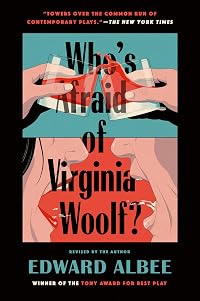
Who's Afraid of Virginia Woolf?
by Edward Albee
On This Page
Description
George, a disillusioned academic, and Martha, his caustic wife, have just come home from a faculty party. When a handsome young professor and his mousy wife stop by for a nightcap, an innocent night of fun and games quickly turns dark and dangerous. Long-buried resentment and rage are unleashed as George and Martha turn their rapier-sharp wits against each other, using their guests as pawns in their verbal sparring. By night's end, the secrets of both couples are uncovered and the lies they show more cling to are exposed. Considered by many to be Albee's masterpiece, "Who's Afraid of Virginia Woolf?" is a "brilliantly original work of art -- an excoriating theatrical experience, surging with shocks of recognition and dramatic fire" ("Newsweek"). show lessTags
Recommendations

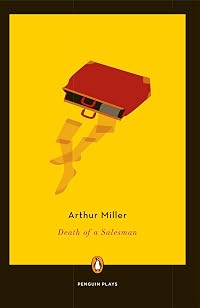
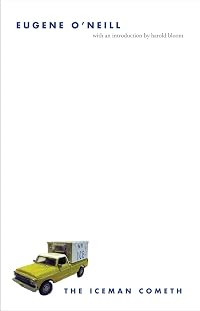

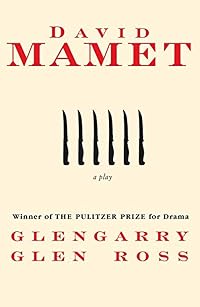


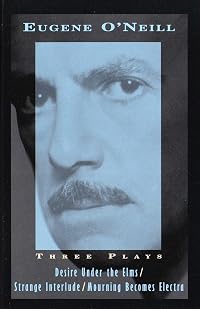
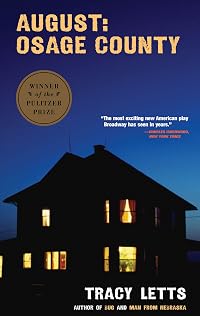
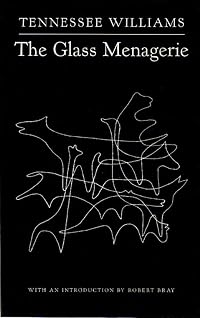
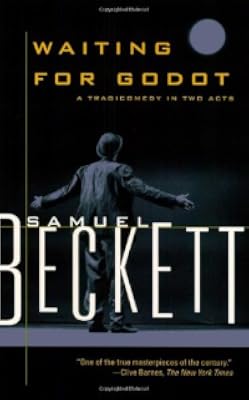
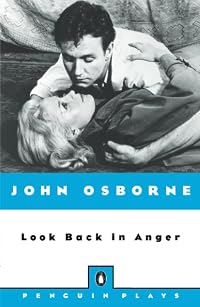
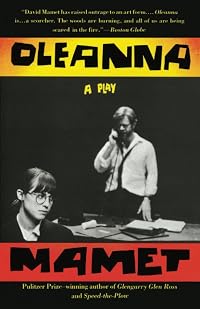
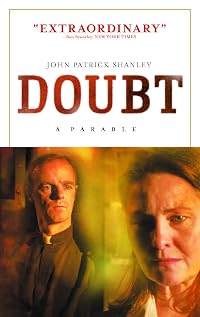
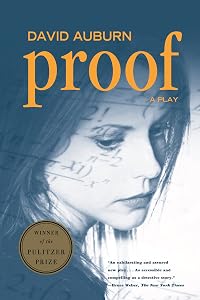
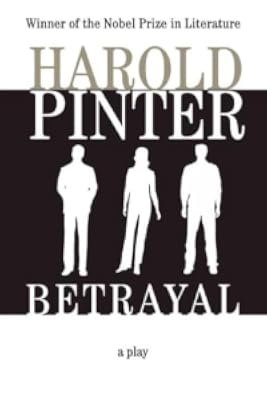
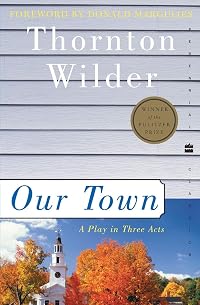
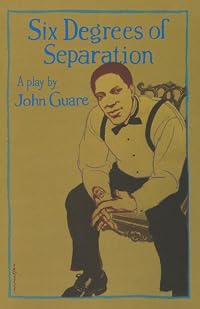

Member Recommendations
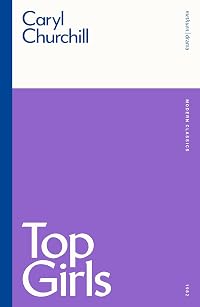
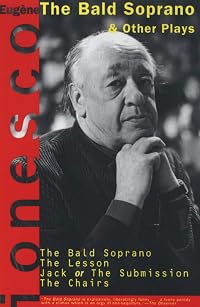
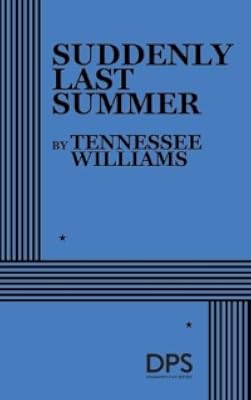
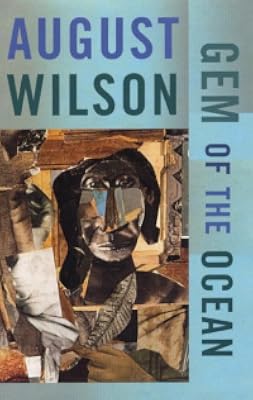
aulsmith Two plays of dysfunctional marriages

Member Reviews
I have seen the film version of "Who's Afraid of Virginia Woolf" many times, which follows the play very closely, with the exception of some locale changes. I am still astounded by this play, and the fact that its central mystery, no matter how many times I read it, will never be uncovered. It is a play that is simultaneously avant-garde and accessible, that cuts through the pretension that exists in most "Broadway-worthy" dramatic work that came before it, and that has come after. WAOVW shows, more effectively than any other play I know, how people behave when their masks are supposedly off--when other, deeper layers of defenses are revealed. Although in the script, Martha and George do admit to being childless, to never having had the show more "son" they speak so much of--whether or not he ever existed can never truly be known. Because George and Martha are such expert game-players, constantly trying to fool themselves, and each other--the "truth" gets lost in that process. This play has been labeled a "dark comedy", but I would call it a "tragicomedy". This work is also very reflective of the early 1960's when it was written--when the social constraints of the 1950's were being sloughed off, and the swinger movement had entered the mainstream. However--George and Martha, or at least Martha, are so far from the stereotype of "swingers" that to label their characters as such would be an insult. As much as both of them are down to earth, they are also academics (or at least a "closet academic" in Martha's case).
The play is essentially "a performance within a performance"; the characters put on their party hats and play the roles of "party personalities", displaying all the faults and enthusiasms of cruel children. George and Martha are the Alpha-Couple, with Martha being the "Alpha Female"--or so it seems. Nonetheless--although George is consistently hounded by Martha--George also wields power in the relationship. In the end, both George and Martha play the fool; yet beneath their chaotic facades, both possess considerable wisdom. They are just trying to get through life; they are failures; they are laughing at themselves; still, one wishes that it could be so much better for them. If life is truly as ugly as the example provided by WAOVW--what other choice do they have, than to be as they are, and go on as they have been? Although the relationship as it is displayed in "Who's Afraid of Virginia Woolf" make it appear that George and Martha have a hellish relationship, that may not actually be the case. The end of the play indicates a capacity on both their parts to, at least temporarily, makes peace with their tragedy, and with each other, thus making it bearable for them to go on living, with themselves and with one another. show less
The play is essentially "a performance within a performance"; the characters put on their party hats and play the roles of "party personalities", displaying all the faults and enthusiasms of cruel children. George and Martha are the Alpha-Couple, with Martha being the "Alpha Female"--or so it seems. Nonetheless--although George is consistently hounded by Martha--George also wields power in the relationship. In the end, both George and Martha play the fool; yet beneath their chaotic facades, both possess considerable wisdom. They are just trying to get through life; they are failures; they are laughing at themselves; still, one wishes that it could be so much better for them. If life is truly as ugly as the example provided by WAOVW--what other choice do they have, than to be as they are, and go on as they have been? Although the relationship as it is displayed in "Who's Afraid of Virginia Woolf" make it appear that George and Martha have a hellish relationship, that may not actually be the case. The end of the play indicates a capacity on both their parts to, at least temporarily, makes peace with their tragedy, and with each other, thus making it bearable for them to go on living, with themselves and with one another. show less
The dialog in this play is brilliant, fast-paced and biting. Both hilarious and painful to watch/read. The thing about it that really kills me though is when Martha is talking to Nick and asks who he thinks is the only man who's made her happy and he guesses one of her affairs, but she says "George, my husband." So heartbreaking what we do to someone we love and what we put up with from someone we love.
I might have started off this review by talking about the inextricable link between humour and gut-wrenching sorrow in this play, but luckily one of the characters has already done it for me:
Indeed you can. And George and Martha play it both ways, backwards and forwards and up and down, taking a perverse pleasure in airing their dirty laundry in front of an audience: the young couple, Nick and Honey, who are at first embarrassed and later too entangled (horrified? show more amused? absorbed?) to leave. And we, too, as an audience, can’t look away from the fiery wreck of Martha and George’s marriage—it’s nasty, it’s explosive, it’s cruel, it’s embarrassing, but it’s undeniably fascinating. Partially because of their unrestrained hatred, and partially because at the bottom of it there’s real feeling, which keeps the sense of tragedy alive and well throughout the play’s runtime.
An evening that is at first merely awkward becomes downright hellish, as we’re treated to a vision of domestic inferno where George and Martha work as each other’s perfectly tuned instruments of torture. They know each other better than anyone else, and they load up each other’s flaws and secrets into their bows to shoot out like arrows from across the room. But the cruel, clever, bitter, corrosive genius of this play is that George and Martha don’t just require spectators—they want participants. Honey and Nick are drawn into their bloodbath, maybe out of a sense of politeness at first but later forced to stay because they’ve got skin in the game too, George and Martha have got the goods on their relationship and won’t hesitate to use it as ammo to add some spice to their sick little games, regardless of the pain they leave in their wake. The bitterness at the heart of George and Martha’s relationship is contagious, and it slowly creeps into and overtakes every line of dialogue, every interaction.
Speaking of dialogue, that’s really what put Who’s Afraid of Virginia Woolf over the top for me, in terms of giving it five stars—Edward Albee truly has an ear for the nuances of dialogue in that I never had to check who was speaking, every voice was very clear and distinct. And as the characters get steadily more inebriated, their dialogue becomes surprisingly realistic drunk person dialogue, from the sudden bursts of anger or childish delight to the moody periods of melancholy and bitter reminiscence and ugly combativeness. Top-notch writing from Albee here, which makes this play as riveting to read as it would be to experience on the stage or screen.
But man, if ever a work of fiction has strengthened my desire to never be married... show less
NICK: All right... what do you want me to say? Do you want me to say it’s funny, so you can contradict me and say it’s sad? Or do you want me to say it’s sad so you can turn around and say no, it’s funny. You can play that damn little game any way you want to, you know!
Indeed you can. And George and Martha play it both ways, backwards and forwards and up and down, taking a perverse pleasure in airing their dirty laundry in front of an audience: the young couple, Nick and Honey, who are at first embarrassed and later too entangled (horrified? show more amused? absorbed?) to leave. And we, too, as an audience, can’t look away from the fiery wreck of Martha and George’s marriage—it’s nasty, it’s explosive, it’s cruel, it’s embarrassing, but it’s undeniably fascinating. Partially because of their unrestrained hatred, and partially because at the bottom of it there’s real feeling, which keeps the sense of tragedy alive and well throughout the play’s runtime.
An evening that is at first merely awkward becomes downright hellish, as we’re treated to a vision of domestic inferno where George and Martha work as each other’s perfectly tuned instruments of torture. They know each other better than anyone else, and they load up each other’s flaws and secrets into their bows to shoot out like arrows from across the room. But the cruel, clever, bitter, corrosive genius of this play is that George and Martha don’t just require spectators—they want participants. Honey and Nick are drawn into their bloodbath, maybe out of a sense of politeness at first but later forced to stay because they’ve got skin in the game too, George and Martha have got the goods on their relationship and won’t hesitate to use it as ammo to add some spice to their sick little games, regardless of the pain they leave in their wake. The bitterness at the heart of George and Martha’s relationship is contagious, and it slowly creeps into and overtakes every line of dialogue, every interaction.
Speaking of dialogue, that’s really what put Who’s Afraid of Virginia Woolf over the top for me, in terms of giving it five stars—Edward Albee truly has an ear for the nuances of dialogue in that I never had to check who was speaking, every voice was very clear and distinct. And as the characters get steadily more inebriated, their dialogue becomes surprisingly realistic drunk person dialogue, from the sudden bursts of anger or childish delight to the moody periods of melancholy and bitter reminiscence and ugly combativeness. Top-notch writing from Albee here, which makes this play as riveting to read as it would be to experience on the stage or screen.
But man, if ever a work of fiction has strengthened my desire to never be married... show less
Read: October 2016
Rating: 2/5 stars
The play covers one late night encounter between two couples who on the surface of things couldn't be more different. George and Martha are older, middle-aged and with horrible, bitter feelings towards each other. They are so spiteful and hateful but I think the behaviour portrayed seems realistic for a long term, unhappy marriage. They are co-dependant and miserable yet don't do anything to change their lives or marriage for the better.
The younger couple are newly-weds in their twenties and they have been invited to Martha and George's house for a late night drink. At first you assume that Nick and Honey are the couple to 'root for' in the drama. They seem happy and well adjusted on the surface but it show more is soon revealed that in their own ways they are just as bitter, unhappy and spiteful as their older counterparts.
The reason for my low rating is that although technically I can see that Who's Afraid of Virginia Woolf is well-written and dramatic with these brilliantly awful characters, I just didn't like it. I think Albee wanted the audience for his play to feel uncomfortable, like they were witnessing something distasteful and personal and in that respect he succeeded too well because it was a relief to finish this play and move on to something else. show less
Rating: 2/5 stars
The play covers one late night encounter between two couples who on the surface of things couldn't be more different. George and Martha are older, middle-aged and with horrible, bitter feelings towards each other. They are so spiteful and hateful but I think the behaviour portrayed seems realistic for a long term, unhappy marriage. They are co-dependant and miserable yet don't do anything to change their lives or marriage for the better.
The younger couple are newly-weds in their twenties and they have been invited to Martha and George's house for a late night drink. At first you assume that Nick and Honey are the couple to 'root for' in the drama. They seem happy and well adjusted on the surface but it show more is soon revealed that in their own ways they are just as bitter, unhappy and spiteful as their older counterparts.
The reason for my low rating is that although technically I can see that Who's Afraid of Virginia Woolf is well-written and dramatic with these brilliantly awful characters, I just didn't like it. I think Albee wanted the audience for his play to feel uncomfortable, like they were witnessing something distasteful and personal and in that respect he succeeded too well because it was a relief to finish this play and move on to something else. show less
Teszkó gazdaságos pokol: két ember elég a fenntartásához. Persze egymás kifilézésének élménye hatványozható, ha új személyeket vonunk be, a célnak pedig épp megfelel a biológia tanszék ifjú üdvöskéje: a tipikus WASP jócsávó, illetve hamvas felesége. Mert a pokol nézőközönség nélkül – úgy fest – nem is pokol igazán.
Amikor az első felvonás végén a függöny legördült, azon tépelődtem, hová lehet ezt még fokozni. Martha és George olyan mély sebeket ejtett egymáson, olyan félelmetes elszántsággal és pervertált intelligenciával csinálták ki egymást (mindezt a vendégek, Honey és Nick szeme előtt), olyan piszkos titkok bukkantak felszínre, hogy annál már – gondoltam – show more nincs lejjebb. Vajon mit tartogat nekünk még Albee?
1.) Rátesz egy lapáttal arra, amire rátenni nem lehet, és a párkapcsolati emberkínzás eddig ismeretlen szintjére vezet minket? Olyan mocskos titkokat bányász elő a lélek mélyéről, amelyeket elképzelni sem tudunk?
2.) A kicsinálást Martha és George személyéről áthelyezi Honeyra és Nickre, így a nézőből résztvevő válik? Valahogy úgy, mintha elmentél volna egy boxmeccsre, és hirtelen téged rángatnának be a szorítóba, hogy orrba csűrjenek?
3.) Esetleg az egymáspusztítás zenitjén az egész irányt vált, és megtudunk valamit a gyűlölet mélyén rejlő szeretetről?
A helyzet az, hogy Albee voltaképpen mindhármat megteszi. És pont ezért zseniális.
Nagyszerű dráma, a leghatásosabbak egyike. Olyan ereje van, hogy még a kissé avítt fordítást is majdnem feledteti. Nem lettem volna ott, ahol Albee az ihletet kapta. show less
Amikor az első felvonás végén a függöny legördült, azon tépelődtem, hová lehet ezt még fokozni. Martha és George olyan mély sebeket ejtett egymáson, olyan félelmetes elszántsággal és pervertált intelligenciával csinálták ki egymást (mindezt a vendégek, Honey és Nick szeme előtt), olyan piszkos titkok bukkantak felszínre, hogy annál már – gondoltam – show more nincs lejjebb. Vajon mit tartogat nekünk még Albee?
1.) Rátesz egy lapáttal arra, amire rátenni nem lehet, és a párkapcsolati emberkínzás eddig ismeretlen szintjére vezet minket? Olyan mocskos titkokat bányász elő a lélek mélyéről, amelyeket elképzelni sem tudunk?
2.) A kicsinálást Martha és George személyéről áthelyezi Honeyra és Nickre, így a nézőből résztvevő válik? Valahogy úgy, mintha elmentél volna egy boxmeccsre, és hirtelen téged rángatnának be a szorítóba, hogy orrba csűrjenek?
3.) Esetleg az egymáspusztítás zenitjén az egész irányt vált, és megtudunk valamit a gyűlölet mélyén rejlő szeretetről?
A helyzet az, hogy Albee voltaképpen mindhármat megteszi. És pont ezért zseniális.
Nagyszerű dráma, a leghatásosabbak egyike. Olyan ereje van, hogy még a kissé avítt fordítást is majdnem feledteti. Nem lettem volna ott, ahol Albee az ihletet kapta. show less
Toxic Love
A review of the Berkley paperback (May 2022) revised by the author from the original Atheneum hardcover (1962).
I read the play before seeing a recent production here in Toronto. It read very bitter and desperate on the page, but I was surprised at how funny it played on stage, at least in the 1st Act. Things turn much nastier in the 2nd and 3rd Acts until the pathos of the final show more reveal. The ending has its own moment of tenderness which you can interpret as a possible awakening to a life without illusions... or will the fun and games continue with a brand new tragic subplot?
See photographat https://scontent-yyz1-1.xx.fbcdn.net/v/t39.30808-6/479258395_29518285527770185_3...
The cast of the 2025 Canadian Stage production at curtain call.
Embittered late middle age couple George and Martha come home from an academia party at their University at 2 a.m. Martha has invited younger couple Honey and Nick over for a nightcap. George is initially frustrated but soon manipulates the scene by playing out the bitterness of their marriage in front of the newcomers. George is a history professor and Nick is a newly appointed member of the biology faculty. There are hints throughout that not all of what Martha and George are saying is true-to-life, but the final reveal is still a gut-punch.
Considering that the play is from 1962 it felt rather uncanny that various phrases or topics had a chilling echo to them in present day early 2025 here in North America. There was mention of "diversity", a repeated chorus of ICE ICE ICE (admittedly, they were talking about ice-cubes), a discussion of eugenics and the rise of a superman race where weaklings would be weeded out. These were brief mentions only, but suddenly had a foreboding feel as if Albee had predicted the future.
This was probably a 4-star on the page, but having seen a recent production I definitely feel like giving a 5-star rating.
See cover at https://images-na.ssl-images-amazon.com/images/S/compressed.photo.goodreads.com/...
The cover of the May 2022 Berkley paperback edition. Image sourced from Goodreads.
Trivia and Links
The trailer for the 2025 Canadian Stage production can be viewed here. The house program book can be read here.
The trailer for the 1966 movie adaptation directed by Mike Nichols and starring Elizabeth Taylor and Richard Burton can be viewed here. show less
A review of the Berkley paperback (May 2022) revised by the author from the original Atheneum hardcover (1962).
GEORGE (Barely contained anger now): You can sit there in that chair of yours, you can sit there with the gin running out of your mouth, and you can humiliate me, you can tear me apart ... ALL NIGHT ... and that's perfectly all right ... that's O.K. ...
MARTHA: YOU CAN STAND IT!
GEORGE: I CANNOT STAND IT!
MARTHA: YOU CAN STAND IT! YOU MARRIED ME FOR IT!
I read the play before seeing a recent production here in Toronto. It read very bitter and desperate on the page, but I was surprised at how funny it played on stage, at least in the 1st Act. Things turn much nastier in the 2nd and 3rd Acts until the pathos of the final show more reveal. The ending has its own moment of tenderness which you can interpret as a possible awakening to a life without illusions... or will the fun and games continue with a brand new tragic subplot?
See photographat https://scontent-yyz1-1.xx.fbcdn.net/v/t39.30808-6/479258395_29518285527770185_3...
The cast of the 2025 Canadian Stage production at curtain call.
Embittered late middle age couple George and Martha come home from an academia party at their University at 2 a.m. Martha has invited younger couple Honey and Nick over for a nightcap. George is initially frustrated but soon manipulates the scene by playing out the bitterness of their marriage in front of the newcomers. George is a history professor and Nick is a newly appointed member of the biology faculty. There are hints throughout that not all of what Martha and George are saying is true-to-life, but the final reveal is still a gut-punch.
Considering that the play is from 1962 it felt rather uncanny that various phrases or topics had a chilling echo to them in present day early 2025 here in North America. There was mention of "diversity", a repeated chorus of ICE ICE ICE (admittedly, they were talking about ice-cubes), a discussion of eugenics and the rise of a superman race where weaklings would be weeded out. These were brief mentions only, but suddenly had a foreboding feel as if Albee had predicted the future.
This was probably a 4-star on the page, but having seen a recent production I definitely feel like giving a 5-star rating.
See cover at https://images-na.ssl-images-amazon.com/images/S/compressed.photo.goodreads.com/...
The cover of the May 2022 Berkley paperback edition. Image sourced from Goodreads.
Trivia and Links
The trailer for the 2025 Canadian Stage production can be viewed here. The house program book can be read here.
The trailer for the 1966 movie adaptation directed by Mike Nichols and starring Elizabeth Taylor and Richard Burton can be viewed here. show less
I have to invent a new word after this play: sadvicious. As in, sad and vicious, ineluctably intertwined, till death do them part. There's also the wicked humor of the play, for which I don't have a new word, a heartbreaking hilarity that keeps pace with the emotional maelstrom. This is an absolutely brilliant work.
Members
- Recently Added By
Lists

Plays I Like
230 works; 31 members
r/acting on Reddit - Essential Plays
44 works; 2 members

Next Plays / 2025
352 works; 1 member

The Complete Rory Gilmore Reading List
506 works; 5 members
My Play Collection
769 works; 3 members

Recommended Reading : 600 Classics Reviewed, Editors of Salem Press, 2015
634 works; 6 members
Essential/Recognized Stage Plays
115 works; 4 members

Mustich's 1000 Books to Read Before You Die: A Life Changing List
1,001 works; 19 members

AP Lit
363 works; 6 members
1:28 p.m.'s 350 Stage Plays Challenge
94 works; 3 members

Rory Gilmore Book Club
193 works; 5 members

My Favourite Books
86 works; 5 members

Every Non-Musical Play Nominated for a Tony Award
64 works; 3 members

Books Featured on Gilmore Girls
307 works; 21 members
Stage Plays/Screenplays/Dialogues/Anything Dialogue-Storytelling Related
81 works; 2 members

1960s, Best books published therein
254 works; 22 members

Tom's Bookstore
346 works; 2 members

20th Century Literature
1,161 works; 55 members

Bibliotherapy: Family and Personal Social Issues
174 works; 5 members

Modernism
140 works; 8 members

Anti-heroines in fiction
59 works; 9 members
Blue Pyramid 1,276 Best Books of All Time
1,248 works; 32 members

Literary Works Read in College
316 works; 15 members
The Top Ten: Writers Pick Their Favorite Books
240 works; 31 members

Bibliography for How to be a Heroine
148 works; 12 members

Next Plays to Watch
50 works; 1 member
Author Information

105+ Works 11,151 Members
Edward Albee was born in Virginia on March 12, 1928. His first produced play, The Zoo Story, opened in Berlin in 1959 before playing at the Provincetown Playhouse in Greenwich Village the following year. In 1960, it won the Vernon Rice Memorial Award. In 1962, his Broadway debut, Who's Afraid of Virginia Woolf?, won a Tony Award for best play. It show more was adapted into a film starring Richard Burton and Elizabeth Taylor in 1966. He wrote about 30 plays during his lifetime including The Sandbox, The American Dream, The Death of Bessie Smith, All Over, and The Play About the Baby. He won the Pulitzer Prize three times for A Delicate Balance in 1966, Seascape in 1975, and Three Tall Women in 1991. Three Tall Women also received Best Play awards from the New York Drama Critics Circle and Outer Critics Circle. He won another Tony Award for The Goat, or Who Is Sylvia? and a Lifetime Achievement Tony Award in 2005. He had died after a short illness on September 16, 2016 at the age of 88. (Bowker Author Biography) show less
Some Editions
Awards and Honors
Awards
Distinctions
Series
Belongs to Publisher Series
Penguin Plays (PL61)
Work Relationships
Is contained in
Has the adaptation
Has as a student's study guide
Common Knowledge
- Canonical title
- Who's Afraid of Virginia Woolf?
- Original title
- Who's Afraid of Virginia Woolf?
- Original publication date
- 1962-10-13
- People/Characters
- Martha; George; Nick; Honey
- Important places
- New England, USA
- Related movies
- Who's Afraid of Virginia Woolf? (1966 | IMDb)
- Dedication
- Signé
- First words
- Set in darkness.
- Last words
- (Click to show. Warning: May contain spoilers.)MARTHA: I...am...George.... I...am... (George nods, slowly, Silence; tableau)
- Original language
- English
- Canonical DDC/MDS
- 812.54
- Canonical LCC
- PS3501.L178
- Disambiguation notice
- This LT work is the text edition of the play. Please do not combine the book with the movie. Thank you.
Classifications
Statistics
- Members
- 5,222
- Popularity
- 2,620
- Reviews
- 81
- Rating
- (4.00)
- Languages
- 12 — Dutch, English, Estonian, French, German, Hungarian, Italian, Korean, Spanish, Swedish, Turkish, Portuguese (Portugal)
- Media
- Paper, Audiobook, Ebook
- ISBNs
- 38
- UPCs
- 2
- ASINs
- 100