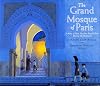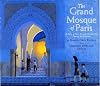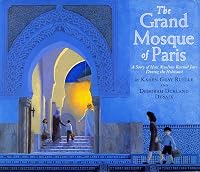
The Grand Mosque of Paris: A Story of How Muslims Rescued Jews During the Holocaust
by Karen Gray Ruelle, Deborah Durland DeSaix (Author)
On This Page
Description
During the Nazi occupation of Paris, no Jew was safe from arrest and deportation to a concentration camp. Few Parisians were willing to risk their own lives to help. Yet many Jews found refuge in an unlikely place, the sprawling complex of the Grand Mosque of Paris. Not just a place of worship but also a community center, this hive of activity was an ideal temporary hiding place for escaped prisoners of war and Jews of all ages, including children.Tags
Recommendations



Member Reviews
"Yesterday at dawn, the Jews of Paris were arrested. The elderly, the women, and the children. In exile like ourselves, workers like ourselves. They are our brothers. Their children are like our own children. Anyone who encounters one of his children must give that child shelter and protection for as long as misfortune - or sorrow - lasts.
Oh man of my country, your heart is generous..."
So reads a World War II era letter, recently discovered amongst the papers of a Tunisian-owned cafe in Paris, and written in Kabyle, the language of one of North Africa's Berber peoples. It points to a little-known footnote in the history of that terrible time: the courageous actions of Si Kaddour Benghabrit - the rector of the Grand Mosque of Paris - and show more the other Parisian Muslims who sheltered and saved Jewish victims of Nazi persecution, members of the French and North African resistance, and Allied parachutists caught behind enemy lines.
Built by North African immigrants between the two world wars, the Grand Mosque was not simply a place of worship, it was an entire community - complete with gardens, apartments, a clinic, a library, and a restaurant - and a hotbed of resistance to the Nazi occupiers. Karen Gray Ruelle and Deborah Surland DeSaix, who also collaborated on Hidden on the Mountain, which chronicles the courageous actions of the people of Le Chambon in hiding Jews during World War II, turn their attention to a similar episode in The Grand Mosque of Paris.
There is much that is not known about this story - much that will never be known. Most, if not all, of the rescuers are dead. They came from a tradition which emphasized oral storytelling, and left few written records behind documenting their heroism. Many of those they rescued were young children at the time, and may have forgotten the Grand Mosque, which usually provided a brief stopover, before refugees were smuggled through Paris's subterranean passages to the River Seine. Perhaps most tragic of all, subsequent developments - the onset of the Arab-Israeli conflict, the widespread denial of the Holocaust in the Muslim world - have led many to ignore and/or suppress this story.
The authors note, in their afterword, that the Grand Mosque's register of children's names for that period - uncovered by filmmaker Derri Berkani when he first began to research this story in 1974, and which he believed proved that the Mosque had saved over 400 Jewish children - have since disappeared. Although one North African Jew, Albert Assouline, claims that the Mosque saved as many as 1,732 souls, the current rector is far more reticent, and Gray and DeSaix were not granted access to the archives.
The Grand Mosque of Paris sets out a story of courage, compassion and honor - a story most worthy of telling. But more importantly, it seems to me that is a story that needs telling. A story that can teach Muslims that in denying the Holocaust they aren't just denying the humanity of the Jewish people, but their own as well. A story that can teach Jews that Muslims didn't always hate them, and aren't a predestined enemy. What could be more necessary? show less
Oh man of my country, your heart is generous..."
So reads a World War II era letter, recently discovered amongst the papers of a Tunisian-owned cafe in Paris, and written in Kabyle, the language of one of North Africa's Berber peoples. It points to a little-known footnote in the history of that terrible time: the courageous actions of Si Kaddour Benghabrit - the rector of the Grand Mosque of Paris - and show more the other Parisian Muslims who sheltered and saved Jewish victims of Nazi persecution, members of the French and North African resistance, and Allied parachutists caught behind enemy lines.
Built by North African immigrants between the two world wars, the Grand Mosque was not simply a place of worship, it was an entire community - complete with gardens, apartments, a clinic, a library, and a restaurant - and a hotbed of resistance to the Nazi occupiers. Karen Gray Ruelle and Deborah Surland DeSaix, who also collaborated on Hidden on the Mountain, which chronicles the courageous actions of the people of Le Chambon in hiding Jews during World War II, turn their attention to a similar episode in The Grand Mosque of Paris.
There is much that is not known about this story - much that will never be known. Most, if not all, of the rescuers are dead. They came from a tradition which emphasized oral storytelling, and left few written records behind documenting their heroism. Many of those they rescued were young children at the time, and may have forgotten the Grand Mosque, which usually provided a brief stopover, before refugees were smuggled through Paris's subterranean passages to the River Seine. Perhaps most tragic of all, subsequent developments - the onset of the Arab-Israeli conflict, the widespread denial of the Holocaust in the Muslim world - have led many to ignore and/or suppress this story.
The authors note, in their afterword, that the Grand Mosque's register of children's names for that period - uncovered by filmmaker Derri Berkani when he first began to research this story in 1974, and which he believed proved that the Mosque had saved over 400 Jewish children - have since disappeared. Although one North African Jew, Albert Assouline, claims that the Mosque saved as many as 1,732 souls, the current rector is far more reticent, and Gray and DeSaix were not granted access to the archives.
The Grand Mosque of Paris sets out a story of courage, compassion and honor - a story most worthy of telling. But more importantly, it seems to me that is a story that needs telling. A story that can teach Muslims that in denying the Holocaust they aren't just denying the humanity of the Jewish people, but their own as well. A story that can teach Jews that Muslims didn't always hate them, and aren't a predestined enemy. What could be more necessary? show less
This book tells the true story of a Muslim community in Paris working to rescue Jewish people during the holocaust, hiding them in their mosque, disguising them as Muslims, and transporting them out of the city to safety. It tells the stories of Albert Assouline and Salim Halil who were both saved by this community, and the work of the Kabyle Resistance.
I thought the illustrator did a great job on the opening page of using texture, color, and the lines of the bayonets to introduce the Nazi occupation of Paris. The dark, fogginess and sameness of the eyeless faces added a lot of meaning and mood to the setting. I noticed that she used the most color to portray the mosque, which seemed to be symbolic of the safety and light this mosque show more held for the Jewish people hidden there. I like how the author wrote in very clear, easy to understand language. It makes the book, with a complex topic, very accessible. I think this is an excellent book to add to children's understanding of world history and of the complexity of religious and cultural differences and interactions. I love how the authors includs a lot of information on the Muslim community in Paris and the functions of the mosque, both topics that many children may find unfamiliar. I think it's important to tell stories of Muslim people and communities that disrupt the often stereotypical or fearful images we are given in the news or other media. I also think that it's important that the creators of this book included a section that explained where they got their information and why they wrote the book. It is important for children to learn that they need to verify whether the information in a book is trustworthy. show less
I thought the illustrator did a great job on the opening page of using texture, color, and the lines of the bayonets to introduce the Nazi occupation of Paris. The dark, fogginess and sameness of the eyeless faces added a lot of meaning and mood to the setting. I noticed that she used the most color to portray the mosque, which seemed to be symbolic of the safety and light this mosque show more held for the Jewish people hidden there. I like how the author wrote in very clear, easy to understand language. It makes the book, with a complex topic, very accessible. I think this is an excellent book to add to children's understanding of world history and of the complexity of religious and cultural differences and interactions. I love how the authors includs a lot of information on the Muslim community in Paris and the functions of the mosque, both topics that many children may find unfamiliar. I think it's important to tell stories of Muslim people and communities that disrupt the often stereotypical or fearful images we are given in the news or other media. I also think that it's important that the creators of this book included a section that explained where they got their information and why they wrote the book. It is important for children to learn that they need to verify whether the information in a book is trustworthy. show less
This book is an informational picture book that highlights the efforts of Muslims in Paris during WWII. The book goes through the various measures the individuals working in the mosque would take to ensure the safety of Jewish people fleeing for safety as well as other North Africans that were in immediate danger. It also talked about the underground passageways that the leader of the mosque would lead people through to Souther France, which was still a dangerous place to be at that time, but it was far more safe than Paris. While reading this, I couldn't help but imagine using this book in my own classroom someday. One of the main goals of the book that was discussed by the author was to introduce people to the valiant efforts of the show more Muslim individuals that have gone largely unrecognized when we revisit this period of history. Especially in our current societal climate, if handled the right way, this book would be an excellent text to open a conversation informing children - and quite frankly adults as well - about how our perceptions of members of Islam is largely skewed. The individuals highlighted in the book were nothing but kind toward everyone, even those of different faiths. It would be so wonderful to be able to have an open discussion with students about current issues with this, and why it's important to remember that not every Muslim - or anyone for that matter - is exactly how they are portrayed in the media. This book was wonderfully researched and assembled, and it's unfortunate that I can already sense the pushback I would get from parents on using this book. It's a great informational text with a number of resources to back what was said in the book. I would 100% use this book in my future classroom to introduce a different side to WWII, but also to start a conversation among students and adults alike about a very serious issue currently impacting society.
Media: Oil paint applied with brushes, paper towels, and all twenty fingers (this was what was said under the copyright information) show less
Media: Oil paint applied with brushes, paper towels, and all twenty fingers (this was what was said under the copyright information) show less
2nd to 8th grade. Inspiring and deeply moving, the picture book The Grand Mosque of Paris makes an important contribution to the children's literature dedicated to promoting understanding and empathy between Moslems and Jews. In it Karen Gray Ruelle presents all the still surviving evidence and stories of how Jews found refuge in the Grand Mosque of Paris during the Holocaust. It being 63 years after the events, very little detail remains of those desperate and secret acts to help. But she describes how the Mosque hid children and escaped war prisoners, and Kabyle Moslems from Algeria helped operate an "underground railroad" of smuggling Jews out of the city. Ruelle's prose is straightforward and she gives a historical account of what show more transpired. Sometimes the stories are less detailed than one would like, but Ruelle explains at the end that this is all the detail that is left. Deborah Durland DeSaix's oil paintings collaborate excellently with the story. Her illustrations move from scenes depicting how large the Mosque is and how forbidding the city looks, to sensitive close ups of faces involved. She incorporates a texture to the paintings that makes it look as if the story were painted on walls, a curious technique to use given how important buildings are to both religions. This book is highly recommended for public, elementary, and middle school libraries. It would also make an excellent classroom read aloud. Given the time we live in and how precious each story of bravery is from during the Holocaust, public librarians and media teachers should not pass up on the opportunity to buy this book. These stories should not pass unknown into history. show less
During the Nazi occupation of France during World War II, a beautiful mosque in Paris was the safety net for many Jews hoping to escape the death camps. While the mosque was a short, temporary stay for many people who were smuggled out of the city to other places, for many children, it became their home. This beautifully illustrated picture book shares the stories of the few documented histories of survivors and those who helped hide them. The mosque's rector, Si Kaddour Benghabrit, was instrumental in placing children who looked Algerian with families associated with the mosque as well as forging birth certificates, grave markers, and certificates of conversion. There are not many picture books regarding Muslims and this is a step show more toward illuminating their place in history. The Afterward at the end of the book shares the difficulty of unearthing this little-known story of Muslims helping Jews during a turbulent time in history. A helpful glossary of Islamic terms is also included as well as a Bibliography, which highlights the books and other materials that are appropriate for children. This is a good read for children interested in history, helping them in understanding another perspective of the Occupation. Highly recommended. Grades 4-6 show less
A part of history is revealed in this beautifully illustrated book. The vibrant colors, ornate drawings of the mosque and impressionistic style applied is breathtaking. Each page is a piece of art. The text is informative and believable. The facts surrounding the history of the The Grand Mosque of Paris are sited with a detailed bibliography. The book also provides recommended books and films about the Holocaust and Islam.
It’s amazing how much these picture books have taught me this past week. I had no idea that the Muslim community of parks hid Jewish children in their mosque. Apparently, it wasn’t a nazi target and an easy place to hide the children. I knew that Paris in general had hidden many Jewish children during the war, but the interfaith teamwork was really inspiring. I think I would definitely read this book to my future students.
Members
- Recently Added By
Lists

Children's Books about World War II (1939-1945)
143 works; 12 members

One Picture Book Per Country
206 works; 1 member
Author Information

22 Works 1,891 Members
Awards and Honors
Common Knowledge
- Canonical title
- The Grand Mosque of Paris: A Story of How Muslims Rescued Jews During the Holocaust
- Original publication date
- 2009
- Important places
- Paris, France
- Important events
- Holocaust; World War II (1939 | 1945)
- Dedication
- The Cramer - Barash Family 2009
Classifications
Statistics
- Members
- 294
- Popularity
- 109,578
- Reviews
- 29
- Rating
- (4.09)
- Languages
- English
- Media
- Paper
- ISBNs
- 3
- ASINs
- 2