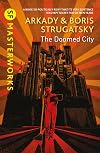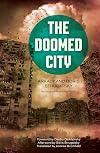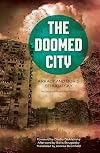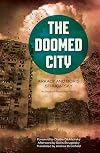
The Doomed City
by Arkady Strugatsky, Boris Strugatsky
On This Page
Description
Arkady and Boris Strugatsky are widely considered the greatest of Russian science fiction masters, and their most famous work, Roadside Picnic, has enjoyed great popularity worldwide. Yet the novel that was their own favorite, and that readers worldwide have acclaimed as their magnum opus, has never before been published in English. The Doomed City was so politically risky that the Strugatsky brothers kept its existence a complete secret even from their best friends for sixteen years after show more its completion in 1972. It was only published in Russia in the late 1980s, the last of their works to see publication. It was translated into a host of major European languages, and now appears in English in a major new translation by acclaimed translator Andrew Bromfield. The Doomed City is set in an experimental city bordered by an abyss on one side and an impossibly high wall on the other. Its sole inhabitants are people who were plucked from Earth's history and left to govern themselves under conditions established by Mentors whose purpose seems inscrutable. Andrei Voronin, a young astronomer plucked from Leningrad in the 1950s, is a diehard believer in the Experiment, even though he's now a garbage collector. And as increasingly nightmarish scenarios begin to affect the city, he rises through the political hierarchy, with devastating effect. show lessTags
Recommendations














Member Reviews
I'll say this about the Strugatsky Brothers: They had *fearless* imaginations, tempered by fearful souls that quailed before publishing this nihilistic, absurdist, deeply subversive book in Soviet Russia. Completed in 1972, shelved until 1989, and published in a professional English translation only in 2016, this stateless satirical look at the amoral roots of True Belief in a System reads as well in 45's Amurruhkuh as it did in Brezhnev's USSR.
Voronin, our astronomer-turned-state-official, is an ideal. He is every system's beloved child, the True Believer who makes excuses and finds reasons instead of asking, "...the fuck...? Are they kidding with this?" As experience teaches him to question, he sidesteps. He changes his beliefs show more without batting an eyelash, a clue to his essential hollowness. For all that he is an eager participant in all the City's shifts of philosophical direction, the reason he can do so remains unexamined: He's complicit in the acts of the State, not driven by a desire to enact a Vision. His lack of an inner compass is rather amusing given that almost the entire novel is an internal monologue. I myownself found this a delightful twist, enjoying the musings of a centerless man as irony. Others might find that conceit wearing.
The things I found wearing were the astoundingly sexist and anti-Semitic attitudes of the characters (and, I suspect, the authors as well). There are horrible words used in connection with the two women I can recall at all...they might indeed have been the only two women mentioned, for I can summon no other woman to mind...and Katzman's presence in stereotypical fashion was not obviously played for ironic effect.
Given my track record for objecting to these facets of other older books, why am I giving this one the Full Five? Because, my friends, the story of a city between an unscalable wall and an endless abyss recommends itself to me as a parable for all of human life, and the awful attitudes of the PoV character are part and parcel of the falling, failing world that the Strugatskys were lampooning, dissecting, parodying, itemizing. These facets seem to me, even though I suspect and believe they were presented unironically, to be so much of a piece with the Experiment being ridiculed that I could easily make them objects of fun. Nonetheless they are there and merit mention lest an unsuspecting reader trip over them and feel blindsided.
Boris Strugatsky, in his Afterword, says it all and best:
Voronin, our astronomer-turned-state-official, is an ideal. He is every system's beloved child, the True Believer who makes excuses and finds reasons instead of asking, "...the fuck...? Are they kidding with this?" As experience teaches him to question, he sidesteps. He changes his beliefs show more without batting an eyelash, a clue to his essential hollowness. For all that he is an eager participant in all the City's shifts of philosophical direction, the reason he can do so remains unexamined: He's complicit in the acts of the State, not driven by a desire to enact a Vision. His lack of an inner compass is rather amusing given that almost the entire novel is an internal monologue. I myownself found this a delightful twist, enjoying the musings of a centerless man as irony. Others might find that conceit wearing.
The things I found wearing were the astoundingly sexist and anti-Semitic attitudes of the characters (and, I suspect, the authors as well). There are horrible words used in connection with the two women I can recall at all...they might indeed have been the only two women mentioned, for I can summon no other woman to mind...and Katzman's presence in stereotypical fashion was not obviously played for ironic effect.
Given my track record for objecting to these facets of other older books, why am I giving this one the Full Five? Because, my friends, the story of a city between an unscalable wall and an endless abyss recommends itself to me as a parable for all of human life, and the awful attitudes of the PoV character are part and parcel of the falling, failing world that the Strugatskys were lampooning, dissecting, parodying, itemizing. These facets seem to me, even though I suspect and believe they were presented unironically, to be so much of a piece with the Experiment being ridiculed that I could easily make them objects of fun. Nonetheless they are there and merit mention lest an unsuspecting reader trip over them and feel blindsided.
Boris Strugatsky, in his Afterword, says it all and best:
How to live in conditions of ideological vacuum? How and what for? In my opinion this question remains highly relevant even today—which is why City, despite being so vehemently politicized and so categorically of its own time, potentially remains of interest to the present-day reader—provided that this reader has any interest at all in problems of this kind.show less
Written over 1967-1972 but not published until 1988, this underground novel from the Strugatsky brothers is powerful stuff. Written ostensibly as science fiction, with people taken from various countries and placed in a world which is conducting a mysterious Experiment, it is in reality a harsh critique of the Soviet Union, which they prophetically knew was tottering towards its inevitable end. This is a world where among other things, the sun is switched on and off by unseen masters, troops of riotous baboons descend on the inhabitants, and a mysterious red building suddenly appears and those who enter it may never be seen again.
The novel’s protagonist, Andrei Voronin, starts off as a true believer in the Experiment and rotates show more through positions of being a garbage collector, police investigator, newspaper editor, and high-ranking government official, allowing the authors to satire the lying, corruption, torture, and censorship that took place in the Soviet Union. The chapter where he enters the red building himself, finds himself in a surreal environment, and plays chess with the ‘Grand Strategist’, with pieces being real people, is absolutely brilliant (and as an aside, I loved the use of the Queen’s Gambit opening).
We find other nations with representatives in the Experiment: an American who grows despondent under such conditions, a German from the 1940s who is ruthless in his rise to power, and a Chinese man who is content with living simply in the same job, which Voronin suspects is because he understands the “eternal futility” of resistance. It’s telling that the other main character, Izya, is a Jew who, despite his sloppy personal characteristics, seeks to preserve culture and turns out to be the most enlightened of all. I have to say though, the treatment of women characters was not so great, and I found it to be a shortcoming of the book.
The novel pretty bluntly ponders communism, and beyond the harsh conditions, takes the larger view: was its nature something akin to early Christianity in its brotherhood and the sharing of wealth, or, far from humble resignation, a rebellion/revolution? How was it supposed to deal with a stratification that would “inevitably arise”? Can it produce creative talent in a repressive environment that controls information and expression? And why go on with it after events have unfolded that were “unforeseen by any theory”?
One cannot help but see any authoritarian leader in the German character when he ascends to power after having waited for “some disturbance of the equilibrium, even if it is only temporary, in order to whip up passions so that the muddy waters of turmoil will raise them up”, as he exclaims “Hatred! Hatred will guide us! … I am sweeping the scum and the subhumans out of our City with a broom of iron!” The overtones of populist politics today are also eerily felt in those words.
The novel also asks the larger questions confronting mankind: what is the nature of the intellectual elite and the masses? Can man overcome what seems to be an inherent bent towards inhumanity towards his fellow man? And perhaps most importantly of all, in a meaningless world, what is the point of anything? I can’t help but believe that the Andrei and Izya’s conversation at the end represents the two sides of the authors own thoughts about that last question, and their ultimate conclusion, represented in Izya’s description of the arts and culture over the centuries, is uplifting.
The short afterword, written by Boris Strugatsky, is excellent, describing the conditions and very real fears the brothers had while writing the novel, without being melodramatic. It also explains the title comes from the painting of the same name by Nicholas Roerich. Lastly, it makes the point that it was not only the authors that had their worldview changed over time, but that “an entire generation traveled this path over the period from 1940 to 1985.” Indeed.
Just this quote, which seemed ominous to me in light of global warming:
“As soon as society has solved some problem that it has, it immediately comes face-to-face with a new problem of the same magnitude… no, of even greater magnitude. … And that, by the way, gives rise to an interesting little point. Eventually society will come face-to-face with problems of such complexity that it will be beyond mankind’s power to solve them. And then so-called progress will stop.” show less
The novel’s protagonist, Andrei Voronin, starts off as a true believer in the Experiment and rotates show more through positions of being a garbage collector, police investigator, newspaper editor, and high-ranking government official, allowing the authors to satire the lying, corruption, torture, and censorship that took place in the Soviet Union. The chapter where he enters the red building himself, finds himself in a surreal environment, and plays chess with the ‘Grand Strategist’, with pieces being real people, is absolutely brilliant (and as an aside, I loved the use of the Queen’s Gambit opening).
We find other nations with representatives in the Experiment: an American who grows despondent under such conditions, a German from the 1940s who is ruthless in his rise to power, and a Chinese man who is content with living simply in the same job, which Voronin suspects is because he understands the “eternal futility” of resistance. It’s telling that the other main character, Izya, is a Jew who, despite his sloppy personal characteristics, seeks to preserve culture and turns out to be the most enlightened of all. I have to say though, the treatment of women characters was not so great, and I found it to be a shortcoming of the book.
The novel pretty bluntly ponders communism, and beyond the harsh conditions, takes the larger view: was its nature something akin to early Christianity in its brotherhood and the sharing of wealth, or, far from humble resignation, a rebellion/revolution? How was it supposed to deal with a stratification that would “inevitably arise”? Can it produce creative talent in a repressive environment that controls information and expression? And why go on with it after events have unfolded that were “unforeseen by any theory”?
One cannot help but see any authoritarian leader in the German character when he ascends to power after having waited for “some disturbance of the equilibrium, even if it is only temporary, in order to whip up passions so that the muddy waters of turmoil will raise them up”, as he exclaims “Hatred! Hatred will guide us! … I am sweeping the scum and the subhumans out of our City with a broom of iron!” The overtones of populist politics today are also eerily felt in those words.
The novel also asks the larger questions confronting mankind: what is the nature of the intellectual elite and the masses? Can man overcome what seems to be an inherent bent towards inhumanity towards his fellow man? And perhaps most importantly of all, in a meaningless world, what is the point of anything? I can’t help but believe that the Andrei and Izya’s conversation at the end represents the two sides of the authors own thoughts about that last question, and their ultimate conclusion, represented in Izya’s description of the arts and culture over the centuries, is uplifting.
The short afterword, written by Boris Strugatsky, is excellent, describing the conditions and very real fears the brothers had while writing the novel, without being melodramatic. It also explains the title comes from the painting of the same name by Nicholas Roerich. Lastly, it makes the point that it was not only the authors that had their worldview changed over time, but that “an entire generation traveled this path over the period from 1940 to 1985.” Indeed.
Just this quote, which seemed ominous to me in light of global warming:
“As soon as society has solved some problem that it has, it immediately comes face-to-face with a new problem of the same magnitude… no, of even greater magnitude. … And that, by the way, gives rise to an interesting little point. Eventually society will come face-to-face with problems of such complexity that it will be beyond mankind’s power to solve them. And then so-called progress will stop.” show less
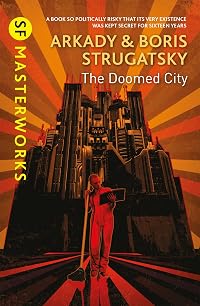
I often complain that so-called dystopias aren’t anything of the sort. Now this is what I call a dystopia! I spotted it on the library new acquisitions shelf and was instantly hooked by the statement, ‘A BOOK SO POLITICALLY RISKY THAT ITS VERY EXISTENCE WAS KEPT SECRET FOR SIXTEEN YEARS’ on the cover. To my mind, the mark of a really good dystopian novel is that it tells you a lot about the time that it was written, while also offering new significances as the decades pass. Although ‘The Doomed City’ was completed in 1972, it predicts that the Soviet Union would eventually be succeeded by a militaristic nationalist kleptocratic oligarchy which would distract the population from inequality and injustice with improved show more availability of consumer goods. That’s impressive. There is also a passage that immediately made me think of climate change:
The story concerns an isolated city, possibly on another planet or otherwise cut off from the rest of Earth, in which the Experiment takes place. The city’s residents are all volunteers, taken from across the world and from different years of the 20th century. None of them know what the Experiment is, how long it has been going on, or who the Mentors that run it are. It might be that the Experiment has already failed, or the Mentors have lost control of it. At the start of the novel, the city is arbitrarily invaded by baboons and residents are expected to rotate jobs regularly. The Experiment could be an allegory for any political ideology; capitalism as well as communism. The main character, Andrei, comes from the Soviet Union, however his circle of close friends includes a former Wehrmacht officer, an American, and a guy from China. This is one of many reasons that the Strugatsky brothers wisely decided the Soviet authorities would not appreciate their book and hid it until perestroika.
The plot centres on Andrei’s journey through various occupations and places, demonstrating how power corrupts despite (or because of) good intentions and kindness towards friends. Andrei’s experiences demonstrate a deep cynicism about ideology, politics, and the operation of institutions; another reason to hide the book from Soviet authorities. Power is shown to be brittle. It enables arbitrary acts of cruelty, without necessarily meaning that the one wielding it knows what the hell is going on or even what they’re trying to achieve. Andrei is a multifaceted and fascinating character, so his progress is compelling to read. His point of view is deeply visceral - he is always suffering from headaches, stomach pains, or wounds. There is an unsettling everyman quality to him that makes his actions all the more chilling. Moreover, the visceral elements of the narrative are complemented by more cerebral tangents, usually in the form of discussions with his friend Izya and others. They force Andrei to consider abstractions, rather than the immediate problems under his nose. As a result, the novel contains some very interesting reflections on art and culture. Izya’s theory of the temple and comments on the city having no creative residents are especially notable.
‘The Doomed City’ is a richly textured dystopia that vividly evokes its pocket world and covers a great deal of social, political, and cultural ground. There were undoubtedly plenty of Soviet-era references that went right over my head, however I found it much easier to appreciate than, say, Platonov’s [b:The Foundation Pit|715995|The Foundation Pit|Andrei Platonov|https://i.gr-assets.com/images/S/compressed.photo.goodreads.com/books/1418363439l/715995._SY75_.jpg|702247] (which it seemed to reference). There is a universality that gives it lasting relevance. It’s also engagingly, consistently weird. I’m giving it four stars rather than five, though, because it took me about fifty pages to get into and because the misogyny is relentless. All three of the named female characters have minor roles as sex objects, existing to be fucked and beaten up. Whether this was a deliberate commentary on gender roles or not, it is deeply unpleasant. show less
”Eventually society will come face-to-face with problems of such complexity that it will be beyond mankind’s power to solve them. And then so-called progress will stop.”
“Nonsense,” said Andrei. “Mankind doesn’t set itself problems that it can’t solve.”
“But I’m not talking about the problems that mankind sets itself,” Izya objected. “I’m talking about the problems mankind runs into. They just come up on their own. Mankind never set itself the problem of famine. It simply used to starve.”
The story concerns an isolated city, possibly on another planet or otherwise cut off from the rest of Earth, in which the Experiment takes place. The city’s residents are all volunteers, taken from across the world and from different years of the 20th century. None of them know what the Experiment is, how long it has been going on, or who the Mentors that run it are. It might be that the Experiment has already failed, or the Mentors have lost control of it. At the start of the novel, the city is arbitrarily invaded by baboons and residents are expected to rotate jobs regularly. The Experiment could be an allegory for any political ideology; capitalism as well as communism. The main character, Andrei, comes from the Soviet Union, however his circle of close friends includes a former Wehrmacht officer, an American, and a guy from China. This is one of many reasons that the Strugatsky brothers wisely decided the Soviet authorities would not appreciate their book and hid it until perestroika.
The plot centres on Andrei’s journey through various occupations and places, demonstrating how power corrupts despite (or because of) good intentions and kindness towards friends. Andrei’s experiences demonstrate a deep cynicism about ideology, politics, and the operation of institutions; another reason to hide the book from Soviet authorities. Power is shown to be brittle. It enables arbitrary acts of cruelty, without necessarily meaning that the one wielding it knows what the hell is going on or even what they’re trying to achieve. Andrei is a multifaceted and fascinating character, so his progress is compelling to read. His point of view is deeply visceral - he is always suffering from headaches, stomach pains, or wounds. There is an unsettling everyman quality to him that makes his actions all the more chilling. Moreover, the visceral elements of the narrative are complemented by more cerebral tangents, usually in the form of discussions with his friend Izya and others. They force Andrei to consider abstractions, rather than the immediate problems under his nose. As a result, the novel contains some very interesting reflections on art and culture. Izya’s theory of the temple and comments on the city having no creative residents are especially notable.
‘The Doomed City’ is a richly textured dystopia that vividly evokes its pocket world and covers a great deal of social, political, and cultural ground. There were undoubtedly plenty of Soviet-era references that went right over my head, however I found it much easier to appreciate than, say, Platonov’s [b:The Foundation Pit|715995|The Foundation Pit|Andrei Platonov|https://i.gr-assets.com/images/S/compressed.photo.goodreads.com/books/1418363439l/715995._SY75_.jpg|702247] (which it seemed to reference). There is a universality that gives it lasting relevance. It’s also engagingly, consistently weird. I’m giving it four stars rather than five, though, because it took me about fifty pages to get into and because the misogyny is relentless. All three of the named female characters have minor roles as sex objects, existing to be fucked and beaten up. Whether this was a deliberate commentary on gender roles or not, it is deeply unpleasant. show less
"The Experiment is the Experiment."
The Doomed City is an exceptional work of storytelling. The Strugatskys are able to bend allegory into narrative and vice versa so that one never tires of an overwrought political message.
I liked the fluid dialogue and easy scene transitions but most of all I thought the novel's structure was masterful. I just finished so I'll have to think about its implications but I was struck by the final moments of the story.
The Doomed City is an exceptional work of storytelling. The Strugatskys are able to bend allegory into narrative and vice versa so that one never tires of an overwrought political message.
I liked the fluid dialogue and easy scene transitions but most of all I thought the novel's structure was masterful. I just finished so I'll have to think about its implications but I was struck by the final moments of the story.
A critique of the Soviet system transported to a mysterious 'world' - basically a ledge between a towering towel and an abyssal cliff.
I thoroughly enjoyed Andrei's various deployments in different roles in the city and seeing him change from idealistic Marxist-Stalinist and "Experimenteer" to part of the elite and apologist for the new totalitarian regime.
I didn't enjoy, so much, the final third of the book, set out of the city on a great expedition to find the anti-city, where Andrei ends up as an exhausted cynic.
I also didn't enjoy the appalling misogyny. Only three bit-part female characters, who are treated as sex objects.
I thoroughly enjoyed Andrei's various deployments in different roles in the city and seeing him change from idealistic Marxist-Stalinist and "Experimenteer" to part of the elite and apologist for the new totalitarian regime.
I didn't enjoy, so much, the final third of the book, set out of the city on a great expedition to find the anti-city, where Andrei ends up as an exhausted cynic.
I also didn't enjoy the appalling misogyny. Only three bit-part female characters, who are treated as sex objects.
Selle raamatu võiks kokku võtta kolme sõnaga: geniaalne. Vaimustav. Suurepärane.
Aga üritan siiski mõned laused rohkem kirjutada, lootuses, et suudan seda head asja reklaamida.
Zanri poolest on tegemist ulmekaga: tegevus toimub väljamõeldud kohas. Samas, pole see ainult ulmekas.
See on harvaesinev kombinatsioon põnevusest ning sügavusest.
Lugedes pidin korduvalt teadlikult tempot alandama- nii oleks tahtnud ju teada, millega see kõik lõppeb.
Aga samas oli vaja aega, et mõelda. Seedida ja nautida. Värskeid ja vaimukaid mõttearendusi inimeseks olemisest ja inimkonna olemusest.
Ning raamatu esimeses kolmes osas ka "mõttepärle". Demagoogia meistriklassi kuuluvat retoorikat eelmisest sajandist. Absurdse totalitarismi iroonilist show more satiiri ja ühiskonnakriitikat. Naerad ja nutad. See kõik on päriselt olnud. Ma tean seda. Ma mäletan seda.
Loe edasi
http://indigoaalane.blogspot.com/2013/09/strugatski-haabuv-linn.html show less
Aga üritan siiski mõned laused rohkem kirjutada, lootuses, et suudan seda head asja reklaamida.
Zanri poolest on tegemist ulmekaga: tegevus toimub väljamõeldud kohas. Samas, pole see ainult ulmekas.
See on harvaesinev kombinatsioon põnevusest ning sügavusest.
Lugedes pidin korduvalt teadlikult tempot alandama- nii oleks tahtnud ju teada, millega see kõik lõppeb.
Aga samas oli vaja aega, et mõelda. Seedida ja nautida. Värskeid ja vaimukaid mõttearendusi inimeseks olemisest ja inimkonna olemusest.
Ning raamatu esimeses kolmes osas ka "mõttepärle". Demagoogia meistriklassi kuuluvat retoorikat eelmisest sajandist. Absurdse totalitarismi iroonilist show more satiiri ja ühiskonnakriitikat. Naerad ja nutad. See kõik on päriselt olnud. Ma tean seda. Ma mäletan seda.
Loe edasi
http://indigoaalane.blogspot.com/2013/09/strugatski-haabuv-linn.html show less
Fantastic. I struggled with the first two sections (probably because there were cultural aspects of the work I'm unfamiliar with). There is a postscript where the authors discuss why it couldn't be circulated when it was originally written.
Members
- Recently Added By
Published Reviews
ThingScore 100
The brothers immerse themselves in a Kafkaesque exploration here, composing a text that is both unequivocally satirical and seriously philosophical. (...) Russian-Jewish masterpiece, whose publication in English constitutes a long-awaited event.
added by SandraArdnas
Lists

S.F. Masterworks (Complete)
229 works; 15 members

SF Masterworks
193 works; 8 members

Speculative Fiction from around the World
610 works; 18 members

Books Read in 2023
5,638 works; 147 members

Books Read in 2025
4,128 works; 98 members
Author Information

289+ Works 12,084 Members
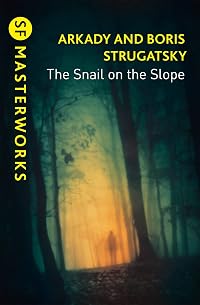
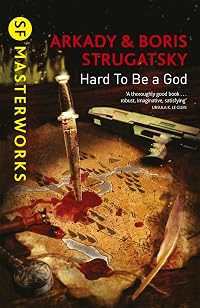
Popular science-fiction writers, the Strugatsky brothers have used the genre since the 1960s to comment on contemporary society, at times provoking major controversy. It's Hard to Be a God (1964) is a dysutopia with commentary on historical theories. The Snail on the Slope (1966--68) features a KGB-like organization and an extraordinarily show more oppressive atmosphere. Pre-glasnost, glasnost, some of the Strugatskys' major works had to be circulated in samizdat, but the brothers' situation is now dramatically better. (Bowker Author Biography) show less

90+ Works 11,550 Members
Popular science-fiction writers, the Strugatsky brothers have used the genre since the 1960s to comment on contemporary society, at times provoking major controversy. It's Hard to Be a God (1964) is a dysutopia with commentary on historical theories. The Snail on the Slope (1966--68) features a KGB-like organization and an extraordinarily show more oppressive atmosphere. Pre-glasnost, glasnost, some of the Strugatskys' major works had to be circulated in samizdat, but the brothers' situation is now dramatically better. (Bowker Author Biography) show less
Some Editions
Awards and Honors
Awards
Notable Lists
Series
Belongs to Publisher Series
群像社ライブラリー (3)
Sündmuste horisont (31)
SF Masterworks (New design)
Work Relationships
Common Knowledge
- Canonical title
- The Doomed City
- Original title
- Град обреченный
- Original publication date
- 2016 (English Translation) (English Translation); 1989
- Epigraph
- Hastily the vicious pike
Called the small carp through his mike.
“Little carplings, how’s your day?”
“Thanks, we’re doing quite OK.”
—Valentin Kataev, Radiogiraffe
. . . I know thy works, and thy labour, and thy patience, and how thou canst not bear them which are evil: and thou hast tried them which say they are apostles, and are not, and hast found them liars . . .
—The Revel... (show all)ation of Saint John the Divine (The Apocalypse) - Original language
- Russian
Classifications
- Genres
- Science Fiction, Fiction and Literature
- DDC/MDS
- 891.73 — Literature & rhetoric Literatures of other languages East Indo-European and Celtic literatures Russian and East Slavic languages Russian fiction
- LCC
- PG3476 .S78835 .G7313 — Language and Literature Slavic languages and literatures. Baltic languages. Albanian language Slavic. Baltic. Albanian Russian literature Individual authors and works 1917-1960
- BISAC
Statistics
- Members
- 588
- Popularity
- 50,039
- Reviews
- 14
- Rating
- (3.97)
- Languages
- 10 — English, Estonian, German, Hungarian, Japanese, Polish, Romanian, Russian, Spanish, Turkish
- Media
- Paper, Audiobook, Ebook
- ISBNs
- 33
- ASINs
- 8