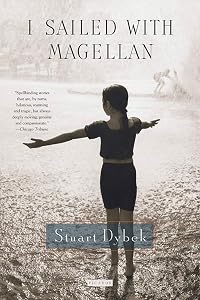
I Sailed with Magellan
by Stuart Dybek
On This Page
Description
A collection of short works by the author of The coast of Chicago is set in the urban areas of Chicago's South Side, where imaginative protagonist Perry Katzek encounters such events as a boy's musical performances on behalf of a drinking uncle, a thug's distraction by multiple ex-girlfriends, and a scheme by two youths to sell stolen flowers to finance a trip to Mexico.Tags
Recommendations






















Member Reviews
After reading of Dybek's collection of novel-in-stories, I Sailed with Magellan, it is hard to resist the sense that contested dreams, memories and what remains unspoken between us are what most deepen the love we have for others and for ourselves. These dreams, memories, and secret thoughts and feelings may fuel our greatest creations; may turn us into endearing fools; or bring us luck; may make possible living on for another day; or grant us a long circuitous lifetime. Even if these memories and dreams and hidden lives drive us mad; even if they kill us: even if they lead us on to countless other forms of destruction, Dybek shows us how they can still deepen our love for one other and for the beauty of our minuscule existence as it is show more lived in narrow alleyways, unclean waters, and a vast cosmos.
Dybek's stories are full of digressions that are as perfectly shaped as the finest cut pieces of a jigsaw puzzle. Each digression, its own right, is a tale worth savoring. Together, they contribute to the richly symphonic whole collection of stories. Thus, while rendering an extraordinarily particular (sometimes humorous, sometimes brutal) portrait of life in the Polish immigrant community in the 1950s and 1960s Little Village and Pilsen neighborhoods of Chicago, Dybek gives the reader so much more than a warm and nuanced reminiscence of time and place: he gives us access to dreams, story structures, and histories that draw us beyond that place, time, and particular community, toward what can make us fully human. show less
Dybek's stories are full of digressions that are as perfectly shaped as the finest cut pieces of a jigsaw puzzle. Each digression, its own right, is a tale worth savoring. Together, they contribute to the richly symphonic whole collection of stories. Thus, while rendering an extraordinarily particular (sometimes humorous, sometimes brutal) portrait of life in the Polish immigrant community in the 1950s and 1960s Little Village and Pilsen neighborhoods of Chicago, Dybek gives the reader so much more than a warm and nuanced reminiscence of time and place: he gives us access to dreams, story structures, and histories that draw us beyond that place, time, and particular community, toward what can make us fully human. show less
Song - A young boy becomes involved with music when his Uncle Lefty takes him around to sing in bars as a child. It's part of a scheme to get free drinks and earn a few coins. Lefty used to play saxophone in a famous band but stopped after he came back from war. Later, Lefty gives the narrator one of his old clarinets. The story culminates in the boy's drunken bandmaster taking the marching band for a practice march around Chicago which breaks up after they cross into a different ethnic neighborhood. The boy runs away and gets, but he saves his clarinet.
Live From Dreamsville - Two brothers try to keep themselves entertained during the time that they put to bed and actually fall asleep. They have many games and schemes but they have to show more be careful because if they're too loud, their father will come in and beat them with whatever's handy. They listen to loud neighbors having sex and pretend to be radio announcers and performers. The story culminates in a fight which spills out into the hall where they witness a fight between their two parents.
Undertow - The protagonist and his brother go swimming at the lake with their father. The waves are big today, and there is a strong undertow that has already claimed one victim. The boys' father tells them stories about his childhood swimming off the rocks. When the older brother jumps in, he stays under too long and begins to worry that he will be sucked under the rocks and drown. He eventually climbs out and meditates upon his fears.
Breasts - A mafia hitman is given the job of dealing with a bookie who's been skimming money. He has every intention of getting on with the grisly task but keeps getting distracted by women from his past. Also in the neighborhood is a one-armed barkeep who is being shaken down for protection money as well as a retired luchador wrestler who is receiving cryptic messages by carrier pigeon. Nearby are the two child protagonists who are very indirectly affected by the interactions of the various characters in their neighborhood.
Blue Boy - There is a sick child named Ralphie born in the neighborhood who becomes a sort of local celebrity. He is born blue and only barely survives childhood. Everyone prays for him and is kind to him and considers him a sort of living saint. He eventually dies before he can take his first communion and the narrator explains his complicated relationship to the boy. In a way, he's a neighbor kid that is everyone's baby brother. In another way, he becomes a kind of sage figure that the narrator even prays to at one point. At around this time, the narrator makes an unlikely friend in the class valedictorian. She is a passionate girl who loves horses and writing stories. She encourages the narrator to write and truly express himself even if it exposes him to ridicule. Memories of the young narrator's father are also interwoven throughout and the story concludes with the narrator's father's death and all that he learned about him after the fact.
Orchids - The author recounts the events of the summer after his senior year of high school. He is spending his time finishing up final papers so that he can actually graduate. He's flirting with delinquency and possibly driving down to Mexico with one of his friends. He recalls his brief courtship with a girl in his class. He struggles to understand how everything went so wrong on prom night. This is a story about transitions from childhood to adulthood and all the disappointments that come along with it. At the center of the story is a Baha'i temple the two boys discover north of the city. To them it seems like a building from another world and they enjoy bumming around in the beauty like a couple of drunks outside a liquor store. Deep within the swamp that abuts the temple, they discover a field of orchids that they plan to harvest and sell for Mexico money. In the end, the find out that the flowers aren't orchids but Irises.
Lunch at the Loyola Arms - Staying in his first ever apartment, the narrator finds himself a bit adrift. He hopes to be a writer, but he's not very motivated or very good yet. He has a girlfriend who visits occasionally. He has no job and no ability to sustain this lifestyle, however, he has some savings and is hoping that some sort of solution will present itself.
We Didn't - This story recounts a frustrating summer in which the narrator and his girlfriend try to have sex in a number of locations. It seems like they are constantly making out and constantly being interrupted before they can complete the act. The final instance is when the find a quite spot on the beach at night. Right as they are about to seal the deal, a horde of police officers swarms their location. Apparently a drowned woman hand washed up on the beach right at this spot. Afterwards, the narrator's girlfriend feels like their relationship is cursed. She is haunted by dreams of the dead woman. The narrator slowly realizes that their relationship is ending and they are growing apart. It is a heartfelt story full of longing.
Que Quieres - In this story, we visit the protagonist's brother, Mick, and catch up with him about how his life is going. Mick has been all over the world and worked many jobs. He spent time in New Orleans working in shipping and performing in community theater. Eventually he moves to New York where he is trying to pursue acting as a career. He works as a bouncer and dates a Puerto Rican woman. On a trip to visit their father, Mick stops into his old neighborhood in Chicago where he is accosted by gang members at has to flee for his life.
A Minor Mood - Lefty can't sleep at night because his harmonium is keeping him up with its wheezing. He's had this sort of problem with other instruments in the past. In the middle of the night, pacing his apartment, he remembers how his grandmother used to come care for him when he was sick. She would boil water on the radiators and run the shower filling the house with steam to sooth his throat. Then she would make him some homemade tea and mix in shots of Jim Beam. The two would drink them slowly and dance around the house, singing away his illness. Now Lefty begins to care for his harmonium like it's an ailing child. He dances around his apartment, lost in the two-way mirror of memory.
Je Reviens - The narrator, as a young man on the eve of adulthood is attending the funeral of his uncle Lefty who died suddenly of tragic circumstances. During the eulogy, he is overcome and flees the church. It's the holiday season in downtown Chicago and so he goes to Marshall Fields to browse. There he witnesses an intimate moment of a woman enjoying a perfume sample. He impulsively steals the bottle and begins following her around the city with the mad desire to gift her the bottle. Ultimately he fails.
This collection of stories is full of nostalgia, innocence, disappointment, foiled expectation and adolescent frustration. Each story is so evocative and mildly painful because it draws the reader back to that time of helplessness where everything seemed impossible yet about to change for the better. The characters are very vivid and memorable. show less
Live From Dreamsville - Two brothers try to keep themselves entertained during the time that they put to bed and actually fall asleep. They have many games and schemes but they have to show more be careful because if they're too loud, their father will come in and beat them with whatever's handy. They listen to loud neighbors having sex and pretend to be radio announcers and performers. The story culminates in a fight which spills out into the hall where they witness a fight between their two parents.
Undertow - The protagonist and his brother go swimming at the lake with their father. The waves are big today, and there is a strong undertow that has already claimed one victim. The boys' father tells them stories about his childhood swimming off the rocks. When the older brother jumps in, he stays under too long and begins to worry that he will be sucked under the rocks and drown. He eventually climbs out and meditates upon his fears.
Breasts - A mafia hitman is given the job of dealing with a bookie who's been skimming money. He has every intention of getting on with the grisly task but keeps getting distracted by women from his past. Also in the neighborhood is a one-armed barkeep who is being shaken down for protection money as well as a retired luchador wrestler who is receiving cryptic messages by carrier pigeon. Nearby are the two child protagonists who are very indirectly affected by the interactions of the various characters in their neighborhood.
Blue Boy - There is a sick child named Ralphie born in the neighborhood who becomes a sort of local celebrity. He is born blue and only barely survives childhood. Everyone prays for him and is kind to him and considers him a sort of living saint. He eventually dies before he can take his first communion and the narrator explains his complicated relationship to the boy. In a way, he's a neighbor kid that is everyone's baby brother. In another way, he becomes a kind of sage figure that the narrator even prays to at one point. At around this time, the narrator makes an unlikely friend in the class valedictorian. She is a passionate girl who loves horses and writing stories. She encourages the narrator to write and truly express himself even if it exposes him to ridicule. Memories of the young narrator's father are also interwoven throughout and the story concludes with the narrator's father's death and all that he learned about him after the fact.
Orchids - The author recounts the events of the summer after his senior year of high school. He is spending his time finishing up final papers so that he can actually graduate. He's flirting with delinquency and possibly driving down to Mexico with one of his friends. He recalls his brief courtship with a girl in his class. He struggles to understand how everything went so wrong on prom night. This is a story about transitions from childhood to adulthood and all the disappointments that come along with it. At the center of the story is a Baha'i temple the two boys discover north of the city. To them it seems like a building from another world and they enjoy bumming around in the beauty like a couple of drunks outside a liquor store. Deep within the swamp that abuts the temple, they discover a field of orchids that they plan to harvest and sell for Mexico money. In the end, the find out that the flowers aren't orchids but Irises.
Lunch at the Loyola Arms - Staying in his first ever apartment, the narrator finds himself a bit adrift. He hopes to be a writer, but he's not very motivated or very good yet. He has a girlfriend who visits occasionally. He has no job and no ability to sustain this lifestyle, however, he has some savings and is hoping that some sort of solution will present itself.
We Didn't - This story recounts a frustrating summer in which the narrator and his girlfriend try to have sex in a number of locations. It seems like they are constantly making out and constantly being interrupted before they can complete the act. The final instance is when the find a quite spot on the beach at night. Right as they are about to seal the deal, a horde of police officers swarms their location. Apparently a drowned woman hand washed up on the beach right at this spot. Afterwards, the narrator's girlfriend feels like their relationship is cursed. She is haunted by dreams of the dead woman. The narrator slowly realizes that their relationship is ending and they are growing apart. It is a heartfelt story full of longing.
Que Quieres - In this story, we visit the protagonist's brother, Mick, and catch up with him about how his life is going. Mick has been all over the world and worked many jobs. He spent time in New Orleans working in shipping and performing in community theater. Eventually he moves to New York where he is trying to pursue acting as a career. He works as a bouncer and dates a Puerto Rican woman. On a trip to visit their father, Mick stops into his old neighborhood in Chicago where he is accosted by gang members at has to flee for his life.
A Minor Mood - Lefty can't sleep at night because his harmonium is keeping him up with its wheezing. He's had this sort of problem with other instruments in the past. In the middle of the night, pacing his apartment, he remembers how his grandmother used to come care for him when he was sick. She would boil water on the radiators and run the shower filling the house with steam to sooth his throat. Then she would make him some homemade tea and mix in shots of Jim Beam. The two would drink them slowly and dance around the house, singing away his illness. Now Lefty begins to care for his harmonium like it's an ailing child. He dances around his apartment, lost in the two-way mirror of memory.
Je Reviens - The narrator, as a young man on the eve of adulthood is attending the funeral of his uncle Lefty who died suddenly of tragic circumstances. During the eulogy, he is overcome and flees the church. It's the holiday season in downtown Chicago and so he goes to Marshall Fields to browse. There he witnesses an intimate moment of a woman enjoying a perfume sample. He impulsively steals the bottle and begins following her around the city with the mad desire to gift her the bottle. Ultimately he fails.
This collection of stories is full of nostalgia, innocence, disappointment, foiled expectation and adolescent frustration. Each story is so evocative and mildly painful because it draws the reader back to that time of helplessness where everything seemed impossible yet about to change for the better. The characters are very vivid and memorable. show less
I wonder if the dominance of bildungsroman narratives in the shnovels (linked books of short stories) I've surveyed indicates a modern realization about the nature of growing up. It isn't linear or clean, a smooth line of story unspooling over years, and the collage approach of books like Local Girls and this one seems a better fit for our current understanding of memory and childhood.
At any rate, a bildungs-shnovel is more or less what this is; along the way, a portrait of place and yet another story where the heart is half-hidden in the untold. I liked that Perry's story includes his brother's, the way real people's growing does intertwine and contrast with the growth of those around them. I liked the elements of the unreal or show more quasi-mythic in the neighborhood, in the stories of the men who drink at Zip's. I like the way the young people are explicitly interested in understanding their lives as stories and writing their own identities. show less
At any rate, a bildungs-shnovel is more or less what this is; along the way, a portrait of place and yet another story where the heart is half-hidden in the untold. I liked that Perry's story includes his brother's, the way real people's growing does intertwine and contrast with the growth of those around them. I liked the elements of the unreal or show more quasi-mythic in the neighborhood, in the stories of the men who drink at Zip's. I like the way the young people are explicitly interested in understanding their lives as stories and writing their own identities. show less
Nice to read stories set in Chicago; well developed characters and a nice intermingling of stories across the entire collection of short pieces! Thoroughly enjoyed it!
Stuart Dybek wrote a short story I loved so I was really looking forward to reading this book, but I couldn't get into it and now the library wants it back. I want to try again eventually, though.
I couldn't get into this book. I tried twice and then took a trip to the bookstore to buy a different book to read. It shall sit on my shelf and possibly get read one rainy afternoon when I am dead bored and there is nothing else to do.
Ratings
Members
- Recently Added By
Author Information

23+ Works 1,179 Members
Stuart Dybek is the author of two collections of short fiction, The Coast of Chicago and Childhood and Other Neighborhoods, as well as two volumes of poetry, Streets in Their Own Ink and Brass Knuckles. A professor of English at Western Michigan University, he lives in Kalamazoo
Awards and Honors
Awards
Distinctions
Common Knowledge
- Original publication date
- 2003
- Important places
- Chicago, Illinois, USA
- Epigraph
- In memory everything seems to happen to music. - Tennessee Williams, The Glass Menagerie
Yo no digo esta cancion/
sino a quien conmigo va. - Anonymous, "El Conde Arnaldos" - Dedication
- For Adeline Dybek 1913-2003
- First words
- Once I was a great singer.
- Last words
- (Click to show. Warning: May contain spoilers.)Only a single door remained opened, where a guard was ushering stragglers out of the darkened lobby, and I kept walking, unable to return the gift in my topcoat pocket, unable to give it away.
- Blurbers
- Terkel, Studs; Turrow, Scott; Wolff, Geoffrey
Classifications
Statistics
- Members
- 276
- Popularity
- 117,579
- Reviews
- 6
- Rating
- (3.70)
- Languages
- English
- Media
- Paper, Ebook
- ISBNs
- 3
- ASINs
- 3