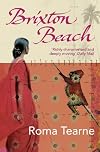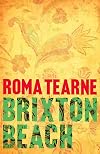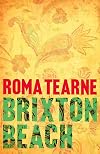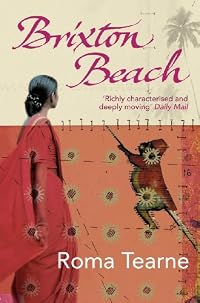
Brixton Beach
by Roma Tearne
On This Page
Description
"When family tragedy strikes, Alice Fonseka, the dreamy, artistic child of a Singhalese mother and Tamil father, leaves the beautiful island of Sri Lanka. Unable to bear the injustice of what has happened, her family heads for England. There, in a totally foreign environment, Alice builds a life for herself and finds outlets for her art. But she remains restless, haunted by memories of the past, and, even in London, the threat of violence is never far away"--Page 4 of cover.Tags
Recommendations





























Member Recommendations

Member Reviews
Upon completing this novel, I sought to confirm that parts of this story are based on the writer's own life. The writing is so evocative of time, place and the emotional impact of dislocation that it had to have been experienced personally. This, indeed, was the case.
The main character in the story is Alice Fonseka, daughter of a Tamil father and Singhalese mother, as was the author. When the families safety is threatened the father decides it is time for the family to relocate to London, to continue the fight from afar. This is devastating for Alice and her mother as it means leaving the most important people in their lives behind, the much loved parents of Sita and grandparents of Alice, Bee and Kamala. Bee is a locally renowned show more artist and Alice has inherited his passion and talent. Mother, Sita has also tragically just lost their second child in childbirth through racial negligence. Her marriage is strained and the immigration to a foreign country increases the pressure on this fractured family.
The story covers the following thirty years of their lives in England where they never fully acclimatise to the environment and culture. The story opens and closes with the Brixton terrorist bombings and we discover the horrific impact that such acts of violence have on the lives of ordinary people.
Once again this author has produced a profound work of fiction, written in beautiful lyrical prose. Her skill at creating visual images of a paradise torn by civil war is remarkable. If you have never read this writer I recommend that you do. show less
The main character in the story is Alice Fonseka, daughter of a Tamil father and Singhalese mother, as was the author. When the families safety is threatened the father decides it is time for the family to relocate to London, to continue the fight from afar. This is devastating for Alice and her mother as it means leaving the most important people in their lives behind, the much loved parents of Sita and grandparents of Alice, Bee and Kamala. Bee is a locally renowned show more artist and Alice has inherited his passion and talent. Mother, Sita has also tragically just lost their second child in childbirth through racial negligence. Her marriage is strained and the immigration to a foreign country increases the pressure on this fractured family.
The story covers the following thirty years of their lives in England where they never fully acclimatise to the environment and culture. The story opens and closes with the Brixton terrorist bombings and we discover the horrific impact that such acts of violence have on the lives of ordinary people.
Once again this author has produced a profound work of fiction, written in beautiful lyrical prose. Her skill at creating visual images of a paradise torn by civil war is remarkable. If you have never read this writer I recommend that you do. show less
Opening in the chaotic aftermath of the 7/7 bombing in London, off-duty doctor, Simon, is looking for a woman he thinks to be caught up in the carnage. The action then moves in time and space to Ceylon on the brink of civil war. The plot unfolds to see how these two worlds connect.
In Ceylon, it's Alice's birthday, and she and her pregnant mother are on their way to her maternal grandparents. Alice's father is a Tamil and her mother a Sinhalese, leaving her caught between the two groups in a country dividing itself along racial lines. Following independence from Britain, this fracturing has become even more evident, friends, neighbours and even family members suddenly find themselves to be enemies. It is in this climate that Alice's show more father makes the decision to go to the U.K. Alice's family's decision to help Tamil friends, and even unknown people, puts them in danger.
Following the personal stories, we see the affect and tragedy of this fighting on the people. No one is unaffected by the violence. Exile was the choice of many, but it brings other problems. Alice and her parents have to adapt to a new country, new customs and come to terms with their past.
Alice has inherited the artistic nature of her grandfather, Bee, who paints in the studio by the sea. His paintings are often controversial, depicting as they do what is happening around them. Alice's talent lies more in sculpture and she creates pieces from debris - driftwood, things she finds. Art becomes her refuge and her means of expression. It is no surprise that the author is also an artist, her descriptions make the art easy to visualise.
Tearne's characters are very real, flawed but human. Alice never fits in, half-Tamil, half-Sinhalese, a Sri Lankan in London, where is her place? She is often misunderstood by other characters who don't know what to do with her, she is different. Her mother, Sita, tries to be strong, but struggles under the weight of tragedy. Bee and his wife, Kamala, are stronger, but Bee often can't see the affects of his actions. Alice's childhood friend, Janake, is a calming influence.
One criticism of the book I have read is its tempo. It does start at a more measured pace, but gets faster as it goes on. For me, this wasn't a bad device. While you wanted to read more about Alice's later life, the speed reflects life as it is. When you are young, life seems eternal, but seems to get faster as you grow up.
Highly recommended. show less
In Ceylon, it's Alice's birthday, and she and her pregnant mother are on their way to her maternal grandparents. Alice's father is a Tamil and her mother a Sinhalese, leaving her caught between the two groups in a country dividing itself along racial lines. Following independence from Britain, this fracturing has become even more evident, friends, neighbours and even family members suddenly find themselves to be enemies. It is in this climate that Alice's show more father makes the decision to go to the U.K. Alice's family's decision to help Tamil friends, and even unknown people, puts them in danger.
Following the personal stories, we see the affect and tragedy of this fighting on the people. No one is unaffected by the violence. Exile was the choice of many, but it brings other problems. Alice and her parents have to adapt to a new country, new customs and come to terms with their past.
Alice has inherited the artistic nature of her grandfather, Bee, who paints in the studio by the sea. His paintings are often controversial, depicting as they do what is happening around them. Alice's talent lies more in sculpture and she creates pieces from debris - driftwood, things she finds. Art becomes her refuge and her means of expression. It is no surprise that the author is also an artist, her descriptions make the art easy to visualise.
Tearne's characters are very real, flawed but human. Alice never fits in, half-Tamil, half-Sinhalese, a Sri Lankan in London, where is her place? She is often misunderstood by other characters who don't know what to do with her, she is different. Her mother, Sita, tries to be strong, but struggles under the weight of tragedy. Bee and his wife, Kamala, are stronger, but Bee often can't see the affects of his actions. Alice's childhood friend, Janake, is a calming influence.
One criticism of the book I have read is its tempo. It does start at a more measured pace, but gets faster as it goes on. For me, this wasn't a bad device. While you wanted to read more about Alice's later life, the speed reflects life as it is. When you are young, life seems eternal, but seems to get faster as you grow up.
Highly recommended. show less
The novel begins on the day of the terrorist bombings on three Underground trains and a Transport for London bus in London on July 7, 2005. Simon Swann is a physician who comes upon the carnage outside of the Edgware Road tube station minutes after the bombing. He begins to aid the wounded passengers, but is mainly interested in locating Alice Fonseka, a woman he has recently met; however, we are not given any more information about the relationship until much later.
The action then shifts to Sri Lanka, with Alice's birth to Sita, a feisty and independent Sinhalese woman, and her restless and sullen Tamil father. Although her parents' marriage is without love and is doomed to failure, Alice's early life is rich and rewarding, as she is show more nurtured and inspired by Sita's father Bee, a respected painter and sculptor, and his wife.
As the Sinhalese-Tamil conflict deepens, Alice experiences ostracism and hostility from her teachers and former friends at school due to her mixed background, and her family and neighbors fall victim to violence at the hands of Sinhalese mobs, police and other government officials. Alice's father realizes that there is no future for him in Sri Lanka, and makes plans to emigrate to London, where his brother is currently living. Sita reluctantly agree to follow him there, after she experiences a tragic personal loss and falls deeply in love with another man. Alice does not want to leave her beloved grandfather, who has encouraged her to become an artist as well.
The family experiences hardship, discrimination and strife in London, and the troubled marriage soon falls apart. With her grandfather's words and the help of a teacher, Alice develops into a fine but troubled and lonely artist, as she is torn between her lives in Sri Lanka and London. She eventually becomes married, moves into a house in Brixton which she paints in the vivid colors of her homeland and names Brixton Beach. She has a child, and finds success in her work after several years of struggle, although her insensitive husband ultimately leaves her. Years later she meets Swann, who is about to leave his wife, at a party celebrating her work, and the two fall in love.
On the morning of the bombing, we are brought back to the beginning of the novel, as Alice takes the Underground and Swann is at work at St. Thomas' Hospital.
This was a tragic, beautiful, and disturbing novel about the daily struggle of assimilation, in one's own country and abroad, the search for love and acceptance, and the importance of family in nurturing a vulnerable young person in dire straits. The portrayal of the beauty of Sri Lanka is in stark contrast with the violence there and the depressing climate in London, and is very well done. The first 300 pages were near perfect; however, the action in the last 100 pages seems rushed; we are introduced to Alice's husband, who she meets on the street, and within two or three pages they are married, without understanding what attracted her to him or learning much about him. Despite this, [Brixton Beach] was an unforgettable read, and is highly recommended. show less
The action then shifts to Sri Lanka, with Alice's birth to Sita, a feisty and independent Sinhalese woman, and her restless and sullen Tamil father. Although her parents' marriage is without love and is doomed to failure, Alice's early life is rich and rewarding, as she is show more nurtured and inspired by Sita's father Bee, a respected painter and sculptor, and his wife.
As the Sinhalese-Tamil conflict deepens, Alice experiences ostracism and hostility from her teachers and former friends at school due to her mixed background, and her family and neighbors fall victim to violence at the hands of Sinhalese mobs, police and other government officials. Alice's father realizes that there is no future for him in Sri Lanka, and makes plans to emigrate to London, where his brother is currently living. Sita reluctantly agree to follow him there, after she experiences a tragic personal loss and falls deeply in love with another man. Alice does not want to leave her beloved grandfather, who has encouraged her to become an artist as well.
The family experiences hardship, discrimination and strife in London, and the troubled marriage soon falls apart. With her grandfather's words and the help of a teacher, Alice develops into a fine but troubled and lonely artist, as she is torn between her lives in Sri Lanka and London. She eventually becomes married, moves into a house in Brixton which she paints in the vivid colors of her homeland and names Brixton Beach. She has a child, and finds success in her work after several years of struggle, although her insensitive husband ultimately leaves her. Years later she meets Swann, who is about to leave his wife, at a party celebrating her work, and the two fall in love.
On the morning of the bombing, we are brought back to the beginning of the novel, as Alice takes the Underground and Swann is at work at St. Thomas' Hospital.
This was a tragic, beautiful, and disturbing novel about the daily struggle of assimilation, in one's own country and abroad, the search for love and acceptance, and the importance of family in nurturing a vulnerable young person in dire straits. The portrayal of the beauty of Sri Lanka is in stark contrast with the violence there and the depressing climate in London, and is very well done. The first 300 pages were near perfect; however, the action in the last 100 pages seems rushed; we are introduced to Alice's husband, who she meets on the street, and within two or three pages they are married, without understanding what attracted her to him or learning much about him. Despite this, [Brixton Beach] was an unforgettable read, and is highly recommended. show less
This is one of the books chosen for the C4 TV Book Club, it’ll be featured at the end of February. Although I thought it looked interesting I wasn’t in a hurry to read it, but then the publisher offered me a copy as the Oxford-based author is coming to my local bookshop Mostly Books in mid-March to take part in a special book group evening – then I couldn’t resist. It is a wonderful book, so I am really glad I read it.
Roma Tearne is Sri Lankan, and fled the country aged ten to live in England, where she qualified as an artist, (the cover artwork is her own). She is now a creative writing fellow at Oxford Brookes, and this is her third novel. All her novels are set against the backdrop of the Sri Lankan Civil War from 1983 show more onwards; it had grown out of the Singhalese independence movement which had marginalised the Tamil minority, leading to the ‘Tamil Tigers’ thirty year campaign to create an independent Tamil state. It finally ended in 2009.
The novel tells the story of Alice, who has a Singhalese mother and Tamil father; she is just nine when the war starts. It’s increasingly hard for a mixed family to live in Colombo. Father, Stanley has applied for passports for them so they can move to England. He’ll go first, and find a job and a house, Sita and Alice will follow. Her beloved artist grandfather Bee wishes they wouldn’t go, but has hopes of a better life for them, as they’ve already suffered. Sita lost her second baby due to the drunken negligence of a drunk doctor who wouldn’t treat a Tamil. By the time Stanley sails for England, his relationship with Sita is effectively over, but they have to go. It’s too dangerous for them to stay with Bee; anyone with Tamil connections could be rounded up by the army, and never heard of again. Alice and Sita arrive in England, to stay in a dingy, dark house in South London. Sita can’t stand the cold and damp climate, and retreats into her shell further. Stanley doesn’t stay for long either. Alice is left to forge her own way, and she begins to follow in her grandfather’s footsteps as she shows talent at art too.
The author has managed to conjure up an utterly compelling portrait of life in Sri Lanka at the start of the unrest, and the waves of tragedy that besets the Fonseka family. She captures perfectly Alice’s struggles to come to terms with all that happens to her, and her chance of finding real happiness. After Alice, Bee, her grandfather is a fantastically well-drawn character, artist, patriarch, and compassionate soul who is willing to risk all to help those in need. The heat and humidity of the troubled paradise contrasts keenly with the bleak urban strangeness of London. The novel however, starts off with a prologue set on the day of 7/7/2005 when bombs went off in London, bringing home to us the similarities of what had happened in Sri Lanka decades before.
This was a deeply affecting read for me, and you can’t help wondering how autobiographical it is – I’ll get a chance in a few weeks to find out when we meet Roma. I found it far more compelling than Brick Lane, and I will look forward to reading her other novels too. I highly recommend this book. show less
Roma Tearne is Sri Lankan, and fled the country aged ten to live in England, where she qualified as an artist, (the cover artwork is her own). She is now a creative writing fellow at Oxford Brookes, and this is her third novel. All her novels are set against the backdrop of the Sri Lankan Civil War from 1983 show more onwards; it had grown out of the Singhalese independence movement which had marginalised the Tamil minority, leading to the ‘Tamil Tigers’ thirty year campaign to create an independent Tamil state. It finally ended in 2009.
The novel tells the story of Alice, who has a Singhalese mother and Tamil father; she is just nine when the war starts. It’s increasingly hard for a mixed family to live in Colombo. Father, Stanley has applied for passports for them so they can move to England. He’ll go first, and find a job and a house, Sita and Alice will follow. Her beloved artist grandfather Bee wishes they wouldn’t go, but has hopes of a better life for them, as they’ve already suffered. Sita lost her second baby due to the drunken negligence of a drunk doctor who wouldn’t treat a Tamil. By the time Stanley sails for England, his relationship with Sita is effectively over, but they have to go. It’s too dangerous for them to stay with Bee; anyone with Tamil connections could be rounded up by the army, and never heard of again. Alice and Sita arrive in England, to stay in a dingy, dark house in South London. Sita can’t stand the cold and damp climate, and retreats into her shell further. Stanley doesn’t stay for long either. Alice is left to forge her own way, and she begins to follow in her grandfather’s footsteps as she shows talent at art too.
The author has managed to conjure up an utterly compelling portrait of life in Sri Lanka at the start of the unrest, and the waves of tragedy that besets the Fonseka family. She captures perfectly Alice’s struggles to come to terms with all that happens to her, and her chance of finding real happiness. After Alice, Bee, her grandfather is a fantastically well-drawn character, artist, patriarch, and compassionate soul who is willing to risk all to help those in need. The heat and humidity of the troubled paradise contrasts keenly with the bleak urban strangeness of London. The novel however, starts off with a prologue set on the day of 7/7/2005 when bombs went off in London, bringing home to us the similarities of what had happened in Sri Lanka decades before.
This was a deeply affecting read for me, and you can’t help wondering how autobiographical it is – I’ll get a chance in a few weeks to find out when we meet Roma. I found it far more compelling than Brick Lane, and I will look forward to reading her other novels too. I highly recommend this book. show less
This is a book to be savoured as it is so beautifully written. It follows a young girl Alice who has an idyllic existence in the home of her grandparents, where she is sheltered from the horror of the beginnings of the civil war in Sri Lanka. She is forced to come to Britain. She is both Tamil and Shinghalese. Readjustment, acceptance, belonging and the strong connection to home are just some of Alice's experiences. This book is deeply moving, yet so deliciously written and with such deep insight from the author. I have challenged some of my thoughts, through this book as it encourages the reader to consider the struggles of families that are seeking safety and acceptance in this country.
I followed the civil war in Ceylon / Sri Lanka with horror through the 1980s and 1990s, it seemed a bloody and, as these civil wars often are, pointless war, mirroring our own conflict in Northern Ireland. I was therefore interested to read Roma Tearne's novel set in that period and I had very much enjoyed The Swimmer. This is a novel of tragedy, whereas I long for happy endings of some kind and so was unsatisfactory but there must be a reason why Roma Tearne gave us so many sad stories within this one novel. The main character is Alice, who leaves Sri Lanka as a young girl of about ten years old for the UK and I was interested to read this mirrored Roma Tearne's own experiences. In the novel Alice is unhappy but has a strength of show more character that is noble and sees her through difficult times. Her mother Sita is grieving for a lost baby and homeland and provides little support beyond financial support for her daughter. The narrative starts in Sri Lanka, a world of bright blue skies and sea the colour of the sky, this is painted as an island of great beauty. The story moves to London and then occasionally flits back to Sri Lanka for an 'update' on how the family remaining there are doing (generally not very well). A well constructed novel that I found hard going at first but then did lose myself in and became immersed in. show less
This is one of the most intense narratives I've read. The story centres around Sita and her daughter Alice Fonseka, and their family's experiences of the conflict and civil war in Sri Lanka and the migration to London of Sita, Alice and their father while the rest of the family stays in Sri Lanka. The story centres around family and loss; the loss of a child, childhood, family members, marriage, homeland, identity and eventually life itself through acts of terrorism and civil war. There are no happy endings - the moments of happiness and hope are short lived. Roma Tearne's story may well be informed through autobiography and there is no doubting the power of her writing and her ability to conjure up place and mood - the descriptions of show more the sea and coast in Sri Lanka are vivid. However, my main gripe with this story is the unrelenting despair and the way any glimmer of hope is soon snuffed out. While this may well be the case in real life for many migrants- particularly those fleeing war zones, this doesn't need to be the case in a novel where it is possible to offer alternative versions of life- at least for migrant children and the 2nd generation, and to offer the characters a greater protagonist role. I'm glad I've read this book but I'm not sure I'll be queuing up to read any more. show less
Members
- Recently Added By
Published Reviews
ThingScore 100
In Bone China, Tearne observed that "a mantle of despair was settling like fine dust on the island, clogging the air, blotting out its brilliance and choking its people". It remains to be seen if the pall of civil war has finally lifted, or whether Sri Lanka is experiencing another of its many false dawns. Whatever happens, Tearne has preserved the emotional impact of this sad historical show more chapter in three remarkable novels dedicated to what has become "the invisible story of the British empire". show less
added by kidzdoc
There is an ironically named 1970s skateboard park in South London known as Brixton Beach, a concrete patch a stone's throw from the High Street. In the same spirit, Roma Tearne has given her latest novel a title with a twisting double meaning. A family saga based on the lives of three generations of Sri Lankans, stretching from the beaches of the Indian Ocean that inspire artist Alice Fonseka show more to imagined ones in Lambeth, it is a poignant follow-up to her previous novel, Bone China. show less
added by kidzdoc
Lists

Best Books Set in London
157 works; 42 members
Author Information

10+ Works 749 Members
Common Knowledge
- Original publication date
- 2009-05-28
- People/Characters
- Simon Swann; Alice Fonseka; Sita Fonseka
- Important places
- London, England, UK; Sri Lanka
- Important events
- 2005 London bombings; Sri Lankan civil war
- Epigraph
- All of life is a foreign country.
Jack Kerouac, letter (24 June 1949) - Dedication
- In memory of N M C whose story, discarded for forty years, is told at last.
And for Barrie, Oliver, Alistair and Mollie. - First words
- There are police everywhere. From a distance it is the first thing he sees. Even before he hears the noise of sirens, the screams. Even before the BBC team appears. Acid-green jackets move grimly about, directing the traffic,... (show all) securing blue-and-white tape, herding people away. That's what he sees. A red, double-decker bus stands parked at an odd angle, black smoke pouring out its windows. There is glass everywhere. His feet crunch on it and he notices shards glinting dangerously in the light. His first thought is, Someone might cut themselves; his second is, There must have been a fire.
- Last words
- (Click to show. Warning: May contain spoilers.)For it is clear that he, Simon Swann, needs this beach; it is clearly and irreversibly part of his internal landscape now. Nothing and no one will erase it. And so he heads toward it, and the small house perched nearby. Where a young man called Ravi, with his mother's dark, unforgettable eyes, sits in stunned silence. Waiting for him to arrive.
- Original language
- English
Classifications
Statistics
- Members
- 220
- Popularity
- 147,719
- Reviews
- 14
- Rating
- (3.88)
- Languages
- Dutch, English, French, Swedish
- Media
- Paper, Audiobook, Ebook
- ISBNs
- 13
- ASINs
- 5