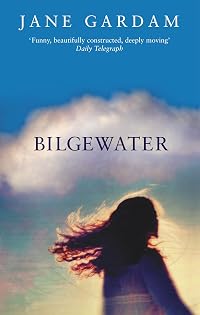
Bilgewater
by Jane Gardam
On This Page
Description
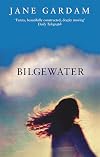
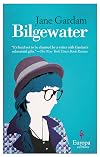
"Originally published in 1977, Jane Gardam's Bilgewater is an affectionate and complex rendering-in-miniature of the discomforts of growing up and first love seen through the eyes of inimitable Marigold Green, an awkward, eccentric, highly intelligent girl. The Evening Standard described Bilgewater as "one of the funniest, most entertaining, most unusual stories about young love." Motherless and 16, Marigold is the headmaster's daughter at a private backwater all-boys school. To make matters show more worse, Marigold pines for head boy Jack Rose, reckons with the beautiful and domineering Grace, and yanks herself headlong out of her interior world and into the seething cauldron of adolescence. With everything happening all at once, Marigold faces the greatest of teenage crucibles."--Amazon.com show lessTags
Recommendations


























Member Recommendations
Member Reviews
I would have read this in one go but I had to repeatedly stop because I was laughing so hard. Right from the start, that bit about the teacher who cannot face forward, and later the bit where Bilge finds she's walked right through the house… these things will never leave me. Gardam has a way of making me know what something must look like without actually describing it.
I also loved the Cinderella set-up. I grew up watching Star Wars (my name's Luke, so you can see what my parents had just seen, back in 1978. Could have been worse. They could have been Tolkien fans), so love finding this myth reused, and reused so well here with the twisted Fairy Godmother / Merlin character in Grace and the unexpected farce of the ending.
Amazingly, I show more had never heard of Gardam. I'm relatively well informed about writers, but never a whisper. Who's in charge here? Why isn't her name being bellowed from rooftops? Why didn't they make me read this at school? I googled her halfway through, only to find that she's one of the most respected writers working today. This may be my fault… I notice from the stats on this site that most of the people I read are European men. Of the women, the vast majority I had discovered because some kind Bookcrosser had set her book free, as is the case here. I think I have been subconsciously choosing books by people who are like me. Thank God for Bookcrossing! show less
I also loved the Cinderella set-up. I grew up watching Star Wars (my name's Luke, so you can see what my parents had just seen, back in 1978. Could have been worse. They could have been Tolkien fans), so love finding this myth reused, and reused so well here with the twisted Fairy Godmother / Merlin character in Grace and the unexpected farce of the ending.
Amazingly, I show more had never heard of Gardam. I'm relatively well informed about writers, but never a whisper. Who's in charge here? Why isn't her name being bellowed from rooftops? Why didn't they make me read this at school? I googled her halfway through, only to find that she's one of the most respected writers working today. This may be my fault… I notice from the stats on this site that most of the people I read are European men. Of the women, the vast majority I had discovered because some kind Bookcrosser had set her book free, as is the case here. I think I have been subconsciously choosing books by people who are like me. Thank God for Bookcrossing! show less
Marigold's nickname is Bilgewater and she's an adolescent living in a House at a boy's school in Yorkshire (vaguely latter half of the 20th) where her father is the Master. Paula is the Matron and runs the place efficiently. It's the basic story of the adolescent girl emerging, as it were from caterpillar to butterfly . . . only . . . hesitantly and in that unsure way that leaves the reader wondering 'what if'. Three boys at the school she has known for years suddenly seem to be interested in her and she also maybe finds a female friend (she's definitely not your average girl so finds friendship difficult). Those three boys are the three trying, as she is, for Oxbridge. (I can categorize them as #1 Kind and Safe,#2 Deceptive and show more Handsome, and #3 Fascinating and Brilliant). After finishing I found myself pondering the way some of us (different from the above -- category A &B not # 1,2,3) (and I know I am category B) tend to choose safety (B) over, shall we say, spontaneity (A)? This leads to intense moments of 'what if' in my own life I had defied my parents and done this or that or taken that other bus or gone ahead or stayed the night with . . . I don't think A's either look back or chicken out! (Or perhaps now and then they might have a pinch of regret?) And let me add too, Gardam makes no judgement call on A or B. Anyway that is, perhaps, the most significant underlying theme. To my surprise I flagged a bit in the middle, seeing where things were headed, but Gardam handles everything with grace and humor and so the book satisfies while also feeling fully grounded in the Way Things Are. **** show less
Marigold Daisy Green, known as Bilgewater to the pupils at the all boys' school where her father is a teacher and housemaster—her nickname being a corruption of "Bill's daughter"—is the narrator of this entertaining coming-of-age story from the pen of English author Jane Gardam. Although educated at the local comprehensive school, the motherless Marigold lives very much in the world of St. Wilfrid's, and her companionship consists largely of her father, his elderly colleagues, and Paula, the matron who runs the House. The story follows events in her late adolescence, as she begins to interact more with some of her father's pupils, one of whom has been her long-time crush, and another who has seemed her nemesis and bully. She also show more forms a friendship, the first of its kind for her, with Grace, the headmaster's newly returned daughter. But all is not as it seems, and Marigold will have to learn to navigate these relationships, as she discovers more about the world around her and the people in it...
Published in 1976, Bilgewater is the third book I have read from the immensely talented Gardam, following upon her A Long Way from Verona and A Few Fair Days, her first two books, both published in 1971. Those earlier two titles were published as a young adult novel and children's book, respectively, whereas this was Gardam's second book for adult readers (following upon the 1975 Black Faces, White Faces), and her fifth book overall. Having said that, it feels in some ways very similar to A Long Way from Verona, both in its setting—Gardam's native Yorkshire—and its depiction of a somewhat misfit young heroine finding her way in school and at home. While I wouldn't categorize this as young adult, it doesn't seem so different from the earlier book which was published for that audience, and could certainly be read with enjoyment by young adults, just as adult readers would enjoy A Long Way from Verona. Leaving the question of audience aside, this was another immensely enjoyable tale from this author, well-written, with a subtle sense of humor that I greatly appreciated. Gardam seems to have a talent for idiosyncratic narrators, and Marigold was certainly one. I saw some of the twists coming, but others were a surprise. The world depicted feels both intensely real and present and somewhat far gone, an England that no longer seems to exist. I will definitely be seeking out more of this author's books, for both adult and juvenile audiences, and highly recommend this one. show less
Published in 1976, Bilgewater is the third book I have read from the immensely talented Gardam, following upon her A Long Way from Verona and A Few Fair Days, her first two books, both published in 1971. Those earlier two titles were published as a young adult novel and children's book, respectively, whereas this was Gardam's second book for adult readers (following upon the 1975 Black Faces, White Faces), and her fifth book overall. Having said that, it feels in some ways very similar to A Long Way from Verona, both in its setting—Gardam's native Yorkshire—and its depiction of a somewhat misfit young heroine finding her way in school and at home. While I wouldn't categorize this as young adult, it doesn't seem so different from the earlier book which was published for that audience, and could certainly be read with enjoyment by young adults, just as adult readers would enjoy A Long Way from Verona. Leaving the question of audience aside, this was another immensely enjoyable tale from this author, well-written, with a subtle sense of humor that I greatly appreciated. Gardam seems to have a talent for idiosyncratic narrators, and Marigold was certainly one. I saw some of the twists coming, but others were a surprise. The world depicted feels both intensely real and present and somewhat far gone, an England that no longer seems to exist. I will definitely be seeking out more of this author's books, for both adult and juvenile audiences, and highly recommend this one. show less
"Bilgewater" is Jane Gardam's first novel for an adult audience, but I think that it's fair to say that the basic building blocks that would underlie her most famous works -- "Old Filth" and "The Man in the Wooden Hat" -- are already in evidence here. The book describes an older sort of England that is quickly fading -- it's set at a down-at-the-heels boarding school where the students seem to live in the twentieth century while the staff and faculty stuck in the nineteenth. It describes -- and has immense sympathy for -- characters caught in these tectonic cultural shifts -- most prominently in this case, Marigold, better known as Bill's daughter, better known as, well, you already know. This novel's prose is, not surprisingly, show more fantastic, though it lacks the heart stopping lyricism of the other Gardam I've read. Still, this book's prose breathes easily, and its characters feel immensely relatable. Not bad, you might say, with characteristic British understatement, for a first attempt.
Bilgewater, having grown up without a mother on school grounds surrounded by men often three or four times her age, is, perhaps unsurprisingly, something of an odd duck herself. She loves math, chess, and her father above all. But she's also seventeen and surrounded by young men at an all-boys school, a unicorn of a sort. It's to Gardam's credit, then, that this novel isn't overstuffed with sensuality: there's so much that Marigold doesn't know about the world that sex, really, isn't the half of it. Although there's a bit of fooling around here, over the course of the novel, Bilgewater also learns about the power of language, adult relationships, the power of female beauty, class prejudice, and the wider world outside the school her father runs. Perhaps the time in which the book is set -- the late fifties or early sixties -- was the last time a young girl, even one as removed from the world as Marigold is, could have been so unworldly about all things carnal. If that's the truth, I found myself feeling happy that Gardam gave her a relatively soft landing. I had grown quite fond of her by the end of this novel. show less
Bilgewater, having grown up without a mother on school grounds surrounded by men often three or four times her age, is, perhaps unsurprisingly, something of an odd duck herself. She loves math, chess, and her father above all. But she's also seventeen and surrounded by young men at an all-boys school, a unicorn of a sort. It's to Gardam's credit, then, that this novel isn't overstuffed with sensuality: there's so much that Marigold doesn't know about the world that sex, really, isn't the half of it. Although there's a bit of fooling around here, over the course of the novel, Bilgewater also learns about the power of language, adult relationships, the power of female beauty, class prejudice, and the wider world outside the school her father runs. Perhaps the time in which the book is set -- the late fifties or early sixties -- was the last time a young girl, even one as removed from the world as Marigold is, could have been so unworldly about all things carnal. If that's the truth, I found myself feeling happy that Gardam gave her a relatively soft landing. I had grown quite fond of her by the end of this novel. show less
One of my failings as a writer is that I begin a book with attention to the author's descriptive details, her dialog, her scenes from beginning to end and I brush the edge of learning but then I lose my critiquing way. I started [b:Bilgewater|1294372|Bilgewater|Jane Gardam|https://d2arxad8u2l0g7.cloudfront.net/books/1294325730s/1294372.jpg|2052616] with much admiration for all of these writerly skills and then became involved in the story such that I never took note again. Every time I put the book down, I couldn't wait to pick it up again. All of my fondness for English life in novels resurfaced and I was right there in the Master's house with Bilgie bemoaning her motherless teen age self. Usually, I don't care for coming-of-age tales, show more eager to get on with adulthood, but this story beguiled me. She lives with her father, a master in a boy's school in the north of England. In first person (never easy to read), we learn of his absent-minded attention, their steady, funny housekeeper, Paula, her difficult friends and stalwart uncles and her initial reading difficulties. My attention never flagged and I lived with them all for the three days it took to read the story, eschewing tv to jump into bed at night to swim laps with Bilgie on school breaks and play chess with her dad. I shouldn't be surprised since Jane Gardam has never failed me. show less
Marigold’s father is house master at a boys’ school, so to the boys Marigold is known as Bill’s Daughter, which devolves into the nickname Bilgewater. This book tells of Marigold’s awkward teenage years, of friends and frenemies and crushes and first love.
For the first half or two-thirds of this book, not much happens — and then a great many things happen all at once. It’s hard to explain or summarize, but it has a certain charm. I’d recommend this to fans of Muriel Spark. As for me, I enjoyed it, but probably won’t seek out other books by this author.
For the first half or two-thirds of this book, not much happens — and then a great many things happen all at once. It’s hard to explain or summarize, but it has a certain charm. I’d recommend this to fans of Muriel Spark. As for me, I enjoyed it, but probably won’t seek out other books by this author.
One of my failings as a writer is that I begin a book with attention to the author's descriptive details, her dialog, her scenes from beginning to end and I brush the edge of learning but then I lose my critiquing way. I started [b:Bilgewater|1294372|Bilgewater|Jane Gardam|https://d2arxad8u2l0g7.cloudfront.net/books/1294325730s/1294372.jpg|2052616] with much admiration for all of these writerly skills and then became involved in the story such that I never took note again. Every time I put the book down, I couldn't wait to pick it up again. All of my fondness for English life in novels resurfaced and I was right there in the Master's house with Bilgie bemoaning her motherless teen age self. Usually, I don't care for coming-of-age tales, show more eager to get on with adulthood, but this story beguiled me. She lives with her father, a master in a boy's school in the north of England. In first person (never easy to read), we learn of his absent-minded attention, their steady, funny housekeeper, Paula, her difficult friends and stalwart uncles and her initial reading difficulties. My attention never flagged and I lived with them all for the three days it took to read the story, eschewing tv to jump into bed at night to swim laps with Bilgie on school breaks and play chess with her dad. I shouldn't be surprised since Jane Gardam has never failed me. show less
Members
- Recently Added By
Lists

Best Books Set in Boarding Schools
160 works; 57 members

all aboard for malory towers (grownups)
28 works; 5 members

1001 Children's Books You Must Read Before You Grow Up
774 works; 101 members

Swinging Seventies
255 works; 18 members

Bookshelf from Interstellar
62 works; 1 member
Author Information

36+ Works 8,952 Members
Jane Gardam was born in North Yorkshire, England in 1928. She is the author of many children's novels that include "A Long Way from Verona" (1971). She has also written novels and collections of stories for adults that include "God on the Rocks" (1978), "Bilgewater and the Pangs of Love and Other Stories" (1983) and "The Summer After the Funeral." show more Her book "Groundlings" was taken from "Showing the Flag and Other Stories" (1989). Gardam's novels and stories have received many literary prizes. (Bowker Author Biography) show less
Some Editions
Awards and Honors
Work Relationships
Is abridged in
Common Knowledge
- Canonical title
- Bilgewater
- Original title
- Bilgewater
- Original publication date
- 1976
- People/Characters
- Marigold Green; Paula; Grace
- First words
- The interview seemed over. The Principal of the college sat looking at the candidate.
- Last words
- (Click to show. Warning: May contain spoilers.)But Bilgewater, across the winter afternoon, waved back.
Classifications
- Genres
- Fiction and Literature, General Fiction, Children's Books, Teen, Young Adult
- DDC/MDS
- 813 — Literature & rhetoric American literature in English American fiction in English
- LCC
- PZ7 .G163 .B — Language and Literature Fiction and juvenile belles lettres Fiction and juvenile belles lettres Juvenile belles lettres
- BISAC
Statistics
- Members
- 394
- Popularity
- 79,469
- Reviews
- 16
- Rating
- (3.75)
- Languages
- English
- Media
- Paper, Audiobook, Ebook
- ISBNs
- 14
- ASINs
- 10