On This Page
Description
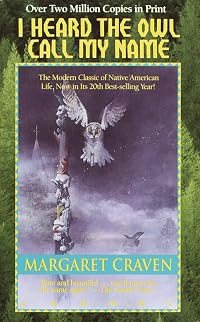
The touching story of a young, mortally ill priest who spends his last days working among the Kwakiutl Indians of British Columbia. Amid the grandeur of the remote Pacific Northwest stands Kingcome, a village so ancient that, according to Kwakiutl myth, it was founded by the two brothers left on earth after the great flood. The Native Americans who still live there call it Quee, a place of such incredible natural richness that hunting and fishing remain primary food sources. But the old show more culture of totems and potlatch is being replaces by a new culture of prefab housing and alcoholism. Kingcome's younger generation is disenchanted and alienated from its heritage. And now, coming upriver is a young vicar, Mark Brian, on a journey of discovery that can teach him-and us-about life, death, and the transforming power of love. show lessTags
Recommendations





















Member Recommendations
Member Reviews
A lovely little tale, set among an isolated Indian tribe in the Pacific Northwest. Craven writes lyrically, poetically, and draws beautiful pictures of a wilderness that not many of us will ever see, let alone survive in. I did enjoy the setup of the tale - young idealistic vicar goes to stay among the Indians, presumably to guide and teach them, and ends up learning far more from them - but since I generally take exception to the invasion of Western religions into these ancient First People cultures, I squirmed a bit. There is no doubt that the tribe is helped by modern civilization - a "hospital boat" arrives periodically to administer to the sick or aging, and give vaccinations to the children - but it seems an irony that the "help" show more is rather forced upon them. There seems an overall acknowledgment by all authorities involved that the tribe's survival is ultimately doomed, and this aid seems designed to draw out the agony while compelling them to see the light of Christianity if they wish to live.
Aside from this underlying note of dissonance, the story, even as short as it is, manages to develop several key characters and their affect on the vicar, as they learn to understand and trust one another. Definitely worth a read. show less
Aside from this underlying note of dissonance, the story, even as short as it is, manages to develop several key characters and their affect on the vicar, as they learn to understand and trust one another. Definitely worth a read. show less
An engrossing fable, told in a sparse almost poetic style, of an outsider in a Kwakiutl village in BC. I couldn't help thinking what we would think of a book written by an American after briefly visiting New Zealand's East Coast in the early '60s, about a sensitive and understanding Pākehā priest who moves there and wins over the local Māori. I have a feeling it would be seen today as HUGELY problematic. I wonder what the Kwakwaka'wakw people of Kingcome think of this book today? That's the review I'd like to read.
This short novel, written decades ago, captured me. Ms. Craven evokes the landscape, the rain, and the stark choices facing the First Nations peoples, but her novel about a young priest's journey to a remote village and his efforts to understand and accompany them goes deeper than that. She gets at the challenges facing both the First Nations people and the descendants of the Europeans who tried to displace them. Fortunately, although it is still a struggle, Craven's pessimism now seems misplaced as the different nations work to save their languages, their culture, their independence.
A classic in Canada and a book with a good reputation, but feels like a very dated view on indigenous people and European relations. A dying priest is sent to a remote village to learn some life lessons and to win over the natives, and in that culture clash he partakes of their wisdom in turn. I gather from the positive reviews this is more about the vibes than the rather trite story summary, and maybe it's on me that I couldn't get into it. What I thought would be the point of the book; watching the internal clash of the indigenous people realizing the slow death of their own culture as their children become integrated in European schools and ways, never takes center stage.
This well-known Canadian novel was very popular in the 1970s. Craven writes very beautiful and moving descriptions of a remote BC coastal indian village, the rhythm of the seasons of hunting and fishing, their traditions and legends, and how their way of life was changing in the early 20th century (the story is set around 1912). Mark, a young priest (Anglican or Catholic?) is sent by the bishop to live in the village of Kingcomb, many hours by boat north of Vancouver, and to care for the people in a widespread community. Gradually he adapts to the first nations people and earns their respect and friendship, and comes to love the culture and the land at the edge of the river and the sea. The people are troubled, as their youth go away to show more residential school and some move away to the city, changing forever. I wondered if this book, written in 1973 before the residential schools lawsuits and treaty rights court cases, might be limited by a romanticized vision of the native way of life, and a paternalistic idealized view of the role of the white men, government and the church. However it is not so easily stereotyped and dismissed. The bishop and priests are aware of their society's flaws and their own limitations. The RCMP and other white visitors (including a lady anthropologist and a teacher) are shown to be arrogant and ignorant of the people's needs. The Indians have their own problems including issues with alcohol, sexual abuse and violence, which are not easily solved. The simple life in the village is portrayed as an ideal, while shown at the same time to be fading away, and the people know that their way of life will disappear in one or two more generations. So the tone of the book is both celebratory, loving, and nostalgic and sad. In communion with the natural world, the priest and the people find peace, accept hardships and tragedies with dignity, and prepare for death. There is an interesting harmony and balance between the traditional beliefs and the Christian faith.
Overall, a very good read, with lots to reflect over. show less
Overall, a very good read, with lots to reflect over. show less
Cayman 2024 - #4 - This was one of the random completely unknown books on my vast library shelves that i just grabbed and put in the box to read on our Caribbean vacation. Not even sure what prompted me to acquire it or when. But it was a very genuine, heartfelt story (one i just learned had actually been made into a movie!) of a preacher sent to take over an island parish in upper British Columbia of Indian villages....a seemingly impossible task for a slightly naive and lonely white man. But the captivating descriptions of life in these villages and on the water....and the spiritual traditions and cultural conflicts he grapples with as he tries to make a difference was unbelievably sweet to me.....sparse in a very good way......and show more startling at the end, which is always a plus. Very glad i brought it! Now to find the movie! show less
There is something compelling about I Heard the Owl Call My Name, by Margaret Craven, but I can’t quite put my finger on what it is. It is a story with characters and themes that are delicately interwoven, telling a tale in a powerful yet understated manner. I found myself frequently re-reading sentences and paragraphs, not because they were too complex, but because they were so rich with meaning. Craven has written a fairly short novel, but one that I wanted to linger over.
The central character is Mark, a young priest, who does not know he has a fatal illness and a limited life expectancy. He is sent by his bishop, who knows of Mark’s illness (although Mark does not know), to serve a remote congregation of Native American’s show more living along coastal British Columbia. Mark is clearly an outside but he has a certain maturity as he enters into the Native community, getting to know them, and becoming known by them, in gradual increments. It is never forceful and in this way they not only accept him as their priest, but also as their friend, one in whom they feel free to trust with their deepest concerns.
I can’t write more without giving bits of the story away. And I think the reader would rather discover the beauty in this story on their own. I really liked this book and I highly commend it. show less
The central character is Mark, a young priest, who does not know he has a fatal illness and a limited life expectancy. He is sent by his bishop, who knows of Mark’s illness (although Mark does not know), to serve a remote congregation of Native American’s show more living along coastal British Columbia. Mark is clearly an outside but he has a certain maturity as he enters into the Native community, getting to know them, and becoming known by them, in gradual increments. It is never forceful and in this way they not only accept him as their priest, but also as their friend, one in whom they feel free to trust with their deepest concerns.
I can’t write more without giving bits of the story away. And I think the reader would rather discover the beauty in this story on their own. I really liked this book and I highly commend it. show less
Members
- Recently Added By
Published Reviews
ThingScore 75
In the 1960s, young, terminally ill priest Mark Brian is sent to a remote Kwakiutl parish in British Columbia. Sensitive and respectful, he shares in the peoples' hardships and sorrows and earns their trust. He learns that the Indians are "…not simple, or emotional, they are not primitive." He learns, too, that "there was no one truth [of the Indian]…." The Kwakiutl are consistently show more referred to as "the Indians." The characters are somewhat romanticized, but this is as true for the whites as for the Kwakiutl. show less
added by CourtyardSchool
Lists

500 Great Books by Women
507 works; 60 members

1960s
281 works; 16 members

Publisher's Weekly Bestsellers - Part II - 1940 - 1979
355 works; 5 members
Overdue Podcast
808 works; 9 members
Animals in the Title
498 works; 11 members
First Novels
373 works; 17 members

Books Read in 2022
5,226 works; 112 members

Set in the Pacific Northwest
136 works; 7 members

Swinging Seventies
255 works; 16 members

Books Read in 2012
59 works; 1 member

Books We Discovered On LibraryThing
530 works; 130 members

Read For Your Life
157 works; 1 member
Author Information

4+ Works 2,804 Members
Some Editions
Awards and Honors
Awards
Distinctions
Series

Belongs to Publisher Series
rororo (5578 / 22786)
Work Relationships
Has the adaptation
Is abridged in
Reader's Digest Auswahlbücher 117 - Die Tarnung. Ich hörte die Eule – sie rief meinen Namen. Handicap. Fur'n Groschen Brause. by Reader's Digest
Kirjavaliot - Päämies / Kartanon kasvatit / Vaara lavastus / Kuulin Pollonista kutsuvan by Valitut Palat
Has as a study
Common Knowledge
- Canonical title*
- Ich hörte die Eule, sie rief meinen Namen
- Original title
- I Heard the Owl Call My Name
- Original publication date
- 1967 (Canada) (Canada); 1973 (United States) (United States)
- People/Characters
- Mark Brian; Jim; Keetah; Gordon; Marta Stephens; T. P. Wallace (show all 15); Chief Eddy; Bishop; Caleb; Mrs. Hudson; Sam; Ellie; Calamity Bill; Peter; Constable Pearson
- Important places
- British Columbia, Canada; Kingcome, British Columbia; Alert Bay; Gilford Island; Turnour Island; Vancouver
- Related movies
- I Heard the Owl Call My Name (1973 | IMDb)
- Dedication
- This book is for the Tsawataineuk Tribe at Kingcome Village, B.C., and for Eric Powell.
- First words
- The doctor said to the Bishop, 'So you see, my lord, your young ordinand can live no more than three years and doesn't know it.'
- Quotations
- In the teacher’s house the only other white man in the village did not think of the vicar at all. He didn’t even know he had arrived; he didn’t even know he was coming. This was the teacher’s second year in the villag... (show all)e. He did not like the Indians and they did not like him. When he had returned from his summer holiday, a seaplane had deposited him at flood tide under the alders on the far side of the river, and he had stood there in the rain yelling loudly, “Come and get me,” and T. P. had announced, “If he cannot be more polite, let him stay there.” It was old Marta who finally poled across the river and plucked him from the bank. The teacher had come to the village solely for the isolation pay which would permit him a year in Greece studying the civilization he adored.
At star-fall a young buck walked through the village to drink at the river. He was unafraid of guns. The Indian hunted for food, not for fun, and when he found it necessary to kill a deer, he did not shoot him. If possible, he knocked him over the head with a club.
Just before dawn when day and night were locked in their tug-of-war, and day began slowly to push away the dark, Ellie, the little lost one, returned to the house of Sam, her father. Ellie went willingly to the bed of any man who beckoned her, and since, at thirteen years, brutality was all she knew of masculine attention, she liked best the man who mistreated her the most.
Also, the teacher accosted him on the path, asking that he intervene with the authorities that he be given proper supplies. Even the smallest villages were given more pencils and pads. Also, he was expected to pay for the pap... (show all)er tissues which he dropped so generously for the sniffling noses of his pupils. Furthermore, his house had no electricity, and its tiny bathroom was so small that when he sat upon the throne-of-thought he could not shut the door without hitting his knees, which was an outrage.
The young vicar suggested the teacher cut two round holes for his knees to stick through, and offered to trade his outhouse for the teacher’s bathroom, but the teacher was not amused. There was one more thing he felt it his duty to inform the vicar. The vicar might as well know right now that as for himself, he was an atheist; he considered Christianity a calamity. He believed that any man who professed it must be incredibly naїve.
The young vicar grinned and agreed. There were two kinds of naїveté, he said, quoting Schweitzer; one not even aware of the problems, and another which has knocked on all the doors of knowledge and knows man can explain little, and is still willing to follow his convictions into the unknown.
“This takes courage,” he said, and he thanked the teacher and returned to the vicarage.
When Mark walked along the bank to the place where the canoe waited, he knew it was useless. They were ready to go—the old of Keetah’s family, warmly wrapped against the cold, and sitting very straight on the narrow woode... (show all)n seats. As he approached, Keetah and Mrs. Hudson came slowly through the black sands, stopped, and Mrs. Hudson lifted her proud old face and spoke to him slowly.
“What have you done to us? What has the white man done to our young?” and they waded into the icy water and climbed into the canoe, and because, to keep them here, someone had removed the outboard motor, one of the old men poled into the center of the river where the current took them, the paddles lifting and falling. Not even Keetah looked back.
They were larger than themselves. They belonged to the great and small hegiras of the self-exiles of this earth, clinging fiercely to a way that is almost gone, as the last leaves fall at last gently and with great pride.
“What have you done to us?”
The words lingered in the wind, in the spruce, in the drizzle that had begun to fall, and Mark turned from them in pain and saw old Marta. He said, “Marta, what can I do?” and she said, “You can wait,” and he stumbled past her and up the path and into the church.
That evening he wrote the Bishop and when the answer came two weeks later, he took it to the church, afraid to open it. Had he failed? Was it his fault?
The letter was short: “I think it is time you knew of Tagoona, the Eskimo. Last year one of our white men said to him, ‘We are glad you have been ordained as the first priest of your people. Now you can help us with their problem.’ Tagoona asked, ‘What is a problem?’ and the white man said, ‘Tagoona, if I held you by your heels from a third-story window, you would have a problem.’ Tagoona considered this long and carefully. Then he said, ‘I do not think so. If you saved me, all would be well. If you dropped me, nothing would matter. It is you who would have the problem.’”
Mark led him to the vicarage, put on the coffee pot and prepared sandwiches, and when they had finished lunch at the kitchen table—the rain pattering on the roof—the sergeant took a photograph from his pocket.
“Is th... (show all)is the girl? Look at it carefully.”
Mark did so.
“Yes. There's no doubt about it. This is Keetah’s sister.”
“The man didn’t marry her. When she found out about the mask, she objected, I suppose. He left her in Vancouver, penniless, and he disappeared. I don’t suppose she’d ever seen a paved street, or a train, or a telephone. There was no place for her to go, no work she was trained to do. She drifted to the only place where she was welcome.”
“A beer parlour?”
“Yes. The money men paid her kept her alive. No one knew to what tribe she belonged. Even if she’d had the money to charter a plane, I suppose she would have been ashamed to return to her village. Soon she was taking dope—it’s what is apt to happen—and one night she took too much, deliberately, probably, though we’ll never know. You’re sure of the identification?”
“Yes, I’m sure, but I’d like Jim to see the picture also. He’s not here today.”
“Dead in three months—well, it doesn’t take long. You’ll tell the family?”
“I’ll have Jim tell them.”
Mark went with the sergeant to the river’s edge and watched his boat head downstream to the inlet. He did not know that when he turned back in his own eyes was the depth of sadness which he had begun to understand.
The first week-end Gordon was home from fishing with his uncle, he came to Marta’s house, bringing three boys who had been with him at the Indian school and who wished also to board with a white family and go to school in a... (show all) white man’s town.
When Gordon was there, Jim did not come or the elders. Gordon was not interested in the past. His mind reached only ahead with that urgent intensity which makes youth seem selfish, and is so necessary to difficult accomplishment.
Do you think I can do it?” he would ask Keetah. “What do you think?” and she would answer, “I know you can. Of course you can.”
Coming home from Gilford one warm afternoon, Mark found a splendid, large American yacht tied at the float in the inlet. There was no one aboard, and when he and Jim moored their own boat and climbed into the speed boat, they... (show all) could see through the portholes the rich polished helm, the gleaming mahogany of the main cabin with its elaborate bar.
When they came up the river to the village, a shabby speed boat was pulled up on the beach and a young logger in a plaid shirt perched on the bank, who explained that the yacht owner had paid him to bring his party here.
There were three women and four men, and as he walked up the path to the vicarage, Mark could hear chatter and gay laughter, and when he passed the vicarage, he could see them—the women in their tailored slacks and cashmere sweaters, the yacht owner in his white jacket and gold braided cap.
They were swatting mosquitoes and horse flies, gawking in the windows of the church, and the voices of the women had a shrill quality he had almost forgotten.
“Look—look at the funny man at the bottom of the totem.”
When he approached and introduced himself, they were most affable.
“What are you doing here?” asked the yacht owner, and Mark said he belonged here; he lived here. And one of the women said, “How do you tell the Indians apart?” and Mark said, the same way she told her friends apart, because she knew them.
He showed them the village and he answered their questions, and, when they were ready to go, he went with them to the river bank. When the yacht owner saw his speed boat, he said, “I wonder if you would take us to the yacht in your boat? The mosquitoes are eating us alive, and the logger’s tub is too slow. It would mean a little money in your collection plate.” And Mark said, no, they would have to return the way they had come, and he noticed that Jim had picked up a stick and was drawing on the sands the picture of a dollar bill.
“If you come to southern California, you must look us up,” said the wife of the yacht owner. “We will show you our big parish,” and he knew he would never see it, and that she knew it also.
They climbed into the logger’s boat and pushed off, and the river took them. They were on their way back to a life he no longer knew, as distant as another planet, and he was glad to see them go—and a little ashamed of it.
He looked at the picture in the sand.
“What does it mean?” he asked, and Jim answered, “It means an American stood here.”
In the latter third of the month, an English woman anthropologist came to visit the village, housed, by arrangements of the Indian Agent with a couple who were among the very few of the tribe who were not Christians and did n... (show all)ot attend church. When Mark went to call on her and offer any help he could, he was at once rebuked.
She was a large, mannish, gray-haired woman who informed him that her visit here was a fulfillment of a wish of many years standing.
“Since I was a girl” she announced, “I have been interested in the culture of the Quackadoodles.”
Mark said hastily, “I had trouble with that word too. It took me a month to learn it. The Indians pronounce it Kwacutals.”
“Young man, for the past century in England this band has been known as the Quackadoodles and as the Quackadoodles, it will be known forever.”
“I beg your pardon.”
Mark asked if she would like to see the church, and when they entered, she saw at once the new insulated sidings which had caused him so many blisters.
“How much better it would have been to have left the rude studding,” she said sadly, and he told her that even with the plywood the flowers on the altar at Christmas had frozen solid in the water that held them.
She did not hear him. What a shame that Christianity had come here! If the white man had not intruded where he was not wanted, where he did not belong, even now, protected by the mountains and the river, the village would have remained a last stronghold of a culture which was almost gone.
Mark tried to say that no village, no culture, can remain static.
“I have often thought that if this lovely and magnificent land belongs to anyone, it is to the birds and the fish. They were here long before the first Indian, and when the last man is gone from the earth, it will be theirs again.”
“Caleb, why are you telling me this?”
“Because it is going to happen to Kingcome and sooner than we think. The long trek down the lonely coast is not yet over. The young will follow Gordon. Very soon only the old wil... (show all)l be left and a very few others, and when the old die, the others will leave. The tribe is going to trade its simplicity for the shiny gadgetry of our complex world, and it will not be so content, because there is one thing it does not anticipate. The outside world will not accept it easily.”
There was a long silence.
“And now it’s my turn, Caleb,” said Mark. “You’re right. In the end they will all leave, and the wrong people will use them for the wrong reasons. For publicity, for politics, for egotism, even for greed. But you have forgotten something. They have one splendid friend who understands them and will stand by them. They have men like you, Caleb. Don’t you know yet that in life you have been to this tribe what the Cedar-man was to them in the myth?”
The old priest looked abashed.
“I hope it’s a little bit true, Mark,” he said humbly. “And if it is true of me, it is true of you also.”
While Mark built the fire, Jim sent out an emergency on the radio-telephone, but the hospital ship was too far away to come and the gale warnings were out and the straits too rough to cross. But it didn’t matter. It was too... (show all) late for help and Mark knew it, and Calamity knew it also.
Mark sat beside the cot.
“I ain’t much of a church man, Mark. Guess you might say I’m an agnostic. I don’t know.”
“There’s a good bit of agnostic in all of us, Calamity. None of us knows much—only enough to trust to reach out a hand in the dark.”
He went up the path and the steps, through the living room and into the kitchen. The lights were on. At the stove Marta was preparing his dinner.
“Marta, something strange happened tonight. On the bank of the river I hea... (show all)rd the owl call my name,” and it was a question he asked, an answer he sought.
She did not say, “Nonsense, it was my name the owl called, and I am old and with me it does not matter.” She did not say, “It’s true you’re thin and white, but who is not? It has no importance.”
She turned, spoon still in her hand, lifting her sweet, kind face with its network of tiny wrinkles, and she answered his question as she would have answered any other. - Last words
- (Click to show. Warning: May contain spoilers.)Past the village flowed the river, like time, like life itself, waiting for the swimmer to come again on his way to the climax of his adventurous life, and to the end for which he had been made.
- Blurbers
- Peale, Norman Vincent
- Original language
- English
*Some information comes from Common Knowledge in other languages. Click "Edit" for more information.
Classifications
Statistics
- Members
- 2,449
- Popularity
- 7,960
- Reviews
- 44
- Rating
- (3.87)
- Languages
- 12 — Czech, Danish, Dutch, English, Estonian, Finnish, French, German, Norwegian (Bokmål), Norwegian, Spanish, Swedish
- Media
- Paper, Audiobook, Ebook
- ISBNs
- 56
- ASINs
- 39