On This Page
Description
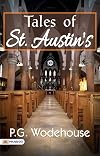
British humorist P. G. Wodehouse rose to popularity in part due to his witty stories set in the country's public schools. This collection brings together some of Wodehouse's most hilarious essays, vignettes, and tales of schoolboys. Get ready for a treasure trove of uproarious accounts of cricket, rugby, prank wars and general mischief-making..
Tags
Recommendations


















Member Reviews
As I have said about other Wodehouse public school stories, there are always negative reviews of those books here in goodreads, because of a problem of expectations. Most people reading these books nowadays are fans of Wodehouse's comic fiction, and when they find out that these early works are mostly not comedies they are disappointed. There are certainly signs of the author's irony and wit, but these were written for a different market and in a genre with different conventions.
Tales of St. Austin's is not a novel, but a collection of short stories and a few humorous essays that were published in fiction magazines for boys between 1901 and 1903. They are about the misadventures of different boys attending a public boarding school show more called St. Austin (the same one where his book The Pothunters was set). Some of the characters appear in several stories here and in that novel.
Even though he builds on the same genre tradition and conventions, you can see the differences with the pioneers of the genre, because Wodehouse is not interested in moralizing. The characters here are boys who want to get out of inconvenient exams or get away with breaking the rules. Some of them are cads and some are likable, but they mostly correspond with the archetypes expected in the genre; do not expect deep characterization in these short stories. But they are well-written, and I found them entertaining and funny in their own way.
Although these Wodehouse school stories are always pleasant for me to read, one thing where he is less to my taste than other contemporary writers of school stories is that he doesn't really do the underdog story. You know, the story where the main character is unfairly accused of something or who has to surmount serious difficulties to get something he wants or earn the respect of his peers, and comes through because of his pluck and strength of will. I always enjoy that kind of stories where you can cheer for the main character, but Wodehouse tends to look at this setting with fond amusement, rather than as a source of epic drama. Possibly that's why my favorite so far among his school books is The White Feather, where he follows that underdog trope very well. (I haven't read Mike yet, though, the one where he introduces his character Psmith, and which is his most famous school story).
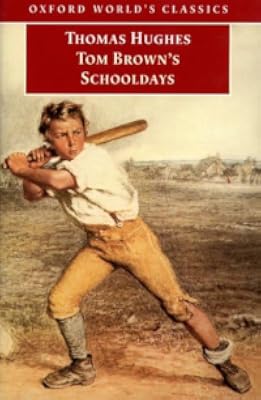
After several short stories and a long one, the book ends with a few humorous essays, where he deals with subjects like the school work these boys did (heavy on Latin and Greek translations), with cricket and even with the classic novel that basically created this genre (Tom Brown's School Days, by Thomas Hughes). Wodehouse is witty and funny in these, but it may be tough for modern readers to appreciate if they are not familiar with the subject. show less
Tales of St. Austin's is not a novel, but a collection of short stories and a few humorous essays that were published in fiction magazines for boys between 1901 and 1903. They are about the misadventures of different boys attending a public boarding school show more called St. Austin (the same one where his book The Pothunters was set). Some of the characters appear in several stories here and in that novel.
Even though he builds on the same genre tradition and conventions, you can see the differences with the pioneers of the genre, because Wodehouse is not interested in moralizing. The characters here are boys who want to get out of inconvenient exams or get away with breaking the rules. Some of them are cads and some are likable, but they mostly correspond with the archetypes expected in the genre; do not expect deep characterization in these short stories. But they are well-written, and I found them entertaining and funny in their own way.
Although these Wodehouse school stories are always pleasant for me to read, one thing where he is less to my taste than other contemporary writers of school stories is that he doesn't really do the underdog story. You know, the story where the main character is unfairly accused of something or who has to surmount serious difficulties to get something he wants or earn the respect of his peers, and comes through because of his pluck and strength of will. I always enjoy that kind of stories where you can cheer for the main character, but Wodehouse tends to look at this setting with fond amusement, rather than as a source of epic drama. Possibly that's why my favorite so far among his school books is The White Feather, where he follows that underdog trope very well. (I haven't read Mike yet, though, the one where he introduces his character Psmith, and which is his most famous school story).
After several short stories and a long one, the book ends with a few humorous essays, where he deals with subjects like the school work these boys did (heavy on Latin and Greek translations), with cricket and even with the classic novel that basically created this genre (Tom Brown's School Days, by Thomas Hughes). Wodehouse is witty and funny in these, but it may be tough for modern readers to appreciate if they are not familiar with the subject. show less
May not be of much interest to folks who aren't completists like myself. This is very early work, and the 12 school stories are amusing but underdeveloped and uneven, compared to what Wodehouse did for most of his writing career. And the 4 "essays", entirely satire, are best appreciated by Anglophiles who find inside jokes about academia funny. A small universe. Of course, I loved it, but I'm an oddball; I wouldn't really expect most of the folks I know to enjoy it.
I'm reading a complete collection of Wodehouse chronologically. Tales of St. Austin's is well-written and shows the development of Wodehouse's wit, but tales from an English boy's school, heavy on their sporting events is kind of boring for me.
A mixed bag, from my perspective. Absolutely loved Wodehouse's review of Tom Brown's Schooldays (which completely tallied with my feelings about the book) and enjoyed 'The Maneouvres of Charteris' but found some of the other stories too focused on cricket and rugby, to the point where I was skimming great chunks of them. Although having said that, I did enjoy the 'Now, Talking About Cricket-' essay...
Here are sixteen short stories about St.Austin's school,and the boys and masters there. As usual ,Wodehouse gives us an hilarious take on the English boarding school scene. Some marvelous characters emerge,such as Pillingshot,Frederick Wackerbath Bradshaw,Charles Augustus Walkinshaw and 'Babe MacArthur plus the truly awful Miss Florence Beezley.
The collection includes my personal favorite 'The Tabby Terror', in which a feline criminal by the name of Captain Kettle is finally brought to justice.
If you enjoy Wodehouse,then you will not be disappointed with this collection.
The collection includes my personal favorite 'The Tabby Terror', in which a feline criminal by the name of Captain Kettle is finally brought to justice.
If you enjoy Wodehouse,then you will not be disappointed with this collection.
Although this was P. G. Wodehouse's third publication, first released in 1903, some of the stories are as old, if not older, than his first book published the previous year.
This is a collection of twelve short stories and four essays. As I don't read essays for pleasure, I didn't bother looking at those featured here. The stories varied from fair to fairly dull. Each one is set around the St Austen's college and most plot lines centered around a sporting event.
This is Wodehouse starting out on what would be a great career. There are flashes of his formidable humour but not enough to make this an entertaining experience for this reader.
This is a collection of twelve short stories and four essays. As I don't read essays for pleasure, I didn't bother looking at those featured here. The stories varied from fair to fairly dull. Each one is set around the St Austen's college and most plot lines centered around a sporting event.
This is Wodehouse starting out on what would be a great career. There are flashes of his formidable humour but not enough to make this an entertaining experience for this reader.
Makes you realiſe what David P ‘πSpengler’ Goldman ſaid about England haviŋ had a proper empire, but not ðe US: wiþout ðe Engliſhboy trainiŋ in languages & claßical culture, ðe US cannot hold an empire.
Members
- Recently Added By
Lists

Children's Literature 1900 - 1950 in order
413 works; 8 members
Author Information

657+ Works 111,110 Members
P. G. Wodehouse was born in Guildford, United Kingdom on October 15, 1881. After completing school, he spent two years as a banker at the Hong Kong and Shanghai Bank in London and then took a job as a sports reporter and columnist for the Globe newspaper. His first novel, The Pothunters, was published in 1902. He wrote over 100 novels and short show more story collections during his lifetime including A Perfect Uncle, Love Among the Chickens, The Swoop, P. Smith in the City, Meet Mr. Milliner, Doctor Sally, Quick Service, The Old Reliable, Uneasy Money, A Damsel in Distress, Jill the Reckless, The Adventures of Sally, A Pelican at Blandings, The Girl in Blue, and Aunts Aren't Gentlemen. His most famous characters, Bertie Wooster and his manservant, Jeeves, appeared in books such as Much Obliged, Jeeves. He also wrote lyrics for musical comedies and worked as screenwriter in Hollywood in the 1930s. In 1939, he bought a villa in Le Touquet on the coast of France. He remained there when World War II started in 1939. The following year, the Germans appropriated the villa, confiscated property, and arrested him. He was detained in various German camps for almost one year before being released in 1941. He went to Berlin and spoke of his experience in five radio talks to be broadcast to America and England. The talks themselves were completely innocuous, but he was charged with treason in England. He was cleared, but settled permanently in the United States. He became a citizen in 1955. He was made a Knight Commander of the Order of the British Empire in 1975. He died from a heart attack after a long illness on February 14, 1975 at the age of 93. (Bowker Author Biography) show less
Some Editions
Series

Belongs to Publisher Series
Work Relationships
Is contained in
Is a (non-series) sequel to
Common Knowledge
- Canonical title
- Tales of St. Austin's
- Original title
- Tales of St Austin's
- Original publication date
- 1903
- Important places
- St Austin's school; St. Austin's English public school
- Dedication
- AD MATREM
- Disambiguation notice
- Most originally appeared in The Captain, the rest in the Public School Magazine, except for 'A Shocking Affair', published in this book for the first time.
Classifications
Statistics
- Members
- 293
- Popularity
- 110,364
- Reviews
- 8
- Rating
- (3.26)
- Languages
- Amharic, English
- Media
- Paper, Ebook
- ISBNs
- 46
- ASINs
- 8