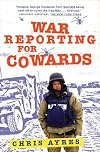
War Reporting for Cowards
by Chris Ayres
On This Page
Description
"Imagine George Costanza from Seinfeld being sent off to cover the Iraq War... Hilarious." -Michiko Kakutani, The New York Times Chris Ayres is a small-town boy, a hypochondriac, and a neat freak with an anxiety disorder. Not exactly the picture of a war correspondent. But when his boss asks him if he would like to go to Iraq, he doesn't have the guts to say no. After signing a one million dollar life-insurance policy, studying a tutorial on repairing severed limbs, and spending twenty show more thousand dollars on camping gear (only to find out that his bright yellow tent makes him a sitting duck), Ayres is embedded with a battalion of gung ho Marines who either shun him or threaten him when he files an unfavorable story. As time goes on, though, he begins to understand them (and his inexplicably enthusiastic fellow war reporters) more and more: Each night of terrifying combat brings, in the morning, something more visceral than he has ever experienced-the thrill of having won a fight for survival. War Reporting for Cowards tells, with "self-deprecating wit", the story of Iraq in a way that is extraordinarily honest and bitterly hilarious ( The New Yorker ). "Heartbreakingly funny." -Anthony Swofford, author of Jarhead "Chris Ayres has invented a new genre: a rip-roaring tale of adventure and derring-don't." -Toby Young, author of How to Lose Friends and Alienate People "Darkly entertaining." - Los Angeles Times "Ayres's stories of life with Marines are gripping-in part because he's the perfect neurotic foil." - People show lessTags
Recommendations



Member Reviews
A capable memoir but not entirely as advertised. The title, War Reporting for Cowards, the bright, cartoonish book design, the light prose, the reviews which call it 'hilarious' and 'laugh-out-loud'; all of this would suggest a breezy, roguish romp through an American misadventure in Iraq. Which makes it all the more jarring when, just a few chapters in, Ayres is describing what it felt like to be in Manhattan on September 11, 2001, watching office workers jump from the burning atrocity. "Here they come: black shapes, writhing, turning and grasping as they make the quarter-of-a-mile journey from the top floors of the World Trade Center to the concrete plaza below." (pg. 68)
It is the best writing of the book – "a section of the north show more tower comes loose, like a melted ice shelf falling into the ocean" (pg. 69) – but it leaves a hollow pit in your stomach that overshadows the rest of the book's jauntiness. Of course, given he was there on that day, Ayres is obliged to include an account of it. However, his reaction to the two planes also betrays a wider problem with his memoir; he just hasn't the inclination to sniff out a story. When a plane hits the North Tower, he doesn't rush to the scene. Even if it's believed, at that point, to be a bewildering aviation accident, it's still one hell of a story. When the second plane hits, he still doesn't want to bite at the story.
Ayres leans into this disinclination throughout the book, and it can be amusing, but it can also be exasperating. It's hard to believe, at times, that he's a journalist with one of the most reputable papers in the world (the London Times). Plenty of journalists and writers would kill for the opportunity to be in a Humvee with the 1st Marine Division at the spearhead of the 2003 invasion of Iraq, or – though they would not be so tactless as to admit it – to be in Manhattan at 8:46 a.m. on 9/11. Ayres plays up his unsuitability and his reluctance for entertainment effect, but it also reminds you that he's not doing his job (as much as you don't want people to put themselves in harm's way), that he's a burden on his military minders, underwhelming to his editors, and much happier doing 'lift and view' (recycling other papers' reports) than real journalism. It is, unfortunately, the type of journalist we get rather than the type we want. You get the impression he's only there in order to navigate his way up the career ladder (he all but admits it) and find opportunity for copy. The way he wriggles out of Iraq at the end feels like a kid trying to get out of P.E. class with a parent's note. He's a second-rate witness to history; a far cry from the Times' first war correspondent, William Howard Russell, who practically invented the role.
This 'cowardly' approach is the book's raison d'être, of course, and this honesty gives Ayres' writing an integrity that more self-aggrandizing, sensationalist 'I-dodged-sniper-fire' accounts forget. And yet it almost feels like he's saying it first, before someone else does, like a bald man making a joke about his pate. He keeps the book brief and easy to read, which are merits, but you also feel this helps cover up the fact that he did not do all that much (he's in Iraq for nine days). A true coward's perspective on war would be interesting; Ayres instead is a journalist looking to squander opportunities to do much original journaling. His self-deprecating anecdotes are amusing, but his 'I was there but only briefly and I didn't do much' betrays the book's overall lack of boost, and it reads like an extended magazine feature rather than something to which people should give too much of their time. show less
It is the best writing of the book – "a section of the north show more tower comes loose, like a melted ice shelf falling into the ocean" (pg. 69) – but it leaves a hollow pit in your stomach that overshadows the rest of the book's jauntiness. Of course, given he was there on that day, Ayres is obliged to include an account of it. However, his reaction to the two planes also betrays a wider problem with his memoir; he just hasn't the inclination to sniff out a story. When a plane hits the North Tower, he doesn't rush to the scene. Even if it's believed, at that point, to be a bewildering aviation accident, it's still one hell of a story. When the second plane hits, he still doesn't want to bite at the story.
Ayres leans into this disinclination throughout the book, and it can be amusing, but it can also be exasperating. It's hard to believe, at times, that he's a journalist with one of the most reputable papers in the world (the London Times). Plenty of journalists and writers would kill for the opportunity to be in a Humvee with the 1st Marine Division at the spearhead of the 2003 invasion of Iraq, or – though they would not be so tactless as to admit it – to be in Manhattan at 8:46 a.m. on 9/11. Ayres plays up his unsuitability and his reluctance for entertainment effect, but it also reminds you that he's not doing his job (as much as you don't want people to put themselves in harm's way), that he's a burden on his military minders, underwhelming to his editors, and much happier doing 'lift and view' (recycling other papers' reports) than real journalism. It is, unfortunately, the type of journalist we get rather than the type we want. You get the impression he's only there in order to navigate his way up the career ladder (he all but admits it) and find opportunity for copy. The way he wriggles out of Iraq at the end feels like a kid trying to get out of P.E. class with a parent's note. He's a second-rate witness to history; a far cry from the Times' first war correspondent, William Howard Russell, who practically invented the role.
This 'cowardly' approach is the book's raison d'être, of course, and this honesty gives Ayres' writing an integrity that more self-aggrandizing, sensationalist 'I-dodged-sniper-fire' accounts forget. And yet it almost feels like he's saying it first, before someone else does, like a bald man making a joke about his pate. He keeps the book brief and easy to read, which are merits, but you also feel this helps cover up the fact that he did not do all that much (he's in Iraq for nine days). A true coward's perspective on war would be interesting; Ayres instead is a journalist looking to squander opportunities to do much original journaling. His self-deprecating anecdotes are amusing, but his 'I was there but only briefly and I didn't do much' betrays the book's overall lack of boost, and it reads like an extended magazine feature rather than something to which people should give too much of their time. show less
War Reporting for Cowards by Chris Ayres is a book which tells of the time the author was embedded with the Marines in the second Gulf War. Mr. Ayres still writes to British magazines and screen.
If there is one word to describe War Reporting for Cowards by Chris Ayres it’s “honest” – and probably also “funny”. So funny and honest it is.
The book follows Mr. Ayres as he becomes a “war reporter”, a short autobiography of growing up, going to school and getting a job. From there Mr. Ayres tells us about being a foreign correspondent in New York City and witnessing the 9/11 attacks from ground level. Mr. Ayres then gets assigned to Los Angeles, where he knows his assignments are not serious, yet he has to take them seriously show more in a wry sort of way.
Then he goes to Iraq.
Sometimes people want to talk with me about the Israel-Palestine, an issue I’m always willing to discuss frankly. Many are just trying to get information before making up their minds, but every once in a while I get the “why did Israel disproportionally bomb Palestine after they shot ‘only’ 2,000 rockets on them?”
My answer is almost always the same “what would you want to do if only one of those 2,000 was aimed at your kids?”
“Idealism increases in direct proportion to one’s distance from the problem.” – John Galsworthy
Being embedded with American troops is no joke, as he soon finds out. Even as an embedded reporter Mr. Ayers finds that he has been hardened witnessing the grim reality of war. The author finds that being on the front lines (without a gun) Mr. Galsworthy starts making sense.
The author’s self-deprecating humor shines throughout the book. He does not make himself to be a hero of the stature of John Rambo or John Matrix, but a reluctant reporter, a coward among brave men. Only that he’s not a coward, just a rational human being.
The book is an enjoyable read, an accurate war story without embellishments and with humor. A fun and easy read which will resonate with many people.
What I couldn’t get past though, were some of the mistakes in the book, outright jumbled words and calling Todd Beamer, the American passenger aboard United Airlines Flight 93 which was hijacked as part of the September 11 attacks, “Tom”.
I know those are minor complaints, but they really irritated me.
For more reviews and bookish posts please visit: http://www.ManOfLaBook.com show less
If there is one word to describe War Reporting for Cowards by Chris Ayres it’s “honest” – and probably also “funny”. So funny and honest it is.
The book follows Mr. Ayres as he becomes a “war reporter”, a short autobiography of growing up, going to school and getting a job. From there Mr. Ayres tells us about being a foreign correspondent in New York City and witnessing the 9/11 attacks from ground level. Mr. Ayres then gets assigned to Los Angeles, where he knows his assignments are not serious, yet he has to take them seriously show more in a wry sort of way.
Then he goes to Iraq.
Sometimes people want to talk with me about the Israel-Palestine, an issue I’m always willing to discuss frankly. Many are just trying to get information before making up their minds, but every once in a while I get the “why did Israel disproportionally bomb Palestine after they shot ‘only’ 2,000 rockets on them?”
My answer is almost always the same “what would you want to do if only one of those 2,000 was aimed at your kids?”
“Idealism increases in direct proportion to one’s distance from the problem.” – John Galsworthy
Being embedded with American troops is no joke, as he soon finds out. Even as an embedded reporter Mr. Ayers finds that he has been hardened witnessing the grim reality of war. The author finds that being on the front lines (without a gun) Mr. Galsworthy starts making sense.
The author’s self-deprecating humor shines throughout the book. He does not make himself to be a hero of the stature of John Rambo or John Matrix, but a reluctant reporter, a coward among brave men. Only that he’s not a coward, just a rational human being.
The book is an enjoyable read, an accurate war story without embellishments and with humor. A fun and easy read which will resonate with many people.
What I couldn’t get past though, were some of the mistakes in the book, outright jumbled words and calling Todd Beamer, the American passenger aboard United Airlines Flight 93 which was hijacked as part of the September 11 attacks, “Tom”.
I know those are minor complaints, but they really irritated me.
For more reviews and bookish posts please visit: http://www.ManOfLaBook.com show less
A salutary antidote to the Geraldo Rivera school of war reporting, written by a self-described and very human "coward." This would be in a top 10 of books on war reporting -- I'd definitely assign this right along with Ernie Pyle!
This book was the most hilarious book you will ever read about the Iraq War. Chris Ayres tells his story about reporting on the front lines, all the horrors, the bravery, and especially the laughs. Really great read if your onto meaningful humor.
Quite good, and while not sacrificing truth it is less painful to read than most accounts of modern war.
Quite good, and while not sacrificing truth it is less painful to read than most accounts of modern war.
Members
- Recently Added By
Author Information
11 Works 327 Members
Common Knowledge
Classifications
Statistics
- Members
- 262
- Popularity
- 121,645
- Reviews
- 7
- Rating
- (3.72)
- Languages
- English
- Media
- Paper, Ebook
- ISBNs
- 6
- ASINs
- 2