On This Page
Description
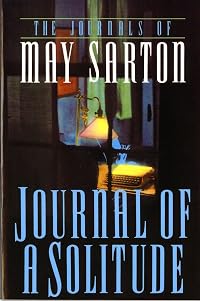
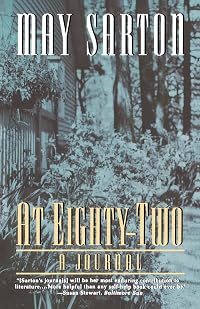
May Sarton's parrot chatters away as Sarton looks out the window at the rain and contemplates returning to her "real" life-not friends, not even love, but writing. In her bravest and most revealing memoir, Sarton casts her keenly observant eye on both the interior and exterior worlds. She shares insights about everyday life in the quiet New Hampshire village of Nelson, the desire for friends, and need for solitude-both an exhilarating and terrifying state. She likens writing to "cracking show more open the inner world again," which sometimes plunges her into depression. She confesses her fears, her disappointments, her unresolved angers. Sarton's garden is her great, abiding joy, sustaining her through seasons of psychic and emotional pain. Journal of a Solitude is a moving and profound meditation on creativity, oneness with nature, and the courage it takes to be alone. Both uplifting and cathartic, it sweeps us along on Sarton's pilgrimage inward. show lessTags
Recommendations


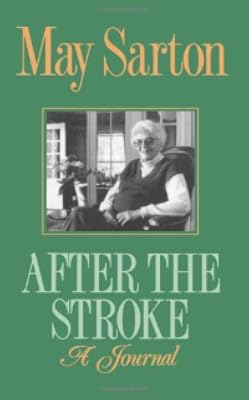
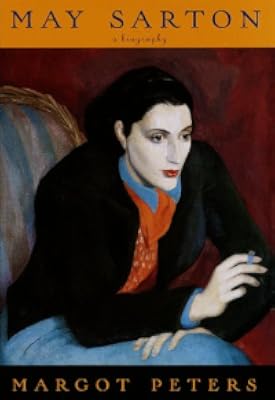


















Member Reviews
"I am here alone for the first time in weeks," May Sarton begins this book, "to take up my 'real' life again at last. That is what is strange―that friends, even passionate love,are not my real life, unless there is time alone in which to explore what is happening or what has happened." In this journal, she says, "I hope to break through into the rough, rocky depths,to the matrix itself. There is violence there and anger never resolved. My need to be alone is balanced against my fear of what will happen when suddenly I enter the huge empty silence if I cannot find support there." In this book, we are closer to the marrow than ever before in May Sarton's writing.
Savory, and best appreciated in smallish bits. The subtitle is "The intimate diary of a year in the life of a creative woman", and that's pretty fair truth in advertising. In 1972, at the age of 58, May Sarton was living alone in her home in New Hampshire, working on her poetry, assessing her life and Life in general (as she apparently was wont to do) in journal entries always intended to be shared. She speaks cautiously of certain people in her life, plumbing the depths of her own emotions while clearly trying to protect the privacy of some of those close to her. (She refers to her current "passionate love" as "X", for instance, and to an aspiring young poet who seeks her advice as "Z".) I found much of it very moving, and unsettlingly show more connected to me in many ways. I recognize her feelings and responses to life's routine situations, and her observations on the nature of writing are spot on. "I suppose I have written novels to find out what I thought about something and poems to find out what I felt about something." It's a bit discouraging, though, to read some of her sensible views on sexuality, for example, and to realize that as a society we still haven't quite got to where she was then. I expect I will revisit this journal, at least in parts, often. It has also prompted me to pick up the great long biography of Sarton by Margot Peters that's been sitting on my shelf for a while. May Sarton is one of those authors I should have known about 45 years ago, but did not discover until recently. Ah, well, "At any age, we grow by the enlarging of consciousness, by learning a new language, or a new art or craft...that implies a new way of looking at the universe." show less
This book was recommended to me by a client who struggles with needing solitude as much as I do -- yet also fears the inevitable loneliness that comes with it. I wasn't sure what to expect when I picked up JOURNAL OF A SOLITUDE. I don't typically read books written nearly 5 decades ago. Still, I love getting glimpses into people's journals and understanding their innermost, intimate thoughts.
I loved Sarton's observations on women, creativity, and the need for solitude. Those passages touched me deeply, and I found myself taking notes and lamenting how little has changed in 50 years. However, I was bored by Sarton's obsession with flowers, gardening, and the birds in her backyard.
I've seen some criticism that calls Sarton self-absorbed, show more but we ARE reading a journal here. I think people who bemoan her focus on introspection forget that self-exploration is exactly what journaling is for. This is true even when someone writes a journal with the ultimate intent to publish it (as Sarton admitted in a later interview). Overall, this was a quick, easy read with some gut-wrenching observations sprinkled in among a love letter to nature. show less
I loved Sarton's observations on women, creativity, and the need for solitude. Those passages touched me deeply, and I found myself taking notes and lamenting how little has changed in 50 years. However, I was bored by Sarton's obsession with flowers, gardening, and the birds in her backyard.
I've seen some criticism that calls Sarton self-absorbed, show more but we ARE reading a journal here. I think people who bemoan her focus on introspection forget that self-exploration is exactly what journaling is for. This is true even when someone writes a journal with the ultimate intent to publish it (as Sarton admitted in a later interview). Overall, this was a quick, easy read with some gut-wrenching observations sprinkled in among a love letter to nature. show less
There were parts and passages of this short work that I loved and that made me stop and consider. Some were moments of insight about our human condition, others were simple descriptions of the raccoons or woodchuck in the car, or the flowers. I found other sections or long quotes more difficult as they were overly academic (my view) and not of great interest. The appeal and penalties of solitude are captured brilliantly in a number of places.
I remember how crushed I was to read in Sarton's authorized biography that Journal of a Solitude was really a work of fiction. The book is a reimagination of how Sarton would like to live rather than a journal of the life she actually lived. No matter. It's still a great read about the solitary life, and the role of solitude in creativity. I gave it four stars instead of five because I'm still smarting over the book not being "true."
I would have enjoyed this volume more had I not first read the Sarton biography by Peters, I think. Peters was so unforgiving of Sarton's human failings.
This volume doesn't minimize those shortcomings altogether, but they nevertheless remained always in the background as I read. I will read another volume, but not for a while. Too many other books stacked by my bed.
This volume doesn't minimize those shortcomings altogether, but they nevertheless remained always in the background as I read. I will read another volume, but not for a while. Too many other books stacked by my bed.
Het lijkt een eenvoudig boek met natuurbeschrijvingen en gedachten maar het is zeker iets om over na te denken. Het thema eenzaamheid: enerzijds belangrijk om productief te kunnen zijn en iets om naar te verlangen, anderzijds is er de behoefte aan relaties en het delen van ervaringen en gezelligheid.
Members
- Recently Added By
Lists

501 Must-Read Books
529 works; 72 members

Best Nonfiction Books about Aging
17 works; 2 members

The Well-Educated Mind, Susan Wise Bauer, 2016
179 works; 3 members
Author Information

102+ Works 8,654 Members
May Sarton (1912-1995) is the author of more than fifty volumes of poetry collections, novels, and memoirs
Some Editions
Awards and Honors
Notable Lists
Series

Work Relationships
Common Knowledge
- Original publication date
- 1973
- People/Characters
- May Sarton; Perley Cole
- Important places
- Cambridge, Massachusetts, USA
- Dedication
- Para Eric Swenson
- First words
- September 15th: Begin here.
!5 de septiembre. Empiezo aquí. - Quotations
- Ocúpate de sobrevivir. Imita a los árboles.Aprende a perder para luego recobrar, y recuerda que nada permanece igual por mucho tiempo, ni siquiera el dolor, el dolor psíquico. Resiste. Déjalo pasar. Suéltalo.
- Last words
- (Click to show. Warning: May contain spoilers.)Once more the house and I are alone.
(Click to show. Warning: May contain spoilers.)Una vez más, la casa y yo estamos solas. - Original language
- Inglés
Classifications
Statistics
- Members
- 1,264
- Popularity
- 19,382
- Reviews
- 22
- Rating
- (3.99)
- Languages
- Dutch, English, French, Spanish
- Media
- Paper, Audiobook, Ebook
- ISBNs
- 13
- ASINs
- 7