
The Essays
by Francis Bacon
On This Page
Description
It is virtually impossible to overstate the impact of Francis Bacon's work on modern society. As the creator of the scientific method, he paved the way for thousands of important discoveries. In this interesting volume of essays, Bacon takes on topics ranging from travel to family life, offering his unique viewpoint and nuggets of philosophical wisdom.Tags
Recommendations












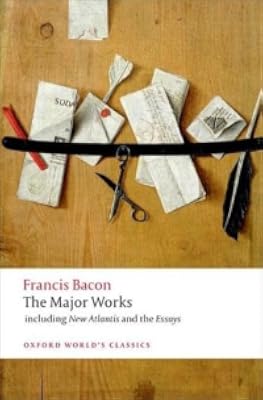











Member Reviews
Sir Francis Bacon (1561-1626), zenginlik ile yoksulluk, ün ile düşüş, tutarlılık ile tutarsızlık, akıl ile boş inanç arasında dalgalanan bir çağda yaşadı.
Bacon’ın yetenekleri, ilgilerindeki evrensellik, düşüncesindeki esneklik, araştırıcılık, çağının pek az kişisinde vardır. Geçmiş gelenekleri ve yöntemleri tanır, çoğunu benimser, ama bununla kalmaz, o geleneklerle yöntemlerin hepsini umulmadık yeni gözlemlerle, kökten değişikliklerle aşmasını da bilir.
Bacon, Denemeler’inde, değişik alanlardan edindiği gözlemler ve deneylere dayanarak kurduğu bilgelik ile “deneme”nin isim babası Montaigne’den ayrılır. Montaigne gibi kendi benliğini anlatmaz, yaşama uygulanabilecek bir show more bilgelik ortaya koyar. Bunu yaparken yarattığı zengin imgelerle bir dil ustası olduğunu da kanıtlar. show less
Bacon’ın yetenekleri, ilgilerindeki evrensellik, düşüncesindeki esneklik, araştırıcılık, çağının pek az kişisinde vardır. Geçmiş gelenekleri ve yöntemleri tanır, çoğunu benimser, ama bununla kalmaz, o geleneklerle yöntemlerin hepsini umulmadık yeni gözlemlerle, kökten değişikliklerle aşmasını da bilir.
Bacon, Denemeler’inde, değişik alanlardan edindiği gözlemler ve deneylere dayanarak kurduğu bilgelik ile “deneme”nin isim babası Montaigne’den ayrılır. Montaigne gibi kendi benliğini anlatmaz, yaşama uygulanabilecek bir show more bilgelik ortaya koyar. Bunu yaparken yarattığı zengin imgelerle bir dil ustası olduğunu da kanıtlar. show less
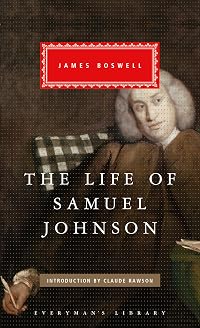
Bacon's Essay's come from an era and a day of philosophy I can sometimes little relate to. A Bible quote, phrase in Latin, a Greco-Romain anectode can be all that is required for a grand pronouncement. Partly, I feel a yearning for a "Classical education". Mostly I year from a narrator other than Bernard Mayes, who already ruined The Life of Samuel Johnson for me. Also, from Bacon's dedication and advice on house and gardening let me know Bacon was writing for his day's equivalent of Architectural Digest and The Robb Report readers. Today, he's have his own show on WealthTV, I think.
However, I like the gradiloquent delivery of common sense, such as:
"Despise no new accident in your body, but ask opinion of it. In sickness, respect health show more principally; and in health, action."
And, some of his aphorism still resound with me when even I have heard them before:
"There is no excellent beauty, that hath not some strangeness in the proportion."
"There are numbers of the like kind; especially if you include dreams, and predictions of astrology. But I have set down these few only, of certain credit, for example. My judgment is, that they ought all to be despised; and ought to serve but for winter talk by the fireside. Though when I say despised, I mean it as for belief; for otherwise, the spreading, or publishing, of them, is in no sort to be despised. For they have done much mischief; and I see many severe laws made, to suppress them. That that hath given them grace, and some credit, consisteth in three things. First, that men mark when they hit, and never mark when they miss; as they do generally also of dreams. The second is, that probable conjectures, or obscure traditions, many times turn themselves into prophecies..."
"If a new sect have not two properties, fear it not; for it will not spread. The one is the supplanting, or the opposing, of authority established; for nothing is more popular than that. The other is the giving license to pleasures, and a voluptuous life... There be three manner of plantations of new sects. By the power of signs and miracles; by the eloquence, and wisdom, of speech and persuasion; and by the sword... Surely there is no better way, to stop the rising of new sects and schisms, than to reform abuses; to compound the smaller differences; to proceed mildly, and not with sanguinary persecutions; and rather to take off the principal authors by winning and advancing them, than to enrage them by violence and bitterness." show less
However, I like the gradiloquent delivery of common sense, such as:
"Despise no new accident in your body, but ask opinion of it. In sickness, respect health show more principally; and in health, action."
And, some of his aphorism still resound with me when even I have heard them before:
"There is no excellent beauty, that hath not some strangeness in the proportion."
"There are numbers of the like kind; especially if you include dreams, and predictions of astrology. But I have set down these few only, of certain credit, for example. My judgment is, that they ought all to be despised; and ought to serve but for winter talk by the fireside. Though when I say despised, I mean it as for belief; for otherwise, the spreading, or publishing, of them, is in no sort to be despised. For they have done much mischief; and I see many severe laws made, to suppress them. That that hath given them grace, and some credit, consisteth in three things. First, that men mark when they hit, and never mark when they miss; as they do generally also of dreams. The second is, that probable conjectures, or obscure traditions, many times turn themselves into prophecies..."
"If a new sect have not two properties, fear it not; for it will not spread. The one is the supplanting, or the opposing, of authority established; for nothing is more popular than that. The other is the giving license to pleasures, and a voluptuous life... There be three manner of plantations of new sects. By the power of signs and miracles; by the eloquence, and wisdom, of speech and persuasion; and by the sword... Surely there is no better way, to stop the rising of new sects and schisms, than to reform abuses; to compound the smaller differences; to proceed mildly, and not with sanguinary persecutions; and rather to take off the principal authors by winning and advancing them, than to enrage them by violence and bitterness." show less
I'd been meaning to tackle Bacon's Essays for years; they're listed among the "100 Significant Books" in Good Reading; this edition has been in my household since before I was born, the better to mark up and highlight, since it's hardly pristine. Bacon's essays didn't impress at first. For one, so many of the best lines in the early essays are quotes from classical sources (almost all in Latin, so it's a good thing my edition provided translations within brackets.) But also reading the short provided biography provided lots of reasons for cynicism. Bacon was stripped of high office for bribery, and never had any children, and knowing that made me look upon such essays as "On Truth," "Of Great Place" (where he speaks of avoiding even the show more suspicion of bribery) and "Of Parents and Children" with a jaundiced eye. That last essay and his take on "Of Marriage and Single Life" and "Of Love" made me feel Bacon's was a cold heart, that only went pitter patter with ambition. (His essay "Of Friendship," one of my favorites in the collection ameliorated that impression a great deal.) At the same time, his life story just underlined that here was a shrewd politician, and that lends all the more interest to essays on power and statesmanship such as "Of Seditions and Troubles," "Of Empire," "Of Counsel" and "On Cunning." Some of his insights certainly still seemed current:
Princes have need, in tender matters and ticklish times, to beware what they say; especially in these short speeches, which fly abroad like darts, and are thought to be hot out of their secret intentions - Of Seditions and Troubles
For their merchants; they are the gate-vein [that distributes nourishment to the body] and if they flourish not, a kingdom may have good limbs, but will have empty veins, and nourish little. Taxes and imposts upon them do seldom good to the king's revenue; for that that he wins in the hundred he loses in the shire; the particular rates being increased, but the total bulk of trading rather decreased. - Of Empire
Besides essays mentioned above, two of my favorites were "Of Travel" (his advice on how to make the most of foreign travel is still relevant) and "Of Studies" with this famous passage:
Read not to contradict, and confute; nor to believe and take for granted; nor to find talk and discourse; but to weigh and consider. Some books are to be tasted, others to be swallowed, and some few to be chewed and digested: That is, some books are to be read only in parts; others to be read but not curiously; And some few to be read wholly, and with diligence and attention. - Of Studies
Besides which, just look in any index of a book of quotations. The essays influence on literature, thinking and common phrases is prodigious, making this a must-read. Just make sure you get an edition like mine that translates the Latin phrases and provides some definition of period words in handy footnotes and you're all set. (One that regularizes the capitalizations and spellings are a help as well for enjoyment and comprehension.) They're short--ranging from only a few hundred to a few thousand words--mostly on that short end of that spectrum, and despite the period language I found them, if not easy, then not difficult reads. I certainly found Bacon far more lively and accessible reading than such descendents as Thoreau and Emerson. show less
Princes have need, in tender matters and ticklish times, to beware what they say; especially in these short speeches, which fly abroad like darts, and are thought to be hot out of their secret intentions - Of Seditions and Troubles
For their merchants; they are the gate-vein [that distributes nourishment to the body] and if they flourish not, a kingdom may have good limbs, but will have empty veins, and nourish little. Taxes and imposts upon them do seldom good to the king's revenue; for that that he wins in the hundred he loses in the shire; the particular rates being increased, but the total bulk of trading rather decreased. - Of Empire
Besides essays mentioned above, two of my favorites were "Of Travel" (his advice on how to make the most of foreign travel is still relevant) and "Of Studies" with this famous passage:
Read not to contradict, and confute; nor to believe and take for granted; nor to find talk and discourse; but to weigh and consider. Some books are to be tasted, others to be swallowed, and some few to be chewed and digested: That is, some books are to be read only in parts; others to be read but not curiously; And some few to be read wholly, and with diligence and attention. - Of Studies
Besides which, just look in any index of a book of quotations. The essays influence on literature, thinking and common phrases is prodigious, making this a must-read. Just make sure you get an edition like mine that translates the Latin phrases and provides some definition of period words in handy footnotes and you're all set. (One that regularizes the capitalizations and spellings are a help as well for enjoyment and comprehension.) They're short--ranging from only a few hundred to a few thousand words--mostly on that short end of that spectrum, and despite the period language I found them, if not easy, then not difficult reads. I certainly found Bacon far more lively and accessible reading than such descendents as Thoreau and Emerson. show less
These essays by Francis Bacon came across to me, more so, as preliminary sermons than essays. I have no issue with reading puritanical, fundamentalist doctrine but what I struggled with throughout these musings was the lack of any kind of wit or introspection that might allude to a paradox in the writer's ideas. I found the text more didactic than dry, but the range of topics were quite interesting, and so I approached each one with a fresh hope. If there was amusement to be found, for me, it was the two essays on buildings and gardens. With these, Francis begins objectively, only to follow on with what he himself would need in a garden or building, and then moves onto what you should do with his garden or building as if instructing a show more client, and all this seemed as if he was suddenly swept away by personal whim and fancy. His desire for a, wholly, clean garden also provided some amusement, but I feel there was no tongue to be found in his cheek while writing it. He's so adamant on this point that he makes clear gardens ought to be free of wildlife as much as possible, right down to the moss. His view of an aviary drives this point home when he states that it should contain as much foliage as possible to prevent the birds from leaving their droppings on the ground. To use a phrase from his essay on counsel, I found the whole body of work "grave & orderly". Some essays stood out such as innovations, friendship, revenge, anger, and fortune. The rest were written with such an austere temperament that I found myself mourning the loss of my literary appetite, and wanting watch a comedy on television just to lighten my mood show less
It is extremely difficult to establish an opinion on Bacon's philosophy by indulging with his ramblings, which are at times profoundly astute and at times on the verge of vacuity. Among my favourites are the ones on atheism, studies, nature of men and cunning. Overall, I came to like Bacon's informal rhetoric but nothing in comparison to elegance of someone like Montaigne. To borrow from Bacon's himself, this is not the text to be chewed and digested but tasted in parts or whole.
These essays were written about 400 years ago, and are often credited as being the first "essays" ever written. Francis Bacon is often credited with starting off the scientific revolution, sometimes credited for writing Shakespeare's plays, and also of being a secret child of Elizabeth I, and he was involved with the Freemasons, and the Rosicrucians too. What isn't in doubt though is that a lot of his philosophy is still poignant today. My copy is second hand, and the previous owner saw fit to underline a good number of lines of particular interest. The thing is, he could have underlined a lot more, the book is full of wit and the serious alike. You probably wouldn't want to read this book from cover to cover in one go, but it is good show more to dip into. Some of the essays seem a bit outdated, but many of them are not. Bacon's New Atlantis, a short utopian novel, is a bit more interesting, but if you have any interest in literature from around this time, or philosophy, then you could enjoy reading this. show less
Os ensaios se tornaram famosos na época, mas ao menos que se tenha um interesse específico pelo renascimento e o que um intelectual inglês do século XVI teria a dizer sobre a vida em geral (o intelectual como aquele que fala de tudo um pouco), seu próprio livro acaba caindo na categoria mais baixa de sua categorização sobre livros, os conselhos e ponderações entram por um ouvido e saem pelo outro. O estilo não ajuda porque, em que pese a elegância, ela ainda assim serve a um conteúdo sem pregnância.
Members
- Recently Added By
Lists

100 Books to Read in a Lifetime (That Are Older Than 200 Years)
415 works; 176 members

The Road to Freedom (Will Durant's 100 Best Books for an Education)
100 works; 8 members

Filosofía - Clásicos
217 works; 1 member

Harold Bloom - The Western Canon: B. The Aristocratic Age
231 works; 13 members

Folio Society
831 works; 53 members

Trinity College Booklist (1951): Class Ten, English Literature
358 works; 5 members

How to Read a Book's Recommended Reading List
309 works; 10 members

Greatest Books, allegedly
484 works; 9 members
Philip Ward's Lifetime Reading Plan
592 works; 22 members

Book Titles Mentioned In Newberry Medal And Honor Books
884 works; 3 members

Recommended Reading : 600 Classics Reviewed, Editors of Salem Press, 2015
634 works; 6 members

Ambleside Year 8
80 works; 1 member
Author Information

Francis Bacon was born on January 22, 1561 in London. After studying at Cambridge, Bacon began a legal career, ultimately becoming a barrister in 1582. Bacon continued his political ascent, and became a Member of Parliament in 1584. In 1600, he served as Queen Elizabeth's Learned Counsel in the trial of Robert Devereaux, the Earl of Essex. After show more numerous appointments under James I, Bacon admitted to bribery and fell from power. Much of Bacon's fame stems from the belief by some that he was the actual author of the plays of William Shakespeare. While many critics dismissed that belief, Bacon did write several important works, including a digest of laws, a history of Great Britain, and biographies of the Tudor monarchy, including Henry VII. Bacon was also interested in science and the natural world. His scientific theories are recorded in Novum Organum, published in 1620. Bacon's interest in science ultimately led to his death. After stuffing a fowl with snow to study the effect of cold on the decay of meat, he fell ill, and died of bronchitis on April 9, 1626. (Bowker Author Biography) show less
Some Editions
Awards and Honors
Series
Belongs to Publisher Series
Berömda Filosofer (XXVIII)
Work Relationships
Is contained in
Contains
Has as a student's study guide
Common Knowledge
- Canonical title
- The Essays
- Original title
- The Essayes or Counsels; The Essays or Counsels, Civil and Moral, of Francis Ld. Verulam Viscount St. Albans
- Alternate titles
- The Essays of Francis Bacon
- Original publication date
- 1597
- Dedication
- To the Right Honorable My Very Good Lo. The Duke of Buckingham, His Grace, Lo. High Admirall of England - Excellent Lo. Salomon saies; A good Name is as a precious oyntment; and I assure my selfe, such wil your Graces Name b... (show all)ee, with Posteritie. For your Fortune, and Merit both, have beene Eminent. And you have planted Things, that are like to last. I doe now publish my Essayes; which of all my other workes, have beene most Currant: For that, as it seemes, they come home, to Mens Businesse, and Bosomes. I have enlarged them, both in Number, and Weight; So that they are indeed a New Worke. I thought it therefore agreeable, to my Affection, and Obligation to your Grace, to prefix your Name before them, both in English, and in Latine. For I doe conceive, that the Latine Volume of them, (being in the universall Language) may last, as long as Bookes last. My Instauration, I dedicated to the Kind: My Historie of Henry the Seventh, (which I have now also translated into Latine) and my Portions of Naturall History, to the Prince: And these I dedicate to your Grace; Being of the best Fruits, that by the good Encrease, which God gives to my Pen and Labours, I could yeeld. God leade your Grace by the Hand. Your Graces most Obliged and Faithfull Servant, Fr. St. Alban
- First words
- Essays or Counsels Civil and Moral Essay I.--Of Truth 'What is truth? said jesting Pilate, and would not stay for an answer. Certainly there be that delight in giddiness, and count it a bondage to fix a belief; affecting f... (show all)ree-will in thinking, as well as in acting. And though the sects of philosophers of that kind be gone, yet there remain certain discoursing wits which are of the same veins, though there be not so much blood in them as was in those of the ancients.
- Quotations
- From the Introduction - 'departed, carrying with him a profound contempt for the course of study pursued there, a fixed conviction that the system of academic education in England was radically vicious, a just scorn for the t... (show all)rifles on which the followers of Aristotle had wasted their powers, and no great reverence for Aristotle himself.' - Macaulay
He that dies in an earnest pursuit is like one that is wounded in hot blood; who, for the time, scarce feels the hurt; and therefore a mind fixed and bent upon somewhat that is good doth avert the dolours of death
[Of Deat... (show all)h]
A king, when he presides in counsel, let him beware how he opens his own inclination too much in that which he propoundeth; for else counsellors will but take the wind of him, and instead of giving free counsel, sing him a so... (show all)ng of placebo.
[Of Counsel]
Nay, it were better to meet some dangers half way, though they come nothing near, than to keep too long a watch upon their approaches; for if a man watch too long, it is odds he will fall asleep.
[Of Delay]
Whosoever is delighted in solitude is either a wild beast or a god.
[Of Friendship]
Classifications
Statistics
- Members
- 2,560
- Popularity
- 7,470
- Reviews
- 20
- Rating
- (3.66)
- Languages
- 12 — Catalan, Chinese, Dutch, English, Estonian, French, German, Greek, Spanish, Swedish, Turkish, Portuguese (Portugal)
- Media
- Paper, Audiobook, Ebook
- ISBNs
- 150
- ASINs
- 162