
Ernest Rhys (1859–1946)
Author of The Life of Samuel Johnson LL.D., with marginal comments and markings . . . by Hester Lynch Thrale Piozzi
About the Author
Works by Ernest Rhys
The Life of Samuel Johnson LL.D., with marginal comments and markings . . . by Hester Lynch Thrale Piozzi (1791) — Editor — 4,306 copies, 45 reviews
English Short Stories from the Fifteenth Century to the Twentieth Century; #743 (1921) — Editor — 29 copies
Coleridge's Essays and Lectures on Shakespeare and Some Other Old Poets and Dramatists (2015) — Editor — 22 copies
Aesop's and Other Fables: An Anthology of the Fabulists of All Countries (1973) — Editor — 15 copies
The growth of political liberty 8 copies
Everyman Remembers 7 copies
FREDERIC LORD LEIGHTON. Late President of the Royal Academy of Arts. An Illustrated Record of His Life and Work By Ernest Rhys. (1900) 5 copies
Everyman's Encyclopedia Fifth Edition in Twelve Volumes Vol. 6 Ghana-Inertial Navigation (1900) 5 copies
The life of Saint David 4 copies
Everyman's Encyclopedia Fifth Edition in Twelve Volumes Vol. 5 Electron Microscope-Ghadames (1932) 4 copies
Modern English Essays (Five Volumes) 3 copies
Twenty-Three Stories by Twenty and Three Authors — Editor — 3 copies
Norrœna Anglo-Saxon Classics Volume 14: The Arthurian Tales — Introduction — 2 copies
31 stories by 31 authors — Editor — 2 copies
EVERYMAN'S LIBRARY EDITED BY ERNEST RYS. POETRY AND THE DRAMA. SHAKESPEARE'S HISTORIES AND POEMS. 2 copies
Poetry and The Drama; Ben Jonson's Plays with an Introduction by Prof. Feliz E Schelling Vol 1 2 copies
The Lyric Poems of Shelley. Edited by Ernest Rhys — Editor — 2 copies
Le Morte D'Arthur - Volume I 1 copy
Everyman's Library, Biography - The Diary of Samuel Pepys F. R. S. In Two Vols. Volume Two (2) (1906) 1 copy
A Century of English Essays - an Anthology Ranging from Caxton to R.L. Stevenson & the Writers of Our Own Time (1923) 1 copy
Romance: Everyman's Library 1 copy
Poetry & The Drama 1 copy
Everymans Library 1 copy
The Diary of Samuel Pepys F.R.S. with a note by Richard Garnett, C.B., LL.D in two Vols. Vol.one. 1 copy, 1 review
Everyman’s Library 1 copy
Selected Comedies By J. B. Poquelin Moliere in 2 Vols. (Volume 2): Poetry & the Drama (Everyman's Library Book No. 831) (1943) 1 copy
The poems of John Keats 1 copy
Shakespeare, The Comedies 1 copy
The Fall of the Nibelungs 1 copy
The Shorter Poems of William Wordsworth — Editor — 1 copy
Memoirs of Benvenuto Cellini 1 copy
The story of the Volsungs 1 copy
Lectures and Lay Sermons 1 copy
Rousseau: Emile 1 copy
EVERYMAN'S LIBRARY, TRAVEL AND TOPOGRAPHY, NO. 306: THE TRAVELS OF MARCO POLO, THE VENETIAN. (1926) 1 copy
Plato's Republic 1 copy
Hobbes' Leviathan 1 copy
Mainly Horses 1 copy
Modern Plays Everyman 942 1 copy
The Leaf Burners 1 copy
John Woolmans Journal 1 copy
Associated Works
Alice's Adventures in Wonderland / Through the Looking-Glass (1865) — Introduction, some editions — 29,284 copies, 314 reviews
Evelina; or, The History of a Young Lady's Entrance into the World (1778) — Introduction, some editions — 2,836 copies, 45 reviews
CRITICAL HISTORICAL ESSAYS BY THOMAS BABINGTON MACAULAY VOL I (EVERYMANS LIBRARY) (1961) — Editor — 52 copies
The Plays of Euripides In English Volume 2 (Everyman's Library #271, Volume 2) (2010) — Editor, some editions — 29 copies
Emerson's essays — Editor, some editions — 3 copies
Tagged
Common Knowledge
- Legal name
- Rhys, Ernest Percival
- Birthdate
- 1859-07-17
- Date of death
- 1946-05-25
- Gender
- male
- Occupations
- poet
editor
critic
essayist - Organizations
- Rhymers' Club
- Relationships
- Rhys, Grace (wife)
- Nationality
- UK
- Birthplace
- London, England, UK
- Places of residence
- London, England, UK
Carmarthen, Carmarthenshire, Wales, UK
Newcastle-upon-Tyne, England, UK - Place of death
- London, England, UK
- Map Location
- England, UK
Members
Reviews
At the end of his Life of Johnson, James Boswell admits to many of his subject's faults: Johnson's irascibility, his prejudices, his narrow-mindedness in religion and politics. Johnson was a conservative with a capital C, and he is outright dismissive of many of the important philosophical ideas of his time (there is little consideration of Locke, Hume or Smith, much less Kant).
Instead, Johnson is known has the foremost literary figure of 18th Century London. He was not a man of ideas; show more rather, he was a man of language, and his greatest achievement was to codify that language in his Dictionary. Again, this project was an essentially conservative endeavor, an attempt to protect and elevate the language so that the uneducated masses could be kept in their linguistic place.
The Romantics that followed represented a rebellion against this staid, elitist, infighting group of literati that includes Addison, Steele, Pope and Johnson. Instead of engaging in a game of wits against their intellectual rivals, the Romantics sought to expand the possibilities of language by infusing it with a more natural, vernacular, personal and passionate approach. The writers of the Age of Johnson were essentially backwards looking, translating and retranslating the Greeks and Romans, writing criticism on Shakespeare. The Romantics were visionary and progressive. johnson would have probably scoffed at the likes of a Keats or a Blake as being too radical and impolite in their poetic visions.
Boswell's life of Johnson is confusing in that, while it is a warts and all depiction of the good doctor, the reader is a left with a sense that Boswell looks at his subject through the rose-colored lenses of a literary acolyte. What are we meant to think of this complicated man? show less
Instead, Johnson is known has the foremost literary figure of 18th Century London. He was not a man of ideas; show more rather, he was a man of language, and his greatest achievement was to codify that language in his Dictionary. Again, this project was an essentially conservative endeavor, an attempt to protect and elevate the language so that the uneducated masses could be kept in their linguistic place.
The Romantics that followed represented a rebellion against this staid, elitist, infighting group of literati that includes Addison, Steele, Pope and Johnson. Instead of engaging in a game of wits against their intellectual rivals, the Romantics sought to expand the possibilities of language by infusing it with a more natural, vernacular, personal and passionate approach. The writers of the Age of Johnson were essentially backwards looking, translating and retranslating the Greeks and Romans, writing criticism on Shakespeare. The Romantics were visionary and progressive. johnson would have probably scoffed at the likes of a Keats or a Blake as being too radical and impolite in their poetic visions.
Boswell's life of Johnson is confusing in that, while it is a warts and all depiction of the good doctor, the reader is a left with a sense that Boswell looks at his subject through the rose-colored lenses of a literary acolyte. What are we meant to think of this complicated man? show less

Fast paced, very funny and successfully operating on multiple levels AT THE SAME TIME.
The novel concerns one Gil Blas, who sets out to display his slack-jawed idiocy to the world. As just one example of what I mean by multiple levels, early on (I don't think I'm giving away too much here) he is captured by bandits, imprisoned and forced into servitude. He effects his escape by robbing a member of the clergy and is consequently plunged into a series of adventures where he is alternately show more imprisoned or in servitude. So you have an interesting story, a moral and character development. Also, by placing Gil Blas at the bottom of society, Le Sage can aim his satire squarely at the ruling classes.
This is an episodic novel. I like an episodic novel but I'm prepared to admit that the main problem with them is that they are, well, episodic. But here there's a smooth richness to the segues that really adds something. And the whole undertaking is elevated by recurring themes and characters and a mirroring of incident from one episode to another.
Just a word on this edition, the Everyman. It's Malkin's revision of Smollett's translation. I had a quick look at Smottlett's and Malkin appears to follow him structurally clause by clause, but often using different words, near synonyms etc. I suppose it was an updating at the time, but now both are old-fashioned. But don't let that put you off. It's well written and the style fits the nature of the story. There are no notes in the Everyman and there are a number of references which I couldn't understand specifically though they're usually clear from the context. Le Sage categorically denies that the characters who are objects of his satire are based on real people. Frankly, I don't believe him. I suspect that a scholarly edition would identify those individuals. That's the only place where I really missed having notes. show less
The novel concerns one Gil Blas, who sets out to display his slack-jawed idiocy to the world. As just one example of what I mean by multiple levels, early on (I don't think I'm giving away too much here) he is captured by bandits, imprisoned and forced into servitude. He effects his escape by robbing a member of the clergy and is consequently plunged into a series of adventures where he is alternately show more imprisoned or in servitude. So you have an interesting story, a moral and character development. Also, by placing Gil Blas at the bottom of society, Le Sage can aim his satire squarely at the ruling classes.
This is an episodic novel. I like an episodic novel but I'm prepared to admit that the main problem with them is that they are, well, episodic. But here there's a smooth richness to the segues that really adds something. And the whole undertaking is elevated by recurring themes and characters and a mirroring of incident from one episode to another.
Just a word on this edition, the Everyman. It's Malkin's revision of Smollett's translation. I had a quick look at Smottlett's and Malkin appears to follow him structurally clause by clause, but often using different words, near synonyms etc. I suppose it was an updating at the time, but now both are old-fashioned. But don't let that put you off. It's well written and the style fits the nature of the story. There are no notes in the Everyman and there are a number of references which I couldn't understand specifically though they're usually clear from the context. Le Sage categorically denies that the characters who are objects of his satire are based on real people. Frankly, I don't believe him. I suspect that a scholarly edition would identify those individuals. That's the only place where I really missed having notes. show less

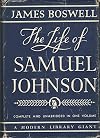
The best way to read Boswell's Life of Johnson is this way: via a somewhat cheesy, "classic library" volume of a Great Classics type of series. The book looks like one of those books you would find in the movie set of a lawyer's office, trying to look distinguished and old, although it feels plasticy.
We learn from other sources (outside of Boswell) that Boswell himself was something of an annoying 18th century star f__ker, but thank God he was - because reading this book is like being a part show more of a hundred dinner and parlour conversations with the wits and men of power in 18th century England. Funny bastards some of them were, too.
Skill in the art of conversation was the most highly prized talent, and Johnson was considered king of them all. This is a world steeped in The Classics, post Renaissance but pre Industrial/Scientific Revolution - that sweet spot where men were expected to venture to come up with a theory and interpretation about anything: how to talk, the way to cook a meal, where to travel, you name it. And Johnson always had an interesting and strong Theory of Anything.
Somehow it seems like nobody worked, they were just able to go to each other's houses, eat too much, drink hard, and talk smack about each other full time. Good times.
Today, Johnson would be considered a blowhard; narrow minded, reactionary, pompous, and egotistical. But that's why he's actually interesting.
This was a cool era because you would address your best friend as "Sir".
Ironically, Boswell's writing holds up better than Johnson's himself, but who cares about that history of literature crap.
If each book had a smell, this book would smell like really good roast beef, with some hard licks thrown in.
Sir, I am,
Your most humble reviewer,
&tc &tc show less
We learn from other sources (outside of Boswell) that Boswell himself was something of an annoying 18th century star f__ker, but thank God he was - because reading this book is like being a part show more of a hundred dinner and parlour conversations with the wits and men of power in 18th century England. Funny bastards some of them were, too.
Skill in the art of conversation was the most highly prized talent, and Johnson was considered king of them all. This is a world steeped in The Classics, post Renaissance but pre Industrial/Scientific Revolution - that sweet spot where men were expected to venture to come up with a theory and interpretation about anything: how to talk, the way to cook a meal, where to travel, you name it. And Johnson always had an interesting and strong Theory of Anything.
Somehow it seems like nobody worked, they were just able to go to each other's houses, eat too much, drink hard, and talk smack about each other full time. Good times.
Today, Johnson would be considered a blowhard; narrow minded, reactionary, pompous, and egotistical. But that's why he's actually interesting.
This was a cool era because you would address your best friend as "Sir".
Ironically, Boswell's writing holds up better than Johnson's himself, but who cares about that history of literature crap.
If each book had a smell, this book would smell like really good roast beef, with some hard licks thrown in.
Sir, I am,
Your most humble reviewer,
&tc &tc show less

I probably couldn't have stomached an unabridged version of this classic, so it was good to read this abridged version. It is a classic, and I see and know why, but it really should be "Boswell's Conversations with Johnson and some Anecdotes I Picked Up From Others." Sometimes he makes good points, sometimes he is funny. But mostly he is curmudgeonly. As a society we've progressed well past people seeing Johnson's greatness and Boswell's usefulness. It was good to read some bons mot I've show more seen before in context, discover where some things come from, and find some new ones. For instance, in the 1964 film Zulu the surgeon tells Hook: "Brandy is for heroes." It's here in Boswell's Johnson. Who knew? But, I wouldn't call this mind-altering or even an essential text anymore. A good one, but well past the ken of usefulness and entertainingness. Glad I read it, but I'd only recommend it to super-nerds with nothing to do and a love of the eighteenth century. This edition is an old, post-War illustrated edition (from 1946), with some pretty color plates and line drawings, though the latter seemed to peter out early on in the book. It looks like some printing restrictions were still in place, like chapters starting on the same page the previous one ended, etc. (I learned that from reading a new edition of Stewart's Names on the Land).
[I bought this edition, too, for like a dollar at a book sale for the friends of the Dick Smith Library at Tarleton State University in Stephenville, Texas, in about 2002 or so, when i was a senior getting my B.A. in history. So, there is a bit of sentimental attachment to the old hunk of book.] show less
[I bought this edition, too, for like a dollar at a book sale for the friends of the Dick Smith Library at Tarleton State University in Stephenville, Texas, in about 2002 or so, when i was a senior getting my B.A. in history. So, there is a bit of sentimental attachment to the old hunk of book.] show less
Lists
Awards


You May Also Like


Associated Authors
Statistics
- Works
- 188
- Also by
- 45
- Members
- 5,523
- Popularity
- #4,509
- Rating
- 3.9
- Reviews
- 57
- ISBNs
- 189
- Languages
- 9
- Favorited
- 1