
Elizabeth Gaskell (1810–1865)
Author of North and South
About the Author
Elizabeth Gaskell was born on September 29, 1810 to a Unitarian clergyman, who was also a civil servant and journalist. Her mother died when she was young, and she was brought up by her aunt in Knutsford, a small village that was the prototype for Cranford, Hollingford and the setting for numerous show more other short stories. In 1832, she married William Gaskell, a Unitarian clergyman in Manchester. She participated in his ministry and collaborated with him to write the poem Sketches among the Poor in 1837. Our Society at Cranford was the first two chapters of Cranford and it appeared in Dickens' Household Words in 1851. Dickens liked it so much that he pressed Gaskell for more episodes, and she produced eight more of them between 1852 and 1853. She also wrote My Lady Ludlow and Lois the Witch, a novella that concerns the Salem witch trials. Wives and Daughters ran in Cornhill from August 1864 to January 1866. The final installment was never written but the ending was known and the novel exists now virtually complete. The story centers on a series of relationships between family groups in Hollingford. Most critics agree that her greatest achievement is the short novel Cousin Phillis. Gaskell was also followed by controversy. In 1853, she offended many readers with Ruth, which explored seduction and illegitimacy that led the "fallen woman" into ostracism and inevitable prostitution. The novel presents the social conduct in a small community when tolerance and morality clash. Critics praised the novel's moral lessons but Gaskell's own congregation burned the book and it was banned in many libraries. In 1857, The Life of Charlotte Brontë was published. The biography was initially praised but angry protests came from some of the people it dealt with. Gaskell was against any biographical notice of her being written during her lifetime. After her death on November 12, 1865, her family refused to make family letters or biographical data available. (Bowker Author Biography) show less
Image credit: Elizabeth Gaskell in the 1860s, towards the end of her life. Her novel 'Wives and Daughters' was left unfinished at her death
Series
Works by Elizabeth Gaskell
Elizabeth Gaskell: The Complete Novels [Mary Barton, Cranford, Ruth, North and South, etc.] (Book House) (2014) 22 copies
Works of Elizabeth Gaskell. North and South, Wives and Daughters, Ruth, The Moorland Cottage, The Life of Charlotte Bronte & more (mobi) (2008) 6 copies
Cranford and Mary Barton 4 copies
Granford - Level3 - Con 1 Cassette (Penguin Readers: Level 3 Series) (Spanish Edition) (2000) 3 copies
Reading & Training - Life Skills : Elizabeth Gaskell : North and South [book + sound recording] (2017) — Writer — 2 copies
The works of Elizabeth Gaskell. Volume 3, Novellas and shorter fiction II, Round the Sofa, and Tales from Household Words (1852-9) (2017) 2 copies
Tales of the Gothic: A Haunting Collection of Short Stories (Mothers of the Macabre) (2024) 2 copies
Disappearances 2 copies
The Collected Short Stories of Elizabeth Gaskell [Annotated] (Civitas Library Classics) (2012) 2 copies
Elizabeth Gaskell: The Complete Novels A Biography of the Author (The Greatest Writers of All Time) (2017) 2 copies
Mary Bartonová 1 copy
The English Christmas 1 copy
Cranford, etc 1 copy
Clopton House 1 copy
English Short Stories 1 copy
Cranford 1 copy
Cousin Phillis: To which are added: Lois the Witch, The crooked branch, Curious if true, Right at last, The grey woman, (1972) 1 copy
Elizabeth Gaskell's Collected Works: Mary Barton, Cranford, North and South, Wives and Daughters, and More! (26 Works) (2014) 1 copy
Hand in A Wisker Cranford 1 copy
Kuzey ve Güney 1 copy
The Shah's English Gardener 1 copy
Elizabeth Gaskell 1 copy
Gaskell Shorter Works 1 copy
The Collected Works of Elizabeth Cleghorn Gaskell: The Complete Works PergamonMedia (Highlights of World Literature) (2015) 1 copy
Martha Preston 1 copy
Short stories. Selections^Four short stories / Elizabeth Gaskell ; introduced by Anna Walters 1 copy
Life in Manchester (1847) 1 copy
Works of Mrs. Gaskell 1 copy
All'ultimo momento 1 copy
SST 69 - Nord e sud 1 copy
SST 67 - Ruth 1 copy
SST 78 - Lontano dal tempo 1 copy
I fratellastri 1 copy
All the Year Round. Bound Volume of Issues 177 to 200 from September 13, 1862 to February 21, 1863 (1863) 1 copy
Arme Lucy 1 copy
Return to Cranford 1 copy
Aşktan da Üstün 1 copy
Mary Barton 1 copy
Fantasmas Vitorianos 1 copy
Gaskell, Elisabeth Archive 1 copy
The Life of Charlotte Brontë 1 copy
Mariti e mogli 1 copy
(all) 1 copy
Associated Works
Ghostly Tales: Spine-Chilling Stories of the Victorian Age (2017) — Contributor — 262 copies, 15 reviews
The Penguin Book of Ghost Stories: From Elizabeth Gaskell to Ambrose Bierce (2010) — Contributor — 185 copies, 4 reviews
The Valancourt Book of Victorian Christmas Ghost Stories (2016) — Contributor — 184 copies, 6 reviews
In the Shadow of Agatha Christie: Classic Crime Fiction by Forgotten Female Writers, 1850-1917 (2018) — Contributor — 108 copies, 8 reviews
Weird Women: Classic Supernatural Fiction by Groundbreaking Female Writers: 1852-1923 (2020) — Contributor — 107 copies, 2 reviews
The Prentice Hall Anthology of Science Fiction and Fantasy (2000) — Contributor — 99 copies, 2 reviews
Delphi Complete Works of Charles Dickens (Illustrated) (2012) — Contributor, some editions — 96 copies
The Phantom Coach: A Connoisseur's Collection of Victorian Ghost Stories (2014) — Contributor — 63 copies, 1 review
Isaac Asimov's Magical Worlds of Fantasy, Volume 11: Curses (1939) — Contributor — 58 copies, 1 review
The Darker Sex: Tales of the Supernatural and Macabre by Victorian Women Writers (2009) — Contributor — 55 copies, 2 reviews
The Moons at Your Door: An Anthology of Hallucinatory Tales (Strange Attractor Press) (2016) — Contributor — 53 copies, 1 review
The Elizabeth Gaskell Collection (Wives and Daughters / Cranford / North and South) (2008) — Original Books — 51 copies
The Lifted Veil: The Book of Fantastic Literature by Women 1800-World War II (1806) — Contributor — 45 copies
Cranford: The Collection [Cranford & Return to Cranford TV series] (2008) — Original book — 36 copies, 1 review
English Short Stories from the Fifteenth Century to the Twentieth Century; #743 (1921) — Contributor — 29 copies
The Gentlewomen of Evil: An Anthology of Rare Supernatural Stories from the Pens of Victorian Ladies (1967) — Contributor — 28 copies
A Quaint and Curious Volume: Tales and Poems of the Gothic (2019) — Contributor — 22 copies, 1 review
Isaac Asimov Presents : The Best Horror and Supernatural of the 19th Century (1983) — Contributor — 20 copies, 1 review
Regarding Jane Eyre: Writers Respond to Charlotte Bronte's Jane Eyre (1997) — Contributor — 17 copies
The Afterlife of Frankenstein: A Century of Mad Science, Automata, and Monsters Inspired by Mary Shelley, 1818-1918 (Clockwork Editions) (2023) — Contributor — 12 copies
More ghosts and marvels,: A selection of uncanny tales from Sir Walter Scott to Michael Arlen, (The World's classics) (1934) — Contributor — 10 copies
Die englische Literatur 08 in Text und Darstellung. 19. Jahrhundert 2 (1982) — Contributor — 5 copies
The Lady Chillers: Classic Ghost and Horror Stories by Women Authors (2014) — Contributor — 4 copies
The Midnight Inkwell: Sinister Short Stories by Classic Women Writers (2023) — Contributor — 3 copies
Novels of the Sisters Bronte. Thornton Edition. In Twelve Volumes (Complete). Includes The Life of Charlotte Bronte (1905) — Contributor — 2 copies
Librivox Ghost Story Collection 006 — Contributor — 2 copies
The Complete Works of The Bronte Family with Mrs. Gaskell's Life of Charlotte Bronte. The "Empyreal" Edition, 10 set volume. — Contributor — 1 copy
English short stories of the nineteenth century — Contributor — 1 copy
Strange Stories: The Last Seven — Contributor — 1 copy
Tagged
Common Knowledge
- Legal name
- Gaskell, Elizabeth Cleghorn
- Other names
- Gaskell, Elizabeth Cleghorn
Stevenson, Elizabeth Cleghorn (birth name) - Birthdate
- 1810-09-29
- Date of death
- 1865-11-12
- Gender
- female
- Education
- Avonbank School, Stratford-upon-Avon, England, UK
Barford House - Occupations
- novelist
short story writer
biographer
ghost story writer - Organizations
- Portico Library, Manchester
- Relationships
- Gaskell, Jane (great-great-great-grand-niece)
Stevenson, William (father)
Stevenson, John (brother)
Holland, Bryan T. (grandson) - Cause of death
- heart attack
- Nationality
- UK
- Birthplace
- Chelsea, London, Middlesex, England, UK
- Places of residence
- Lindsay Row (now 93 Cheyne Walk)
Heathwaite, Heathside, Knutsford, Cheshire, England, UK
Manchester, Lancashire, England, UK
Barford, Warwickshire, England, UK
Stratford-upon-Avon, Warwickshire, England, UK
Newcastle-upon-Tyne, Northumberland, England, UK (show all 7)
Plymouth Grove, Manchester, England, UK - Place of death
- Holybourne, Hampshire, England, UK
- Burial location
- Brook Street Chapel graveyard, Knutsford, Cheshire, England, UK
- Map Location
- England, UK
Members
Discussions
Group read: Curious, If True by Elizabeth Gaskell / The Lifted Veil by George Eliot in Virago Modern Classics (May 2024)
January 2024: Elizabeth Gaskell in Monthly Author Reads (January 2024)
Victorian Q2 Read-Along: North and South in Club Read 2022 (September 2022)
Group Read, December 2021: North and South in 1001 Books to read before you die (December 2021)
Group Read, January 2017: Cranford in 1001 Books to read before you die (February 2017)
1816: Charlotte Brontë - Resources and General Discussion in Literary Centennials (January 2016)
July Group Read: Mary Barton by Elizabeth Gaskell in 2014 Category Challenge (August 2014)
North and South, Chapters 27-52 (Spoiler Thread) in 75 Books Challenge for 2011 (January 2012)
North and South, Chapters 1-26 (Spoiler Thread) in 75 Books Challenge for 2011 (December 2011)
North and South by Elizabeth Gaskell (Non-Spoiler Thread) in 75 Books Challenge for 2011 (December 2011)
Anyone care to discuss, or read and discuss, 'Sylvia's Lovers' by Elizabeth Gaskell? in Girlybooks (October 2011)
Reviews
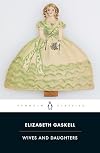
Firstly, I can't believe I didn't know Elizabeth Gaskell died before finishing this book?
Secondly, I can't believe I didn't know Elizabeth Gaskell died before finishing this book??
So to prevent anyone else from feeling the same pain I felt after reading one of the cutest chapters I've ever read and then seeing . . . nothing but tragic news I'm putting this right up at the top of my review.
Book content warnings:
racism
antisemitism
manipulation/abuse/whatever you'd call how Mr. Preston used show more Cynthia
This has always been one of my favorite English "period dramas" that one of my friends introduced me to. Of course I've never actually read the original book until now (thanks to a reading challenge, mostly). But I'm surprised how much I liked Elizabeth Gaskell's writing and characterization. People and places have so much life to them. I would've rated this much higher if not for the racism. "But think of when it was written!" Yeah, okay, but it's still gross--and it makes me uncomfortable enough to make me like the book/author less.
I never know what to say about these Classics because I'm not what you'd call an ""intellectual"", and I'm not the best at the academic language that seem to fill their review pages. But I see a disturbing amount of people talking about how Cynthia manipulated and took advantage of "simple" and good-natured Molly, and while she may have taken advantage her, people are ignoring Mr. Preston in this entire equation (or are even saying Mr. Preston is the victim in his affair with Cynthia as well?).
It may have been an awful scandal on Cynthia's part back in the 1800s, but dang, if Cynthia's situation had taken place today, she might have been better understood. Her childhood shaped her entire character (and I'm about 200% sure she's aromantic from her own words, shaped by trauma or otherwise--she even gets a happy ending with someone who understands her, which is fantastic for someone who'd like to read a novel with great aro rep). Cynthia tries to explain to Molly that her mother's negligence has hurt her so much so that it's pretty much traumatic. No, it's not an excuse for some of her . . . not-so-great actions to Molly, but she might have been better understood where Mr. Preston is concerned because he pretty much took advantage of her when she was penniless and in a very low point in her life. He gave her money, as a gift from a friend, and then later persuaded him to marry him because of his gift.
"But she liked him then!" Yeah, okay, but she was a child, as she said. That he should later blackmail her and hold her letters over her is basically proof that he's one hell of a skeevy character. I can't believe I see reviews that basically state "poor Mr. Preston," or something like that. Or "that flirt Cynthia used Mr. Preston and Roger and Molly!" without ever taking Cynthia's perspective into question, and it just makes me seethe.
So . . . that aside, it's just one example of how the characters in this book are so fully fleshed and individual without being caricatures. They're so different from each other (like Cynthia from Molly), but still love and accent each other enough so that they work well together. It's also probably my favorite thing about this book (besides how it handles grief). show less
Secondly, I can't believe I didn't know Elizabeth Gaskell died before finishing this book??
So to prevent anyone else from feeling the same pain I felt after reading one of the cutest chapters I've ever read and then seeing . . . nothing but tragic news I'm putting this right up at the top of my review.
Book content warnings:
racism
antisemitism
manipulation/abuse/whatever you'd call how Mr. Preston used show more Cynthia
This has always been one of my favorite English "period dramas" that one of my friends introduced me to. Of course I've never actually read the original book until now (thanks to a reading challenge, mostly). But I'm surprised how much I liked Elizabeth Gaskell's writing and characterization. People and places have so much life to them. I would've rated this much higher if not for the racism. "But think of when it was written!" Yeah, okay, but it's still gross--and it makes me uncomfortable enough to make me like the book/author less.
I never know what to say about these Classics because I'm not what you'd call an ""intellectual"", and I'm not the best at the academic language that seem to fill their review pages. But I see a disturbing amount of people talking about how Cynthia manipulated and took advantage of "simple" and good-natured Molly, and while she may have taken advantage her, people are ignoring Mr. Preston in this entire equation (or are even saying Mr. Preston is the victim in his affair with Cynthia as well?).
It may have been an awful scandal on Cynthia's part back in the 1800s, but dang, if Cynthia's situation had taken place today, she might have been better understood. Her childhood shaped her entire character (and I'm about 200% sure she's aromantic from her own words, shaped by trauma or otherwise--she even gets a happy ending with someone who understands her, which is fantastic for someone who'd like to read a novel with great aro rep). Cynthia tries to explain to Molly that her mother's negligence has hurt her so much so that it's pretty much traumatic. No, it's not an excuse for some of her . . . not-so-great actions to Molly, but she might have been better understood where Mr. Preston is concerned because he pretty much took advantage of her when she was penniless and in a very low point in her life. He gave her money, as a gift from a friend, and then later persuaded him to marry him because of his gift.
"But she liked him then!" Yeah, okay, but she was a child, as she said. That he should later blackmail her and hold her letters over her is basically proof that he's one hell of a skeevy character. I can't believe I see reviews that basically state "poor Mr. Preston," or something like that. Or "that flirt Cynthia used Mr. Preston and Roger and Molly!" without ever taking Cynthia's perspective into question, and it just makes me seethe.
So . . . that aside, it's just one example of how the characters in this book are so fully fleshed and individual without being caricatures. They're so different from each other (like Cynthia from Molly), but still love and accent each other enough so that they work well together. It's also probably my favorite thing about this book (besides how it handles grief). show less
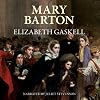
Give this book to Jane Austen fans to radicalize them.
I've gone ahead and tagged this with my "manners" tag, but somewhat hesitantly. While Gaskell's North and South has a brilliant false start as an Austen-esque novel of manners, Mary Barton is much more dour and raw from the novel's opening. It has a lot to say about the social world of Manchester, but even more about the bodily, financial, and spiritual realities and struggles of that world. The idea of living in a novel of manners would show more be an unattainable luxury to our main characters, a kind of frivolous life available only to the masters-- indeed, at one point near the middle of the novel a peek in at the Carson sisters chatting about society and tea feels more like a scene from Bong Joon-ho's Parasite than Austen's Emma, as the reader knows the acute poverty and suffering of the workers in the city that surrounds them.
It's interesting that Elizabeth Gaskell wrote Mary Barton first, and North and South later. Admittedly, N&S does intermingle the romance and realism aspects more evenly than Mary Barton, and reads like a more stylistically mature book (Mary Barton's switch halfway through to a focus on crime and courtroom drama can feel a bit odd). But it is strange to me that after the time Gaskell spends in Mary Barton focusing closely on John Barton and his thoughts and inner life (he was originally intended to be the titular character!), she would hold his counterpart in N&S, Nicholas Higgins, at a comparative arm's length. And it is instead John Thornton, the evolution of Harry/John Carson, who gets a closer eye and greater sympathy. Personally, I have little interest in the plights of the masters over the men. And despite the tragedy of Bessy's death, N&S seems to me to blunt the abject despair and rage created by poverty in Manchester. I don't know. It's clear the books share the same concerns, and the fact that they also share many very similar character archetypes and specific interpersonal and societal events, makes them easy to compare, whether fruitfully or not.
Something I'd like to think and read more about is the portrayal in Mary Barton of how gender and family roles are broken down and subverted by strife and poverty. John Barton and George Wilson help tend to their own children as infants, and also become temporary homemakers and carers during the extremity of the Davenport family's troubles. Job Legh's story of his long trip home from London with the baby Margaret is also very concerned with this theme, as he and Margaret's other grandfather must of necessity fill the place of a mother to her. There's definitely a lot of interesting stuff there. Later, the contrast between how Barton feels when he must be supported by his daughter's income, as opposed to Jane Wilson being supported by her son, show in stark contrast. The roles of parent, mother, father, and child are examined and tested throughout the novel. This comes up in N&S, too, with Higgins and the Boucher children.
Juliet Stevenson's narration was very good. She excelled particularly at making Sally Leadbitter the most infuriating character to ever exist, haha. show less
I've gone ahead and tagged this with my "manners" tag, but somewhat hesitantly. While Gaskell's North and South has a brilliant false start as an Austen-esque novel of manners, Mary Barton is much more dour and raw from the novel's opening. It has a lot to say about the social world of Manchester, but even more about the bodily, financial, and spiritual realities and struggles of that world. The idea of living in a novel of manners would show more be an unattainable luxury to our main characters, a kind of frivolous life available only to the masters-- indeed, at one point near the middle of the novel a peek in at the Carson sisters chatting about society and tea feels more like a scene from Bong Joon-ho's Parasite than Austen's Emma, as the reader knows the acute poverty and suffering of the workers in the city that surrounds them.
It's interesting that Elizabeth Gaskell wrote Mary Barton first, and North and South later. Admittedly, N&S does intermingle the romance and realism aspects more evenly than Mary Barton, and reads like a more stylistically mature book (Mary Barton's switch halfway through to a focus on crime and courtroom drama can feel a bit odd). But it is strange to me that after the time Gaskell spends in Mary Barton focusing closely on John Barton and his thoughts and inner life (he was originally intended to be the titular character!), she would hold his counterpart in N&S, Nicholas Higgins, at a comparative arm's length. And it is instead John Thornton, the evolution of Harry/John Carson, who gets a closer eye and greater sympathy. Personally, I have little interest in the plights of the masters over the men. And despite the tragedy of Bessy's death, N&S seems to me to blunt the abject despair and rage created by poverty in Manchester. I don't know. It's clear the books share the same concerns, and the fact that they also share many very similar character archetypes and specific interpersonal and societal events, makes them easy to compare, whether fruitfully or not.
Something I'd like to think and read more about is the portrayal in Mary Barton of how gender and family roles are broken down and subverted by strife and poverty. John Barton and George Wilson help tend to their own children as infants, and also become temporary homemakers and carers during the extremity of the Davenport family's troubles. Job Legh's story of his long trip home from London with the baby Margaret is also very concerned with this theme, as he and Margaret's other grandfather must of necessity fill the place of a mother to her. There's definitely a lot of interesting stuff there. Later, the contrast between how Barton feels when he must be supported by his daughter's income, as opposed to Jane Wilson being supported by her son, show in stark contrast. The roles of parent, mother, father, and child are examined and tested throughout the novel. This comes up in N&S, too, with Higgins and the Boucher children.
Juliet Stevenson's narration was very good. She excelled particularly at making Sally Leadbitter the most infuriating character to ever exist, haha. show less
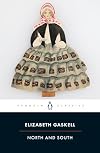
Margaret Hale and John Thornton are both too proud to admit to their mutual attraction and, what's worse, Thornton is in 'trade'. As a romance, North and South has a lot in common with Pride and Prejudice but it's somber where P&P can be a little superficial. Romance aside, Margaret's family is a study in conscientiousness: her father's crisis of faith, her brother's stand against a cruel captain, and her mother's marriage for love instead of wealth and position. Margaret's own involvement show more with the family of a factory mill hand shows the social impact of industrialization as the workers strike for a living wage. It's good enough that I want to revisit it, either in audiobook or miniseries form. show less
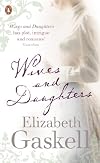
Elizabeth Gaskell is a fine writer, who penned admirable heroines and sensitive heroes, but she definitely peaked with 'North and South' - 'Mary Barton', her first novel, is far too melodramatic, and I'm afraid I found 'Wives and Daughters', her final (and unfinished) work, too slow. I class this sort of Austenesque pastoral satire as 'Sunday evening fodder', the sort of gentle, harmless period drama that is a staple production of the BBC around autumn, when the nights are drawing in and the show more weather is terrible. Like 'Cranford' (which I won't be adding to my Gaskell library), these adaptations usually feature Dame Judi Dench in a bonnet and conclude with a wedding or two. I much prefer Gaskell's 'northern' novels, which are a more engaging and instructive blend of humour, romance and social commentary - the body count is usually considerably higher (imagine, only one death in 'Wives and Daughters'!), but on the plus side, there are fewer old women in bonnets.
That said, I did persevere with this story, because the central characters are well drawn and Gaskell knows how to pace a domestic drama with teasers - what is Cynthia's secret? When will Obsbourne's father find out what his son has been up to? Molly Gibson, the pure and selfless heroine, is far too good for my liking, but I loved Cynthia's 'Estella Syndrome', as I termed her fickle behaviour (now there's a girl who knows how to keep her options open!) Cynthia Kirkpatrick is my favourite type of heroine, or perhaps anti-heroine - beautiful, charming, sharp as tack, and ruthless! She knows that men of every age and station find her irresistible, and employs her natural talents to bait them and then reel them in - but only if they can be of advantage to her. And she's so thoroughly attractive that everyone forgives her for using them! Wonderful. Molly truly fell flat compared to her wicked stepsister. And I felt sorry for the oily Mr Preston, but not Roger Hamley, who must have been either gullible or shallow.
From the supporting cast of thousands, I adored Mr Gibson, who marries in haste and repents at leisure, and Squire Hamley, and found in Lady Harriet the strength lacked by Molly and the generosity missing in Cynthia. The rest of the caricatures - Cynthia's sycophantic and self-centred mother, and her aristocratic match Lady Cumnor, ailing Osbourne and blockhead Roger, and of course the usual gaggle of spinsters - were mildly entertaining but only pale imitations of Austen's stock-in-trade. Although some of the characters and devices reminded me of 'North and South' - a dark-haired heroine with 'soft grey eyes' who dotes on her father, invalid mothers, brothers with secret wives, many misunderstandings, and even a Dr Donaldson! - I missed the earnest grounding in social concerns of real importance that give meaning and impact to Gaskell's 'northern' novels. If I wanted to read about the romantic entanglements of swooning girls in white dresses, I would choose 'Sense and Sensibility'.
And if Gaskell used the phrase 'tete-a-tete' once, she must have used it a thousand times - the constant repetition made me laugh at first, and then slowly started to annoy me.
All in all, a pleasant, if rather lengthy, comedy of manners, for fans of Austen and Heyer. show less
That said, I did persevere with this story, because the central characters are well drawn and Gaskell knows how to pace a domestic drama with teasers - what is Cynthia's secret? When will Obsbourne's father find out what his son has been up to? Molly Gibson, the pure and selfless heroine, is far too good for my liking, but I loved Cynthia's 'Estella Syndrome', as I termed her fickle behaviour (now there's a girl who knows how to keep her options open!) Cynthia Kirkpatrick is my favourite type of heroine, or perhaps anti-heroine - beautiful, charming, sharp as tack, and ruthless! She knows that men of every age and station find her irresistible, and employs her natural talents to bait them and then reel them in - but only if they can be of advantage to her. And she's so thoroughly attractive that everyone forgives her for using them! Wonderful. Molly truly fell flat compared to her wicked stepsister. And I felt sorry for the oily Mr Preston, but not Roger Hamley, who must have been either gullible or shallow.
From the supporting cast of thousands, I adored Mr Gibson, who marries in haste and repents at leisure, and Squire Hamley, and found in Lady Harriet the strength lacked by Molly and the generosity missing in Cynthia. The rest of the caricatures - Cynthia's sycophantic and self-centred mother, and her aristocratic match Lady Cumnor, ailing Osbourne and blockhead Roger, and of course the usual gaggle of spinsters - were mildly entertaining but only pale imitations of Austen's stock-in-trade. Although some of the characters and devices reminded me of 'North and South' - a dark-haired heroine with 'soft grey eyes' who dotes on her father, invalid mothers, brothers with secret wives, many misunderstandings, and even a Dr Donaldson! - I missed the earnest grounding in social concerns of real importance that give meaning and impact to Gaskell's 'northern' novels. If I wanted to read about the romantic entanglements of swooning girls in white dresses, I would choose 'Sense and Sensibility'.
And if Gaskell used the phrase 'tete-a-tete' once, she must have used it a thousand times - the constant repetition made me laugh at first, and then slowly started to annoy me.
All in all, a pleasant, if rather lengthy, comedy of manners, for fans of Austen and Heyer. show less
Lists
Which house? (1)
Hidden Classics (1)
First Novels (1)
Read in 2014 (1)
AP Lit (1)
The Best Of (1)
5 Best 5 Years (1)
Urban Fiction (1)
Overdue Podcast (1)
Comfort Reads (1)
Unmarried women (1)
Reading LIst (2)
Funny Classics (2)
Five star books (3)
Folio Society (3)
Female Author (3)
Out of Copyright (4)
1850s (4)
19th Century (5)
Victorian Period (5)
Books I've read (1)
My TBR (2)
Favourite Books (2)
Allie's Wishlist (2)
Awards


You May Also Like


Associated Authors
Statistics
- Works
- 228
- Also by
- 127
- Members
- 30,362
- Popularity
- #653
- Rating
- 3.9
- Reviews
- 807
- ISBNs
- 1,737
- Languages
- 21
- Favorited
- 181


